

Monday, April 13, 2020

When our two sons first started cooking for themselves, they’d often text or call me for advice. I came up with two basic recipe methods that were inexpensive, flexible and quick. One was a Mexican-style rice and bean casserole, and the other a boilerplate for Asian stir-fry or fried rice.
The bonus is that both meals can swallow up all manner of bits and bobs that tend to get lost in the back of the fridge. Cutting food waste is always a good idea. These days it’s an even better one.
This fried rice was inspired by writer and chef Tamar Adler’s recipe for Thai fried rice in her book An Everlasting Meal: Cooking with Economy and Grace (Scribner, 2011). I love the funk of fish sauce, but soy sauce works fine if you're not a fan (like my boys) or don’t have it on hand.
Once you’ve got everything chopped, the fried rice is super quick to pull together — so quick, in fact, you’ll want the ingredients laid out ready to go before you turn on the stove.
The only thing that you need to plan ahead is having cold cooked rice, the kind you might have left over from Asian takeout. Or, if you’re making rice for another meal, cook extra. You can store it in the fridge for a few days, or even freeze and then thaw it.
Do not even think about making this dish with freshly cooked rice. It will be a dismal failure. As Adler writes, “Thank heavens for the occasional, calculable superiority of old things.”
The vegetables can be pretty much anything you have on hand. I especially like to use stems or leaves that might normally get tossed. Thinly slice kale stems or broccoli stems, or the inner stalks and leaves of celery; ribbon up radish or beet greens. (If those greens are a little limp, soak them in cool water for an hour or so and you'll be amazed by how they come back to life.)

I’ve made this with finely diced ham, chicken, smoked tofu — even leftover fried calamari. You can scramble a couple eggs into the rice after it’s crisped up, but my favorite way to finish it off is with a runny-yolked fried egg, a shower of chopped green herbs and something crunchy. Roasted peanuts are perfect, but crushed potato chips are also a surprisingly great option.
Adler does not include potato chips in her recipe, but I think she might agree that using up those bits stuck at the bottom of the bag is the epitome of cooking with economy and grace.
Fridge-Foraged Fried Rice
Makes 2 servings (can be multiplied, but fry rice in batches so it gets crispy)
Ingredients
- 2 to 3 bacon strips, thinly sliced, optional
- About 3 tablespoons peanut oil, divided (sub: any vegetable oil)
- 2 cups sliced vegetables
- 1 medium shallot, thinly sliced (sub: 1/4 cup sliced onion or scallions)
- 3 cloves garlic, sliced lengthwise
- 1 teaspoon crushed red pepper flakes, plus more to taste
- 2 to 3 teaspoons Thai fish sauce, divided (sub: soy sauce or Asian stir-fry sauce)
- 2 cups cold cooked rice
- 1 lime (sub: bottled lime juice or rice vinegar to taste)
- 3/4 teaspoon sugar
- Salt, to taste
- Egg per person, optional (or any leftover cooked meats, seafood, tofu or seitan, diced small)
- 1/2 chopped cilantro (sub: fresh green herb such as mint, basil, parsley)
- Chopped roasted peanuts, optional (sub: toasted sesame seeds, packaged fried onion rings or even crumbled potato chips)
Directions
- Prepare and measure out all ingredients. Turn on your kitchen fan.
- If using bacon, cook it over medium heat in a large flat-bottomed sauté pan or wok just until crisp. Remove bacon to a plate lined with paper towel. Add enough oil to pan to measure about 1 tablespoon total fat, including bacon fat if you cooked bacon.
- Increase heat to medium high. When a drop of water sizzles in the oil, add the sturdiest vegetables (I started with kale stems and cabbage) and cook 3 to 4 minutes, stirring. Add remaining vegetables (for me, this was sliced radishes and mushrooms) along with shallots, garlic and crushed red pepper. Cook, stirring a few times, another 4 to 5 minutes until vegetables are cooked to your liking. Splash in about 1 teaspoon of the fish sauce and cook 1 more minute. Remove vegetables to a plate.
- Set pan back over medium-high heat and add remaining 2 tablespoons oil. When a drop of water sizzles in the oil, add rice, spreading it out to cover the pan. Let it cook without stirring for 2 to 3 minutes, then add 1 teaspoon fish sauce and turn rice over to crisp up as much of it as possible. Cook another 2 to 3 minutes.
- If using eggs, while rice is cooking, set a frying pan over medium heat with a little oil and fry eggs.
- When rice is crispy, if using other meats or proteins, toss those in and warm through. Then return vegetables and bacon, if used, to the pan. Sprinkle in sugar and a good squeeze of lime juice and toss to combine. Taste and add more fish sauce, lime juice or a little salt if desired.
- Serve fried rice topped with eggs, if using. Shower with chopped herbs, peanuts, another sprinkle of crushed red pepper flakes, and serve with lime wedges.
Got cooking questions? Feel free to email them to [email protected].
Tags: Recipes , Home on the Range , fried rice , food waste , Web Only , Image
Saturday, April 11, 2020

Vermont's cheese industry — valued at $650 million, according to the council — is experiencing significant impacts from the COVID-19 crisis. One of the largest sales channels for the state's cheese serves restaurants and institutions, both within Vermont and in urban markets throughout the Northeast.
"Restaurant closures in the New York City area resulted in a simultaneous 50 percent drop in sales for Vermont's artisan cheesemakers," Marty Mundy, executive director of the Vermont Cheese Council, told Seven Days. Mundy added that the drop in sales has since "grown to be over 50 percent for a lot of cheesemakers."
Tags: Cheese , Vermont Cheese Council , COVID-19 , online shopping , dairy , agriculture , Web Only , Image
Friday, April 10, 2020

In a call with farmers market managers Friday morning, the Vermont Agency of Agriculture, Food and Markets communicated that farmers markets — which are not deemed essential under Gov. Phil Scott's "Stay Home, Stay Safe" executive order — cannot operate.
As the winter market season wraps up, market managers and their advisory boards have anxiously awaited guidelines from the state for how they can adapt their operations for the summer season. While the state has closed farmers markets for now, it is expected to allow them to operate in a modified fashion at some point soon, according to a VAAFM document released Friday evening.
Tags: farmers market , COVID-19 , NOFA-VT , Burlington Farmers Market , Capital City Farmers Market , agriculture , Web Only , Image

To correspond with this sign of spring, the pizzeria is sharing a recipe that suits the season. The Homesteader pie, a house special, “reminds me of spring,” chef-co-owner Silas Pollitt said. “It’s a very warm flavor. The feta is bright and tangy. It just screams spring to me.”
Pollitt and his longtime friend, Tyler Stratton, launched the original Stone’s Throw in their hometown of Fairfax in the fall of 2018. In January, along with Stratton’s wife, Allison, they opened a location in Richmond next to Volunteers Green. The restaurants moved to takeout service only in mid-March to minimize the risk of exposure to the coronavirus. Stone's Throw announced its decision to stop dine-in service two days before the state issued a similar order to restaurants and bars. The directive from Gov. Phil Scott was extended on Friday to May 15.

The transition has been a smooth one for Stone's Throw, Pollitt said. He noted that takeout orders have always been a majority of the business.
“The community is still really supporting us,” he said. “We’re still able to pay all our employees.”
Each restaurant has a protected outdoor spot for pizza pickups: under an awning in Fairfax and a tent in Richmond. But for people who want to make their own pizza, Stone's Throw is sharing its recipe for the Homesteader, a house pie topped by feta cheese, olives and spinach and touched off by the zing of preserved lemon. (Start preserving now — it takes a month!)
“People are really leaning on comfort food right now,” Pollitt said. “And pizza is communal. Making pizza is a fun thing to do with your family, especially if you have nothing else to do and you’ve been locked in your house.”
Homesteader Pizza
“It’s salty and briny and pungent and vegetal, as it lights up the taste buds heading into the warmer months.” — Silas PollittIngredients:
- 1 pound pizza dough
- 6 ounces crushed tomato
- Grated Parmesan or Pecorino Romano
- 1 cup baby spinach
- 4 ounces shredded whole milk mozzarella (or 1/3 ounce dollops of fresh mozzarella)
- 2 ounces sliced Greek or kalamata olives
- 2 ounces crumbled feta
- 1 tablespoon preserved lemon
- Chopped fresh herbs (parsley, oregano, rosemary)
- Extra virgin olive oil
- Preheat the oven to 500 degrees. If you have pizza stones, let them slowly come up to temperature. If you don’t have a set of pizza stones, just flip a cookie sheet upside down.
- Buy a pound of your favorite pizza dough (most pizza restaurants will sell it, and it’s available frozen) and let proof for 20 minutes at room temperature. If you’re feeling lucky, throw the dough out to a 16(ish)-inch disk yourself. Using a rolling pin or wine bottle to roll out the dough is also perfectly acceptable for home pizza-making, but the crust won’t be as defined.
- Place the stretched dough onto a floured wooden pizza peel or cutting board.
- Evenly distribute crushed tomato over the dough, leaving a 1-inch border around the outside for the crust. Sprinkle the Parmesan/Romano and spinach over the tomato, then sprinkle the mozzarella, olives, feta and preserved lemon.
- Slide the pizza onto the heated pizza stone or cookie sheet and cook for 8-10 minutes. As all ovens are slightly different, use your best judgement and remove at your preferred doneness.
- Once the pizza is done, remove and let cool for two minutes. Cut and dress with fresh herbs, and then drizzle with olive oil. The smell of singed flour, toasted cheese, briny lemon and fresh herbs will fill the house and wow your family and other quarantine-mates.
- Feel free to make two while the oven is hot. No harm in leftovers.
Homemade Dough
Makes three 12-ounce balls or two 18-ounce ballsIngredients:
- 1 1/2 cups cold water
- 1.8 ounces extra virgin olive oil
- 1/10 ounce (2.85 grams) fresh/brick yeast
- 2 ounces poolish (pre-fermented flour mixture)
- 1 1/3 pounds all-purpose flour
- 0.12 ounce (3.3 grams) kosher salt
(For poolish, mix 1 ounce water, 1 ounce flour and 1 gram yeast and let sit overnight.)
- Mix yeast, water, poolish and olive oil well. Mix in flour mechanically for five minutes or by hand for 10 minutes, turning and stretching the dough to develop gluten until it resembles pizza dough.
- Cut individual doughs after mixing and let sit in refrigerator overnight if possible.
Preserved Lemon
- Cut lemons into quarters (rind and all), cover in kosher salt and place in a jar, leaving at room temperature for about a month. Add peppercorns, coriander or spices of your choice.
- When ready to use, rinse and pat dry, slice away the flesh and pith, and finely mince the rind. The purely distilled citrus flavors add a tremendously refreshing punch to a wide array of dishes.
(Preserved lemon can also be purchased at some stores.)
Editor’s note: Because it's important to limit trips to the grocery store, you can use toppings of choice that you have at home, and then stock up on Homesteader ingredients on your next trip to the store.
Tags: Recipes , pizza , Stone's Throw Pizza , home cooking , quarantine , Richmond , Fairfax , spring flavors , Stone's Throw Pizza (Richmond) , Stone's Throw Pizza (Fairfax) , Stone's Throw Pizza (Charlotte) , Web Only , Image

Early April is prime time for starting gardens, and with a directive to stay home, planting vegetables is both a means of exercise and a way to ensure a steady supply of fresh produce this summer (if all goes well). Delays in shipments and new systems at local garden centers, as well as low or nonexistent stock online, has gardeners planting seeds of doubt.
Gardeners looking to stay at home and purchase seeds online are faced with limited selection. Vermont's own High Mowing Organic Seeds is navigating "unprecedented challenges" and "significant increases in orders and web activity," according to a note posted on the company's blog. They still have seeds for sale, but many varieties are out of stock, and the shipping turnaround time was extended to 20 days as of March 30.
Nurseries and locally owned garden centers around the state are adapting to pre-ordering and curbside service; many have seeds for sale, but they're learning how to communicate new ordering and pickup systems to their customers. Online order forms, lines to pick up bulk soil, virtual nursery tours and plant delivery are all part of the new normal.
Tags: COVID-19 , seeds , garden , agriculture , Vermont Senate , Vermont Agency of Agriculture , Food and Markets , Web Only , Image
Thursday, April 9, 2020
A few weeks ago, Jim Logan was working as a chef-instructor at the Community Kitchen Academy, a culinary jobs program based at Feeding Chittenden in Burlington’s Old North End. He taught aspiring cooks and, with his students, made meals for people who get food at the nonprofit on North Winooski Avenue.
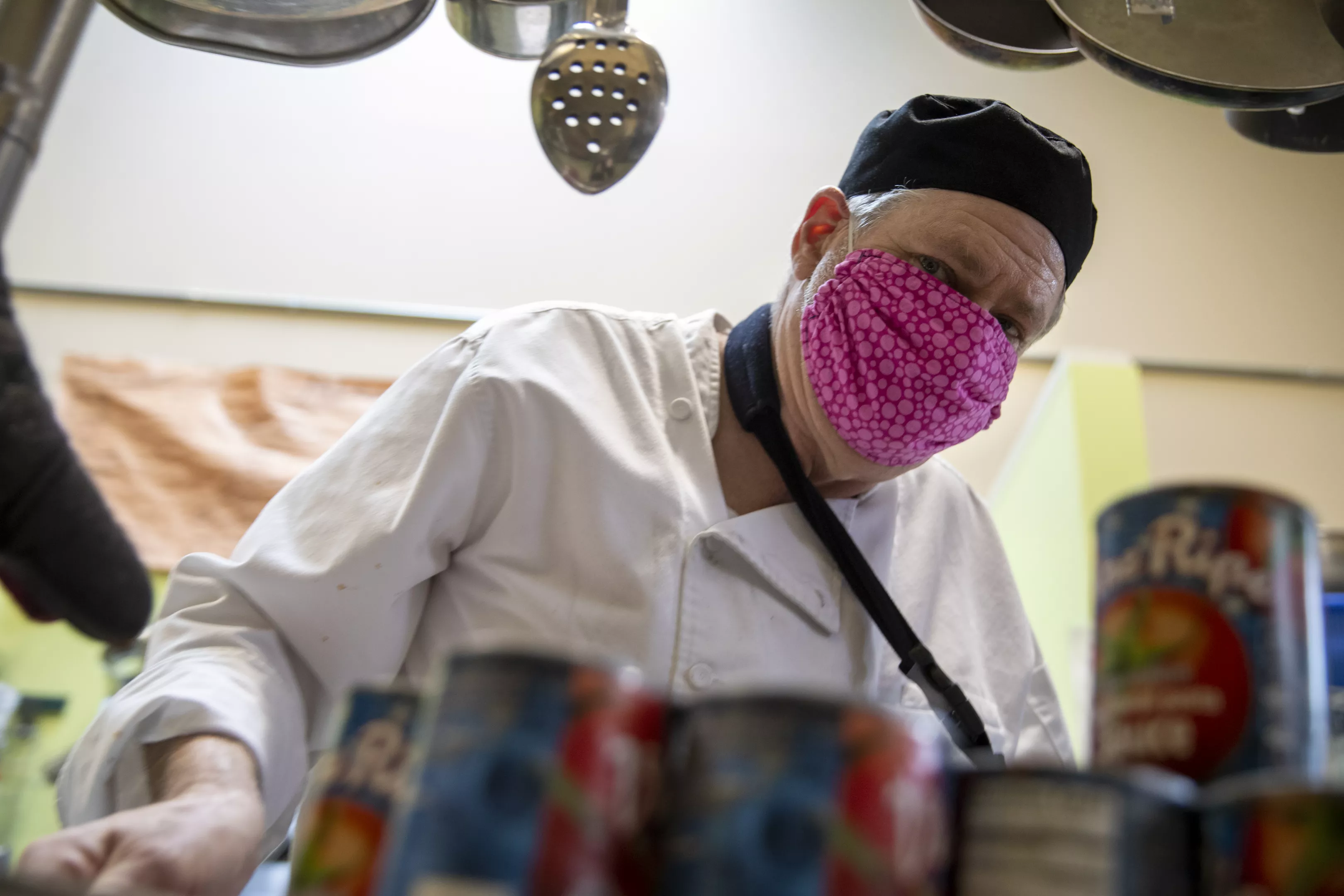
That building is now closed to the public. Food-shelf clients — and it’s a growing population — not long ago selected their own groceries. Now they receive a pre-packed box of food. The breakfast program, formerly sit-down, is takeout.
Tags: Feeding Chittenden , Covid-19 , Burlington , emergency housing , shelter in place , Community Kitchen Academy , Vermont Foodbank , Web Only , Image
Monday, April 6, 2020

Most of us are stuck at home with far more meals to feed ourselves than normal. Some have added a second full-time job of caring for kids and managing their schoolwork. We’re trying to minimize our trips to buy ingredients. When we do venture out, there is pressure to be efficient, but also flexible if favorite or desired items are out of stock.
On the plus side, in between juggling the rest of our lives from home, we have more time to simmer up homemade meals and bake, if Instagram parades of crusty loaves are any indication.
For some people, cooking can be relaxing. Especially if someone else does the dishes. (Assign the kids clean-up duties and award them extra credit for life skills.)
Whichever camp you fall in, our Home on the Range cooking column is here to help. We’ll offer a couple of simple, flexible recipes each week, including some from local chefs — many of whom are also cooking more at home these days.
This first recipe is an example of a basic method with lots of options to use what you have on hand. I cooked it a couple weeks ago over FaceTime with my brother-in-law, Conor. He used chicken; I stuck with vegetables. I had coconut milk on hand; he didn’t and used plain yogurt.
Conor and my youngest sister, Julia, are thirtysomethings expecting their first baby in mid-June. She’s a great cook but needs a break, so he’s trying to step up to cook a couple times a week.
What he lacks in kitchen experience, Conor makes up in willingness to learn. (Sorry, Con, I’ve got to share how you didn’t know the difference between a tablespoon (big T) and teaspoon (little t), resulting in a very spicy pasta sauce.) What I’m trying to say is, if Conor can do it, so can you.
The results have been pretty good; Julia has given Conor a solid B+ on our last two efforts. After we cook, my husband and I sit down to eat “with” them. It connects us regularly in a way we wouldn’t have experienced when we were living our busy, pre-pandemic lives in NYC and Vermont, respectively. (See this recent Stuck in Vermont episode for a brother and sister who’ve been doing this for several years.)
For a few hours, our worries fade to the background while we focus on feeding those we love.
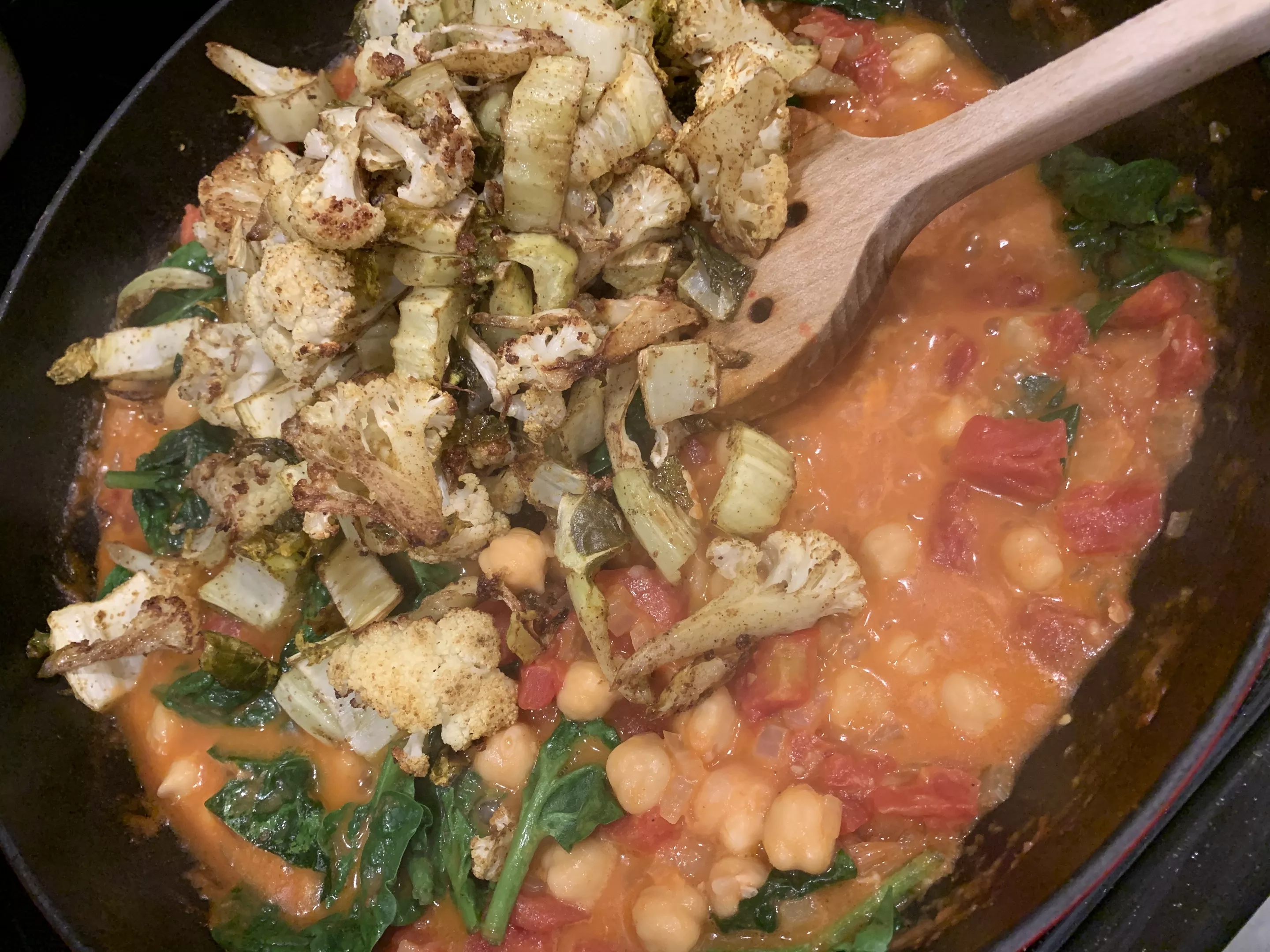
Roasted Cauliflower and Chickpea Curry (Optional Chicken)
Makes about 4 servings (more if using chicken).Ingredients
For optional chicken:
- ½ cup plain yogurt (sub: the thick top layer from a can of full-fat coconut milk)
- 1 to 2 teaspoons curry powder, to taste
- ½ teaspoon coarse salt
- 1 pound skinless, boneless chicken breasts or thighs, trimmed and cut into bite-size cubes
- About half a large head of cauliflower, including stem and ribbed leaves, cut into bite-size pieces (sub: broccoli, or 1 pound turnips or all-purpose potatoes, peeled and cut into bite-size pieces)
- 2 tablespoons oil, plus a little for oiling the chicken pan if needed (coconut, canola, olive)
- 3 teaspoons curry powder, divided
- 2 teaspoons coarse salt, divided
- 1 large onion, diced
- 3 to 4 garlic cloves, minced
- 1-inch chunk fresh ginger, peeled and finely grated, or ½ teaspoon powdered ginger
- About 1½ cups (14-ounce can) diced tomatoes (sub: whole or crushed tomatoes; if using whole tomatoes, break them up with hands or use kitchen scissors to snip them before adding)
- 1 (15-ounce) can chickpeas, drained and rinsed (sub: cooked or canned beans or lentils)
- 1 pound fresh spinach or 10-ounce package frozen, thawed and squeezed as dry as possible (sub: baby kale or ribboned chard; 1½ cups thawed frozen peas)
- 1 cup coconut milk (sub: ½ cup plain yogurt or heavy cream, or skip)
- If using chicken, at least 30 minutes and up to several hours before you plan to start cooking, whisk together yogurt, 1 teaspoon curry powder and salt. Taste and add curry powder if desired. Stir in chicken and refrigerate, covered.
- Heat oven to 375 degrees. On a rimmed baking sheet or shallow roasting pan, toss cauliflower with 1 tablespoon of oil, 1½ teaspoons curry powder and ½ teaspoon coarse salt. If using chicken, lightly oil another rimmed baking sheet or roasting pan and spread marinated chicken evenly in the pan. Roast cauliflower and chicken for about 20 to 25 minutes until browned and chicken is cooked through, stirring each pan once. Set aside.
- In a large sauté pan, heat remaining tablespoon oil over medium-high heat. When a drop of water sizzles in the oil, add onion with ½ teaspoon salt and cook, stirring occasionally, 4 to 5 minutes until softened. Reduce heat to medium and stir in garlic, ginger and remaining 1 ½ teaspoons curry powder. Cook for 1 minute until fragrant. Add tomatoes and remaining teaspoon salt to the pan. Stir to combine and scrape up any brown bits from bottom of pan.
- Stir in chickpeas, spinach and coconut milk. Cover to wilt spinach for about 3 minutes. Uncover and stir. Stir in roasted cauliflower and chicken, if using. Bring to a simmer and add a little water if needed to keep it saucy. Simmer gently (especially if using yogurt) for about 5 to 7 minutes until everything is hot. Taste and add more curry powder or salt as desired. Serve over rice.
Got cooking questions? Feel free to email them to [email protected].
Tags: Recipes , home cooking , curry , Web Only , Image
Thursday, April 2, 2020
Researchers at the University of Vermont, working with colleagues at Johns Hopkins University, have developed and distributed a survey to learn how the coronavirus might impact food insecurity.
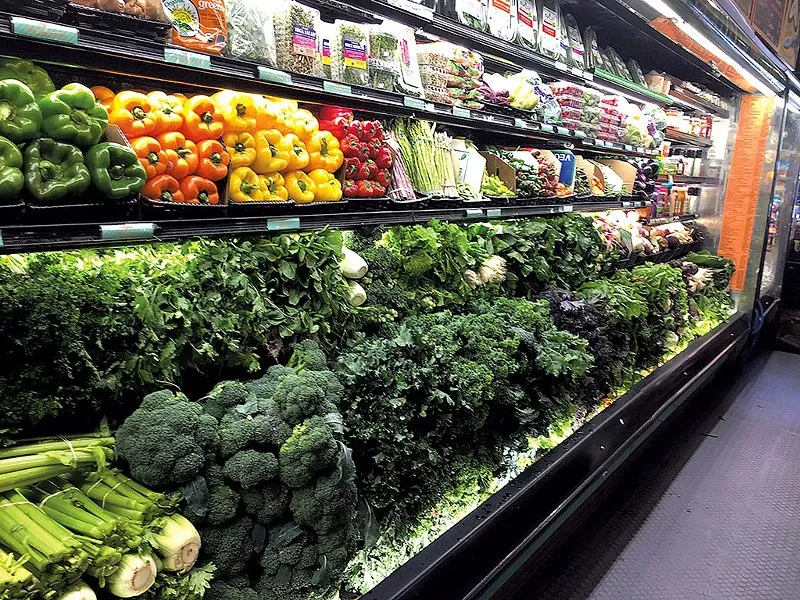
Meredith Niles, lead investigator and assistant professor in UVM’s Department of Nutrition and Food Sciences, said in a press release that the pandemic has “highlighted a number of instabilities in the food system.”
Tags: University of Vermont , COVID-19 , food access , survey , food insecurity , coronavirus , Web Only , Image
Tuesday, March 31, 2020

If so, grab some bread, crack an egg and crank up your computer: It’s time to pair trippy Phish with a drippy egg for this week's installment of “Dinner and a Movie.” The weekly online event, which airs Tuesdays at 8:30 p.m., pairs a live show from the Phish archives with a recipe shared by the band that fans can make themselves — surely, a suitable form of entertainment in the stay-at-home age.
Tags: Phish , Hen of the Wood , music , recipes , stay at home , covid-19 , "Dinner and a Movie , " Mike Gordon , Web Only , Image
Friday, March 27, 2020

Restaurants are adapting, trying to support their employees and their communities, and aiming to make money however they can — all with the goal of, hopefully, reopening as their former selves when it's safe for people to gather again.
With a kitchen full of food, Poco restaurant owners Stefano Cicirello and Susie Ely have pivoted to stocking pantries. The Burlington eatery, open on lower Main Street for just under a year, is temporarily operating as an online grocery store.
Tags: Poco , restaurants , grocery , coronavirus , Burlington , Poco Mercato , Stefano Cicirello , Susie Ely , Good To-Go , takeout , delivery , Web Only , Image