

Monday, September 2, 2013
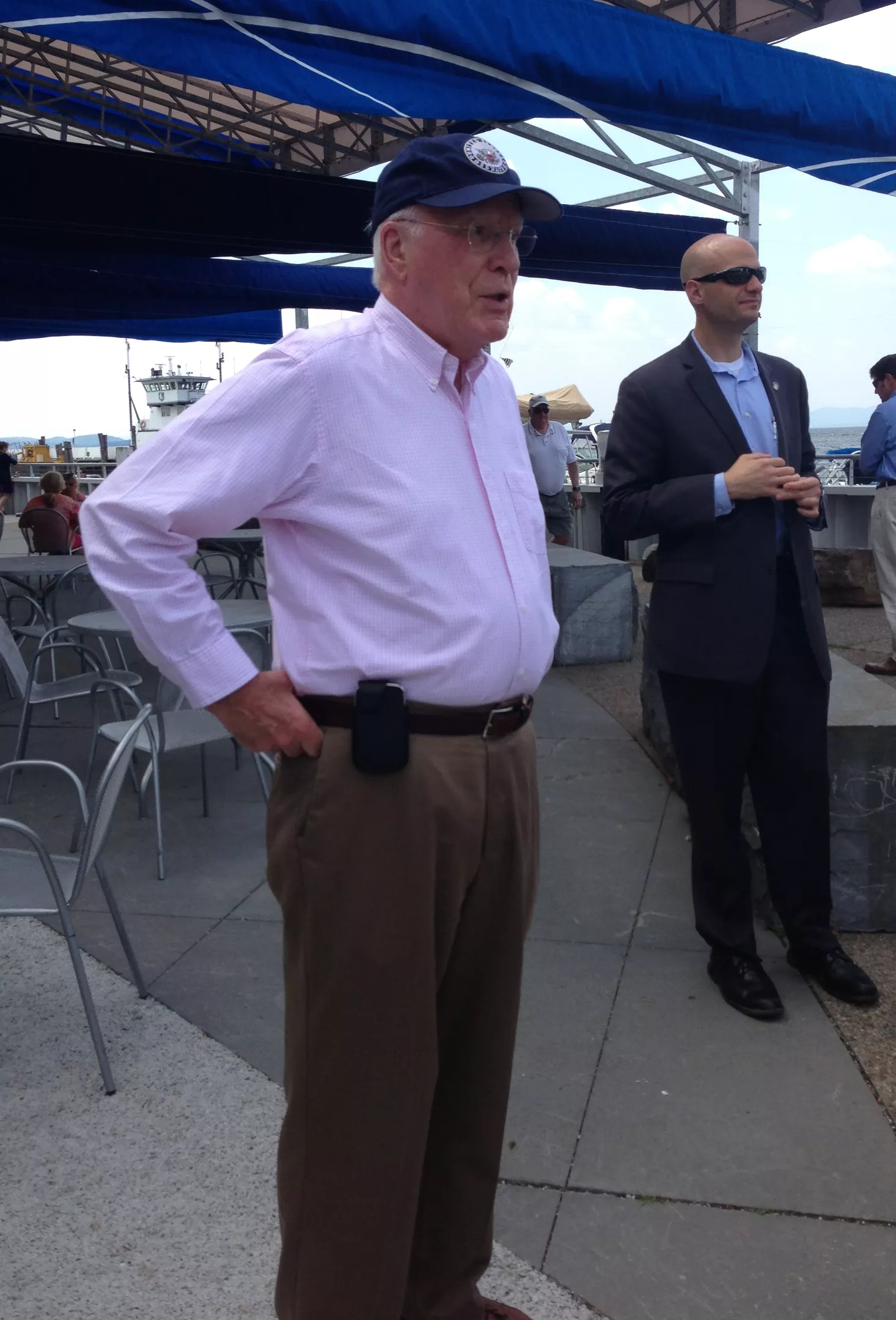
Sen. Patrick Leahy (D-Vt.) on Monday criticized the White House's draft resolution authorizing the use of force in Syria as "too open-ended" and predicted it "will not pass as written."
While the senior Vermont senator said he hoped Congress would narrow the scope of the resolution, he expressed ambivalence as to whether he could support even a whittled-down version.
"I don't know the answer to that — and I'm trying to be as honest as I can. I have no question that the use of chemical weapons is heinous and contrary to everything since the Geneva Conventions," he said. "What I worry about is what happens next."
Leahy's comments came two days after President Obama abruptly reversed course and said he'd seek Congress' approval before launching retaliatory air strikes in response to Syrian president Bashar al-Assad's alleged use of chemical weapons late last month.
Leahy hailed Obama's decision to seek Congress' imprimatur, saying that, no matter the war or the president, "The point is, you need to go to Congress."
But after flying back to D.C. for a classified briefing in the Capitol on Sunday, Leahy told reporters assembled outside that the White House draft was "too open-ended" and would be amended in the Senate.
Leahy elaborated on those comments Monday morning, telling Seven Days that the resolution as written could empower the president to send ground troops to Syria — or elsewhere.
"It's the breadth of what he can do [under the draft resolution] that's the biggest concern now. I mean, there's nothing to stop sending military into Syria or into other countries. See, that's the concern. It's too open-ended. And I've told the White House this. But having said that, I'm not the only one who's told them. They're hearing it from everybody."
Friday, August 30, 2013
Paul Heintz is on vacation, so this week's scores have been tallied by Seven Days digital media manager Tyler Machado. (CONFIDENTIAL TO HEINTZ: You picked a hell of a week to take off, dude!)
So who won and lost the week in Vermont news and politics?
Stoners, Catamounts and Lake Monsters, oh my!
Here's the Scoreboard for the week of Friday, Aug. 30:
WINNERS:
Almost Everyone — Entergy's announcement that it will shut down Vermont Yankee in 2014 was good news for everyone — except, of course, the folks who work there. Entergy saves some loot. Vermont ratepayers won't notice the difference since local utilities weren't buying its power anyway. Environmentalists will close the book on decades of activism. And nearly every political entity in Vermont (and elsewhere!) scored an easy layup — even if cheap natural gas was the final death blow for the state's sole nuclear power plant.
Pot smokers — Attorney General Eric Holder says the Justice Department won't challenge state laws legalizing marijuana. That should ease the minds of Vermont's marijuana reform opponents, including House Speaker Shap Smith. Runner-up winner: Sen. Patrick Leahy, who may have forced Holder's hand on the issue.
More winners, and losers, after the jump...
Tags: cannabis related , The Scoreboard , Web Only
Friday, August 23, 2013
Two days after former governor Howard Dean traveled to Iowa to speak at a labor conference, the Burlington-based political group he founded laid off six staffers.
The group, Democracy for America, is run by Dean's brother, Jim.
In a statement released to Seven Days, spokesman Neil Sroka cited the arrival of a new executive director as the reason for the layoffs. The news was first reported by the Huffington Post.
According to a source close to DFA, one of the six staffers cut from the organization was based in Burlington.
“We view this as a key moment in the fight for a more progressive country. This decision will help us grow our organization and expand our reach,” Sroka said in the statement. “We look forward to announcing new hires and campaigns in the weeks ahead as we double down on our efforts.”
Dean pictured at left with Attorney General Bill Sorrell.
Thursday, August 22, 2013
Senator Patrick Leahy (right) with Norwich University President Richard Schneider. Photo by Taylor Dobbs
In Sen. Patrick Leahy’s first public appearance since his office publicly parted with the White House over whether the U.S. has suspended military aid to Egypt, Vermont's senior senator stuck to his guns.
“It’s not being sent,” Leahy said Thursday in an interview after announcing new federal funding for Norwich University.
The answer came on the heels of a Daily Beast story published Monday quoting Leahy spokesman David Carle as saying, “[Sen. Leahy’s] understanding is that aid to the Egyptian military has been halted, as required by law.”
White House spokesman Josh Earnest refuted that report Tuesday — calling it “not accurate” — and said the administration's review of its Egyptian aid policy was ongoing.
But, according to Leahy, it was accurate.
Michael Hastings, the acclaimed journalist who considered Vermont his "spiritual home" after spending parts of his life here, died in a fiery, early-morning car wreck in Los Angeles in June. The strange circumstances surrounding the crash and Hastings' history of reporting articles unfriendly to the powers-that-be prompted a flurry of theories suggesting that the incident was an assassination.
Now an autopsy report and an exhaustive newspaper feature have revealed new details about Hastings and the crash that killed him.
On Tuesday the Los Angeles coroner's office released its official report about the Hastings crash, declaring it an accident and noting that drugs were found in his system, but, in the coroner's view, they did not play a role in the crash. Via the Los Angeles Times:
Coroner's officials said Hastings had traces of amphetamine in his system, consistent with possible intake of methamphetamine many hours before death, as well as marijuana. Neither were considered a factor in the crash, according to toxicology reports.
The cause of death was massive blunt force trauma consistent with a high-speed crash. He likely died within seconds, the report said.
Tags: cannabis related , Web Only
At least 50 Vermonters will be in Washington, D.C. on Saturday to take part in a mass march remembering and updating the historic protest held at the Lincoln Memorial 50 years ago.
Richard Kemp, 80, won't be part of the throng converging on the nation's capital this weekend to demand racial justice. He's been there, done that.
Kemp participated in the August 28, 1963, March on Washington with his wife and their six young children. They journeyed to D.C. by bus from Peekskill, N.Y., where Kemp was working for IBM.
Still an activist, Kemp recalls feeling "elevated, uplifted" for being part of what a book reviewer in last Sunday's New York Times described as "the most famous mass gathering in American history."

As we noted last week (quoting the great Chris Cillizza), "No politician goes to Iowa by accident." The same generally holds true for New Hampshire — unless you're already in Vermont and you really, really need to get to Boston.
So former governor Howard Dean's trip to Iowa Wednesday and his plans to visit New Hampshire next month have gotten bored, horse-race-loving political types (I admit it! I'm one of them!) into a tizzy.
Of course, the less-often-stated corollary to the Cillizza maxim is this: "Most politicians who go to Iowa just want people to think they'll run for president." In our view, Dean falls squarely in that camp. Dude's looking for some press coverage — and he knows that's the way to get it (see: this blog post).
Wednesday, August 21, 2013
Bernie reflects on his youthful activism as a student at the University of Chicago.
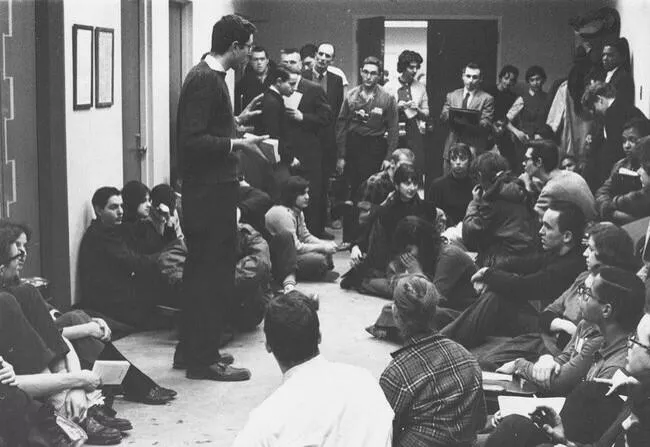
Fifty years ago next week, a young University of Chicago student activist took a bus to the nation's capital to take part in the March on Washington.
Now a 71-year-old U.S. senator from Vermont, that same man is reminiscing about what he calls "one of the most memorable and important speeches in the modern history of the United States of America."
In a video produced by his Senate office, Sen. Bernie Sanders (I-Vt.) appears in front of the Lincoln Memorial, where Martin Luther King Jr. delivered his "I Have a Dream" speech in August 1963. Gesticulating to the camera like a museum docent or a college professor, the senator recalls what he saw that day.
"I remember that very well, not by simply seeing it on TV or reading about it," Sanders says, pointing in the direction of the Washington Monument. "I was way, way back there — one of the several hundred thousand people who were here."
(Pictured above: Sanders leading a protest against discriminatory housing in 1962 at the University of Chicago.)
Tags: Senator , Bernie Sanders , Video , Recommended Reading , Web Only , Image
- Burlington code enforcement director Bill Ward runs a tight ship, holding landlords' feet to the fire to keep the city's housing stock up to snuff. And check out the sidebar to see tips for renters.
- Studies have shown racial bias in Vermont traffic stops. A police academy class is teaching new cops to overcome their internalized prejudices.
- Public water is public water, right? Not in Essex or Shelburne — these towns are keeping nonresidents away from their beaches.
- No more dodgeball targets! Vermont gym teachers are reforming physical education to make it better for body and mind — for everybody.
- And in Fair Game: Vermont's congressional delegation is split on whether to cut off aid to Egypt amidst turmoil. Plus, Lt. Gov. Phil Scott's worries over the health care exchange, and media news from the Times Argus and Burlington Free Press.
Wednesday, August 7, 2013
In this week's Fair Game, we touched on Sen. Patrick Leahy's (D-Vt.) use of a "leadership PAC" to collect contributions from corporate and union political action committees.
As we noted, only a slim minority (14 percent) of the $136,000 he raised in his traditional campaign account last quarter came from special interest groups. But a majority (70 percent) of the $197,000 he raised for Green Mountain PAC during the first half of the year came from those sources.
We focused in the column on contributions Leahy reaped from the aerospace and weapons industry. But that's not the only sector forking over the dough. Here's a sampling of other groups who contributed $2500 or more to Green Mountain PAC during the first six months of 2013:
- Labor: IBEW ($5000), Laborers' Political League ($2500), International Association of Machinists and Aerospace Workers ($5000)
- Banking: Bank of America ($2500), Deloitte ($5000)
- Entertainment: Directors Guild of America ($2500), National Association of Broadcasters ($3500), News America/FOX ($2500), Commissioner of Major League Baseball ($5000), Sony Pictures ($5000), Walt Disney ($2500), Viacom ($2500)
- Telecom/Cable: Comcast/NBC ($5000), DirecTV ($2500), EchoStar/Dish Network ($2500), National Cable and Telecommunications Association ($5000), Verizon ($2500)
- Law: Alston & Bird ($5000), American Association for Justice ($5000), DLA Piper ($2500)
- Aerospace/Military: Boeing ($5000), General Dynamics ($5000), Lockheed Martin ($2500), Raytheon ($2500), United Technologies ($3500)
- Technology: GoDaddy ($2500), Microsoft ($5000), Netflix ($2500)
- Beverage: Miller Coors ($2500), National Beer Wholesalers ($500O), Wine and Spirits Wholesalers ($5000)
Again, those are just contributions to Green Mountain PAC. Some of those very same organizations also gave money to the senator's traditional campaign account. For instance, General Dynamics gave another $1000 to the Leahy for U.S. Senator Committee; GoDaddy gave another $2000; and Raytheon gave another $1000.