

Wednesday, January 27, 2016
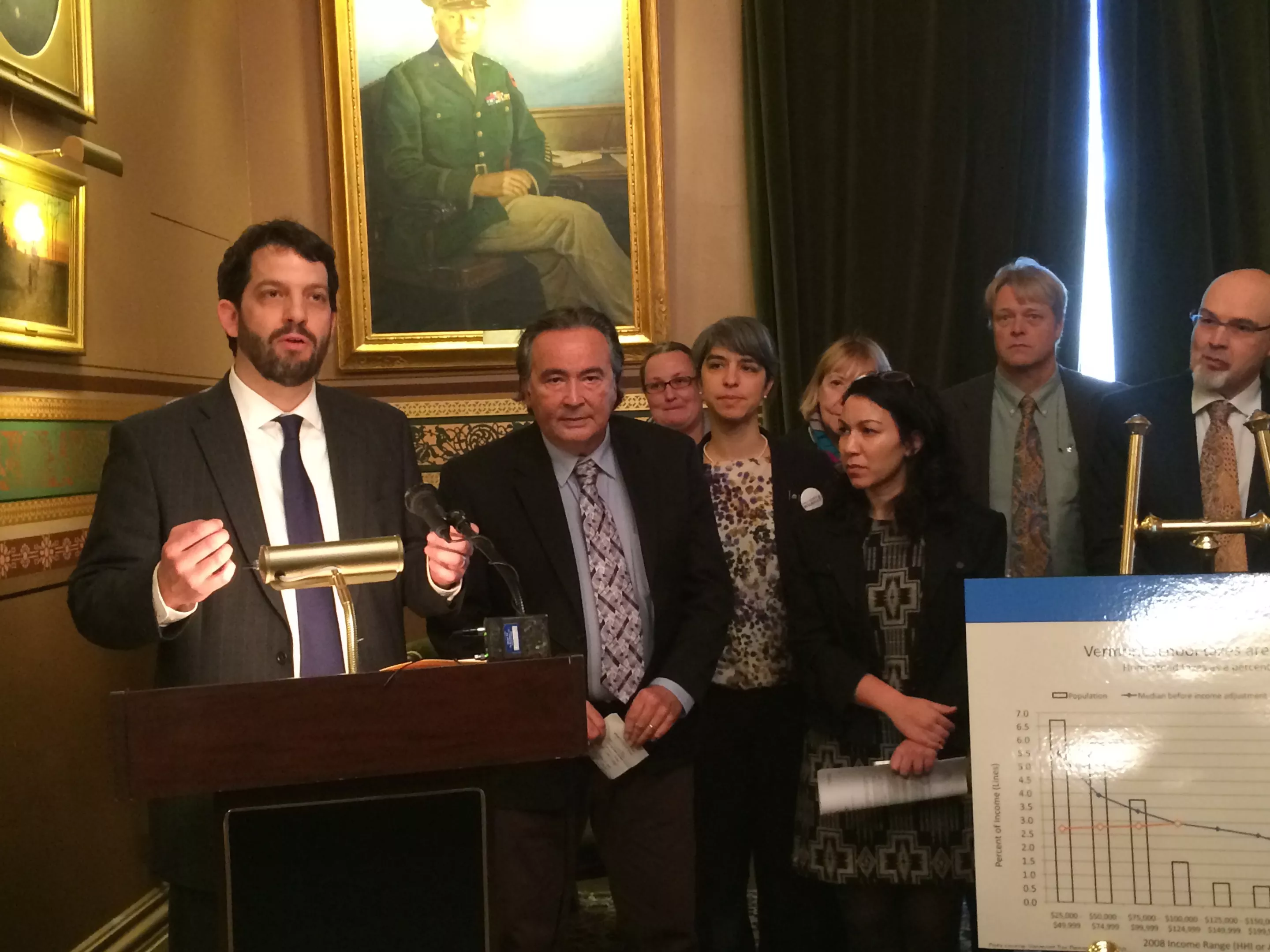
Rep. Chris Pearson (P-Burlington) said the bill would increase the fairness of the school tax by asking higher-income Vermonters to pay the same share of their pay as middle-income property owners. Vermonters with $100,000 in household income now pay about 3 percent of their wages in property taxes, compared to 0.5 percent for households with income of $1 million, he said.
“We believe we have a way to make our school funding more equitable and, at the same time, give most Vermonters a break on their property taxes,” said Sen. Anthony Pollina (D/P-Washington), sponsor of the Senate version of the bill.
Currently, the income-based system covers only taxpayers with household incomes of $90,000 or less and only for a house and two acres. Residential property owners with more than two acres pay an additional amount based on the property’s value.
Tags: School property tax , Rep. Christopher Pearson , Sen. Anthony Pollina , Sen. Tim Ashe , Rep. Janet Ancel , Image , Web Only
Tuesday, January 26, 2016
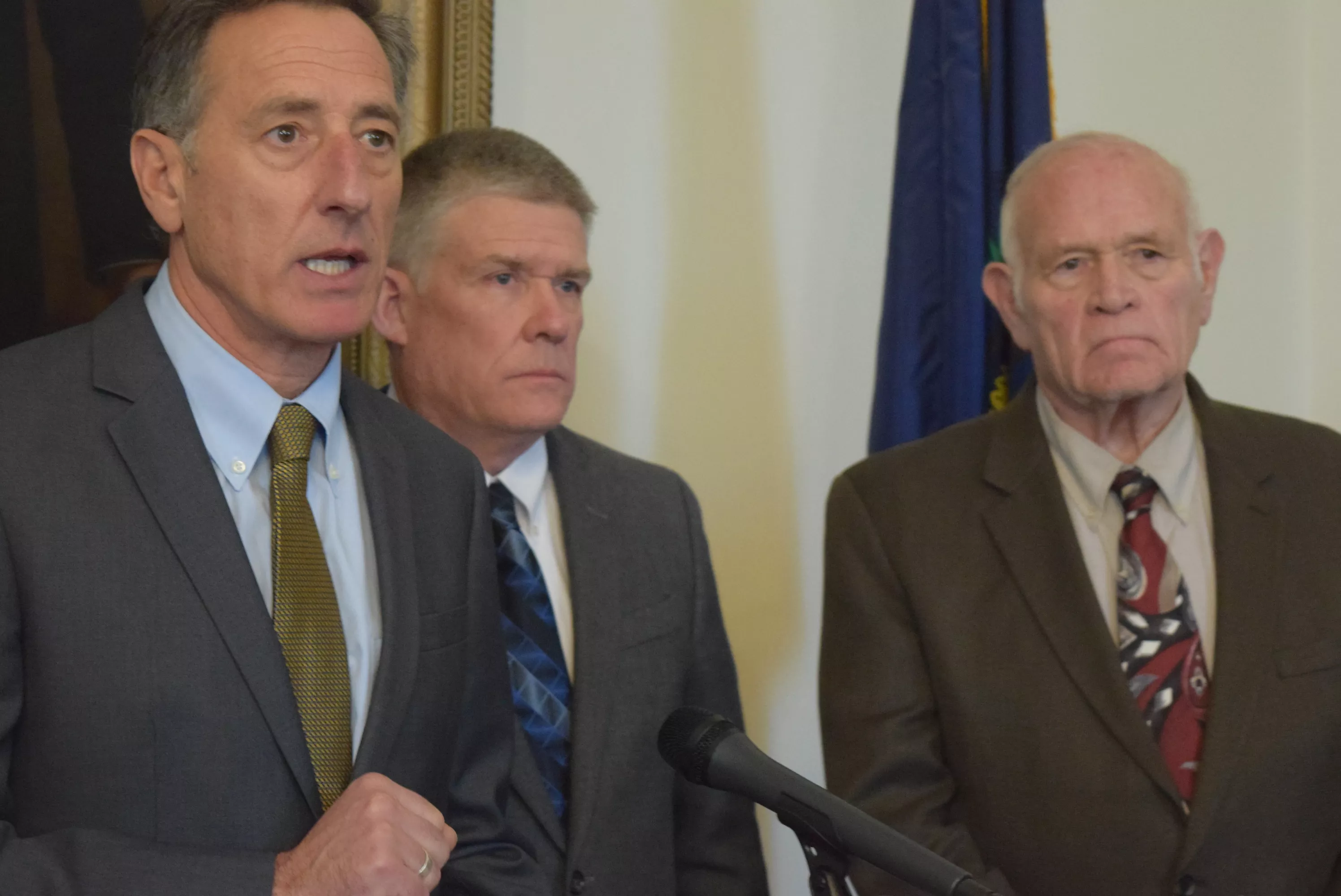
Shumlin and Sears, the Senate Judiciary Committee chair, stood side-by-side at an afternoon press conference to champion a plan that is more restrictive than what some legalization advocates want. The two say a bill that Sears crafted over the weekend with Shumlin's help would create a system that is safer and more sensible than the current illegal market.
“Listen, the black market is failing,” Shumlin said. “Dealers don’t care how old you are when they sell you their wares.”
“If we can do a tightly regulated, from-seed-to-sale-system … I think that is far superior to the black market,” Sears said.
Sears earlier in the day unveiled the 53-page draft bill that his committee will work on for the rest of this week. It would allow for the legal sale of up to an ounce to Vermonters over age 21, and a quarter of an ounce for adults from out of state. The market initially would be served by 10 to 20 licensed marijuana cultivators, who would have to be Vermont residents.
Sears' committee is expected to vote on a bill with revisions Friday.
Tags: Cannabeat , Dick Sears , marijuana legalization , Peter Shumlin , Vermont legislature , Image , Web Only
Monday, January 25, 2016
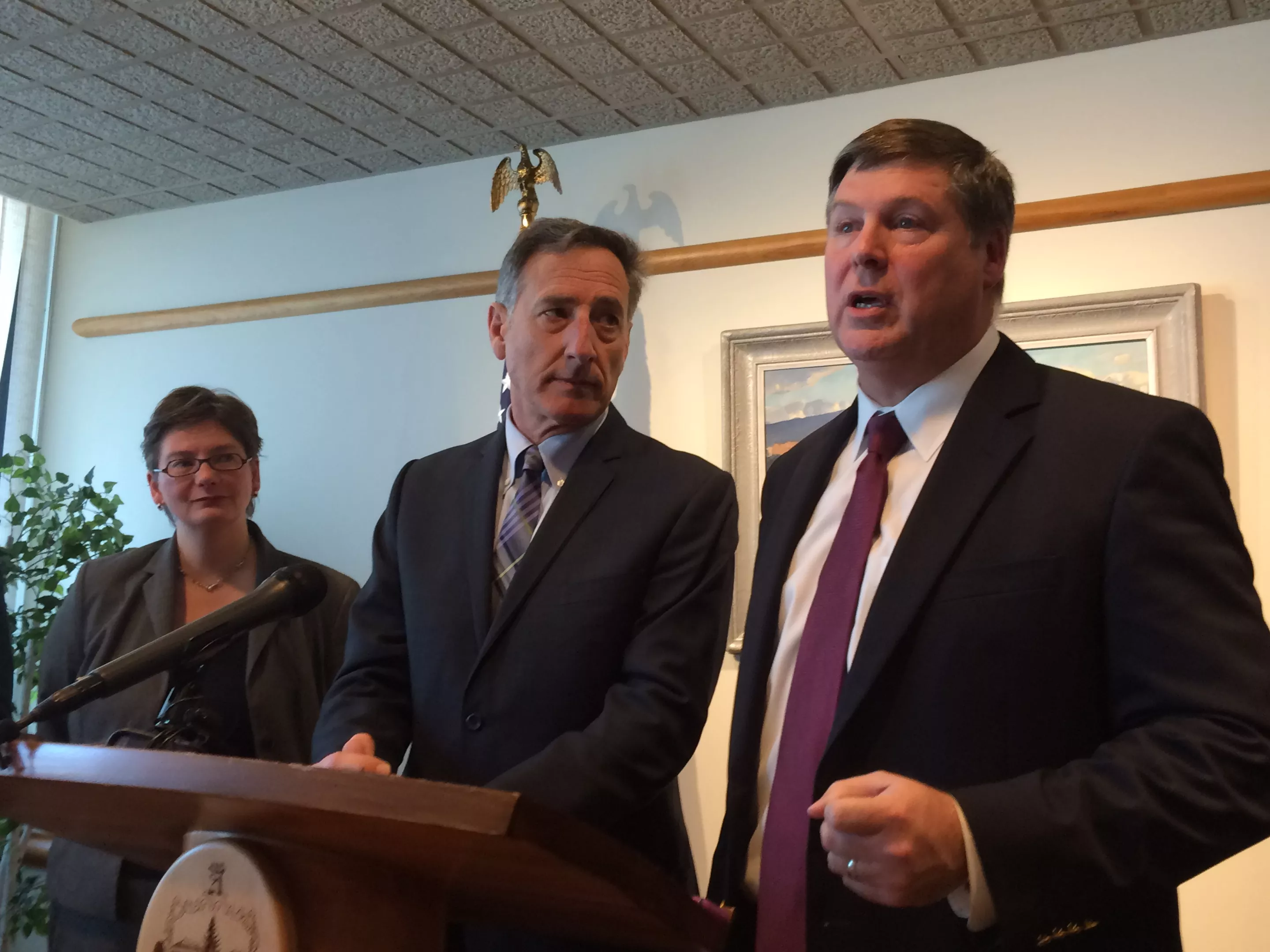
The state needs federal permission because two of the health insurance systems it wants to involve are federal programs — Medicare and Medicaid, which respectively cover the elderly and the poor. The state wants change to include commercial insurance, too.
The state is proposing to move from the current health care model that pays a fee for a service such as a blood test or a physical exam. In the new system, hospitals and doctors would receive set payments for their patient populations and have flexibility to provide appropriate medical care to prevent or manage patient health. The precise payment methodology has yet to be determined.
Monday’s briefing, featuring Gov. Peter Shumlin and Al Gobeille, chair of the Green Mountain Care Board, coincided with the state’s submission of preliminary terms and conditions for the waiver from federal regulations that Vermont seeks.
Tags: Gov. Peter Shumlin , Al Gobeille , Green Mountain Care Board , Medicare , Medicaid , Darcie Johnston , Guy Page , Image , Web Only
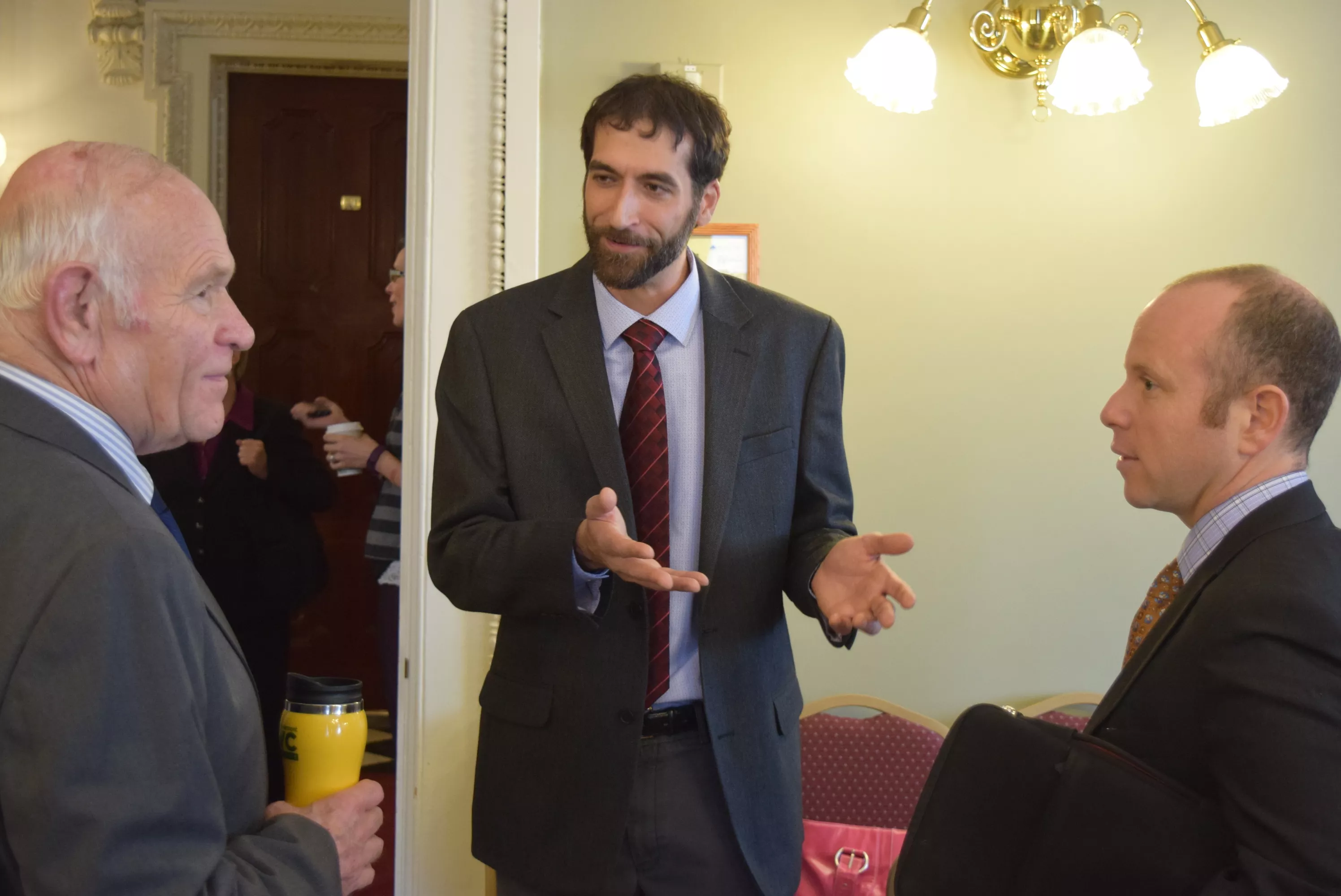
Sears, who holds considerable power in crafting the legislation, said that's based on testimony from officials in Colorado, Washington and Vermont. A Colorado official told the committee that it is difficult to police home growers to keep them within quantity limits and to prevent them from selling.
While Sears’ stance could derail legalization efforts this year, advocates may be willing to go along with him in hopes of keeping legalization alive.
“It’s not going to make every member of our coalition happy, but we’ll support any path forward," said Matt Simon, New England political director of the Marijuana Policy Project.
Sen. Joe Benning (R-Caledonia), a supporter of legalization and a member of the Senate Judiciary Committee, agreed. “If he insists on going there, I might very well join him,” Benning said. “I don’t think it’s going to be a bill-killer.”
Tags: Cannabeat , Dick Sears , marijuana legalization , Vermont Legislature , Image , Web Only
Friday, January 22, 2016
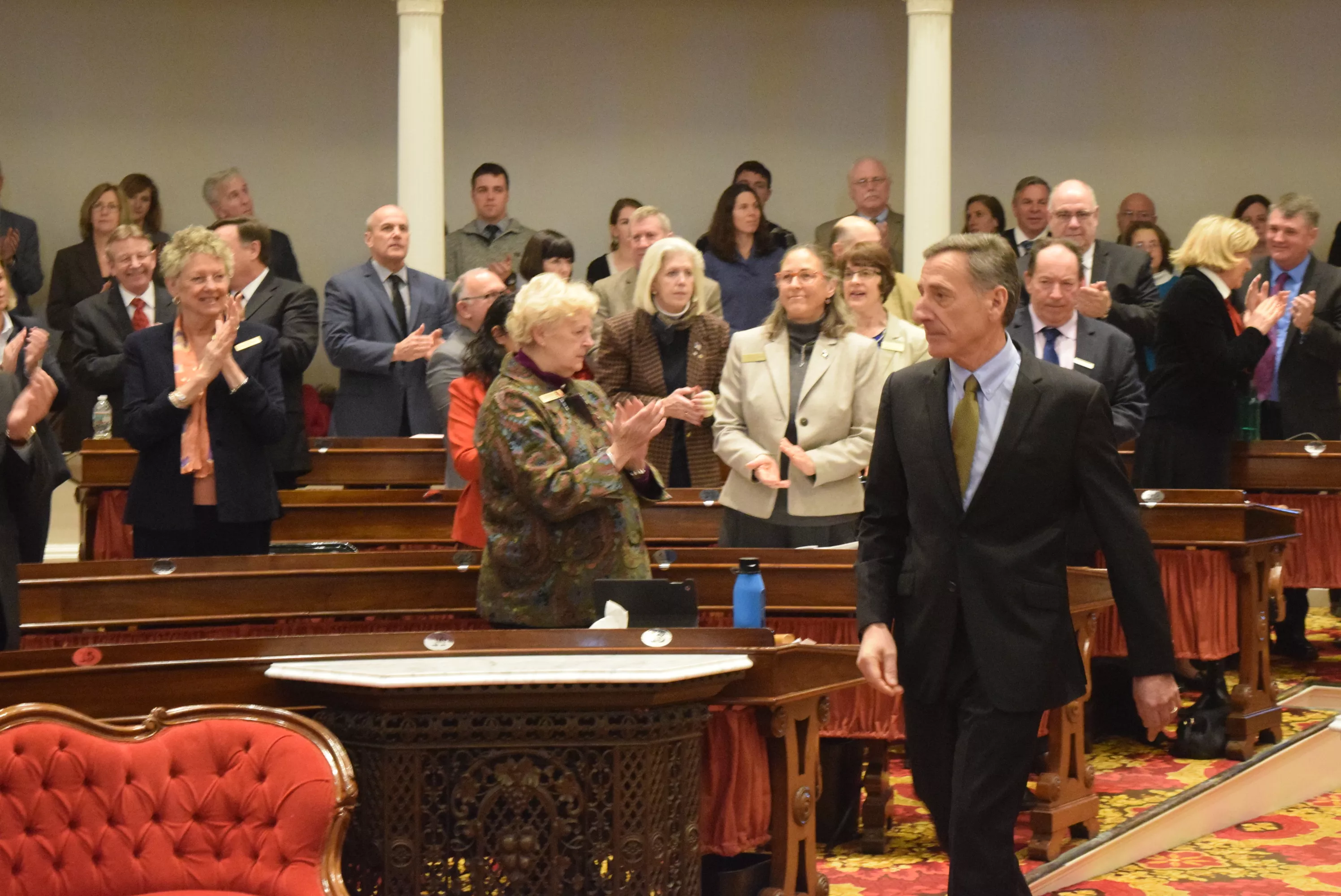
“I don’t want to use this as a way to cost pregnant women more money,” Shumlin said Friday on Vermont Public Radio’s “Vermont Edition” after a caller criticized the plan. “I told my team this morning, ‘This shouldn’t be a savings effort.’”
Shumlin didn't specifically mention the plan in his address, but it was in his written budget summary and was included in details that his administration outlined to media in a briefing Thursday. The plan was to save $4.9 million by changing the income threshold for pregnant women to qualify for Medicaid. Currently, they qualify if their incomes are 213 percent of the federal poverty level. The budget would reduce that to 138 percent of the poverty level.
The women would be able to obtain subsidized health coverage through Vermont Health Connect, Agency of Administration Secretary Justin Johnson said Thursday in the media briefing.
Tags: Medicaid , Peter Shumlin , Vermont Legislature , Image , Web Only
Now, there’s a push to try again.
“It’s certainly by far and away the will of the Burlington voters,” said Rep. Mary Sullivan (D-Burlington), who is among those championing three bills in the legislature that contain the items Burlington voters overwhelmingly approved.
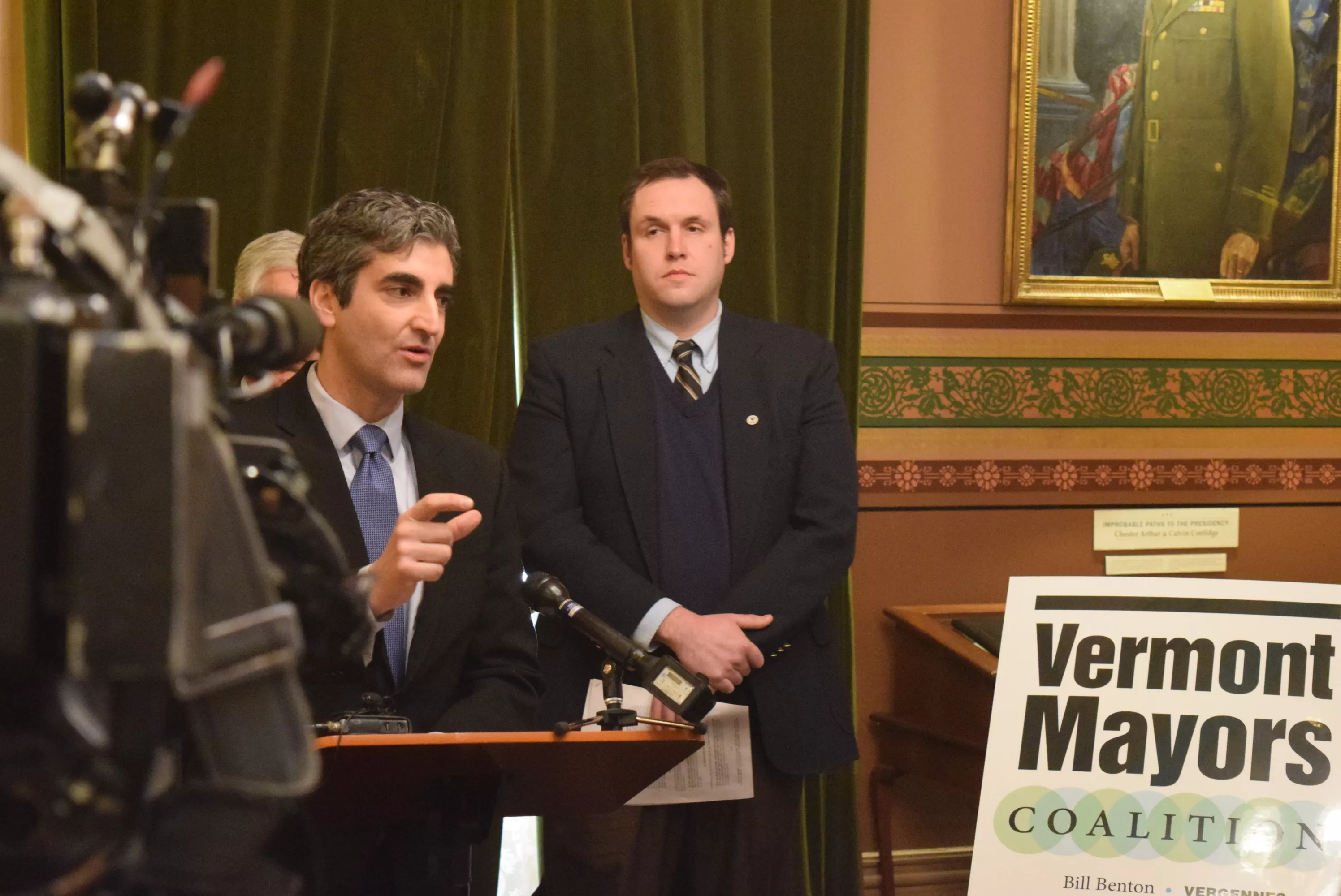
Sullivan and other Burlington House members have won a daylong hearing next Thursday before the House Government Operations Committee. Mayor Miro Weinberger is lobbying for support of the measures, citing renewed need after a fatal shooting outside the Zen Lounge in downtown Burlington in December. The Burlington City Council this month passed a resolution urging the Legislature to reconsider the issue.
“I’m going to push hard,” Weinberger said, while visiting the Statehouse last week. He has the backing of Vermont’s seven other city mayors. Though the Vermont Mayor’s Coalition has not taken a stance on Burlington’s charter changes themselves, the group made a statement in support of the city’s right to do what it believes is necessary to protect public safety.
Tags: Vermont Sportsmen's Bill of Rights , Vermont Legislature , Shap Smith , Miro Weinberger , Burlington , gun control , Image , Web Only
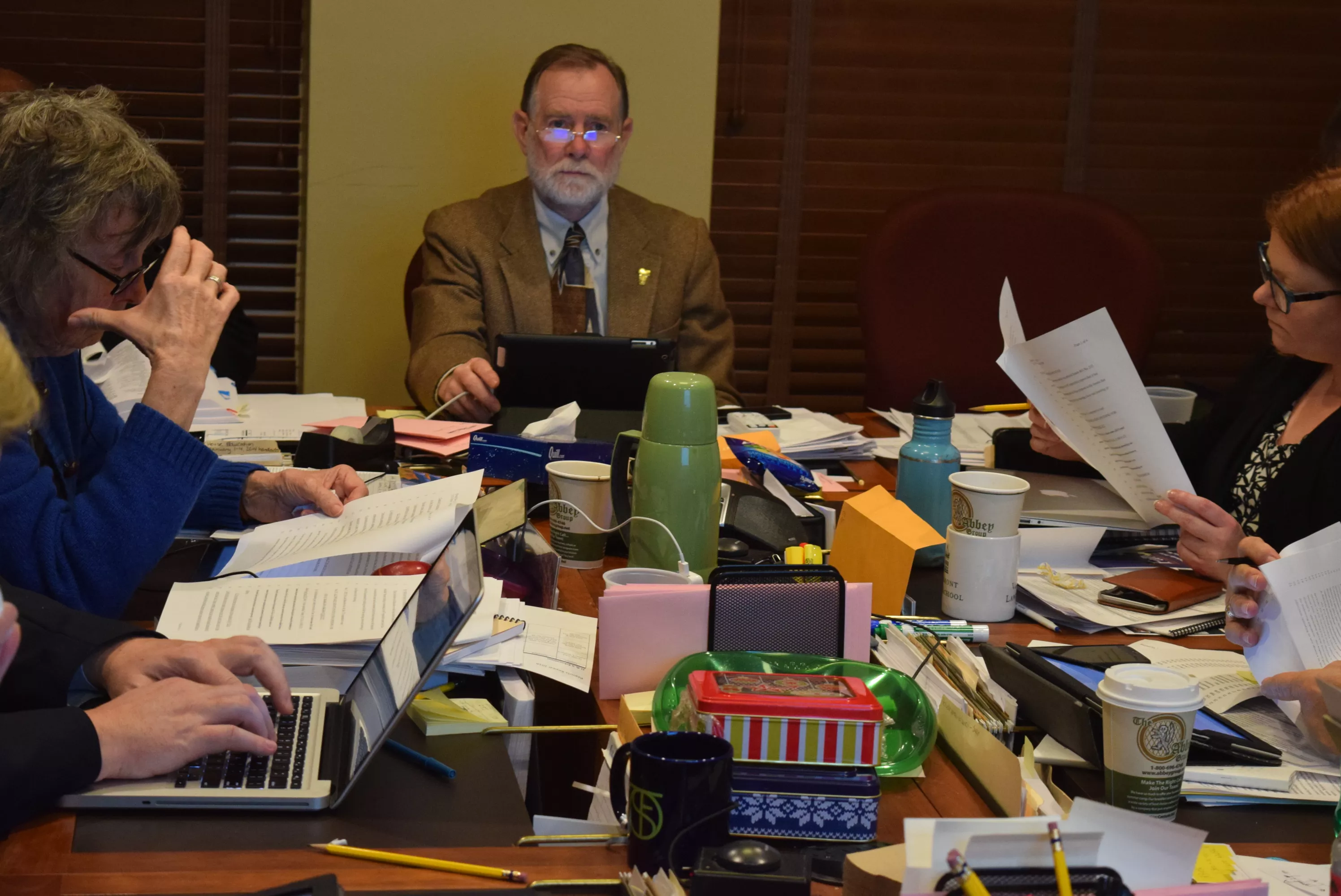
Members who had been left out of the loop fumed in the Statehouse hallway.
“I am really turned off by what’s happening,” said Rep. Kurt Wright (R-Burlington), a member of Sharpe's committee, who said he found out about the private meetings long after they started. “I think it’s counterproductive.”
Wright turned out to be correct. By day’s end, Sharpe was apologizing to his committee and conceding the private meetings had failed. “We never did come to a consensus as a group,” he said.
That left the Education Committee trying to start over at 5 p.m. Thursday after members heard the governor's budget address, and after many of them had lost the thread of the discussion they've been having the last two weeks. Their goal is to come up with a way to amend the school-spending caps they set last year but that many complain unfairly punish some low-spending school districts. Those on the 11-member panel struggled even to understand each other’s ideas.
At 6:45 p.m. Thursday, Sharpe pulled the plug. “It’s clear we are getting nowhere fast,” Sharpe said. “We’ll pick this up in the morning.”
Tags: Act 46 , school spending , David Sharpe , Kurt Wright , Vermont legislature , Image , Web Only
Wednesday, January 20, 2016
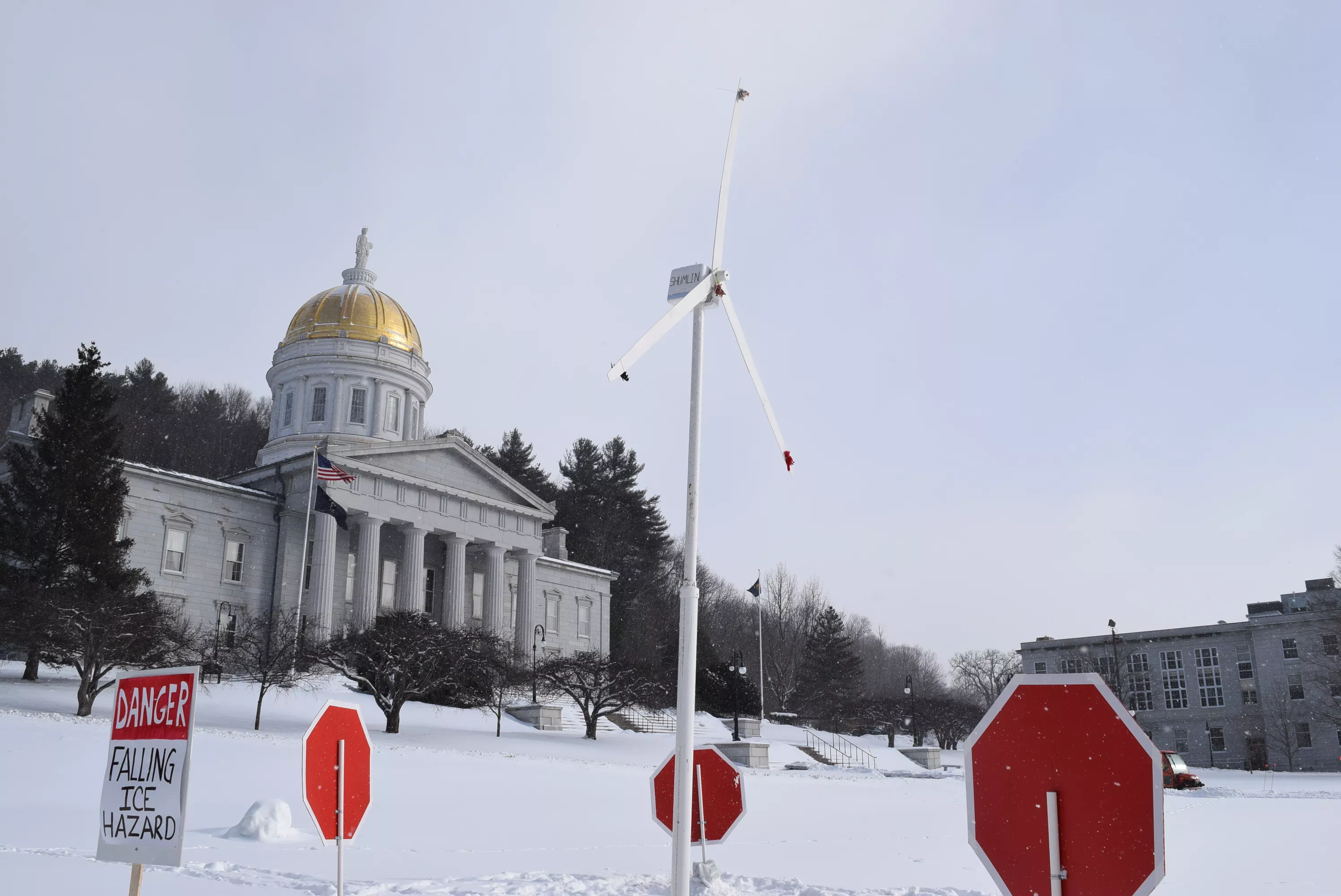
Inside, in the halls of the Statehouse, the cafeteria and committee rooms, scores more were dressed in bright green vests to highlight their presence and emphasize the danger they feel.
Wednesday brought the biggest show of force yet by Vermonters upset with the state’s siting process for energy projects. What has in recent years been a relatively small group of wind opponents has grown into a legion of people worried about wind and solar, including town leaders from across the state.
“Now, it’s being taken more seriously,” LuAnn Therrien said of the opposition. Therrien has spent years speaking against the Sheffield wind project, which she said drove her family out of town.
Tags: solar , wind , energy siting , Vermont Legislature , Russ Hodgkins , Jon Rodgers , Chris Bray , Tony Klein , Image , Web Only
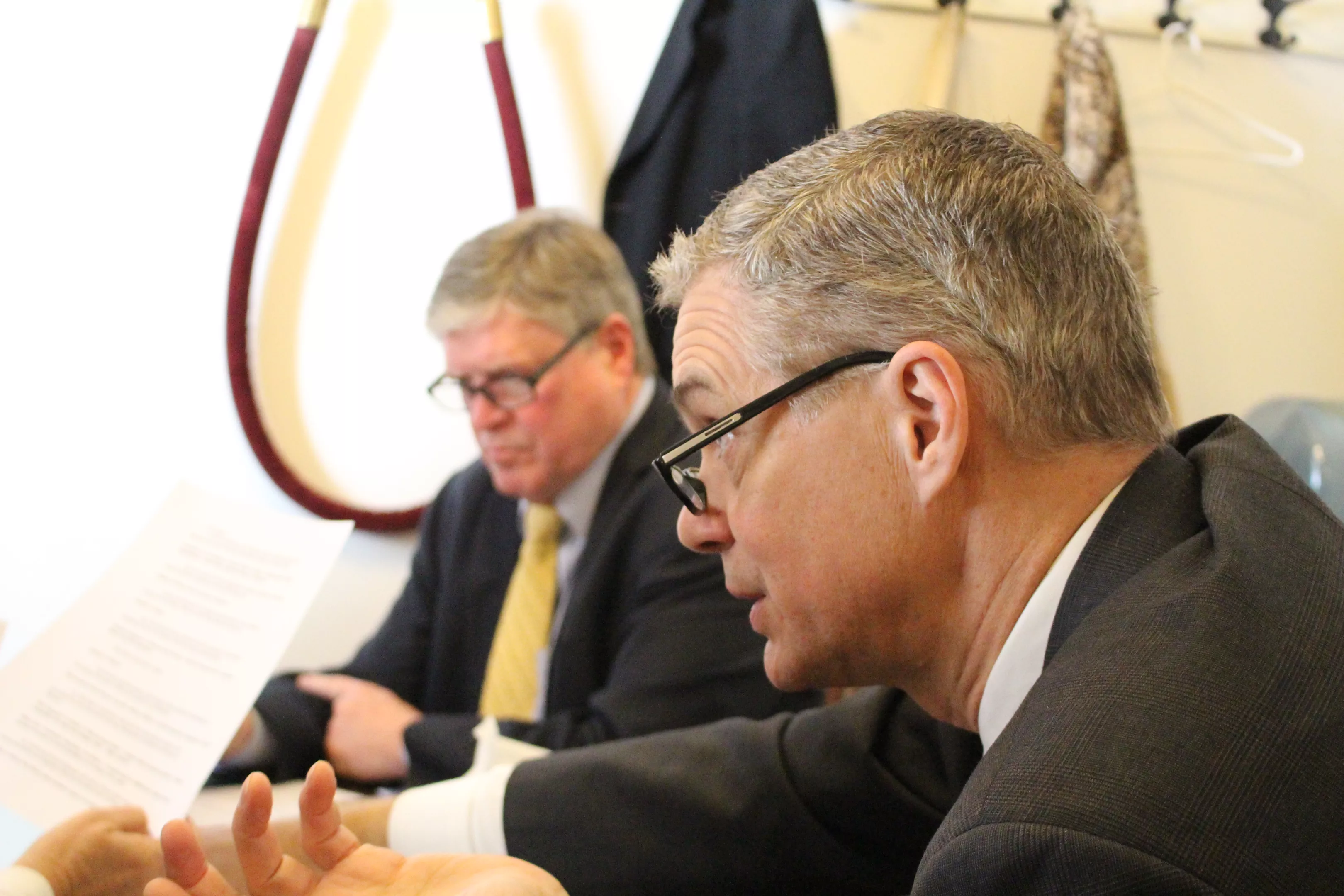
The exchange came at the end of an otherwise collegial meeting of the Senate Rules Committee, during which its members debated a trio of proposed changes to the upper chamber's rules. The Senate is considering establishing an internal ethics panel, requiring senators to identify their employers, and asking interns and aides to register with the Statehouse sergeant-at-arms.

Though the committee appeared inclined to move forward with the proposals, an argument broke out over how much personal information senators should be required to disclose to the public. As drafted, one of the proposals would ask members to fill out a form every two years identifying whom they work for and on what boards they serve. The House enacted a similar rule nearly two years ago.
Baruth wanted to go further. He suggested that senators also disclose the names of companies in which they held a "controlling interest."
"If I have a majority stake in three companies in Vermont and people know about one of them and they don't know about the other two and I'm writing legislation to advantage those companies, then I've got a concealed relationship and a clear conflict," Baruth said.
Campbell argued that determining where to draw the line would be difficult.
Tags: John Campbell , Phil Baruth , Vermont Senate , Image , Web Only
Tuesday, January 19, 2016
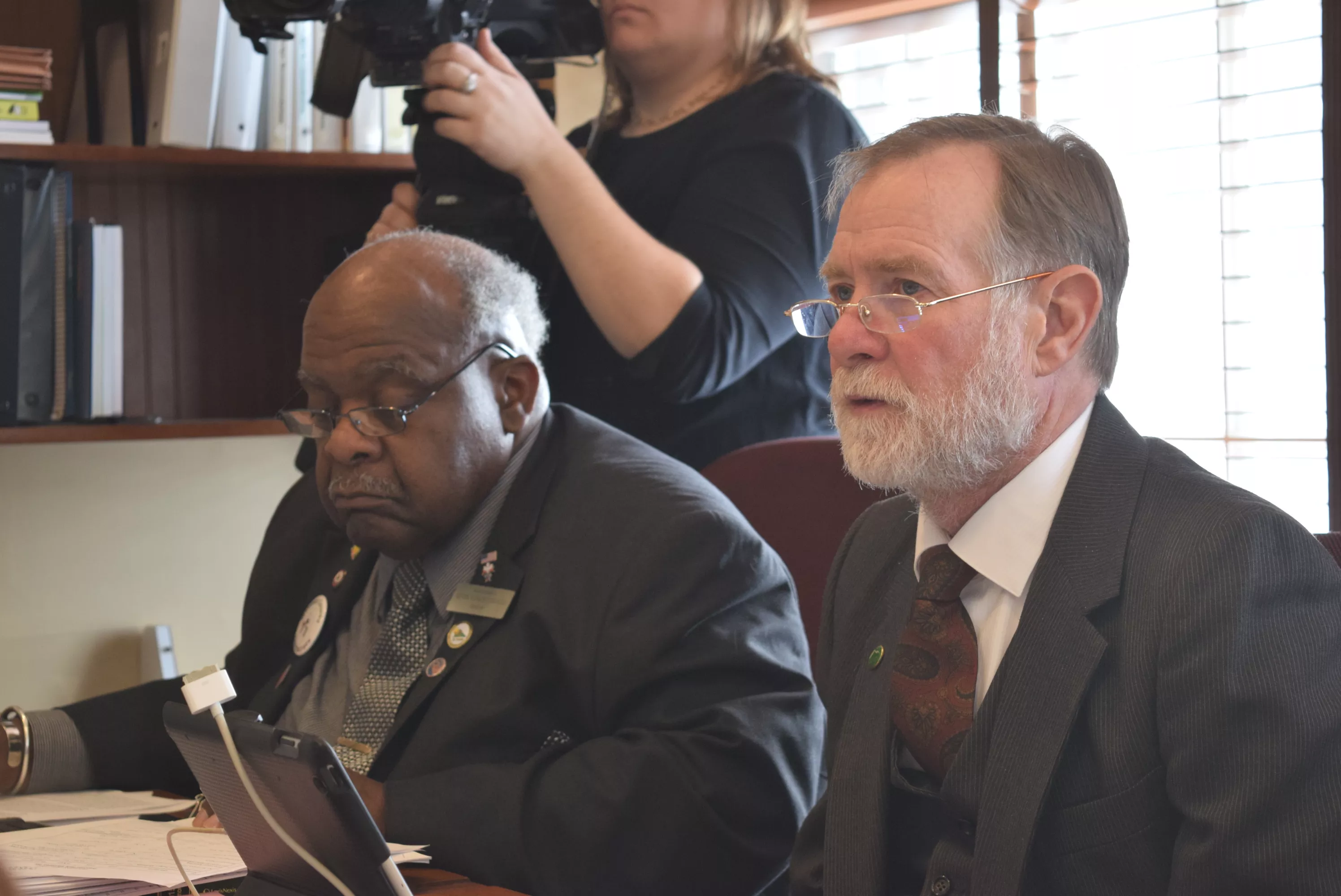
Instead of voting on the issue, House Education Committee members hunkered down in the committee room, grinding anew through spreadsheets. Meantime, political candidates used the unsettled issue to score political points, while local school officials found themselves saddled with a new layer of confusion.
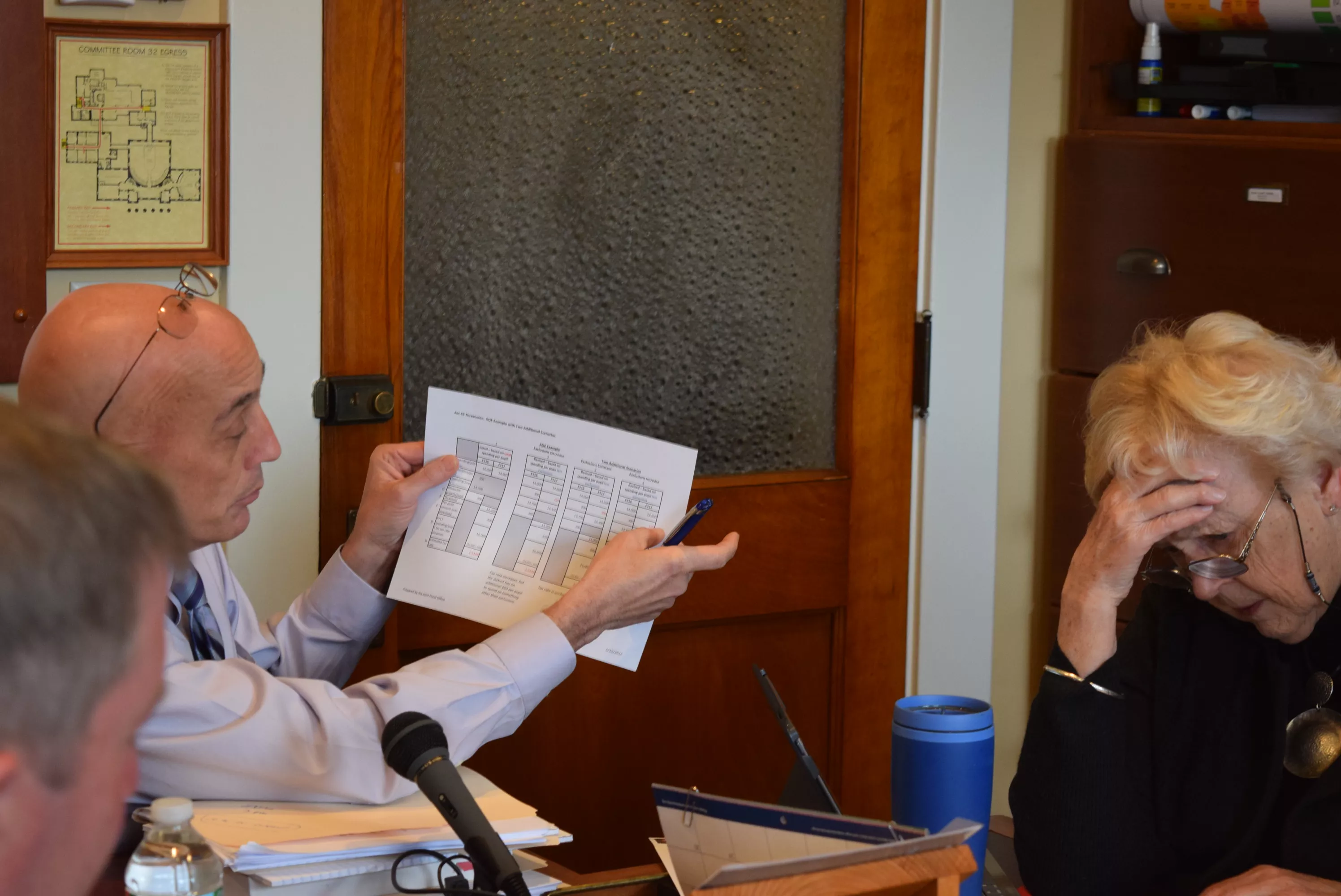
“It’s a mess,” said Rep. David Sharpe (D-Bristol), who chairs the education committee. He pulled a bill off the House floor Tuesday morning and reassembled his committee to consider the discovery that school districts had been sent incorrect information about spending caps.
Lawmakers had already been mired in uncertainty, trying to decide whether to repeal or revise the spending caps, after districts complained that they hurt some low-spending districts more than high-spenders.
The mess deepened Tuesday after it became clear that the Agency of Education had sent school districts inaccurate information about what kind of expenses fall under the spending caps, leaving them with bad data on which to build their budgets. Lawmakers had intended the caps to exclude items such as school construction and unusual special-education costs, but the agency didn’t allow for those exclusions in information sent to school districts.
Tags: Act 46 , Vermont schools , David Zuckerman , Kesha Ram , David Sharpe , Nicole Mace , Image , Web Only