

Wednesday, August 3, 2016
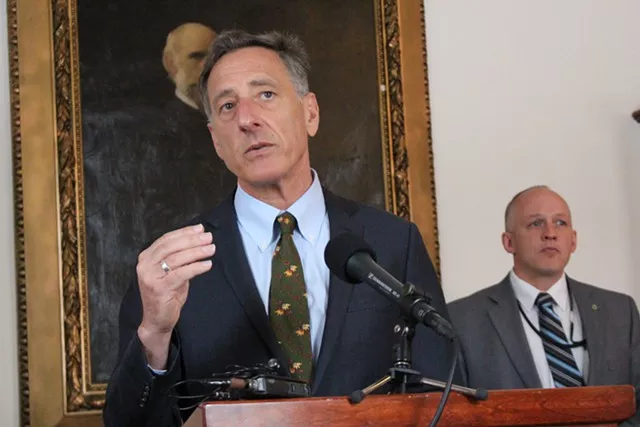
A veteran of Gov. Peter Shumlin’s administration will take over as state secretary of commerce and community development, the governor’s office announced Wednesday.
Current Deputy Secretary Lucy Leriche replaces outgoing Secretary Pat Moulton, who leaves her post to serve as interim president of Vermont Technical College.
Leriche previously spent about seven years in the state legislature representing Hardwick, including a stint as Democratic House majority leader.
Shumlin also announced that Economic Development Commissioner Joan Goldstein will oversee the Vermont EB-5 Regional Center. The appointment comes two weeks after Gene Fullam resigned from the post. Fullam served just one year that saw scandal as the feds charged Ariel Quiros and Bill Stenger with longtime fraud related to EB-5 projects in the Northeast Kingdom.
The changes come as Shumlin’s deputy chief of staff and spokesman, Scott Coriell, embarks on a two-month unpaid leave to travel. Coriell returns October 1. In the interim, Sue Allen, also a deputy chief of staff, will take over press duties, Coriell said.
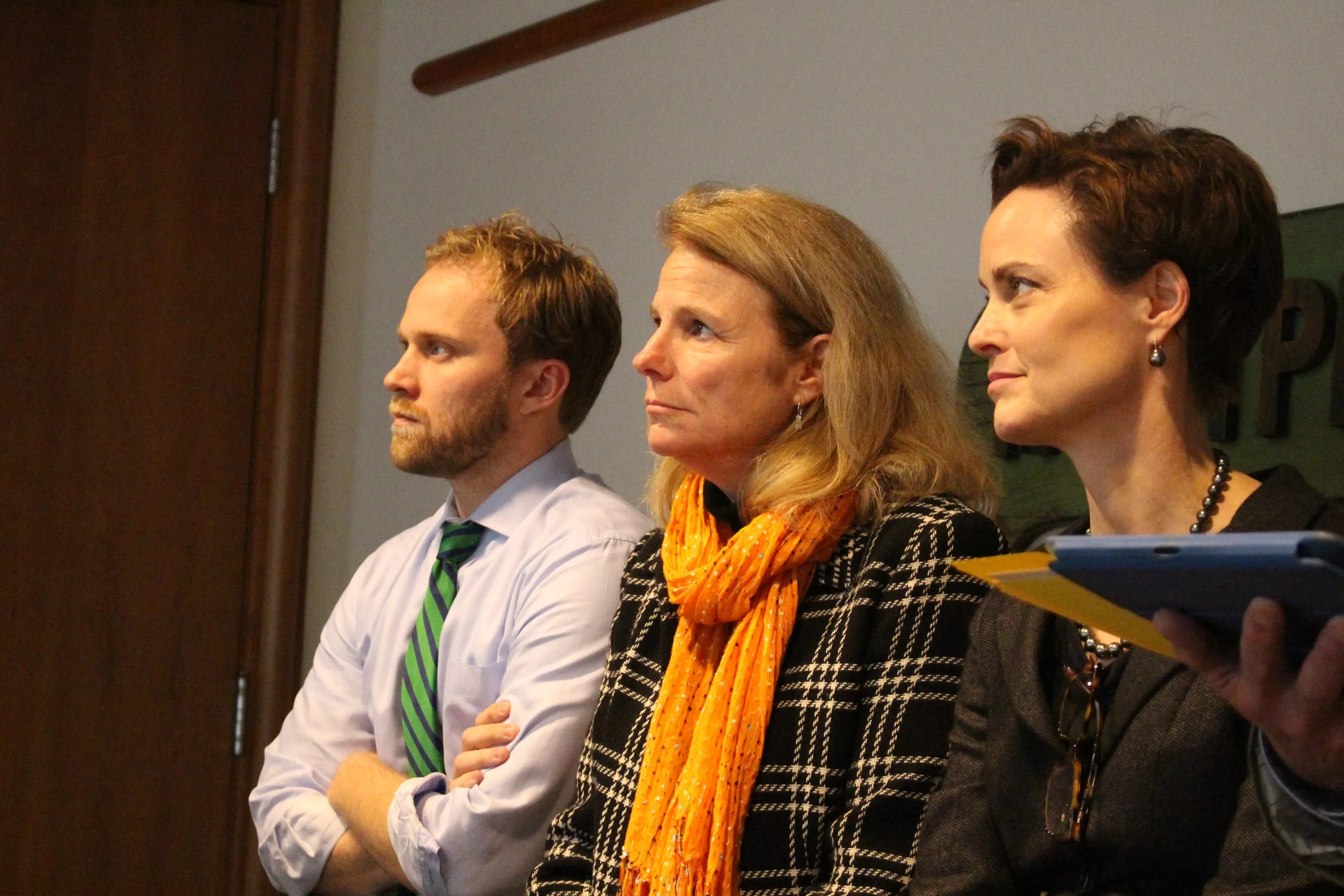
Shumlin’s tenure as governor is in its final months. He’ll retire and be replaced by one of five candidates vying for the position. The primary election is Tuesday.
Tags: Lucy Leriche , Joan Goldstein , Peter Shumlin , Scott Coriell , Gene Fullam , Image , Web Only
Thursday, July 21, 2016

"But it often takes time for the state capital to catch up to public opinion," says Braden, who founded Gun Sense Vermont after the December 2012 school shooting in Newtown, Conn.
Now, with less than three weeks remaining before Vermont's gubernatorial primary, one candidate is staking her candidacy on the controversial issue. In a television advertisement released Wednesday, Democrat Sue Minter ties firearms to domestic violence and pledges to take on "the gun lobby."
"We need to keep guns away from domestic abusers and require background checks on all gun sales," she says.
It may not be the riskiest strategy in a Democratic primary. The Castleton Polling Institute found last February that 97 percent of Democrats support universal background checks. Even independents and Republicans overwhelmingly support the concept, the poll concluded.
Tags: Sue Minter , Peter Galbraith , Matt Dunne , Ann Braden , Evan Hughes , gun control , universal background checks , election 2016 , primary 2016 , Image , Video , Web Only
Friday, July 15, 2016
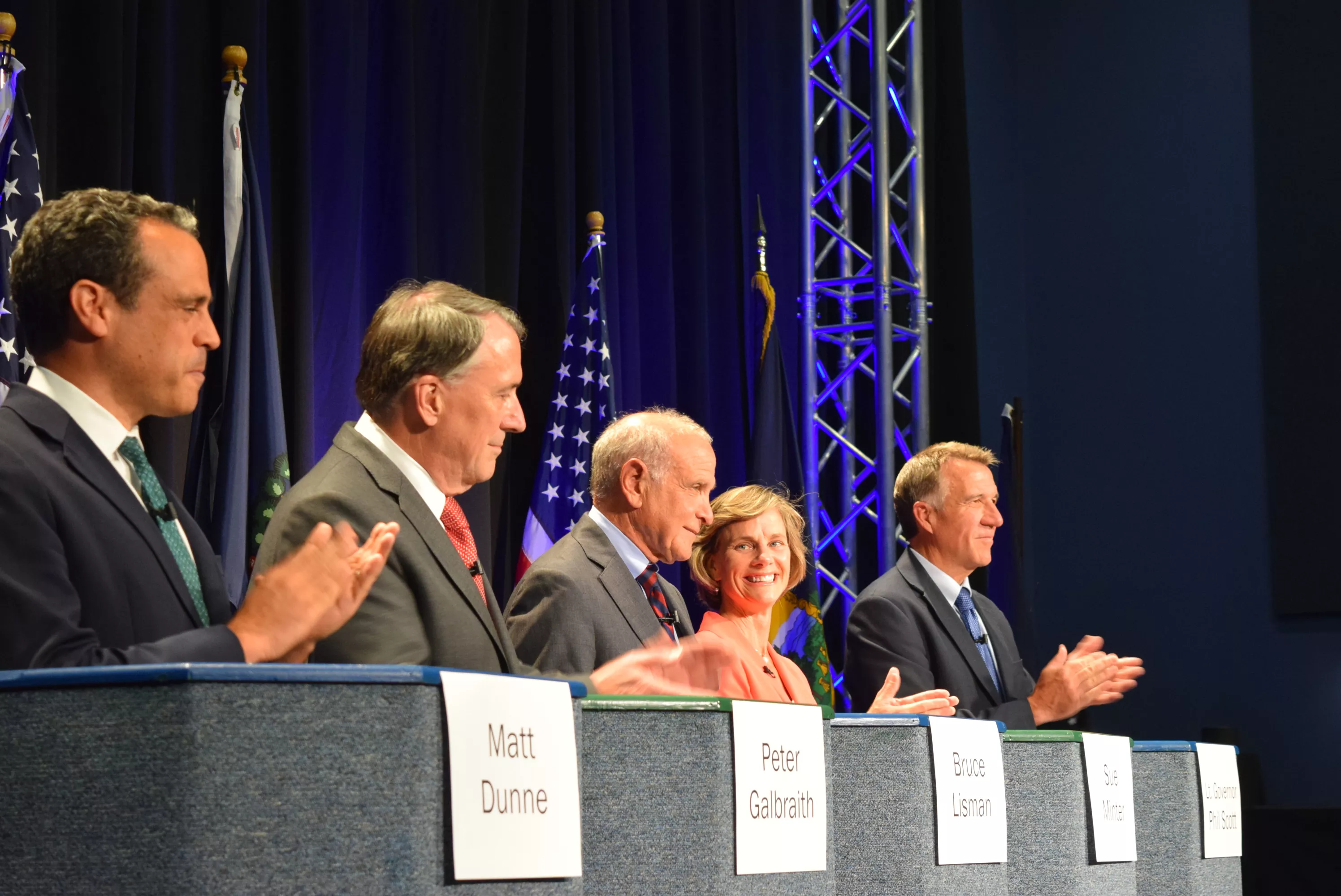
Republican gubernatorial candidate Bruce Lisman has sunk $1.6 million of his own money into his campaign, providing nearly all of its funding, according to a campaign finance report filed Friday.
Lisman, 69, of Shelburne, a retired Wall Street executive, has raised $286,561 from other contributors, he reported.
He has spent nearly all of the money, racking up $1,660,564 in expenses, leaving his campaign account with $189,493, the report shows. Lisman has been running television ads regularly since early spring.
An underdog in the Republican primary, Lisman has far outspent his opponent, Lt. Gov. Phil Scott.
Tags: Beth Pearce , Bruce Lisman , campaign finance , David Zuckerman , Deborah , election 2016 , H. Brooke Paige , Kesha Ram , Matt Dunne , Peter Galbraith , Phil Scott , primary 2016 , Randy Brock , Richard Dunne , Shap Smith , Sue Minter , T.J. Donovan , Image , Web Only
Thursday, July 14, 2016
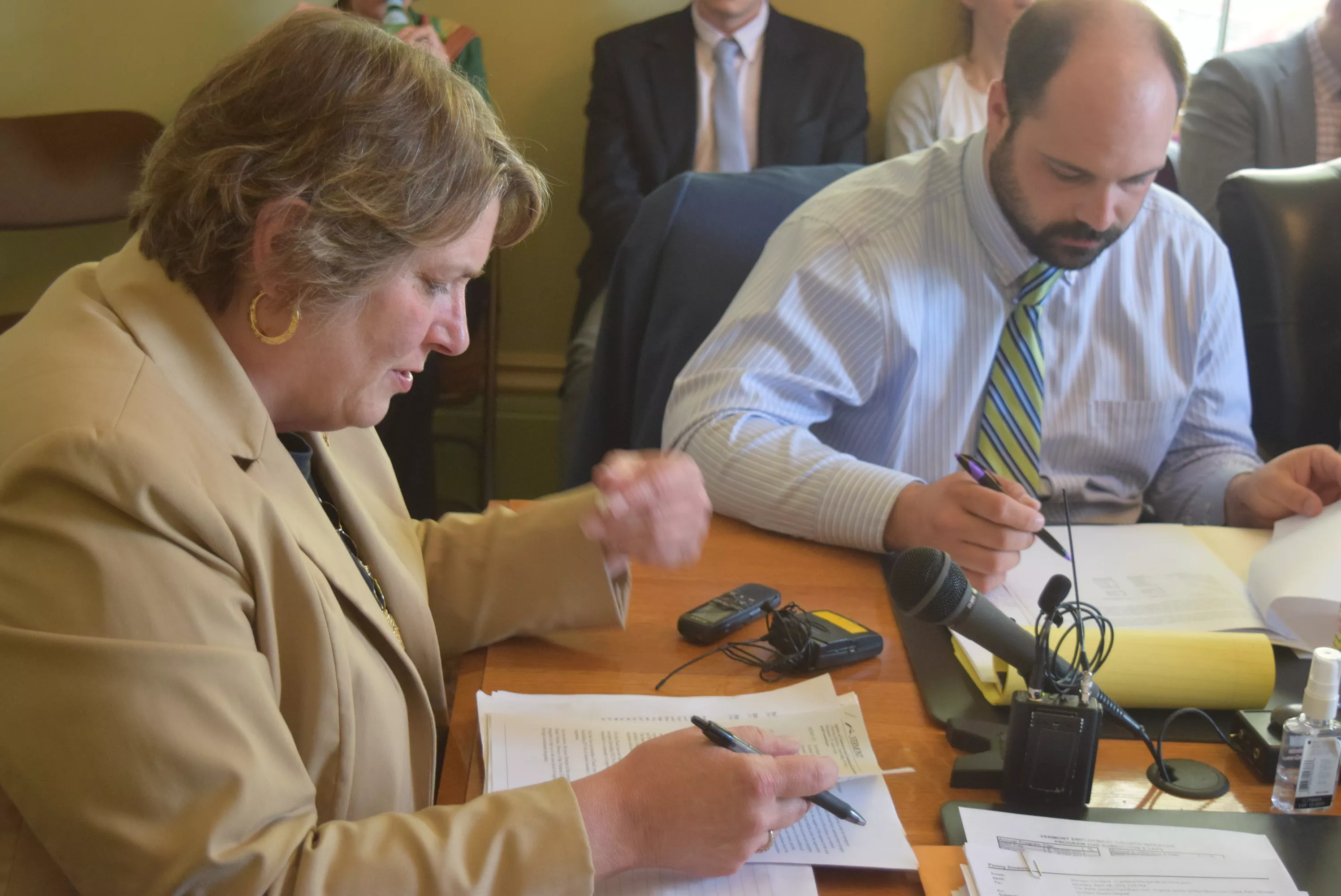
Moulton will be the second of two administration officials who oversaw the controversial EB-5 economic development program to leave their jobs. Susan Donegan, commissioner of the Department of Financial Regulation, announced in March she would resign in June. Donegan has been replaced by deputy commissioner Michael Pieciak.
The two state departments oversee Vermont’s EB-5 Regional Center. The center has been at the center of controversy since allegations made in April by the U.S. Securities and Exchange Commission that Jay Peak developers Ariel Quiros and Bill Stenger misused money invested for EB-5 projects.
Gov. Peter Shumlin, who is not seeking reelection, will have a replacement for Moulton before she leaves, spokesman Scott Coriell said.
Tags: Pat Moulton , EB-5 , Peter Shumlin , Image , Web Only
Wednesday, July 6, 2016

Vermont’s congressional delegation opposes the bipartisan Senate bill. The bill would allow food manufacturers to disclose GMO ingredients by labeling products with codes that consumers could scan via smartphone. Critics say that would be insufficient to inform consumers.
The bill cleared the 60-vote threshold to advance on Wednesday, setting the stage for a formal Senate vote to pass it that could occur as early as Thursday.
It would supersede Vermont’s law, which requires food manufacturers and retailers to label products made with GMOs. The state’s law confused some local retailers.
The food industry is backing the Senate bill. Supporters argue that a national versus a state-by-state approach is preferable. Labeling advocates have criticized the Senate bill as too lax.
Tags: Senator , GMO labeling , food , Bernie Sanders , Peter Shumlin , Patrick Leahy , Image , Web Only
Friday, July 1, 2016

Advocates say it is a signal achievement in consumer rights. Vermont Right to Know GMOs and other groups are planning a celebration on the Statehouse lawn this afternoon.
But it’s not clear how much change the average consumer will immediately notice.
The Vermont Office of the Attorney General says that because many packaged foods have long shelf lives, regulators are essentially granting a six-month grace period. Until January 1, improperly labeled foods will be assumed to have been packaged and distributed before today, and manufacturers will not be held liable if the labels are not in compliance.However, the attorney general’s office warned that no manufacturer, retailer or producer will be granted an extension beyond that, and manufacturers can be fined $1,000 per violation.

(Just what the heck is a GMO? Vermont Public Radio posted a good explainer last week.)
Tags: Senator , GMO labeling , food , grocers , Bernie Sanders , Image , Web Only
Monday, June 20, 2016

James Duff Lyall, of Tuscon, Ariz., will replace Allen Gilbert as executive director of the ACLU of Vermont on July 25. The state chapter is based in Montpelier.
Tags: James Lyall , Allen Gilbert , ACLU , police , immigration , Vermont ACLU , Arizona ACLU , Image , Web Only
Thursday, June 16, 2016
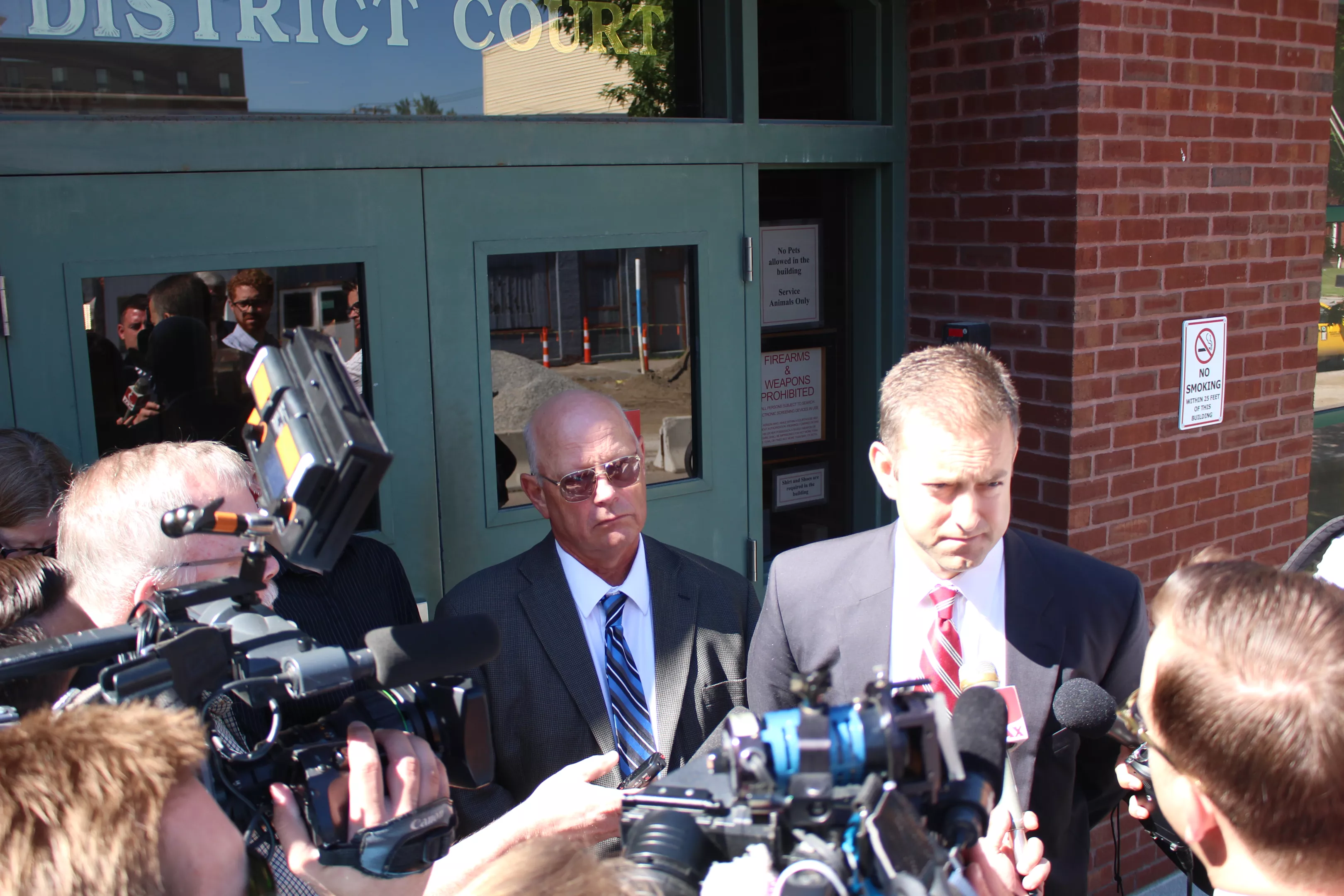
"In a word, yes, absolutely we did the right thing," said Sen. Phil Baruth (D-Chittenden), the Democratic majority leader.
"The approach the Senate took was not to prejudge McAllister in any way," he said. "It was to say: Without a look at the state's case, we can say that there are multiple serious sexual assault charges pending, and we don't believe he should be wielding powers as a senator while it's pending."
Sen. Joe Benning (R-Caledonia), the Republican minority leader, agreed.
"Based on the information we had at the time, it was clear the Senate was going to be in a state of dysfunction," he said. "It was never about Norm McAllister's guilt or innocence. This was about the Senate's ability to function, and my opinion at the time was it would not."
Tags: Norm McAllister , Joe Benning , Phil Baruth , John Campbell , Kevin Mullin , Dustin Degree , Sara Kittell , Denise Smith , Carolyn Branagan , statehouse , montpelier , Image , Web Only

State prosecutors abruptly dismissed sexual assault charges Thursday morning against Sen. Norm McAllister (R-Franklin), a day after his accuser struggled on the stand with discrepancies in her story.
“The state is in a position to have to dismiss,” Franklin County Deputy State’s Attorney Diane Wheeler told Vermont Superior Court Judge Robert Mello at about 9:45 a.m.
“Something came to light during [Wednesday] evening that warranted the state to have to dismiss the matter,” Wheeler said outside the courtroom afterward, adding that doing so was her “ethical obligation.”
Her boss, State’s Attorney Jim Hughes, said in an interview that an issue arose in his office after trial testimony on Wednesday, prompting the need to dismiss the case. “I can’t tell you specifics or details of the ethical dilemma, because we still have charges pending against Mr. McAllister.”
Tags: Norm McAllister , Brooks McArthur , Diane Wheeler , Image , Web Only
Wednesday, June 15, 2016
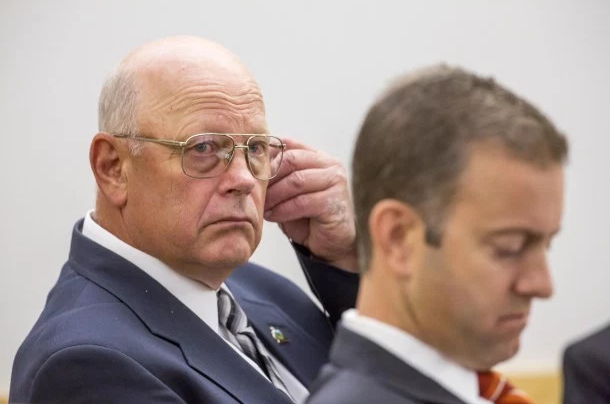
“When I wouldn’t give up, he threw me over his shoulder,” the slight, 4-foot-11-inch woman said, describing an alleged incident at McAllister’s Franklin County farmhouse. Asked what she was thinking as he forced her to have sex, she said: “That I was in hell. I didn’t want it happening.”
For most of the afternoon, however, the woman faced a bristly exchange with one of McAllister’s lawyers as he laid out numerous differences in the accounts she had told to the jury, lawyers and police, each time under oath.
“Would you agree that what you told me under oath just a few weeks ago is different than what you just told the jury?” David Williams asked.
“I guess so,” she mumbled. Dressed in a green plaid shirt and jeans, with her hair in a ponytail, the woman was visibly uncomfortable throughout her testimony, at times sitting with arms crossed, impatient with questions from both the prosecution and defense.
Tags: Norm McAllister , Vermont Senate , sexual assault , Diane Wheeler , David Williams , Image , Web Only