

Thursday, January 26, 2017

When a committee considers a bill, it hears testimony, discusses the bill, amends it, gets more testimony, discusses and amends yet again — lather, rinse, repeat.
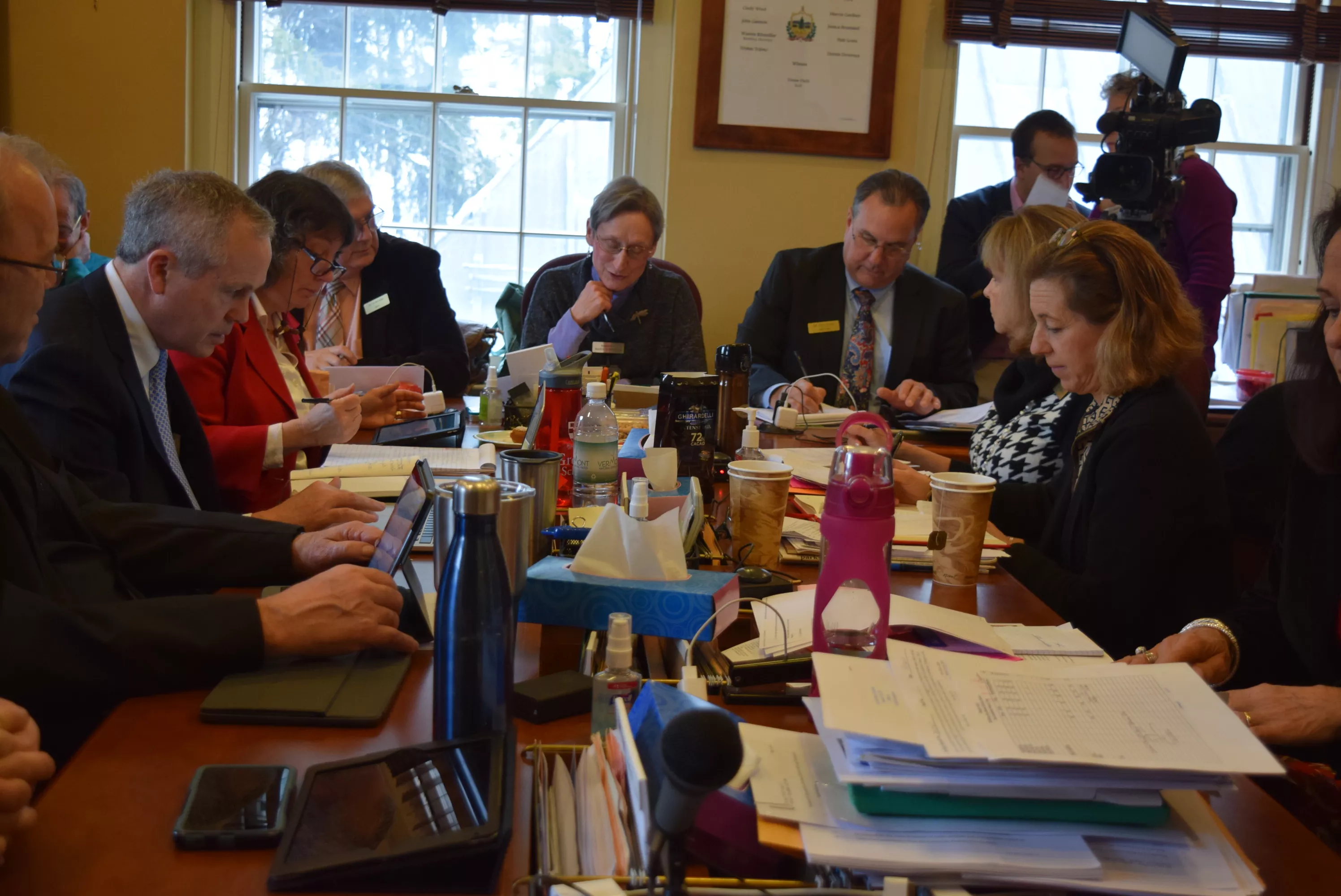
After all that, when the committee is almost ready to vote on the bill, it has a markup session. This is a process of going through the bill line-by-line, raising potential issues, discussing, debating, dithering, and finalizing the language in the bill. Which they've gotta do because, after all, this thing might become law, and they can't afford to overlook mistakes or unintended consequences. Still, it tries the patience of one and all.

On Wednesday, the Senate Government Operations Committee was scheduled to do markup on S.8, the ethics reform bill. Thirty-two pages of legalese.
Committee chair Sen. Jeanette White (D-Windham) is no dummy. She knew it was going to be a long, tedious afternoon. So she brought cake.
Tags: Jeanette White , Alison Clarkson , Brian Collamore , Claire Ayer , Chris Pearson , Mark Johnson , Image , Web Only
Wednesday, January 25, 2017
The vote fell along party lines: Six Democrats and one Progressive for the recount, four Republicans against it. The full House is expected to vote next week.
“We want to make absolutely sure that the ballots in Orange House District 1 were indeed correctly counted and that the will of the voters is indeed carried forward,” Rep. Maida Townsend (D-South Burlington), chair of the House Government Operations Committee, said after the panel voted.
Rep. Ron Hubert (R-Milton), the committee vice chair, called it a partisan and unnecessary decision. “We’re going through this process because we have a sore loser,” he said.
Tags: Vermont legislature , elections , Susan Hatch Davis , Bob Frenier , Maida Townsend , Ron Hubert , Image , Web Only
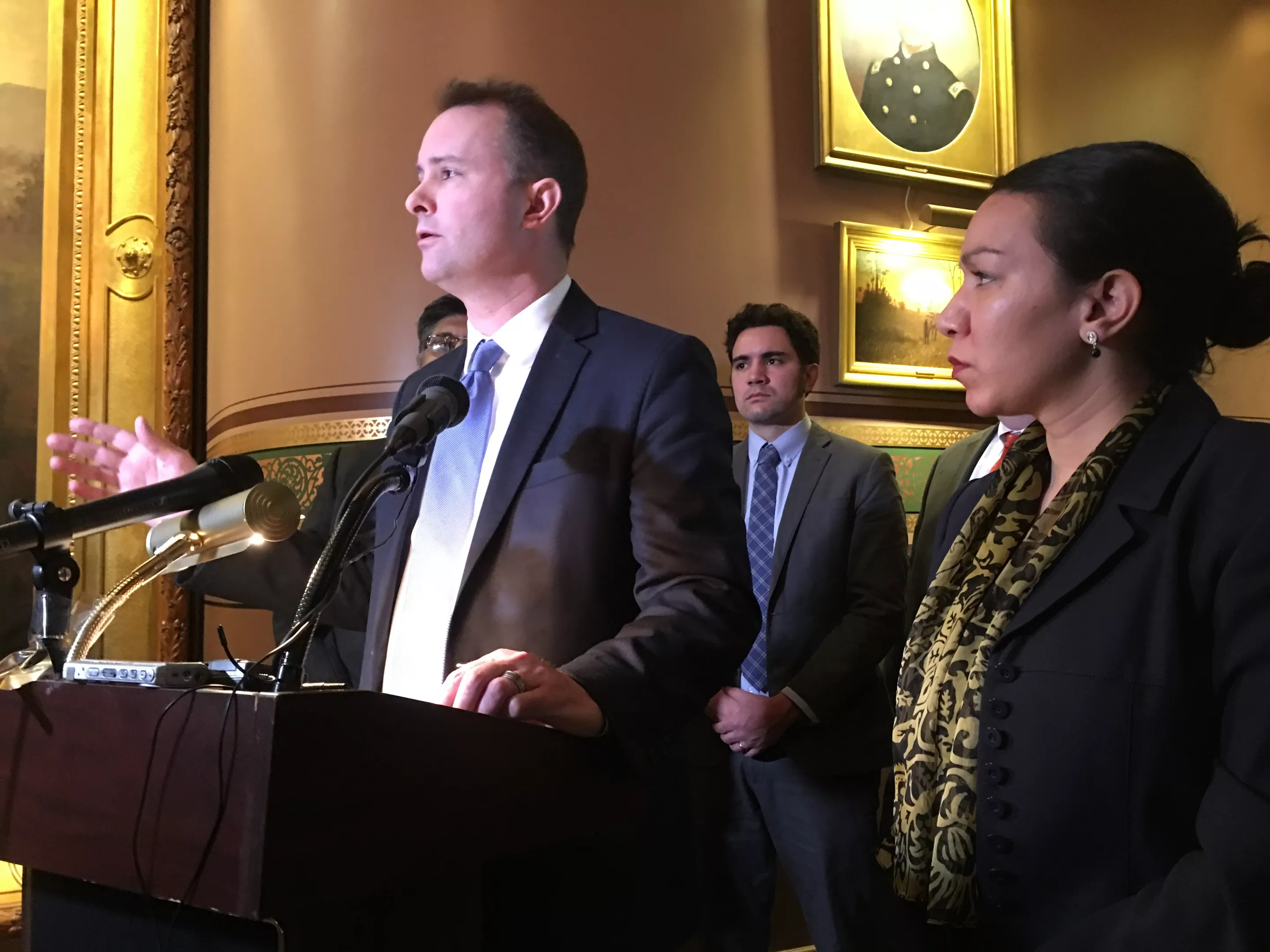
In practical terms, the effect of the task force is unclear. “Since the election and the transition of power in Washington, many Vermonters have approached me with questions about what’s going to happen, specifically in the area of immigration,” he said. “The short answer is, we don’t know.”
The task force’s mission is to address those unknowns as they become knowns, and advise Donovan on how to respond.
In purely political terms, the task force is a masterpiece of networking. Donovan cast a wide net through Democratic and advocacy circles, essentially enlisting some very influential people onto Team T.J. And two of the three cochairs represent that rarest of commodities in Vermont — visible minorities.
Tags: T.J. Donovan , Faisal Gill , Kesha Ram , Jake Perkinson , sanctuary cities , Dustin Degree , Don Turner , Image , Web Only
Tuesday, January 24, 2017


Scott’s first budget includes plenty of popular ideas — designed to strengthen early childhood education, make higher ed more affordable, ease the burden on property taxpayers, enhance worker-training programs, support the fight against opiate addiction and build affordable housing. Taken as a whole, the initiatives target some of Vermont’s most persistent problems.
The bad news is how Scott proposes to pay for it all — while holding the line on taxes and fees.
Tags: Phil Scott , Susanne Young , Jim Douglas , budget , Town Meeting Day 2017 , Image , Web Only

“I am committed to doing whatever it takes to put us on a new path to a more prosperous future,” Scott told a joint session of the House and Senate.
That, he said, would require level-funding for most state agencies — as well as for public school budgets. The latter have long been controlled by local communities.
The much-anticipated, 43-minute address offered the first indication of how Scott — a Berlin Republican who took office January 5 — would meet his campaign promise to be fiscally prudent while protecting the most vulnerable.
Tags: Phil Scott , Tim Ashe , Vermont legislature , state budget , school funding , Town Meeting Day , Dave Sharpe , Vermont State Colleges , Image , Web Only
Monday, January 23, 2017

Selectboard chair Peter Hood said the Middlesex Therapeutic Community Residence hasn’t caused problems for the town, but the board is tired of the state “diddling around.”
“We just said, ‘The door is open. Come back when you have a plan.’ They haven’t been back yet,” Hood said in an interview last week.
The facility opened in June 2013 as a stopgap for psychiatric patients displaced from the Vermont State Hospital after Tropical Storm Irene in 2011. The state signed an initial agreement with the Middlesex selectboard to close the seven-bed locked facility no later than January 2016.
The state has always intended to replace the facility with a permanent 14-bed facility in a different location, but there are still no concrete plans.
Tags: Department of Mental Health , Middlesex Therapeutic Community Residence , Tropical Storm Irene , Image , Web Only

A new panel — the Committee on Campaign Finance Education, Compliance and Reform — is designed to bring more people into compliance and recommend ways to improve the law, according to Secretary of State Jim Condos and newly sworn-in Attorney General T.J. Donovan.
Simply making it clear to candidates and contributors what the rules are is part of the goal, Condos said. “Print off a copy of the candidates for 2016 election, go down the list and see who filed campaign finance reports,” he said. “How do we get more people to do compliance?”
Tags: campaign finance reform , T.J. Donovan , Brady Toensing , Bill Sorrell , Josh Wronski , Jake Perkinson , Natalie Silver , Image , Web Only

“It was a learning experience for everyone,” Batchelor says. “We had a wonderful, wonderful, eye-opening experience.”
The event was called the Convention of States, and it was meant to be a model of what’s called an Article V Convention. There are two ways to amend the Constitution: the first begins with Congress adopting an amendment. But under the Constitution’s Article V, the states may also initiate a convention. This has never happened in American history and legal scholars disagree over some key aspects of the process.
The COS took place in Williamsburg, Virginia. It was organized by a group called Citizens for Self-Governance — which, according to the left-leaning Center for Media and Democracy, has ties to the Tea Party movement, the American Legislative Exchange Council (ALEC) and the conservative mega-donors Charles and David Koch.
Tags: Convention of States , American Legislative Exchange Council , Koch brothers , Bob Helm , Lynn Batchelor , Vicki Strong , Citizens for Self-Governance , Fair Game Extra , Image , Web Only
Saturday, January 21, 2017

Event organizers said the protest to voice opposition to Donald Trump’s inauguration was the largest march in state history.
Tags: Senator , Bernie Sanders , Women's March , Montpelier , Slideshow , Image , Web Only
Thursday, January 19, 2017
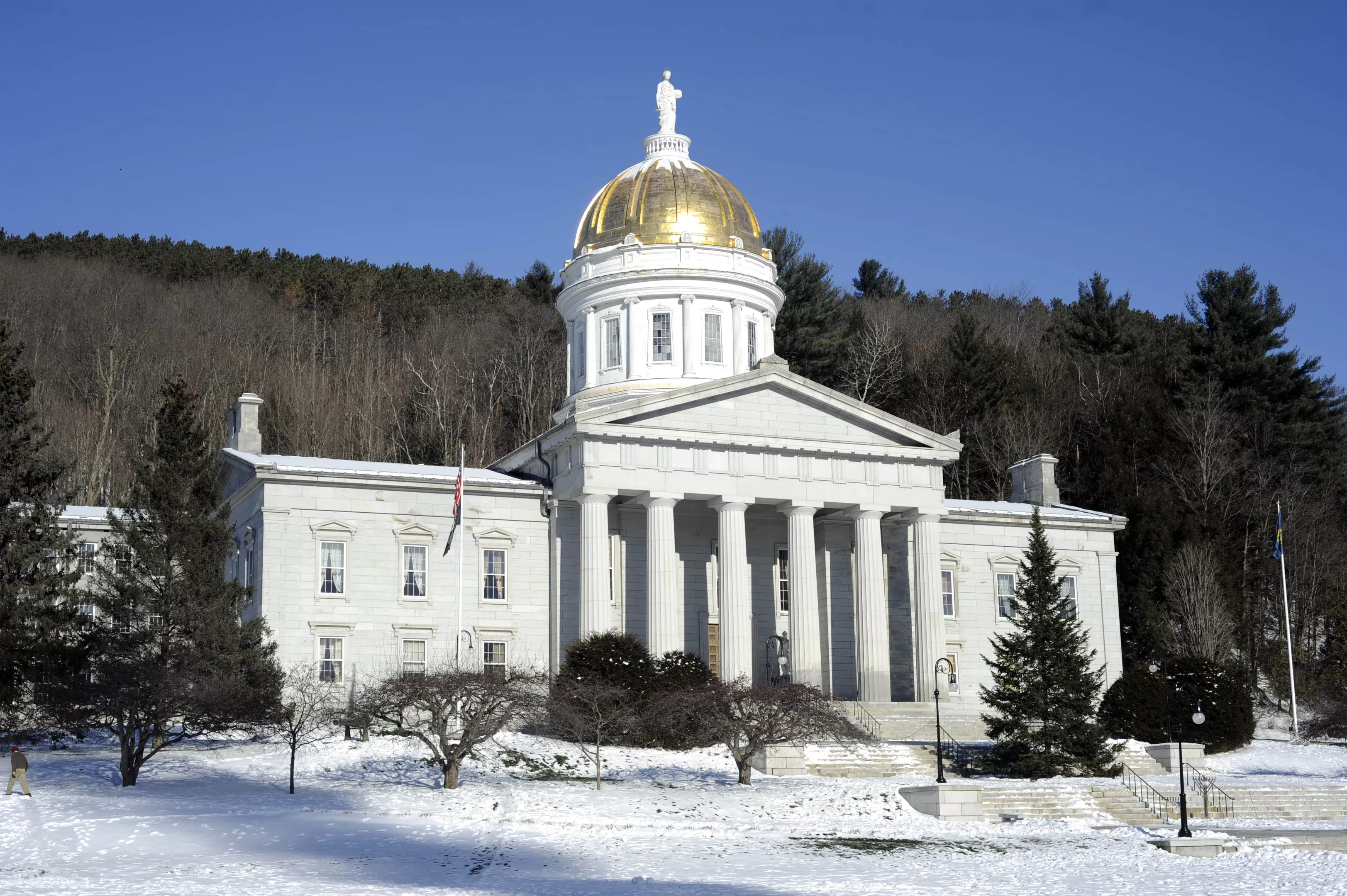
First, the House. In a session expected to be brief and painless, lawmakers heard first readings of a number of bills and then took up House Resolution 6, which would make minor changes to existing financial disclosure procedure. Currently, state representatives’ disclosure forms are only available in person at the House Clerk’s office; H.R. 6 calls for the forms to be posted online. It had unanimously passed the House Rules Committee, and was expected to sail through.
But lawmakers are very particular about disclosure rules applying to themselves, and a flurry of questions ensued.
Tags: Mitzi Johnson , Brian Collamore , Dustin Degree , Ann Cummings , Bobby Starr , Mark MacDonald , Image , Web Only