

Thursday, May 4, 2017
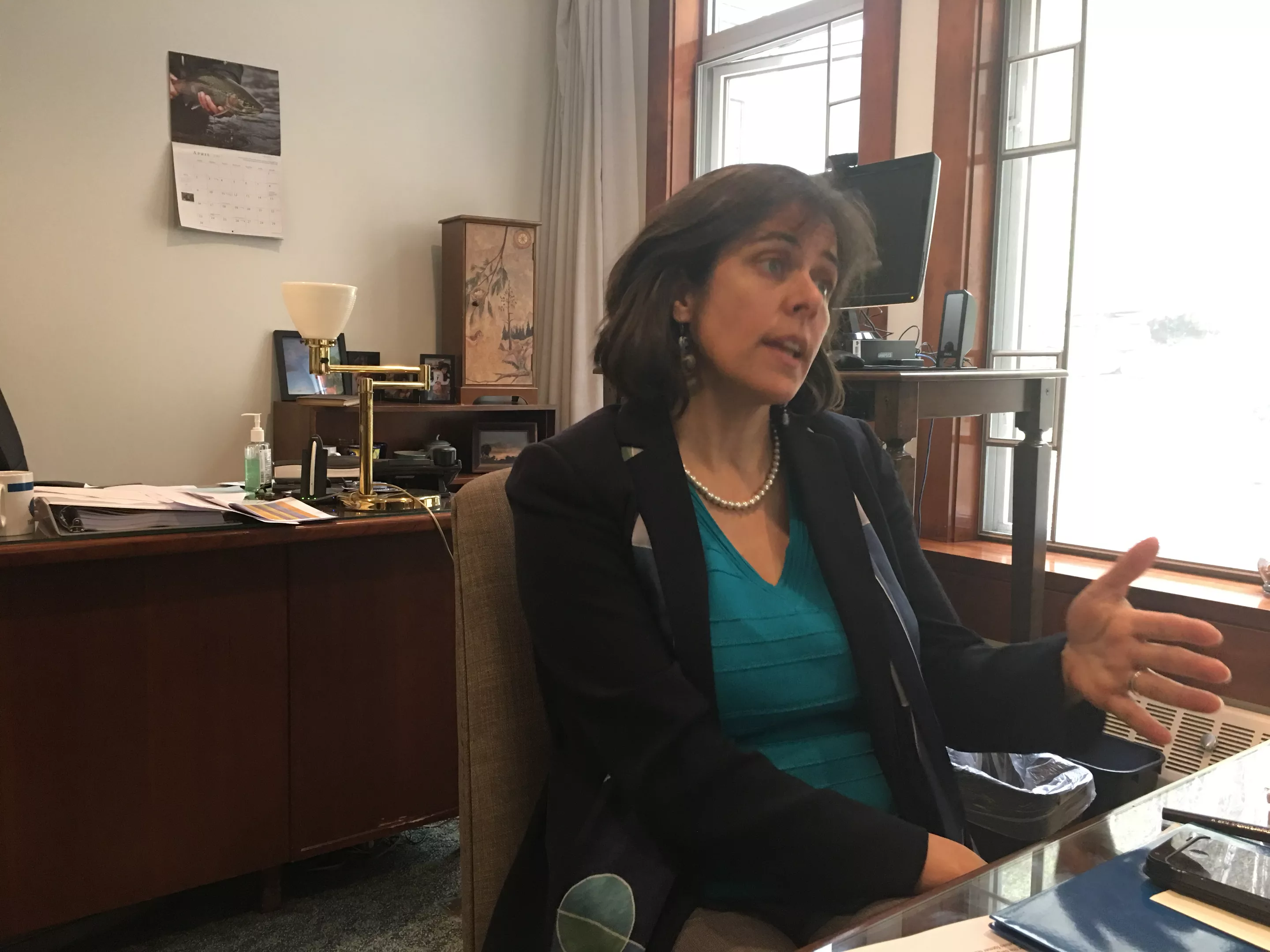
At issue was a plan to have public school teachers’ health care benefits negotiated on a statewide basis. Republican Gov. Phil Scott says the measure would save up to $26 million a year. He has insisted that it be part of a final budget deal.
The governor came whisper-close to a win in the House on Wednesday. The initial tally was 74 for the proposal and 73 against. Then, House Speaker Mitzi Johnson (D-South Hero) cast her vote — a rarity for a speaker. That created a tie, thus defeating the measure.
The day after the vote, Johnson was sounding pretty confident for a leader who almost suffered an embarrassing defeat.
“We knew it was going to be close,” she said. “I think it’s a symptom of people being really frustrated about property taxes. When I spoke to [lawmakers], it was really about wanting to do anything, even things that were not fleshed out but sounded juicy.”
Tags: Phil Scott , Mitzi Johnson , Don Turner , Becca Balint , state budget , Image , Web Only

House Speaker Mitzi Johnson (D-South Hero) had to cast a rare vote to counter a 74-73 tally that was favoring the Republican position. By forcing a 74-74 tie, Johnson defeated a GOP amendment that would shift teacher health care negotiations from the local to the state level.
The dramatic vote came at 10:30 p.m. after a long day of backroom negotiations followed by floor debate. Republicans would have won if two of their supporters — Reps. Marcia Martel (R-Waterford) and Jim Condon (D-Colchester) — were present.
“In nine years, I’ve never seen anything like it,” said Rep. Adam Greshin (I-Warren), who joined Republicans on the issue.
“It’s the closest I’ve ever come to winning,” said House Minority Leader Don Turner (R-Milton). “Unbelievable.”
Democrats prevailed in a subsequent vote to leave health care negotiations at the local level. Under that plan, any savings generated would be used to lower property taxes. That amendment passed by an 81-56 vote at 11:10 p.m.
Tags: Affordable Care Act , Vermont-NEA , Mitzi Johnson , Adam Greshin , Don Turner , Phil Scott , Jeff Fannon , Image , Web Only
Wednesday, May 3, 2017
“We’re absolutely thrilled at the Senate’s action,” said Erhard Mahnke of the Vermont Affordable Housing Coalition. “This will be a great shot in the arm for affordable housing.”
Within a few hours, the bloom was off the rose. The funding mechanism, attached as an amendment to S.100, had alienated a coalition of environmental groups. They said the plan would divert money from cleanup efforts on Lake Champlain and Vermont waterways. Key senators suddenly seemed disinclined to claim credit for the idea.
“It wasn’t my amendment,” insisted Sen. Richard Westman (R-Lamoille), who had reported the amendment to the full Senate. “It was an Appropriations Committee amendment, and I was the reporter for the committee.”
Because Westman was the official reporter, environmentalists blamed him for the plan. He quickly acquired the nickname “Dirty Water Westman.”
What was all the fuss about?
Back in his January budget address, the governor called for a $35 million bond to boost affordable housing. The idea met with near universal praise. But nobody could agree on how to pay the annual $2.5 million cost of the bond.
Well, there was fairly quick agreement that $1.5 million would come from the Vermont Housing and Conservation Board. The other $1 million, however, was a sticking point.
With the end of the session looming, the dispute threatened to derail the entire housing bond plan. Then, on Tuesday afternoon, a solution was brought to the Senate Appropriations Committee: a new funding mechanism proposed as an amendment to S.100.
The mechanism takes a bit of explaining, so strap yourself in.
Two years ago, when the legislature made its first attempt to tackle waterways cleanup under threat of sanction by the U.S. Environmental Protection Agency, it created a Clean Water Fund. The designated funding source was a surcharge of 0.2 percent on property transfers, which raises about $5 million a year.
The surcharge was set to expire on July 1, 2018. The intention was to identify a longer-term funding source by then.
OK, that’s the background. The amendment to S.100 would do three things. First, it would extend the surcharge for an additional year, until July 1, 2019. Second, in each of the next two years, $1 million would be applied to the housing bond — leaving the Clean Water Fund with roughly $4 million each year. And lastly, the surcharge in 2019 would be reduced to 0.04 percent and extended until the year 2039. The revenue, an estimated $1 million a year, would be used to pay down the housing bond.
“What that will do for the Clean Water Fund is give them $4 million more in the second year than they would have had,” explained Westman.
The plan was approved by Appropriations on Tuesday, by the Senate Finance Committee and by the full Senate on Wednesday, all on unanimous votes. The whole process took less than 24 hours from start to finish.
The bill was on its way to the House, which would have to concur with the amended funding mechanism. Seemed like a slam dunk. It even passed muster with the governor.
“It certainly has some promise,” Scott said of the amended S.100. “That’s something that I would look at favorably.”
Hey, let’s all sing “Kumbaya.”
The amendment had been devised by “a group from the House and Senate,” according to a very laconic message to me from Senate President Pro Tempore Tim Ashe (D/P-Chittenden), who was too busy on Wednesday attending to his senatorial duties to conduct an interview about the amendment.
Or maybe he knew the shit was getting close to the fan.
Because when environmental groups got wind of the amendment, they were not in a singing mood.
“We’re getting the short end in a big way, and we’re not happy about it,” said Jon Groveman, policy and water program director for the Vermont Natural Resources Council.
Groveman’s take: The argument for the Senate’s amendment is grossly misleading, and the waterways cleanup is getting the shaft.
It’s true that the transfer tax surcharge is getting an additional year in the Senate bill, and that means $4 million more for the Clean Water Fund.
Here’s the thing: According to Groveman, the extension of the transfer tax surcharge had already been proposed by Scott and by State Treasurer Beth Pearce in her waterways cleanup plan. And it had previously been approved by the House.
And all the money would have gone to the Clean Water Fund.
“We look at it that the Senate’s taking it away,” said Groveman. “They’re not giving us more money, they’re reducing the money from what the governor recommended, what the treasurer recommended and what the House passed.”
Groveman said he first heard of the Senate amendment on Wednesday morning.
“It was not in any bill, it was not noticed anywhere, there were no hearings about it,” he said. “It’s pretty clear that they wanted to get this through quickly.”
The VNRC is part of a coalition advocating for a robust waterways cleanup plan. Other members include the Conservation Law Foundation, the Sierra Club, the Nature Conservancy, the Lake Champlain Committee and Lake Champlain International.
The groups scheduled a meeting for late Wednesday to discuss strategy. They hope to put pressure on the House not to concur with the latest version of S.100. The legislative session is still scheduled to end on Saturday, so time is running short to pass the Senate version or find another funding solution lickety-split.
Or let the housing bond die a disgraced, bloody death.
Meanwhile, the anonymous geniuses who devised the latest funding plan have managed to placate the governor and legislative Republicans while driving a wedge between two liberal constituencies: the environmental community and affordable-housing advocates.
That’s quite the masterstroke.
Disclosure: Tim Ashe is the domestic partner of Seven Days publisher and coeditor Paula Routly. Find our conflict-of-interest policy here: sevendaysvt.com/disclosure
Tags: Phil Scott , Richard Westman , Erhard Mahnke , Jon Groveman , Tim Ashe , Image , Web Only
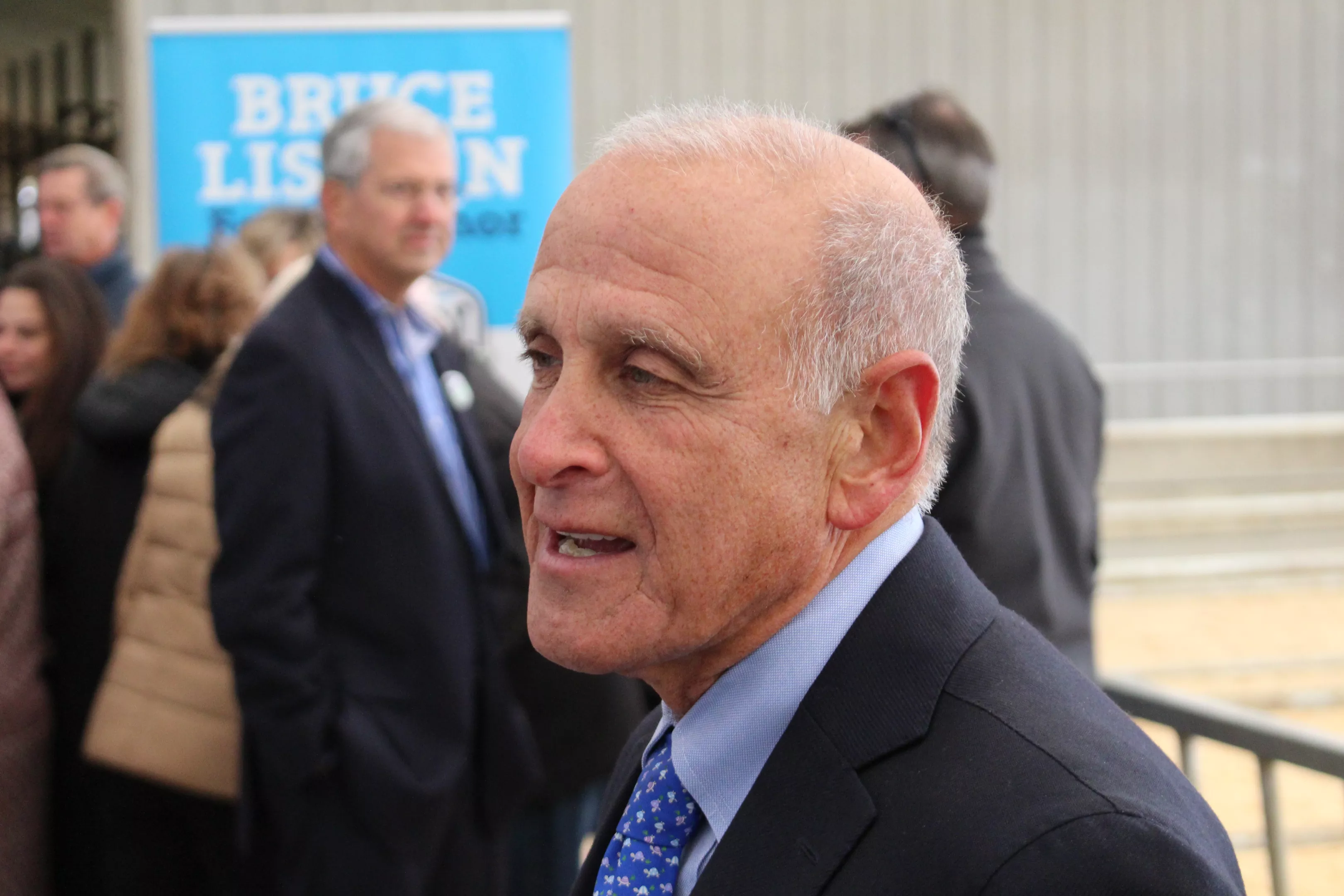
Lisman, who lost to Scott in a bitter Republican primary last August, has reemerged to launch a statewide ad blitz urging Vermonters to weigh in with their legislators.
So far he's spent $9,040 on newspaper ads, according to a disclosure form filed Wednesday with the Secretary of State's Office. But according to his former campaign manager, Shawn Shouldice, who is now acting as his lobbyist, Lisman has also bought radio and online ads. Shouldice said they are running in the Burlington Free Press, St. Albans Messenger, Caledonian Record, Brattleboro Reformer, Bennington Banner, Manchester Journal, WDEV, WVMT and VTDigger.org.
Tags: Bruce Lisman , Phil Scott , teacher health care , Vermont legislature , Image , Web Only , Video
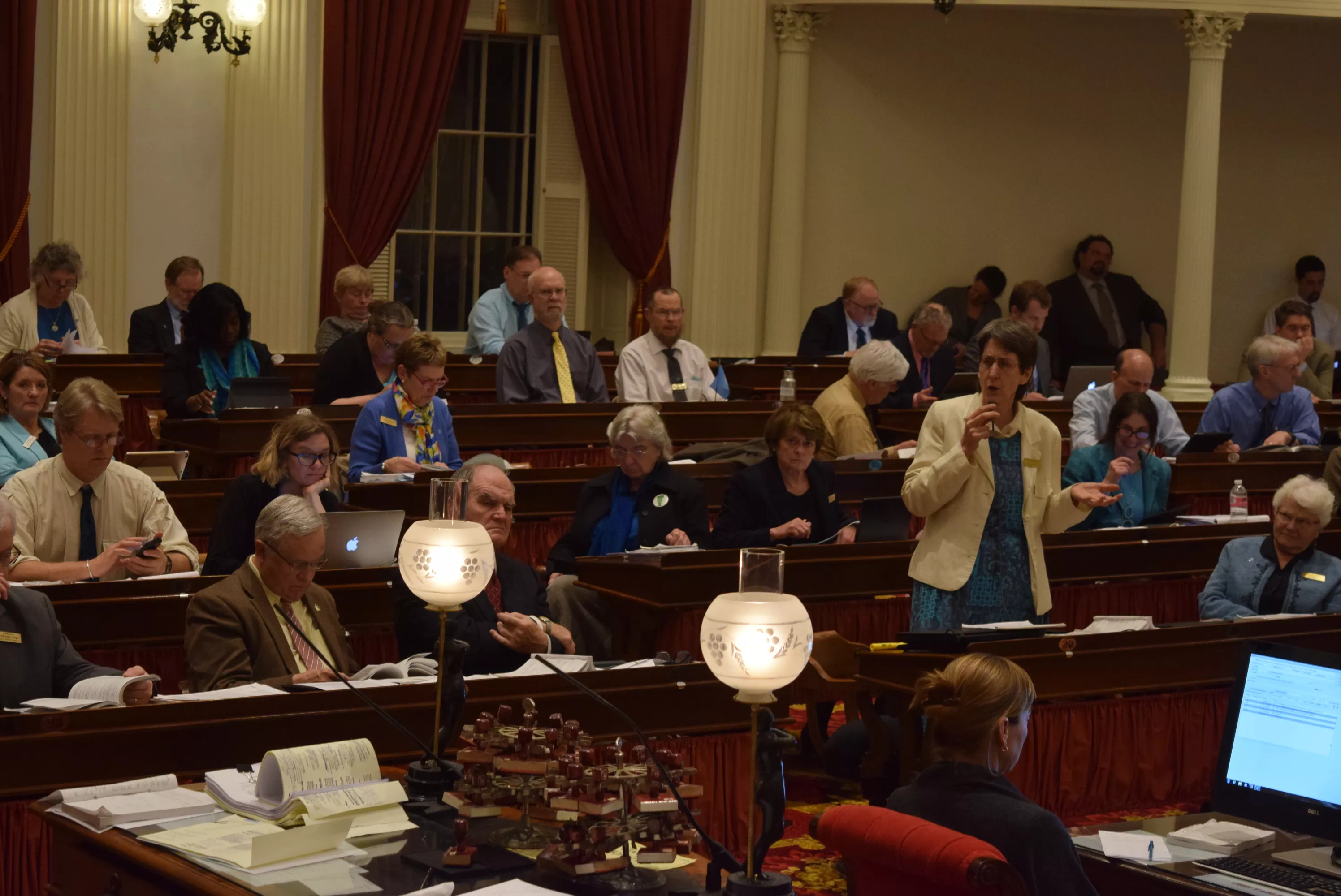
Lawmakers supported the legislation by a 74-68 tally in a vote taken around 11:30 p.m. — some four hours after the issue was first presented on the floor.
"All this leads to savings in our corrections and judicial systems," said Rep. Tom Burditt (R-West Rutland). "Let's end prohibition."
The action comes after months of delays that make it likely too late to pass in the full legislature this year, as lawmakers are expected to adjourn for the session later this week. But supporters see any action as progress toward their goal.
Tags: Cannabeat , Chip Conquest , Cynthia Browning , Jean O'Sullivan , marijuana legalization , Paul Poirier , Peter Fagan , Tom Burditt , Vermont House , Image , Web Only
Tuesday, May 2, 2017
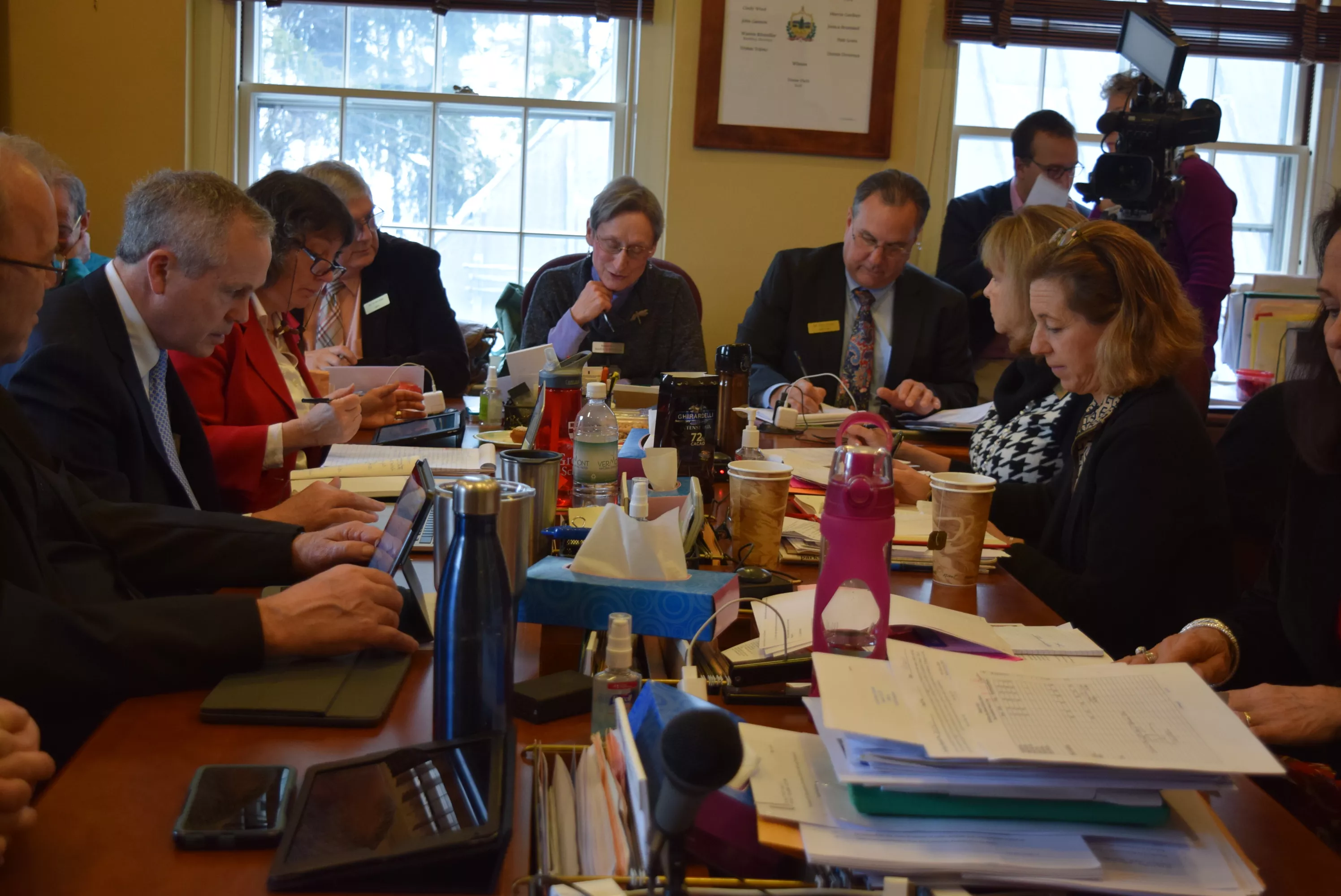
The legislation creates an ethics commission, prevents lawmakers from becoming lobbyists within a year of leaving their seats and requires political candidates to disclose financial information.
Transparency advocates have deemed it a good start. But they’ve criticized certain aspects of the bill, such as the fact that the ethics commission can accept — but not adjudicate — complaints about conflicts of interest or other ethical transgressions. A number of lawmakers resisted efforts to strengthen the bill, citing concerns that it would facilitate political witch hunts.
By the time the bill, which passed the Senate earlier this year, came up for a final vote in the House, only one concern remained unresolved.
Candidates for statewide or legislative office would have to list sources of income that exceed $5,000, although not the amounts. The sticking point Tuesday was the fact that this requirement extends to their spouses or partners.
Rep. Paul Poirier (I-Barre) proposed an amendment to remove that obligation. “My spouse did not choose to be involved in the legislature,” he said. “I think that is really infringing on the privacy of, in this particular situation, my spouse.”
“This is not about us,” countered Rep. Heidi Scheuermann (R-Stowe). “This is about instilling the confidence that Vermonters deserve in our government.”
Tags: ethics bill , Vermont legislature , Paul Poirier , Heidi Scheuermann , Image , Web Only
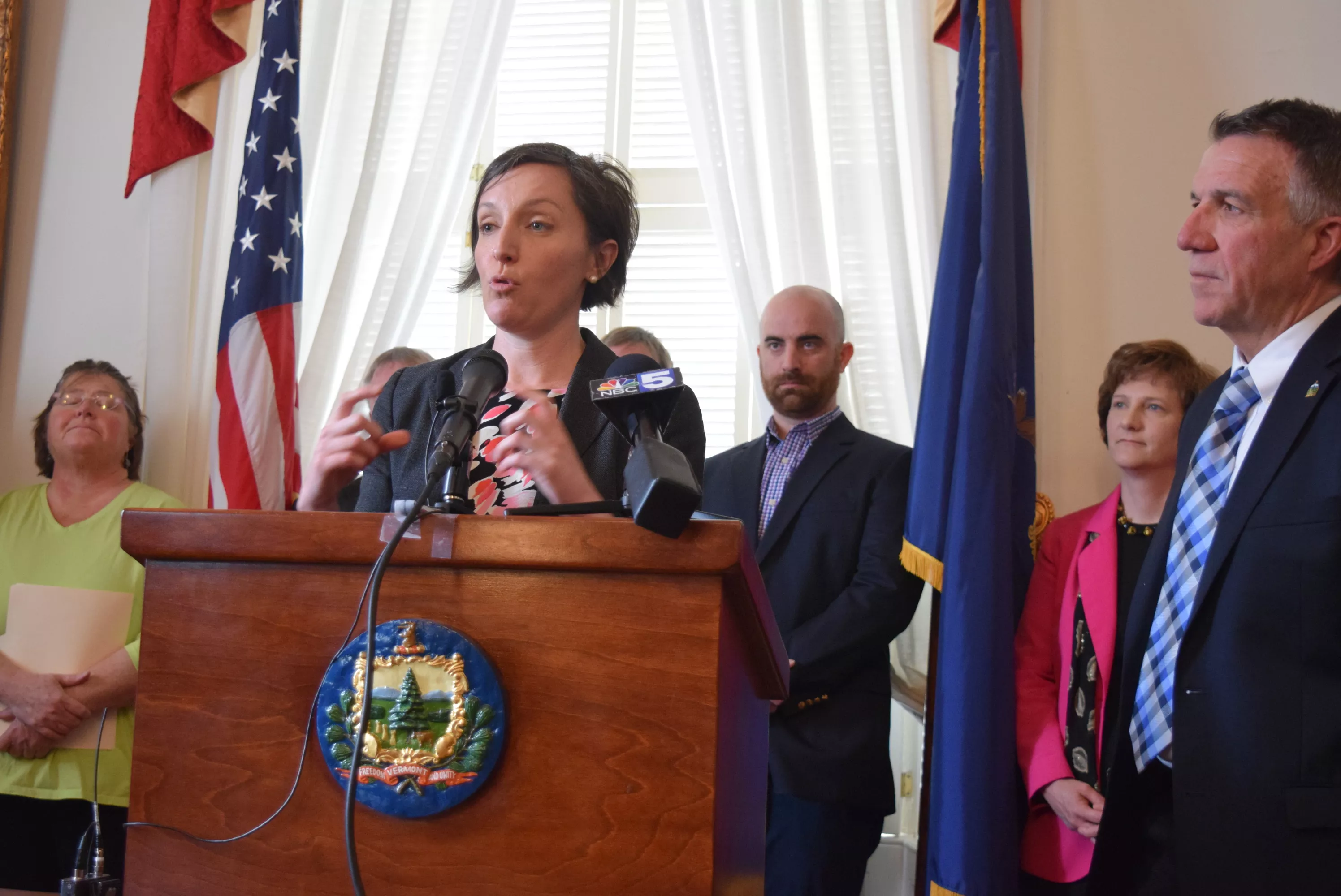
Can the two sides find common ground on how to ensure that anticipated savings in teachers’ new health coverage finds its way to Vermont property owners? Or will philosophical differences over the issue prompt a gubernatorial budget veto?
Those questions hung in the air Tuesday at the Statehouse as legislators worked toward a targeted Saturday adjournment for the year.
Gov. Phil Scott has claimed that his proposal for a statewide teacher health care contract would save the state education fund $13 million next year and $26 million annually after that.
The latter amounts to about $75 a year in property taxes on a $250,000 house. Just a month ago, Scott praised a House-passed budget that didn’t include that savings, but he now says he won’t support a final state budget without it.
Tags: health care , VEHI , Phil Scott , Vermont legislature , Nicole Mace , Martha Allen , collective bargaining , education , Image , Web Only
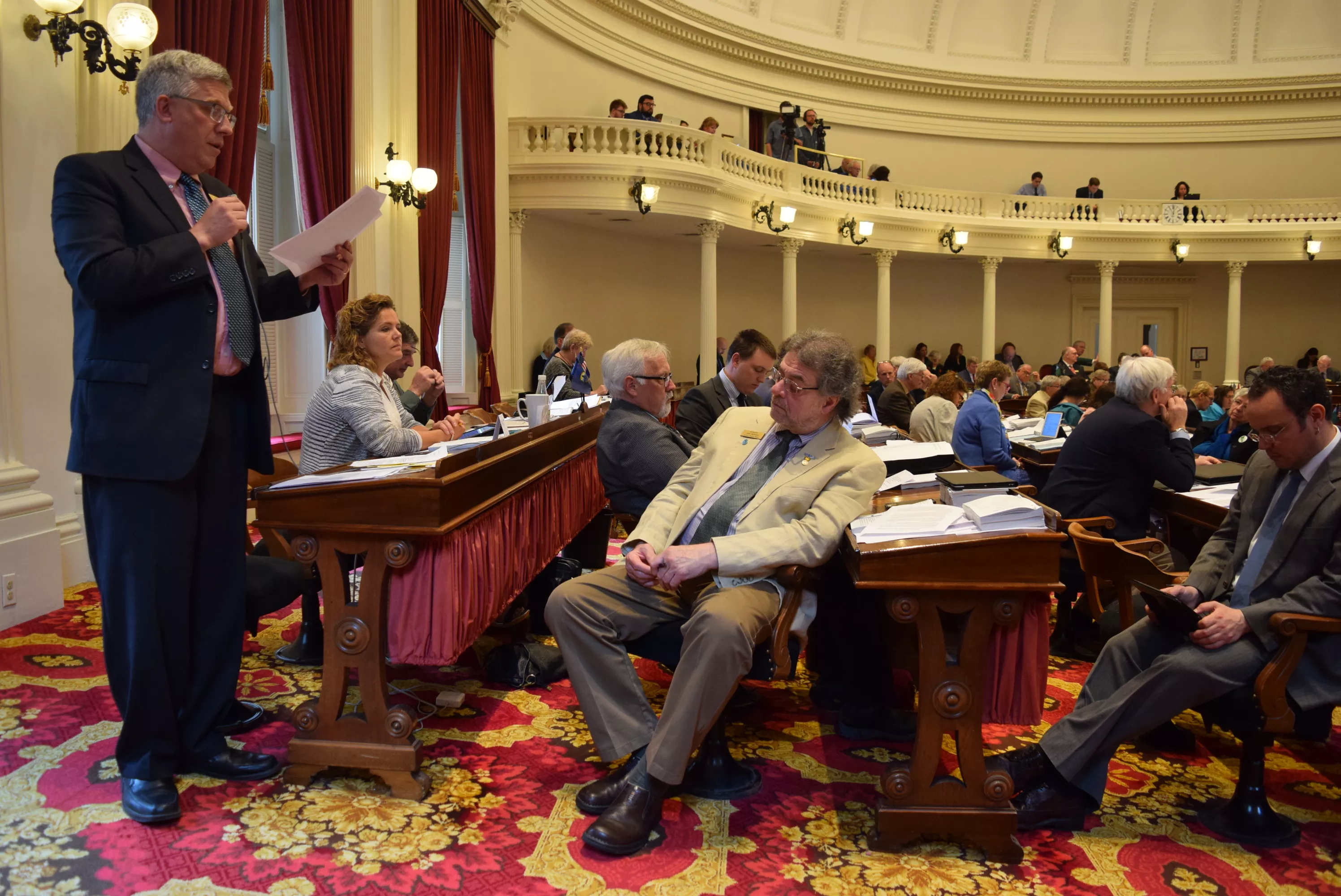
The bill is not expected to pass the full legislature before lawmakers adjourn for the year, likely later this week. House Democrats nonetheless chose to tackle the issue as part of a packed agenda Tuesday so that the bill will be ready for possible Senate action when legislators return next January.
Supporters touted paid family leave as good for both the economy and workers' well-being.
Tags: paid family leave , Tom Stevens , George Till , Vermont House , Image , Web Only
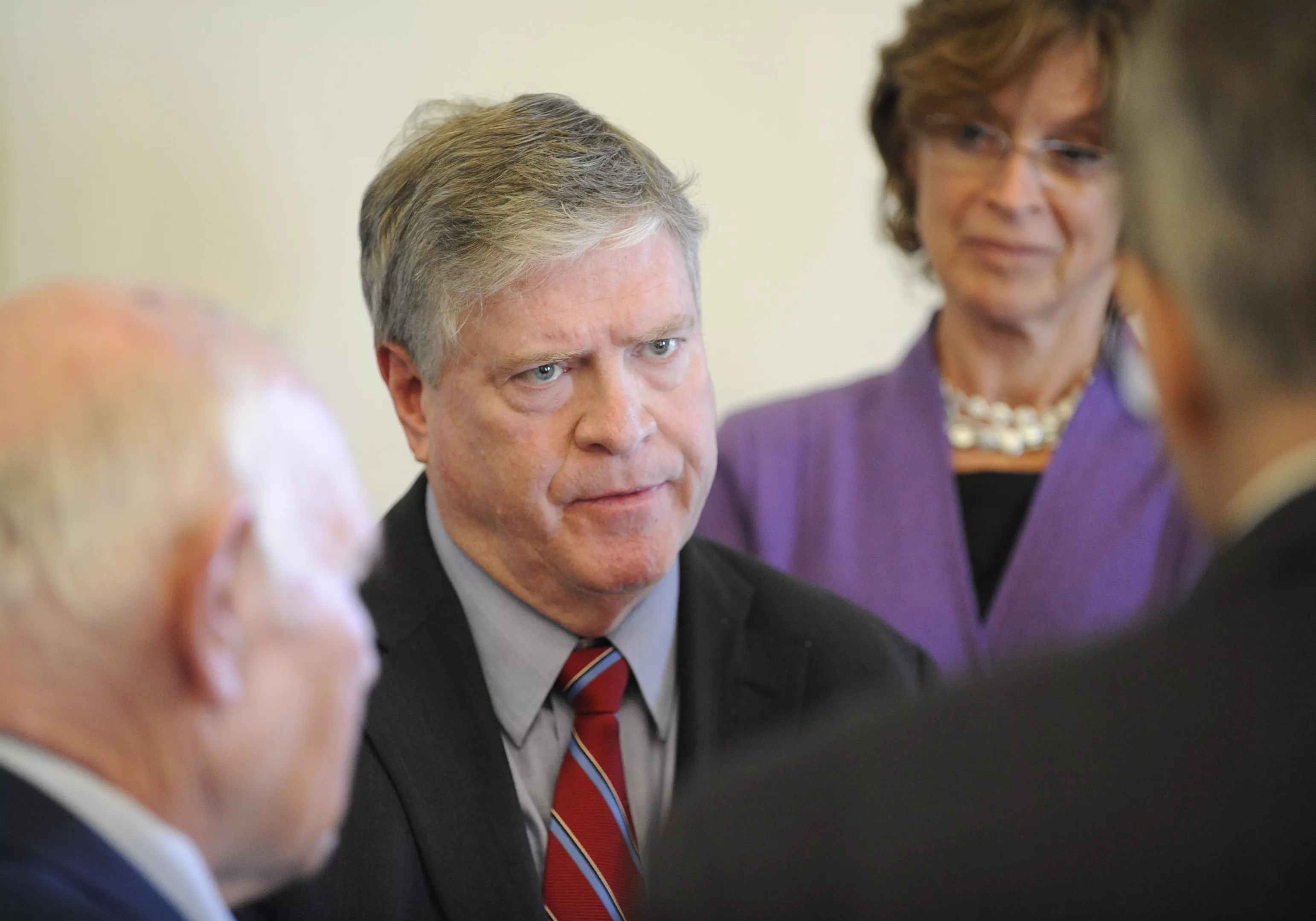
John Campbell, who stepped down as Senate president pro tempore last year to lead the Department of State's Attorneys and Sheriffs, has brought on two veterans of former governor Peter Shumlin's administration: former labor commissioner Annie Noonan and former director of intergovernmental affairs James Pepper.
"When I got here, it was clear that this place was totally understaffed," said Campbell, who has served as the department's executive director since last May. In that role, for which he earns $108,000 a year, Campbell provides budgetary and lobbying assistance to the independently elected state's attorneys and sheriffs from Vermont's 14 counties.
Noonan, who spent six years running the Vermont Department of Labor, started at the Department of State's Attorneys and Sheriffs two weeks ago in the newly created position of labor relations manager. Though the $43-an-hour job is billed as temporary, Campbell is seeking to make it permanent in next year's state budget. Pepper, meanwhile, started four weeks ago in a recently created deputy state's attorney position focused on appellate work.
Tags: John Campbell , Annie Noonan , James Pepper , David Cahill , Dick Sears , Jane Kitchel , Image , Web Only
Monday, May 1, 2017
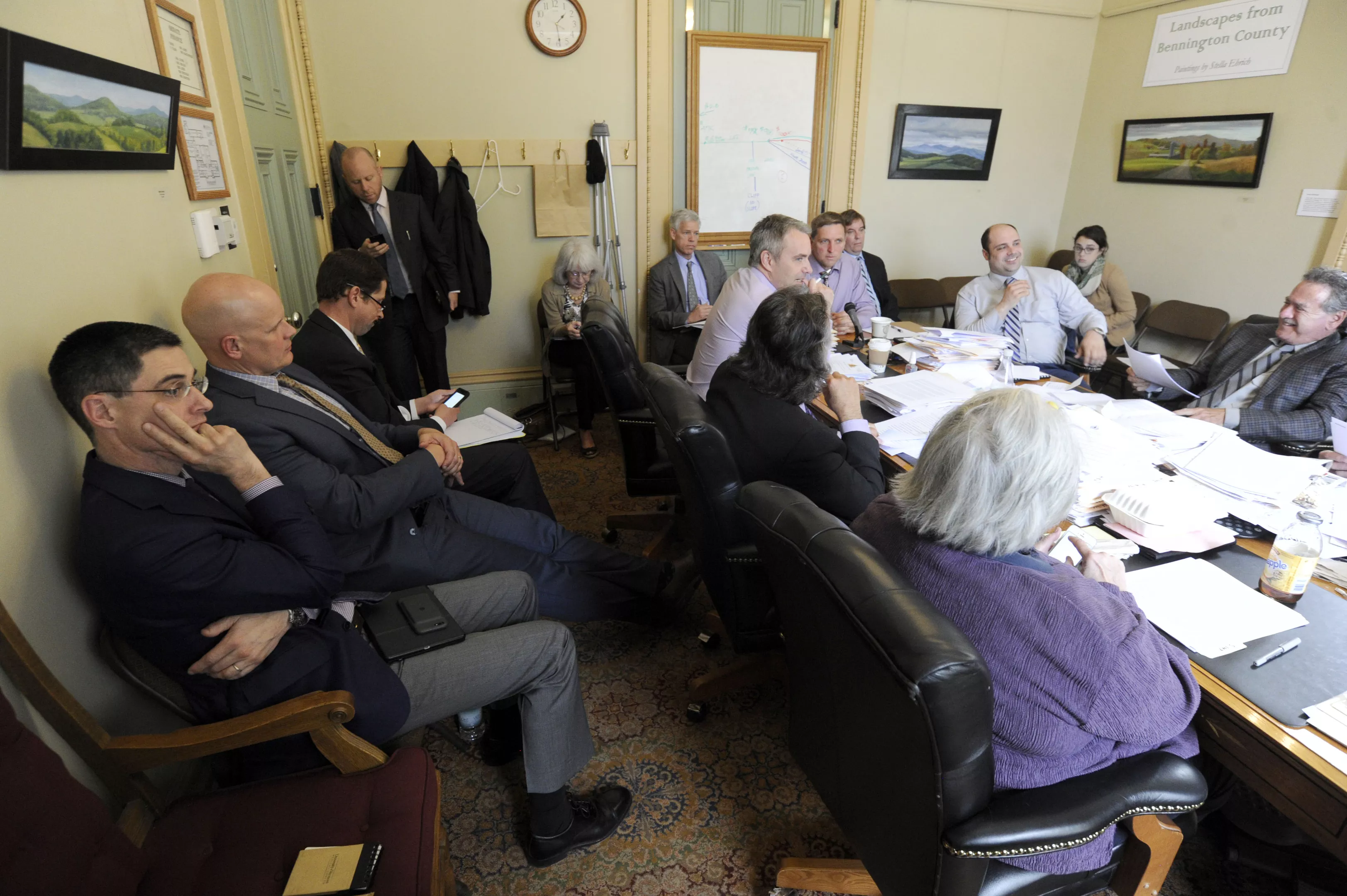
The discussion had played out in committee rooms throughout the Statehouse during the last four months. But any bill with a tax, fee or affecting the state’s revenues has to pass through Finance. At the end of a legislative session, nearly all of the most significant debates make their last stop here.
Often, time is short and the committee is new to the topic. That means that lobbyists must be prepared with a honed elevator pitch supporting their legislation. And subsequently, any bills that have been in the works for months, or even years, can die or take a dramatic turn here.
“It all happens in Senate Finance,” said Jamie Feehan, a lobbyist with the firm Primmer Piper Eggleston & Cramer, who grabbed a seat in the room Thursday to represent the Property Casualty Insurers Association of America.
“I walked out of here yesterday and said, ‘I asked for this?’” Sen. Ann Cummings (D-Washington), said Friday from her seat at the head of the table. “It’s a lot of pressure.”
But make no mistake, this is where Cummings wants to be. She chaired Finance for 10 years, then was marooned on the Education Committee for four years before winning a place this year back in the center of the action.
Tags: Senate Finance Committee , Vermont legislature , Ann Cummings , Uber , Lyft , Todd Bailey , Jamie Feehan , Adam Necrason , Image , Web Only