

Tuesday, May 1, 2018
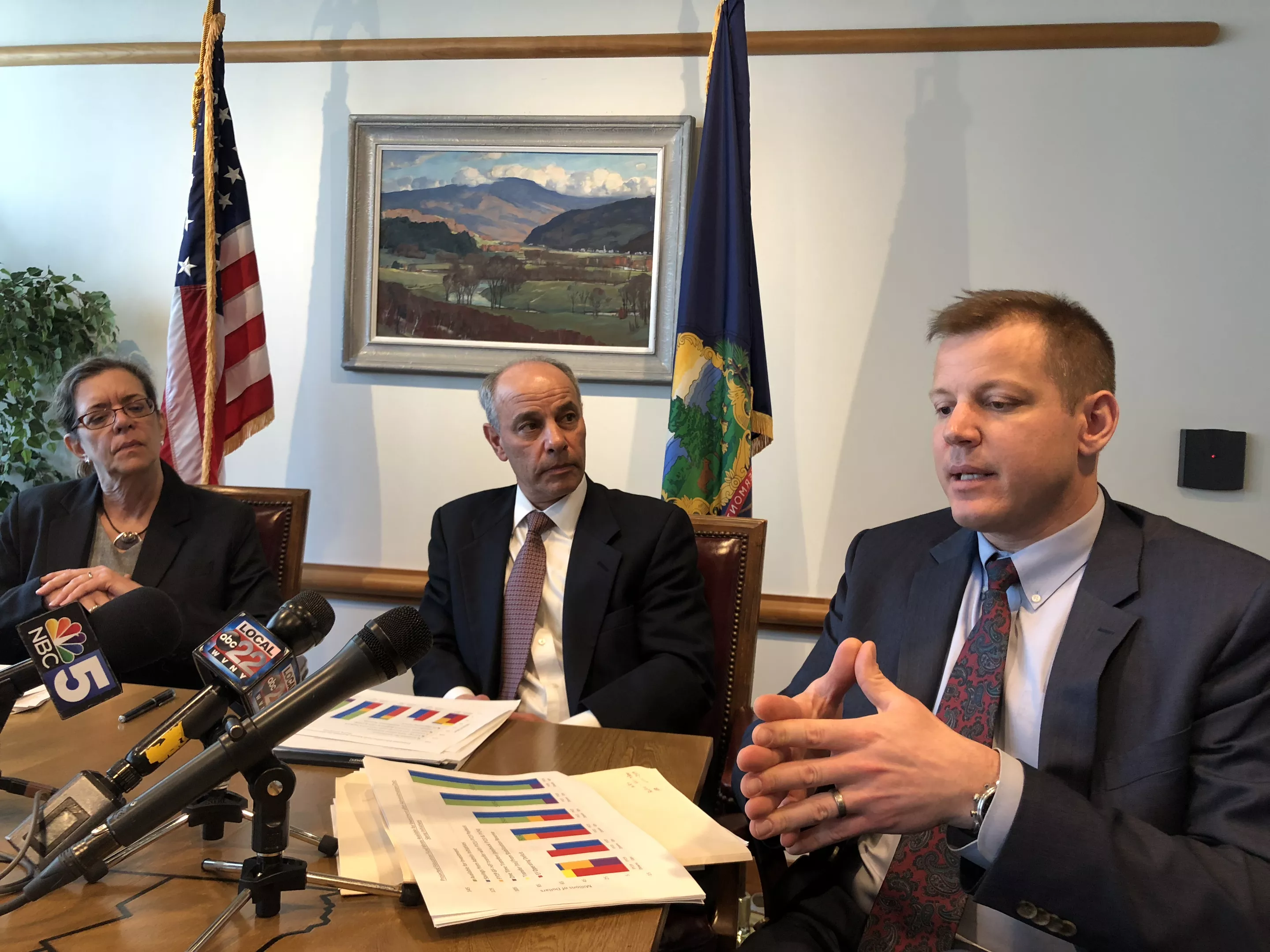
Gov. Phil Scott on Tuesday proposed using eight distinct pots of money to hold down property taxes in 2019, and unveiled a plan he says would cut school spending and keep property taxes level for another five years.
The governor wants lawmakers to approve the two-part package during the final two weeks of the legislative session.
To find the $58 million needed to avert a property tax increase, Scott would turn to one-time expenditures. Nearly $20 million would come from an unexpectedly large tobacco settlement, much of which lawmakers have already allocated to other programs. The administration is also counting on another $20 million in expected surplus revenue, and it wants to borrow $7 million from the state’s general fund reserves.
Tax Commissioner Kaj Samsom told reporters that transfers from the general fund to the education fund would be paid back over five years.
Still, House Speaker Mitzi Johnson (D-South Hero) and Senate President Pro Tempore Tim Ashe (D/P-Chittenden) expressed skepticism about relying on such a large amount of one-time funds.
Tags: Phil Scott , Vermont legislature , education funding , Image , Web Only

Despite winning support from every Senate Republican, the bill, which increases spending over the previous year by less than 1 percent, faces an uncertain future.
It relies on a $34 million tobacco settlement, and Scott announced Tuesday that he wants to use a majority of that money to hold property taxes level. The Republican governor could decide to veto the budget to pressure lawmakers into supporting his property tax and education cost-containment proposal.
Tags: Vermont Senate , budget , Phil Scott , Jane Kitchel , Image , Web Only
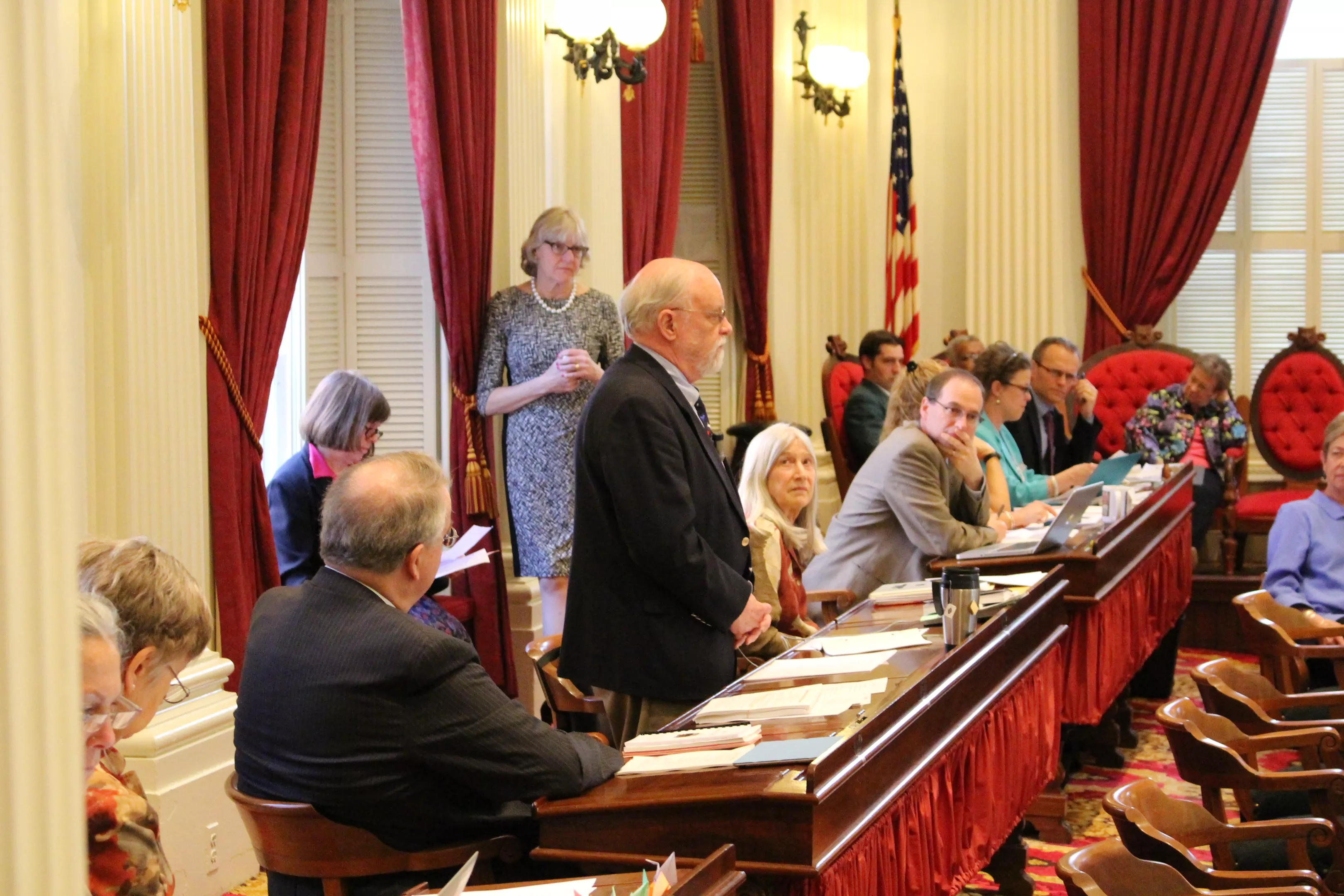
As chair of the House Committee on Natural Resources, Fish and Wildlife, the 73-year-old legislator has played a lead role in the ongoing debate about how — and when — to find a long-term funding source to clean up the state's polluted waterways, including Lake Champlain.
Deen, who considered retiring in 2016, told Seven Days at the time that he would stick around for another term to ensure water quality protections were firmly in place. It's not clear he succeeded in that effort. Deen acknowledged Tuesday that, even now, there's more work to be done — but he won't be the one to do it.
“Thirty years of service? Thirty is a nice round number,” Deen said when asked why he chose to retire this year. “People say I’m a slow learner. Maybe I am, but after 15 election cycles of saying, You know what? I gotta run again because there’s more to do, I finally figured it out: There’s always more to do. And I do have a personal agenda in terms of things I’d like to do, and I’d like to get to it, so now’s the time.”
Tags: Vermont House , David Deen , water quality , Mike Mrowicki , environment , natural resources , Image , Web Only
Friday, April 27, 2018

On Friday morning, the Vermont House of Representatives voted 106 to 28 to indefinitely shelve H.167, a bill that had been rewritten as a vehicle for legalizing the commercial sale of marijuana with state oversight and taxation. Earlier this year, the legislature approved — and Gov. Phil Scott signed — a bill permitting personal cultivation and possession of small amounts of marijuana.
Supporters had hoped to at least keep the bill alive for more debate next week. After the vote, legalization supporter Lt. Gov. David Zuckerman said, "I think it's over for this year."
He blamed Statehouse politics for the defeat. "There is plenty of support to legalize," he said, "but sometimes in this building, the powers that be guide legislators to do something that isn't what their constituents want."
The vast majority of Democrats and Republicans voted to shelve the bill. Democratic leadership cited the rush of more pressing business in the remaining days before adjournment.
Tags: Cannabeat , David Zuckerman , marijuana legalization , Don Turner , Jill Krowinski , Diana Gonzalez , Image , Web Only
Thursday, April 26, 2018
González said she’s been working toward the proposal for most of the legislative session, and that recent conversations suggest there are enough votes to pass it. She said it’s got support among some Republicans who voted against January’s legalization bill because it didn’t establish a means to tax and regulate sales.
“Ultimately what we need are the votes, and in our conversations it looks like we have them,” González said.
Tags: Cannabeat , marijuana , Diana González , Image , Web Only
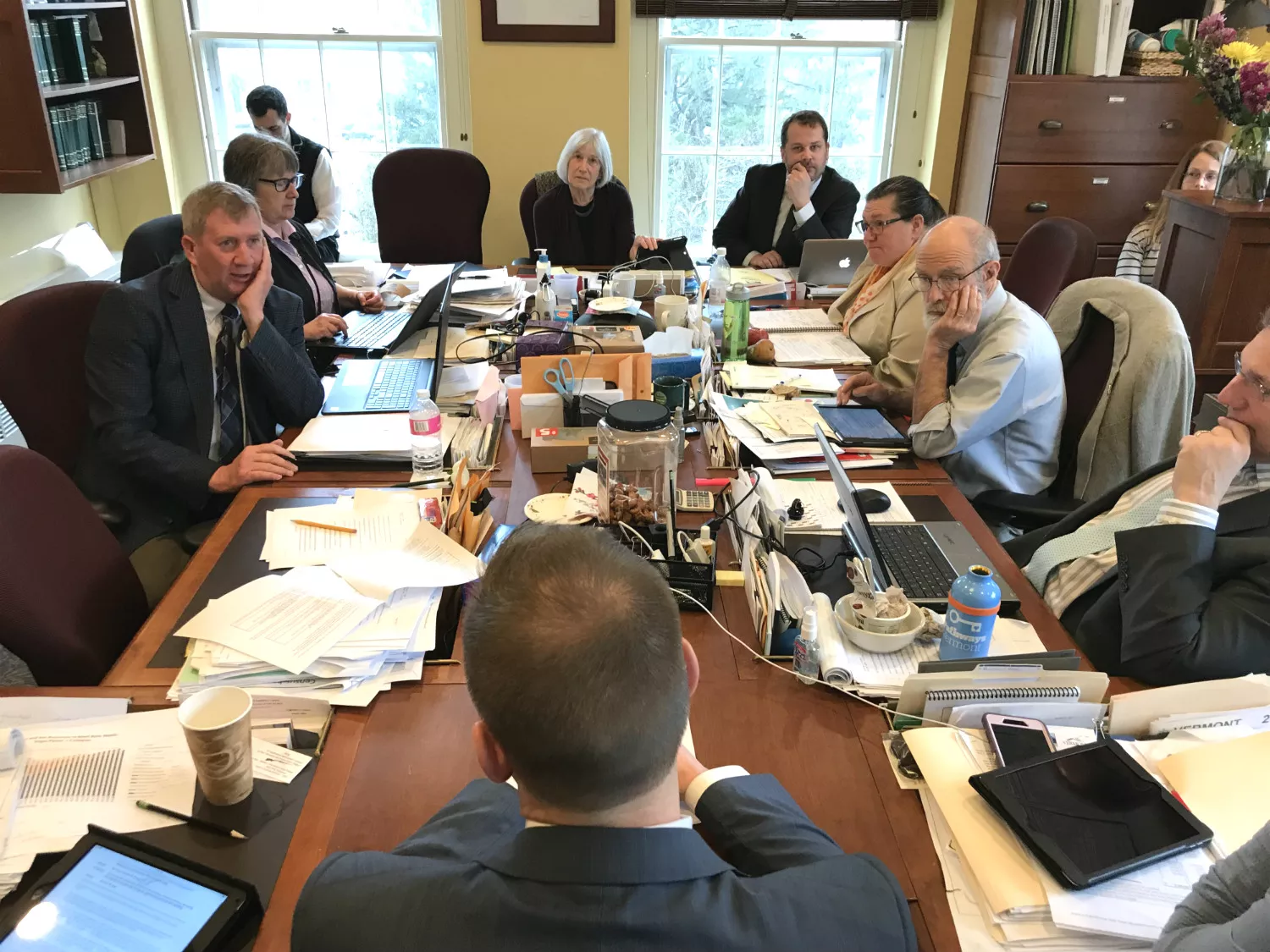
House Ways and Means Committee chair Janet Ancel (D-Calais) said the “clock is ticking” on the legislative session, which is expected to last two more weeks. Committee members voiced concern and frustration that the administration has hinted at a comprehensive proposal but provided few details.
“I’d like to know if there is going to be a proposal … to use one-time money,” Ancel told Samsom. “Where would it come from, and how would it be replaced? Those are all things that would affect tax rates.”
Tags: tax , Kaj Samsom , Janet Ancel , Kurt Wright , George Till , education funding , Image , Web Only
Wednesday, April 25, 2018

The education-funding challenge standing between Vermont lawmakers and adjournment just grew — by roughly $18 million, according to a legislative fiscal officer.
Gov. Phil Scott has insisted that there be no property tax increase in 2019. Last week, he proposed using $40 million in one-time funds to offset a projected 5.5 cent increase in the statewide education property tax. But the legislature’s fiscal analysts are now pegging the figure at $58.2 million.
That stems partly from new information, according to Stephen Klein, the legislature's chief fiscal officer: The Agency of Education learned last week that special education costs came in about $6 million higher than expected, and general school spending is also up. That means the projected education property tax increase now stands at 6.8 cents.
In response, the administration revised its estimate to the "mid-$50 million" range late last week, according to Scott's communications director, Rebecca Kelley, who added, "We’ve been accounting for it as we finalize our recommended package for closing the gap."
Tags: Phil Scott , property taxes , Vermont legislature , Image , Web Only

The bill would have expanded the power of the commissioner of the Department of Health to regulate products that pose a risk of exposing children to toxic chemicals. The commissioner, who is appointed by the governor, would have been able to require health labeling on products or even ban their sale.
The House's vote to override the veto failed to get approval from two thirds of the representatives present, as required by the state's constitution. Ninety-four representatives voted in favor of the bill and 53 voted against it.
One of those standing with the Republican governor was Rep. David Ainsworth (R-South Royalton), who had been out sick. He returned to the chamber to help the GOP's cause, casting his first votes of the session.
Tags: Phil Scott , Don Turner , David Ainsworth , Fred Baser , William Canfield , Martha Feltus , James Harrison , Richard Lawrence , Terry Norris , toxics , consumer protection , veto , Department of Health , Image , Web Only
Tuesday, April 24, 2018

Finance Commissioner Adam Greshin said the plan does not include a tax increase, because districts that beat the target would get a tax break, meaning the state wouldn't be taking in more money overall — even though some Vermonters would pay more.
“What the proposal does is, it levels the average statewide property tax,” Greshin told the House Education Committee Tuesday.
Tags: taxes , education , staff-student ratio , education funding , Dave Sharpe , Dylan Giambatista , Phil Scott , Adam Greshin , Brad James , Rebecca Holcombe , Agency of Education , Image , Web Only
Monday, April 23, 2018

State Police Capt. Kevin Lane told the House Judiciary Committee Friday that the agency stopped using the technology because of state rules put into place in 2016 and the potential cost of replacing the devices as they reach the end of their useful lifespan.
“Looking at replacements was expensive, and some of the reporting requirements when the law changed were very challenging to meet,” Lane said.
Tags: privacy , law enforcement , ALPRs , license plate scanners , license plate readers , Image , Web Only