

Wednesday, February 19, 2020

Senators seem to support a bill that would require electric utilities to get all of their power from renewable sources by 2030. The state’s renewable energy standard already calls for them to reach 75 percent renewable by 2032. So the new benchmark seemed manageable to members of the Senate Finance Committee.
But the bill’s call to double — from 10 percent to 20 percent — the amount of renewable energy that utilities would have to purchase from new Vermont sources like solar seemed to be a bridge too far for some senators.
Sen. Ann Cummings (D-Washington), who chairs the committee, cautioned members that the requirement was causing some utilities — and her — concern over potential cost hikes.
Tags: renewables , climate , S.267 , Sen. Chris Pearson , Web Only , Image
Tuesday, February 18, 2020

Alice Little — who has reportedly earned more than $1 million in a single year working at a legal brothel in Nevada, which she says makes her the state's highest-earning licensed sex worker — extended the offer in a YouTube video posted last Friday.

“You have a tremendous opportunity to be the first state to legalize sex work at the state level,” says Little, sitting on the foot of a bed. “As someone that’s been in this industry for the past four years, I want to help shape the future of sex work in America and ensure that we have a system that values everyone involved.”
Tags: Sex worker bill , Good Samaritan bill , Selene Colburn , Alice Little , Moonlite Bunny Ranch , Montpeculiar , Web Only , Image , Video
Thursday, February 13, 2020
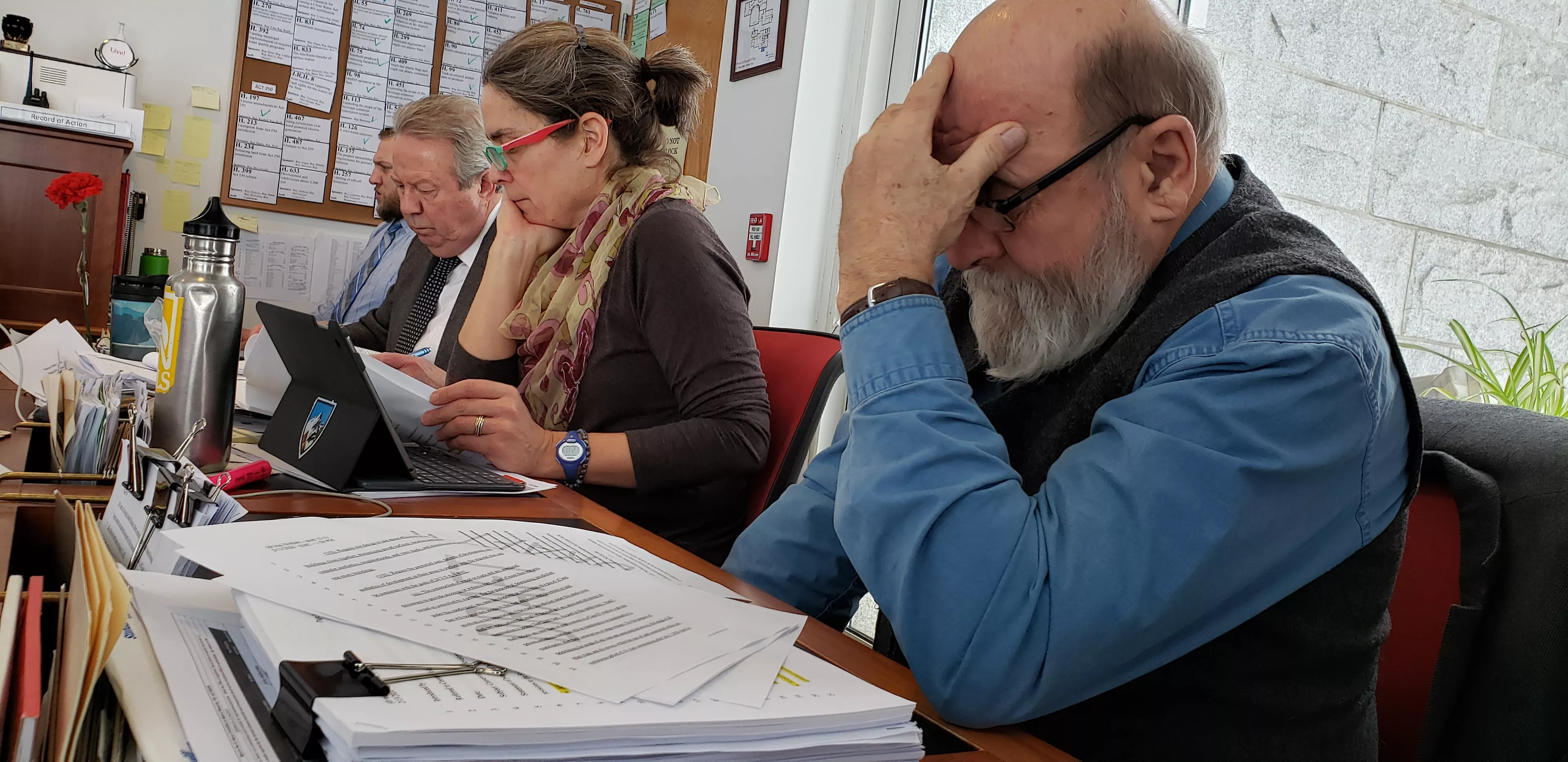
The 94-page draft bill still has a long way to go to become law. But its approval by the House Natural Resources, Fish and Wildlife Committee marked a significant milestone in the nearly two-year-long effort to modernize Act 250.
Even the bill’s supporters, however, acknowledged that changes to the 50-year-old law represent a compromise that won’t please everyone.
“I would do this a different way, but it’s politics. It’s the art of the possible,” said committee chair Amy Sheldon (D-Middlebury). “We have to make compromises that meet people’s needs, and that’s what we’ve done.”
She was referring largely to the decision to strip the nine volunteer district commissions of their ability to decide the fate of complex projects.
Tags: Act 250 , district commissions , Web Only , Image
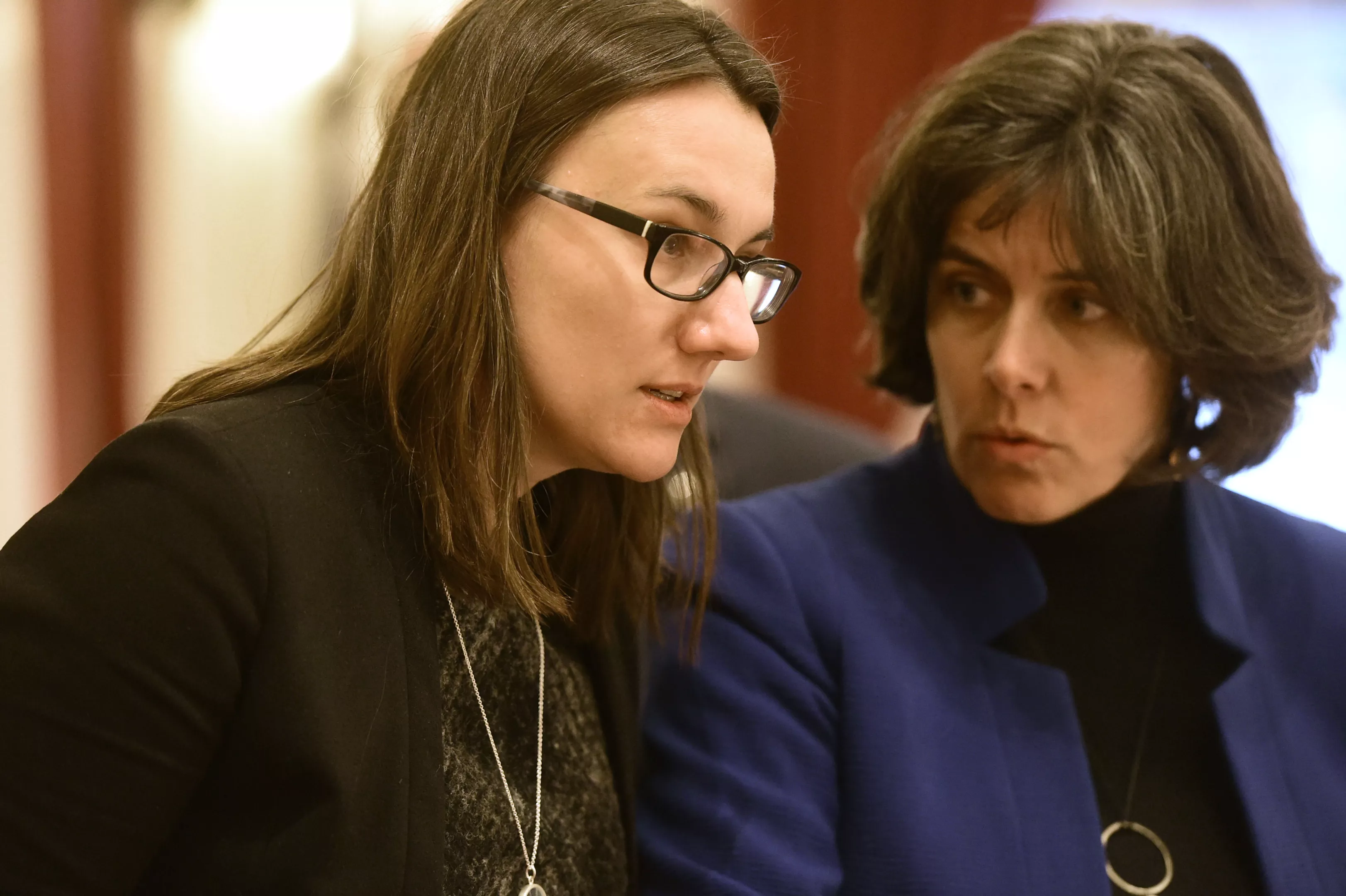
All eyes now turn to the House, where Democratic leaders fresh off their failure to force paid leave legislation into law must prepare for another high-stakes vote.
House Majority Leader Jill Krowinski (D-Burlington) said Democratic leaders have begun working on a vote count and plan to check in with every member of their caucus. That includes the eight moderate Democrats who voted against the minimum wage hike the first time around.
"Some people are hearing and feeling pressure from their constituents, so we are in constant conversations with them to see where they're at," Krowinski said.
Tags: Minimum wage , Gov. Phil Scott , Jill Krowinski , paid leave , veto , override , Web Only , Image
Tuesday, February 11, 2020
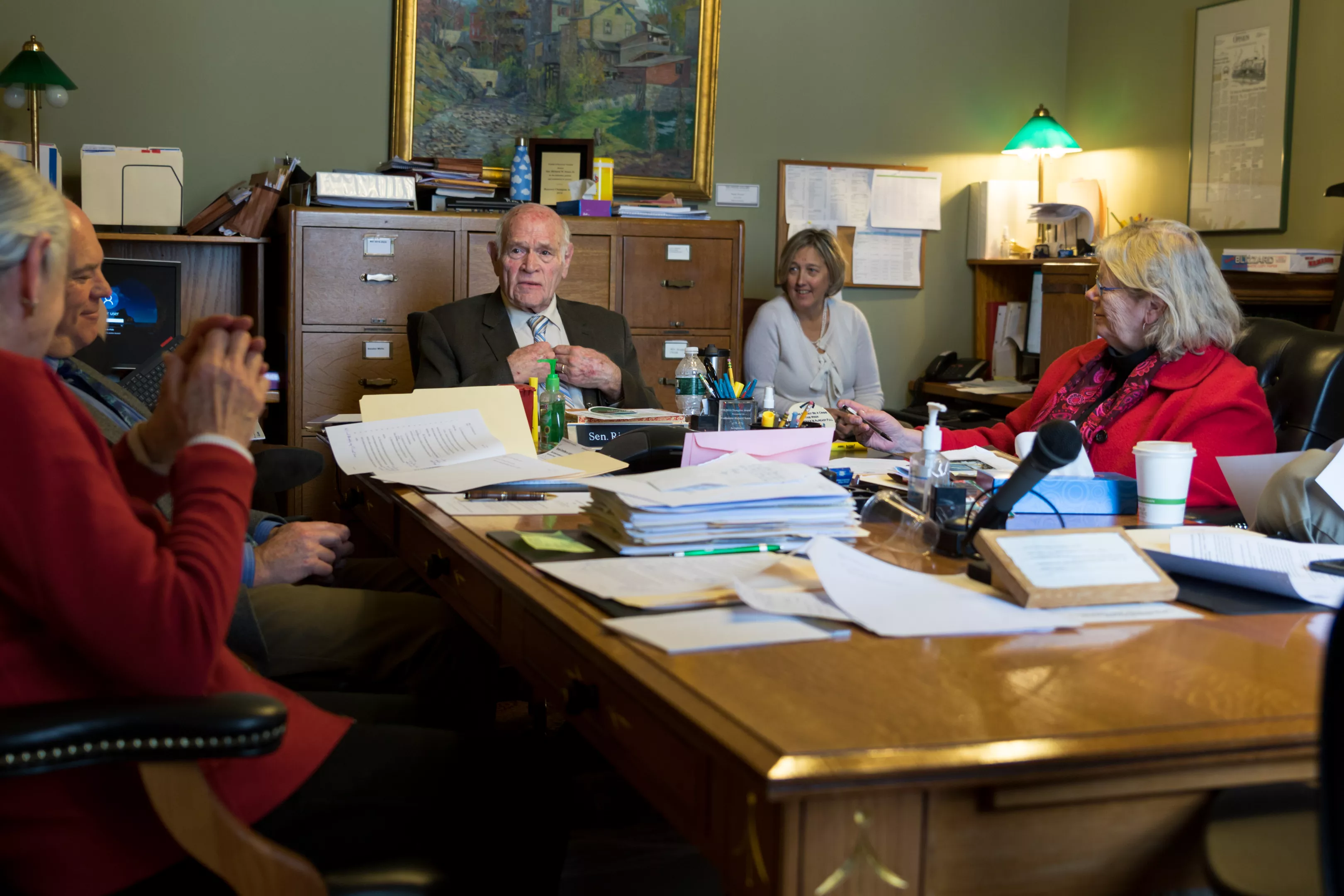
"Here we go," Baruth said. He set his device to speakerphone. A prerecorded voice filled the hearing room: "Get ready for the ultimate vacation!" it said.
"It sounds too good," Sen. Jeanette White (D-Windham) said with a grin.
It's better than some of the messages that scammers send: Many warn that non-existent car warrantees are expiring, or that the Internal Revenue Service is out to arrest the person who answers.
Sen. Randy Brock (R-Franklin) has introduced a bill that would criminalize robocalls, which he described as a "scourge."
"There are few things worse," Brock said, outlining his bill before the committee.
S.324 would prohibit businesses from contacting Vermont consumers using automated phone call software with a few exceptions, such as announcing school closures or appointment reminders. The measure would also allow the state to charge business owners who sponsor illicit calls with fines and jail time.
Brock explained that he was moved to action after receiving his 11th robocall in a single day despite software on his phone meant to screen them.
"I had originally thought about introducing this bill for capital punishment applying only to robocallers," he joked. "But my wife suggested that probably wouldn't be received well."
Tags: Robocalls , criminalization , Dick Sears , Randy Brock , Phil Baruth , Web Only , Image
Monday, February 10, 2020

The governor had until midnight Monday to take action on S.23, which calls for hiking the state’s minimum wage from $10.96 per hour to $12.55 by 2022. He released a statement at 8:30 p.m. announcing the veto, his second in as many weeks.
The boost would have been more modest than the $15 minimum wage that many lawmakers had sought to have in place by 2024. But it still proved too much for the Republican governor, who said the increase would raise the cost of goods, harm economic growth and disproportionately affect rural areas.
“It’s critical to recognize that we share the goal of Vermonters making more money. I also believe Vermonters should keep more of what they earn, which is why I can’t support policies that increase the costs of living,” Scott said. “I believe this legislation would end up hurting the very people it aims to help.”
Tags: minimum wage , veto , Gov. Phil Scott , Web Only , Image
Friday, February 7, 2020
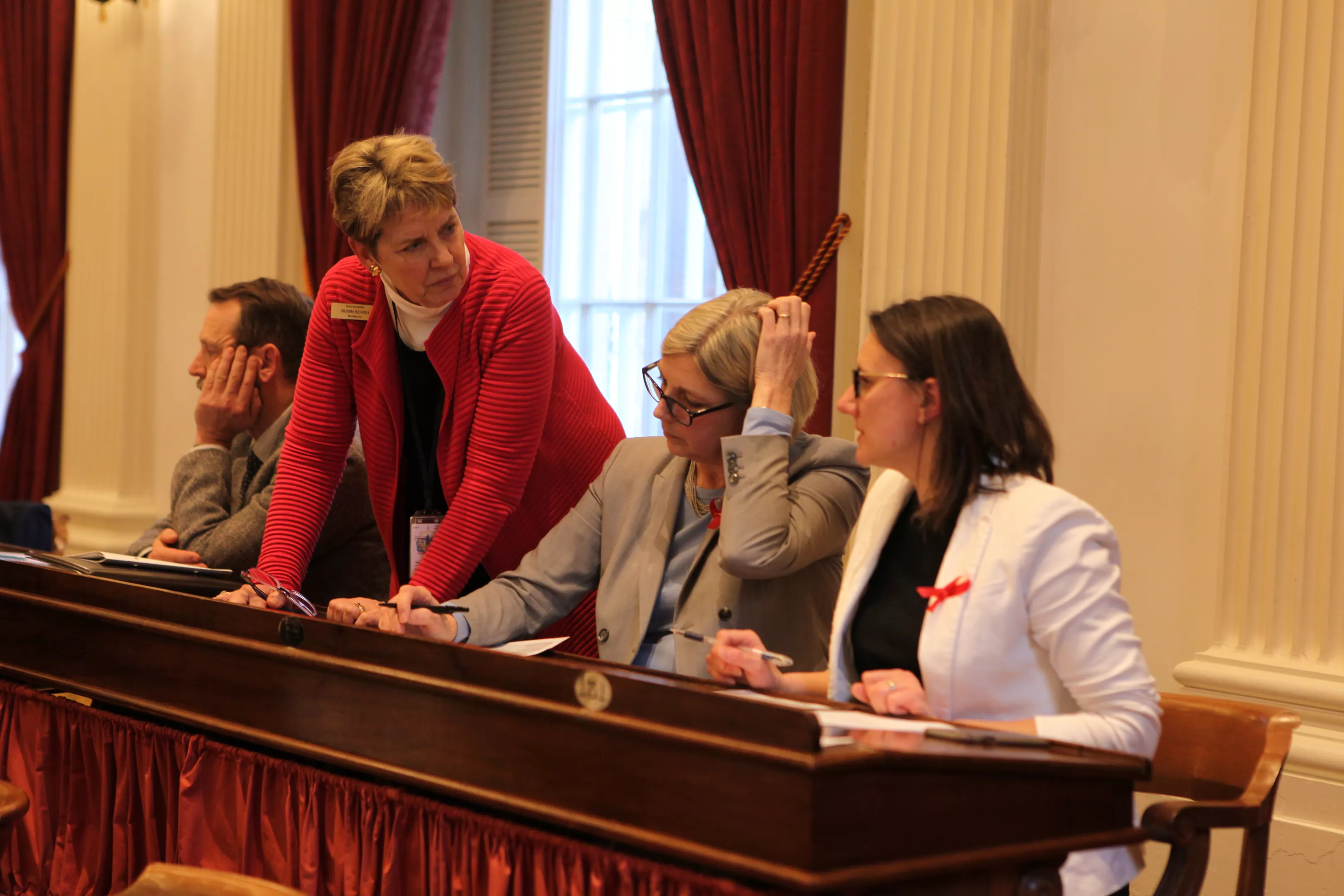
The finger-pointing reflected how painful it has been for many lawmakers to watch their signature legislative priority — one that some have pushed for a decade — fall just one vote shy of success.
The full 150-member House needed 100 votes to override Republican Gov. Phil Scott’s long-promised veto of H.107, but a coalition of Democrats and Progressives could only muster 99 votes in favor.
In the hours and days following the high-profile defeat, House members first expressed disappointment and commitment to keep fighting, but later began characterizing it as a betrayal.
“I believe a trust was broken,” said bill sponsor Rep. Robin Scheu (D-Middlebury), though she said she wasn’t directly involved the vote-counting conversations. Rep. Tom Stevens (D-Waterbury) said a House member had “reneged” on a “hard, stated commitment” to support the override.
Majority Leader Jill Krowinski (D-Burlington) said alarms began going off shortly before the vote when a member who had pledged support the previous week was spotted in the Statehouse conferring with members of the Scott administration.
Krowinski didn’t name the member, who she said had previously “indicated that they were a ‘yes’ and were going to help out with having conversations with other people.”
Rep. Linda Joy Sullivan (D-Dorset) acknowledged she was the member whose vote leaders took issue with.
On the morning of the vote, leadership learned the governor had been “pulling people in” for meetings about it, Krowinski said.
Scott acknowledged administration officials had meetings with two House members shortly before the vote, as well as side meetings with members to answer questions and urge them not to support the override.
Concerned about that outreach effort, House Speaker Mitzi Johnson (D-South Hero) checked in with Sullivan that morning, and learned she wasn’t sure how she was going to vote.
“This is not the first time that she’s gotten squirrelly,” Johnson said. “It’s just the first time that it’s been in a situation with these consequences.”
Johnson said she arranged to get Sullivan the answers to her outstanding questions even as she was working to see if she could convince Rep. Laura Sibilia (I-Dover) to support the override.
Both efforts failed. Party leaders blamed Sullivan for not keeping them in the loop about her change of heart.
“It was a breach of protocol, and it was a breach of trust,” Krowinski charged. “And I hope that we can rebuild from this and learn from this so that it doesn’t happen again.”
Some Democrats in the House, such as Rep. Cynthia Browning (D-Arlington), don’t always support bills that leadership wishes they would, Johnson said. But Browning has “honesty and integrity” and lets leadership know her concerns up front, she said.
She did not have similar praise for Sullivan.
“Rep. Sullivan is smart enough and engaged enough and has been around long enough to know the protocol is that if you are not on board with the main plan, it’s on you to be clear to leadership about that,” Johnson said.
Rep. Emily Long (D-Newfane), the House whip, is responsible for making sure House leaders know who plans to vote how on bills, and why.
“It’s not about the decision,” Long said. “It’s about the communication, or lack thereof.”
Sullivan had been widely seen as one of the swing votes. She was one of a group of conservative Democrats from southwestern Vermont who voted against the original House bill last year as well as the compromise bill struck with the Senate early this session.
Sullivan conferred at length with staff from the legislative counsel’s office in the House chamber just before the override vote. She denied she had ever committed to “flip” and vote for the override.
“I can understand Leadership’s need to mischaracterize their folly,” Sullivan wrote in an email. “While I appreciate the miscommunication from the Majority Leader to the Speaker, I never committed to anyone on how I was going to vote.”
Sullivan said the last time she spoke to anyone in leadership about her vote was at a Democratic event in Bennington County on January 26 when Krowinski, “under a social setting with a glass of wine, asked me if I was getting the answers to my unanswered questions.
“I told her that I was,” Sullivan wrote, adding she was continuing to ask questions. “There was no further conversation about the veto vote until approximately an hour or so before the floor on vote day."
In her comments on the House floor, Sullivan said she was “unequivocally and without reservation” in support of a paid family leave plan in Vermont. But she said the “two competing and irreconcilable plans” proposed by the legislature and the governor convinced her a compromise between the two plans was possible and should be further pursued.
Sullivan’s written explanation of her vote, however, differed from her verbal one, and fueled questions about her grasp of the paid leave policy. Those written comments express concern that “we are committing to spend another $30 [million] to $60 million in General Fund dollars to set up this plan.”
The $29 million program would be funded by payroll taxes, not general fund dollars. Sullivan said the written comments were in error, and she meant to write that she had concerns the plan could result in a $3 million to $6 million impact on the general fund.
By the time Sullivan’s concerns were clear, Johnson said, there was no way to delay the vote.
Johnson had informed Republican leadership about the timing of the vote, and House members had gone to great lengths to be there. Members had delayed travel plans and reported to the Statehouse after surgeries, she said.
“There had been a lot of push to take the vote,” Johnson said. “I think we were very much on this train.”
Correction, February 8, 2020: This post has been updated to clarify Sullivan's statement acknowledging that she was the legislator whom leaders blamed, and it was also corrected to give her correct hometown.
Tags: paid family leave , veto , Gov. Phil Scott , Linda Joy Sullivan , override , Web Only , Image
Wednesday, February 5, 2020
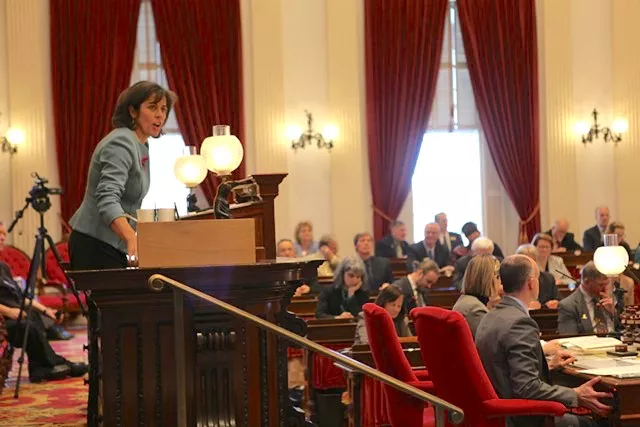
paid family and medical leave program Wednesday, a huge blow to one of their key legislative priorities.
House members voted 99-51 in favor of override, one vote shy of the 100 needed to force the bill — with the expected consent of the Senate — into law.
H.107 received 89 yes votes in the House last month, and leaders sought to whip up 11 additional votes. Some had predicted that enough lawmakers who voted against the bill would come around to support overriding the Republican governor's veto.
"The vote the last time was, 'Is this bill my ideal?' And the vote this time was ... 'Is Vermont better off with this or with nothing?'" a visibly disappointed House Speaker Mitzi Johnson (D-South Hero) said after the vote.
Speculation about whether leadership had lined up the votes was high after five Progressives who voted against the bill last month agreed Tuesday afternoon to support the override.
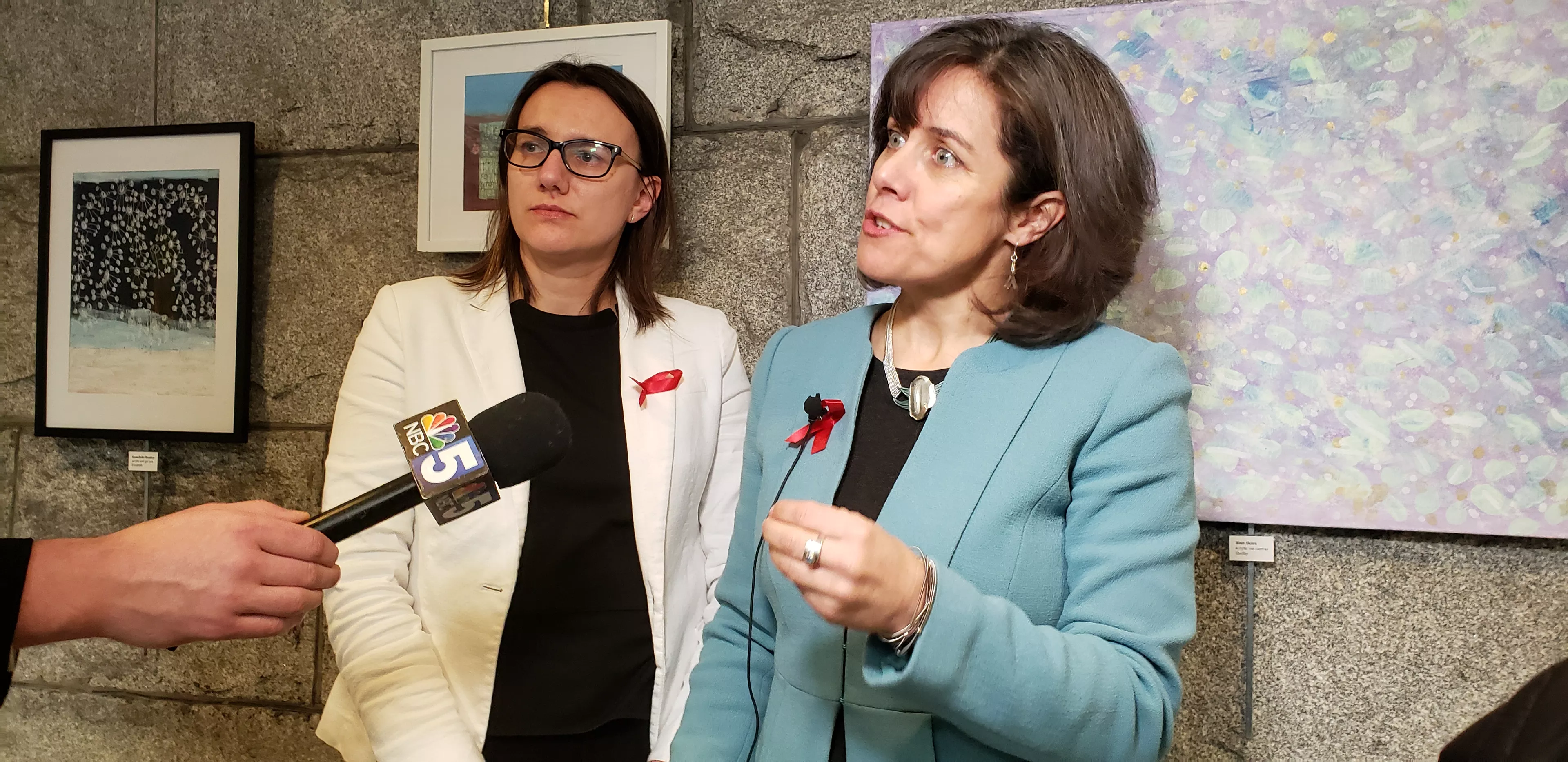
Rep. Robin Chesnut-Tangerman (P-Middletown Springs), who initially voted no, said he felt it should be passed into law with an eye toward "improving and strengthening it next year."
That left just a few swing votes — three by some calculations — needed to override. Two Democrats who initially voted against the bill, Logan Nicoll (D-Ludlow) and Charen Fegard (D-Berkshire), flipped.
But Rep. Linda Joy Sullivan (D-Dorset) said she could not support one of "two competing irreconcilable plans," a reference to Scott's voluntary leave plan.
"I believe that this plan, and the governor's plan, are both broken" and need to be reconciled, she said.
Another Democrat who stuck by his no vote was Rep. Randall Szott (D/P-Barnard), who pushed back against the idea that lawmakers should strive for incremental change by passing a compromise bill and working to improve it later.
Laura Sibilia (I-Dover), who was absent for the initial debate on the bill Wednesday, cast another key vote against it. She returned to the chamber around the same time as Johnson, just before the final vote, but her position had not changed.
After reaching an impasse on competing versions of the bill last session, House and Senate leaders hammered out a compromise last month. The program would have allowed most workers to take up to 12 weeks of paid leave to bond with a newborn child and eight weeks to care for a sick family member. The $29 million insurance program would have been funded by a payroll tax.
The cost and mandatory nature of the program is what troubled most Republicans, including Rep. Scott Beck (R-St. Johnsbury).
Beck said the question came down to a choice between an optional family leave program such as Scott's, or "to raise a $30 million payroll tax on tax-weary Vermonters. That is the question."
Rep. Robin Scheu (D-Middlebury) countered that the program would help businesses that currently opt to pay employees who take leave. She also said it would help all businesses attract and retain workers.
"It's long past time for us to support working families and help our businesses with a paid family leave program," Scheu said.
House Majority Leader Jill Krowinski (D-Burlington) said the bill was "one of the top issues in our platform" and its defeat did not mean the war was over.
"We're going to be taking it back to the campaign trail," she said. "We're going to be running on it again."
Tags: veto , override , paid family leave , Web Only , Image
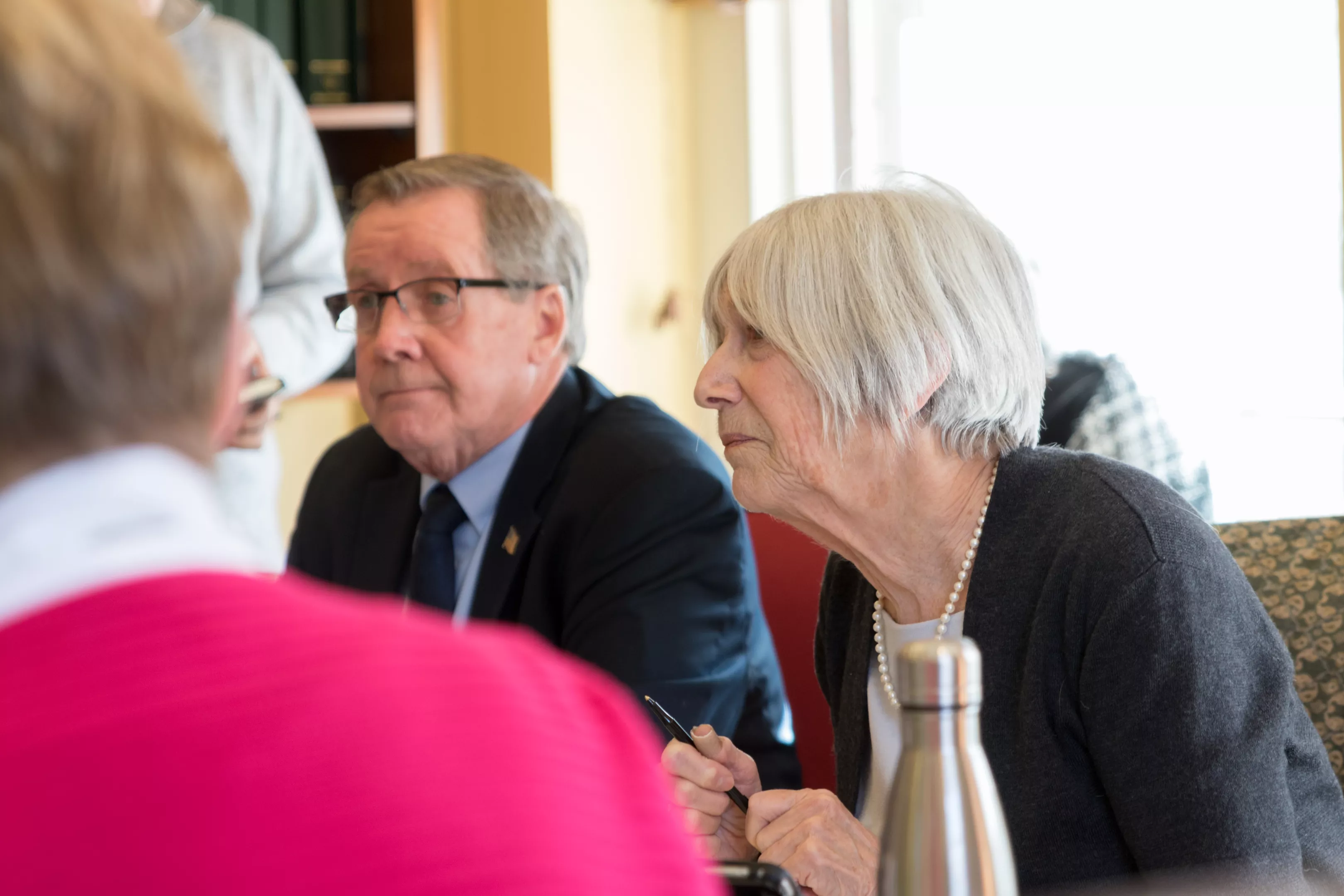
On Wednesday, the House Ways and Means Committee voted 7-3 to advance S.54 with a 20 percent tax on all retail cannabis sales. The state tax figures align with those in Massachusetts, which set up an adult-use cannabis market in 2018, said chair Rep. Janet Ancel (D-Calais).
"We felt that 20 percent ... is a good place to land," Ancel said after the vote. "I think there might be some tolerance for it being a little bit higher than that, but not much."
Tags: Cannabeat , Cannabis , tax , Rep. Janet Ancel , tax-and-regulate , Web Only , Image
Tuesday, February 4, 2020
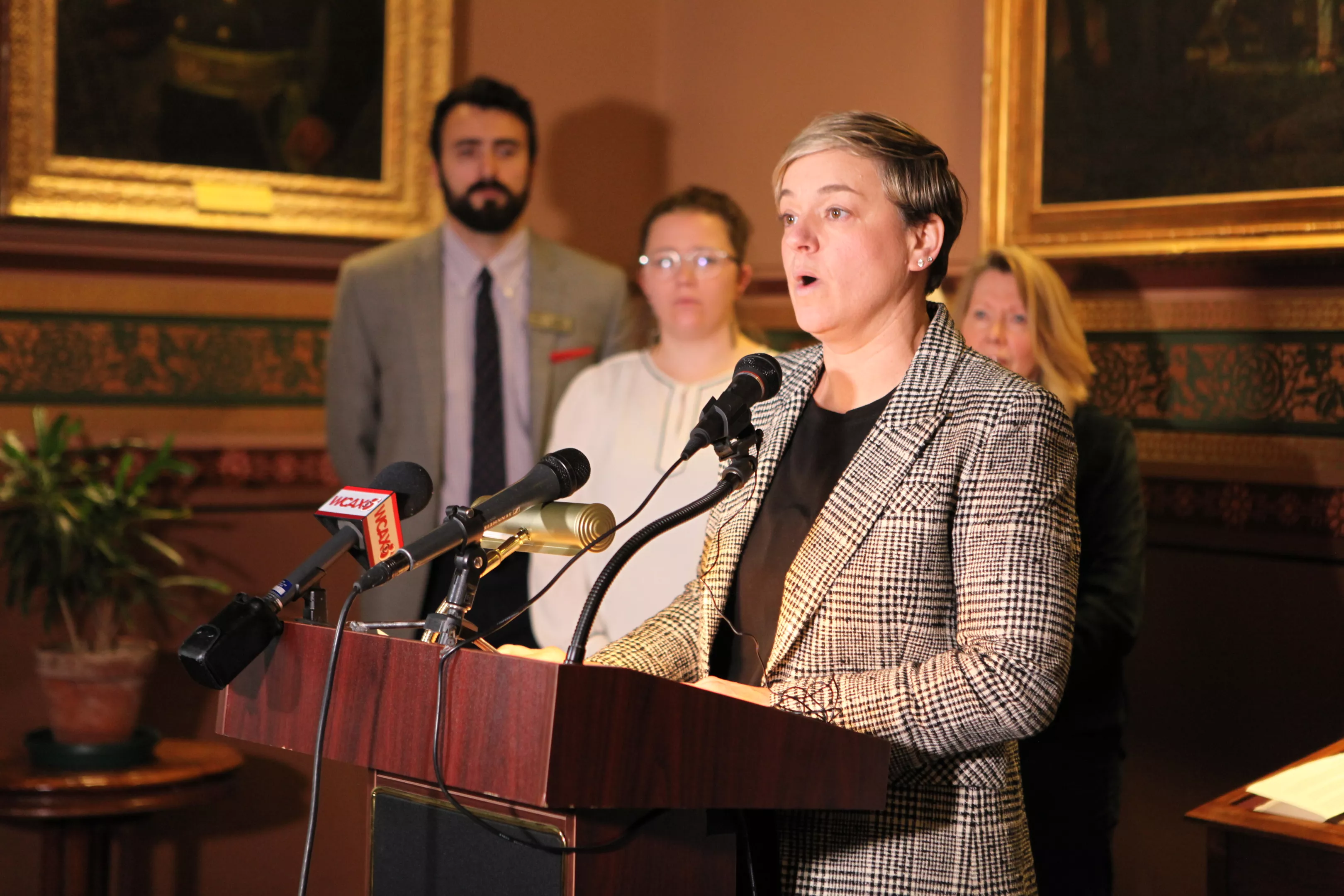
House leaders will hold an afternoon floor vote and will need two-thirds of the members present — 100 if all 150 members show up — to block the veto.
“This is a critical vote,” House Majority Leader Jill Krowinski (D-Burlington) told Democrats during a Tuesday caucus. “This is our signature issue for this legislative session for this caucus, so attendance is critical.”
With 89 House votes cast in favor of H.107 last month, lawmakers would have to pick up 11 additional yes votes Wednesday to power past Scott's veto. Three are easy gets: two supporters who missed the January 23 vote and House Speaker Mitzi Johnson (D-South Hero), who votes during veto overrides.
Tags: paid family leave , veto , Gov. Phil Scott , override , Web Only , Image