

Thursday, February 10, 2022

Scott, a former building contractor himself, said in a press release Thursday that the added paperwork would put larger and more established businesses at an advantage. Few other professions must meet such demands, he said.
He noted that there are already tracking and enforcement systems in place, such as the home improvement fraud registry at the state Attorney General’s Office. And the proposed registration system would not provide any assurance that the registered contractor was competent, he said.
“We should not risk the economic harm of this legislation when we already have tools in the toolbox to protect consumers and perhaps those tools should be sharpened,” Scott said.
Monday, February 7, 2022

The Hinesburg farmer and prominent state Progressive served two terms as lieutenant governor before running for governor as the Democratic nominee in 2020 and losing badly to Republican Gov. Phil Scott.
Another gubernatorial run this November against the popular incumbent would "likely be a futile endeavor," Zuckerman said. Instead, he sees a return to his former post as the best way for him to continue advocating for issues working Vermonters care about, such as raising the minimum wage, addressing the climate crisis, expanding broadband access and expanding affordable housing.
“There is a real opportunity to talk with everyone, from students in schools to business owners and community groups, about how to really be effective in creating the changes we want to see,” Zuckerman told Seven Days.
Tags: david zuckerman , molly gray , phil scott , charlie kimbell , Kitty Toll , Greg Thayer , Joe benning , Web Only , Image
Friday, February 4, 2022
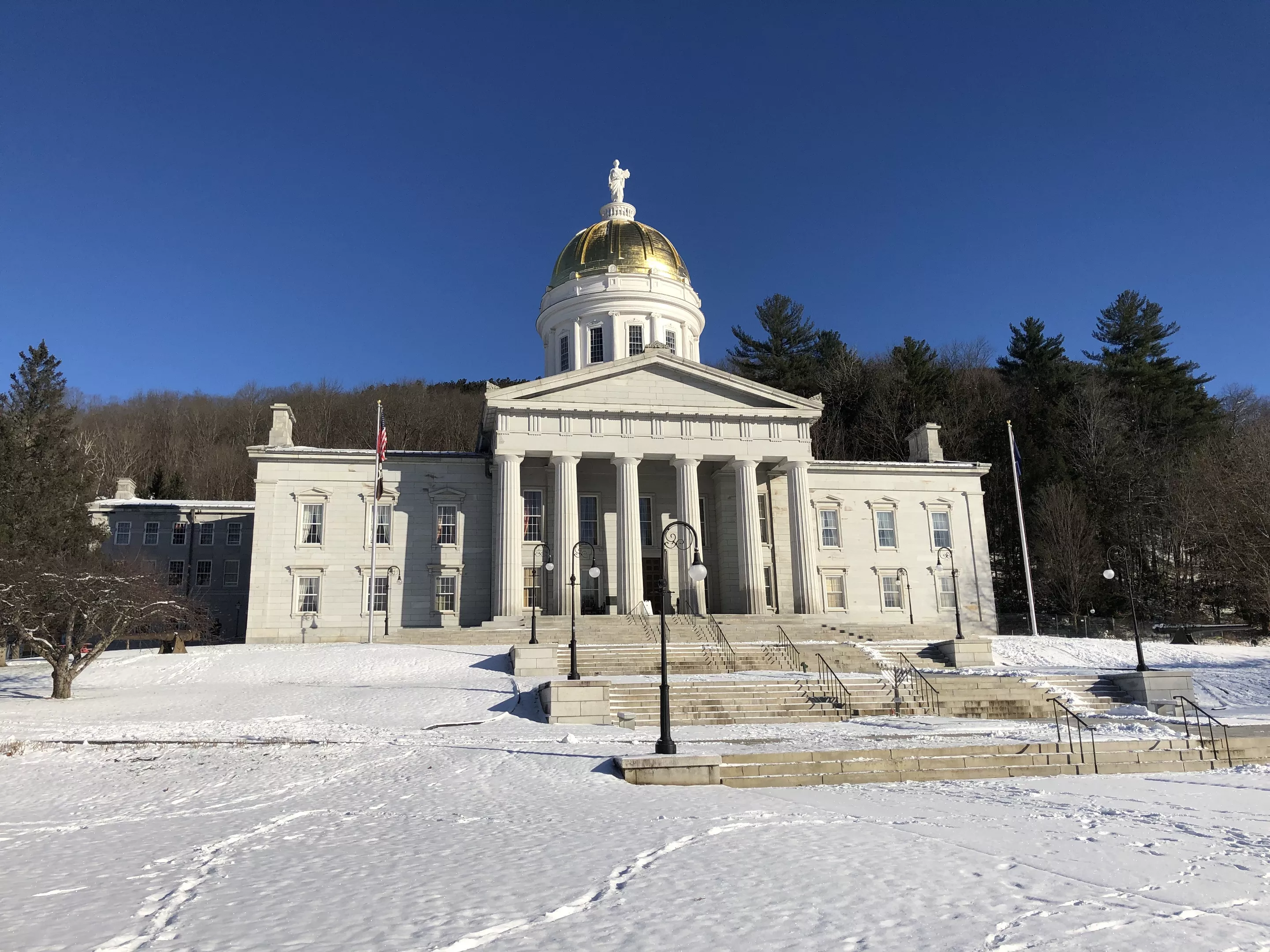
Vermont’s constitution currently says no one 21 or older should be enslaved unless they are bound by their own consent or “by law for the payment of debts, damages, fines, costs, or the like." The 13th Amendment to the U.S. Constitution would later prohibit slavery except as punishment for a crime, but Vermont's founding document has maintained its seemingly partial prohibition to this day.
The amendment, known as Prop 2, would remove this language and replace it with a clause that says slavery and indentured servitude in any form are prohibited.
Tags: Vermont legislature , Slavery amendment , Prop 2 , Web Only , Image
Thursday, January 20, 2022
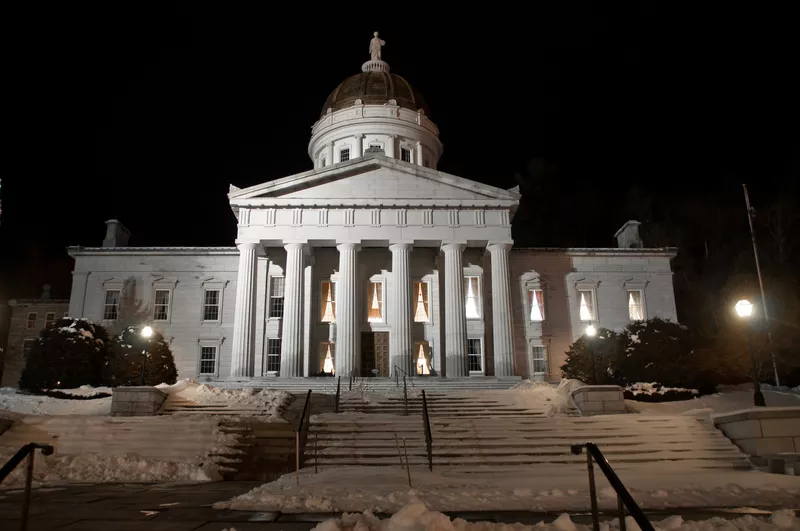
"This is going to serve as the foundation for addressing systemic racism in our state laws and institutions," said Mark Hughes, executive director of the Vermont Racial Justice Alliance, which has pushed hard for the amendment.
Vermont is often credited with being the first state in the U.S. to ban slavery. But the prohibition, enshrined in its constitution in 1777, was a partial one, applying only to people over age 21 while not protecting those "bound by law for the payment of debts, damages, fines, costs, or the like.”
Tags: Vermont , Slavery , Constitution , Public Hearing , Prop 5 , Mark Hughes , Web Only , Image
Tuesday, January 18, 2022

Vermont has a rare opportunity to reverse its economic and demographic stagnation if it spends its federal pandemic windfall wisely in the coming year, Gov. Phil Scott said Tuesday.
In his annual budget address, Scott urged lawmakers to invest the state’s unprecedented budget surplus in initiatives such as workforce development, technical education and targeted tax relief intended to produce economic benefits long after the pandemic subsides.
“It is not an exaggeration to say that the opportunity before us is truly historic,” Scott said. “It’s once in a lifetime, and one I never expected to see happen. There is absolutely no doubt that the economic future of our state will be defined by what we do today.”
Scott said his $7.7 billion proposed budget represents a “transformative moment” in state history. He built on themes he outlined in his January 5 State of the State speech, including the need to strengthen an anemic state workforce. Since 2020, the state has lost 24,000 workers, many to retirement, he said, leading to reduced operating hours for some businesses.
“If we don’t work to solve this problem now, it will be there down the road in the future, and it will be much bigger and more complex,” Scott said.
He outlined several ways to tackle the problem. One is to boost the new and remote worker incentive program to attract young workers and new families to the state. The program, which reimburses people up to $7,500 in moving expenses, would be expanded to $8.5 million over three years.
“I know looking beyond our borders to recruit new Vermonters is not always a popular conversation, but it is a tool we can’t ignore,” he said.
He cited a couple who had lived in South Carolina, Matt and Jessica Bernhardt. They always wanted to move to Vermont and took advantage of the worker programs. They now live in Warren, and Matt works at a Montpelier architectural firm.
Also on tap are a variety tax relief measures for workers in the most needed fields, such as nursing and childcare. Scott outlined $50 million in tax breaks he said would lower the tax burden on workers.
Chief among them would be exempting military retirement income from state taxes. Seventy percent of military retirees are between ages 35 and 50, tax commissioner Craig Bolio said before Scott’s speech. Eliminating state income tax on their pensions would make the state a more affordable place for them to work, he said.
Under another proposal, a single preschool teacher making $18 dollars an hour would pay no Vermont income tax. Under another, young workers would enjoy write-offs on their student loan interest, he said.
Scott also proposed returning half of the $95 million surplus in the education fund to property owners to lower their tax burdens.
To ensure workers have more housing options, Scott outlined a number of proposals. These include $105 million for affordable, mixed-income housing, $25 million for the Vermont Housing Improvement Program for the renovation of run-down properties, and $15 million to build homes for middle income residents.
Key infrastructure upgrades are also coming down the pike, including $200 million in federal grant funds toward broadband, $51 million toward the installation of 100 new cell towers and $72 million more for water, sewer and stormwater infrastructure. He also proposed $216 million in greenhouse gas reduction and climate resiliency work.
To address the mental health challenges deepened by the pandemic, Scott is proposing $2 million to expand Rutland’s mobile mental health response program to four other cities, and $1 million more for suicide-prevention efforts. He’s also calling for $8 million more to strengthen prevention and recovery programs.
And while he acknowledged it’s not sexy, Scott said debt reduction is another key way to use the surplus that would benefit Vermont for years. He cited three types of debt — $22 million in transportation borrowing, $20 million in capital bonds, and $10 million in a property management fund — that he proposed paying off to save money on interest payments.
Democratic legislative leaders issued a statement expressing willingness to work with the governor on his ideas and pushed their own, including the need for $200 million to make good on a recent tentative pension deal.
“The agreement we’ve struck with our hardworking teachers and state employees will protect the public pension system and put it on a path of sustainability,” Democratic leaders wrote in a joint statement.
Scott concluded his remarks by urging lawmakers to view their work through a long-term lens.
“Let’s do our very best to make sure that every negotiation, every decision and every investment withstands the test of time and meets this extraordinary moment," he said, "because we will not get a second chance.”
Tags: Gov. Phil Scott , budget , economy , pandemic relief , Web Only , Image
Monday, January 17, 2022

The first Republican to enter the field said that if elected, he would use the largely ceremonial post not as a stepping stone to higher office, but to highlight the “civility and integrity” of Vermont and its people.
“It is a position that I envision as a cheerleader for the State of Vermont in trying to make our image, if you will, known not just around the United States, but indeed around the world,” Benning said.
The former Senate minority leader joins Rep. Charlie Kimbell (D-Woodstock) and Patricia Preston, executive director of Vermont Council on World Affairs, in making his campaign official. Others who’ve expressed interest in running include former Democratic representative Kitty Toll of Danville and former Democratic/Progressive lieutenant governor David Zuckerman, who served two terms before running unsuccessfully for governor in 2020.
Unlike other candidates “pontificating about what social ill they are going to attack,” Benning said that as lieutenant governor, he would recognize the inherent limitations of the job.
The LG presides over the Senate and steps into the shoes of the governor if needed. The lieutenant governor has no power over legislation except for casting rare tie-breaking votes, he noted.
“The reality of the job, though, is that I [would] have very little impact in the state Senate itself,” he said.
While he would never shy away from expressing his views on issues, Benning said, he’d shift gears from crafting legislation to being an ambassador for the state, such as attending new business openings or other events requiring the participation of a state official.
Benning stressed his strong working relationship with Gov. Phil Scott and members of his administration. He noted that he campaigned for Scott and spoke with him three weeks ago about running. He suggested voters might prefer a lieutenant governor closely aligned with the official he or she might be called upon to replace.
“If something happened to the governor where he was unable to fulfill his role, my candidacy offers about as seamless a transition as you can possibly imagine because I know all those people,” Benning said.
The defense attorney and history buff spoke with reporters and others via Zoom from his home in Lyndonville, shelves full of law books and a historic map of Vermont the wall behind him.
Benning said his next move will be starting to raise the $300,000 to $500,000 he thinks he'd need for a successful campaign.
The 65-year old senator was first elected in 2011. He acknowledged that in a primary, he could face opposition from more conservative Republicans who oppose some of his positions. This includes his support for Proposition 5, which would enshrine in the state Constitution protections for women’s reproductive rights. However, Benning said he and those voters share core Republican values: smaller government, lower taxes, a strong education system, personal responsibility and individual liberty.
Benning previously told Seven Days he was saddened that “somebody was using [the LG role] as an obvious stepping stone to someplace else,” a reference to Gray.
He declined to repeat that critique Monday. Instead he praised Gray for doing an “admirable job” of coming into a Senate “where she knew no one” and moderating the chamber during a pandemic.
“Different people have different paths to arrive at where they want to be,” he said.
Tags: Lieutenant Governor , Molly Gray , Joe Benning , Phil Scott , Charlie Kimbell , Patricia Preston , Web Only , Image
Friday, January 14, 2022

Lawmakers insisted the vote was merely the start of a larger conversation about how to best divvy up General Assembly districts in light of population shifts in the last decade, not a preference for one plan over another.
“This initial redistricting plan is the beginning of the process,” said Rep. John Gannon (D-Wilmington) “We are far from the end of the process.”
But the decision to kick off the effort using a map other than the one approved by the panel tasked with redrawing those lines smacked some as proof of legislative self-interest at work.
“I believe strongly this map put forward by the committee puts incumbency at the forefront rather than equality of representation,” Rep. Heidi Scheuermann (R-Stowe) said in prepared remarks read by a colleague.
Scheuermann noted she is the sole voice in the House for members of her district, while residents just over the line in Waterbury have two representatives, who are Democrats.
That’s because there are twice as many residents in the Waterbury district, which also includes Bolton, Huntington and tiny Buels Gore. But Scheuermann and others nevertheless argue that having the two types of districts amounts to “unequal representation.”
Residents of two-member districts “have two voices in the House. I have one for my constituents,” Minority Leader Pattie McCoy (R-Poultney) said.
After nearly a year of work, the Legislative Apportionment Board in November approved a map that proposed eliminating two-member House districts entirely. It also approved a Senate map with 30 single-senator districts, eliminating the multimember districts that includes Chittenden County six-member district.
Based on the 2020 U.S. Census of 643,077 residents in the state, the goal is to get each single member-district as close to 4,287 residents as possible, and each two-member district close to double that, or 8,574 residents. The goal of single-member Senate districts is to get them as close as possible to 21,435 residents each.
The new House map proposed 150 single-member districts, often by dividing the two-member districts in half and rejiggering the lines to make the resulting districts as balanced as possible.
Alburgh residents are currently represented by two House members, Republicans Leland Morgan and Michael Morgan, both of whom live in Milton, 35 miles south.
The proposed switch to single-member districts would chop the district in half, creating a northern district for Alburgh, Isle La Motte and Grand Isle, and a southern district for South Hero and Milton.
Similarly, residents of Huntington are currently represented by two Democrats, Theresa Wood and Tom Stevens, both of whom live in Waterbury, 15 miles to the east and in a different county.
Under the single-representative plan, the district would be split largely along Route 100, with Buels Gore, Huntington, Bolton and western Waterbury in one district, and eastern Waterbury, including downtown, in the second.
The new map could force incumbent representatives from the same party to run against each other to retain their seats, while opening up opportunities for new representatives from new districts.
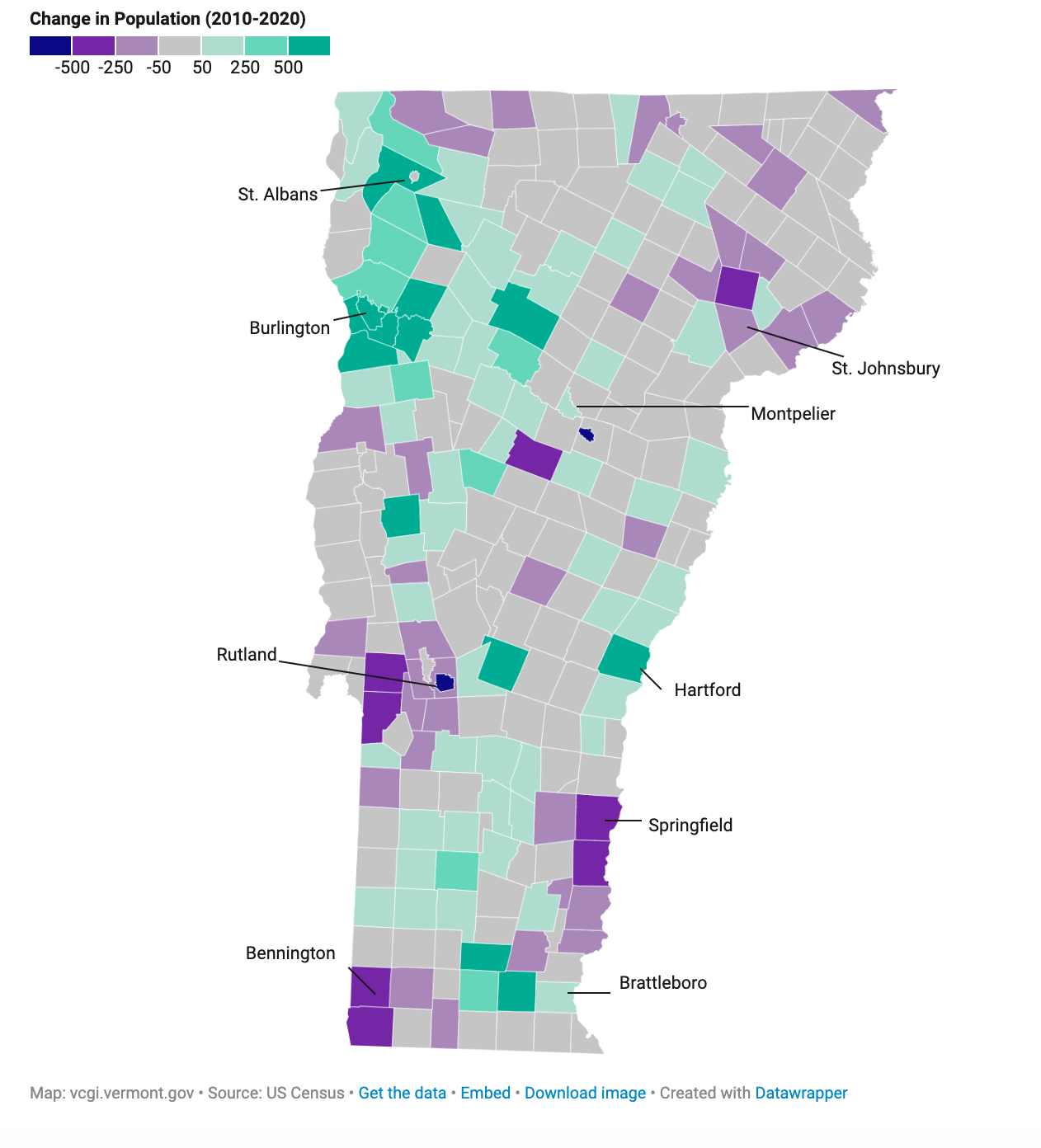
Some existing districts have gotten significantly imbalanced over the last decade as some have gained residents while others have lost them. The changes mean that there are now 19 House districts either at least 10 percent above or below the ideal number; six of those are more than 20 percent out of whack.
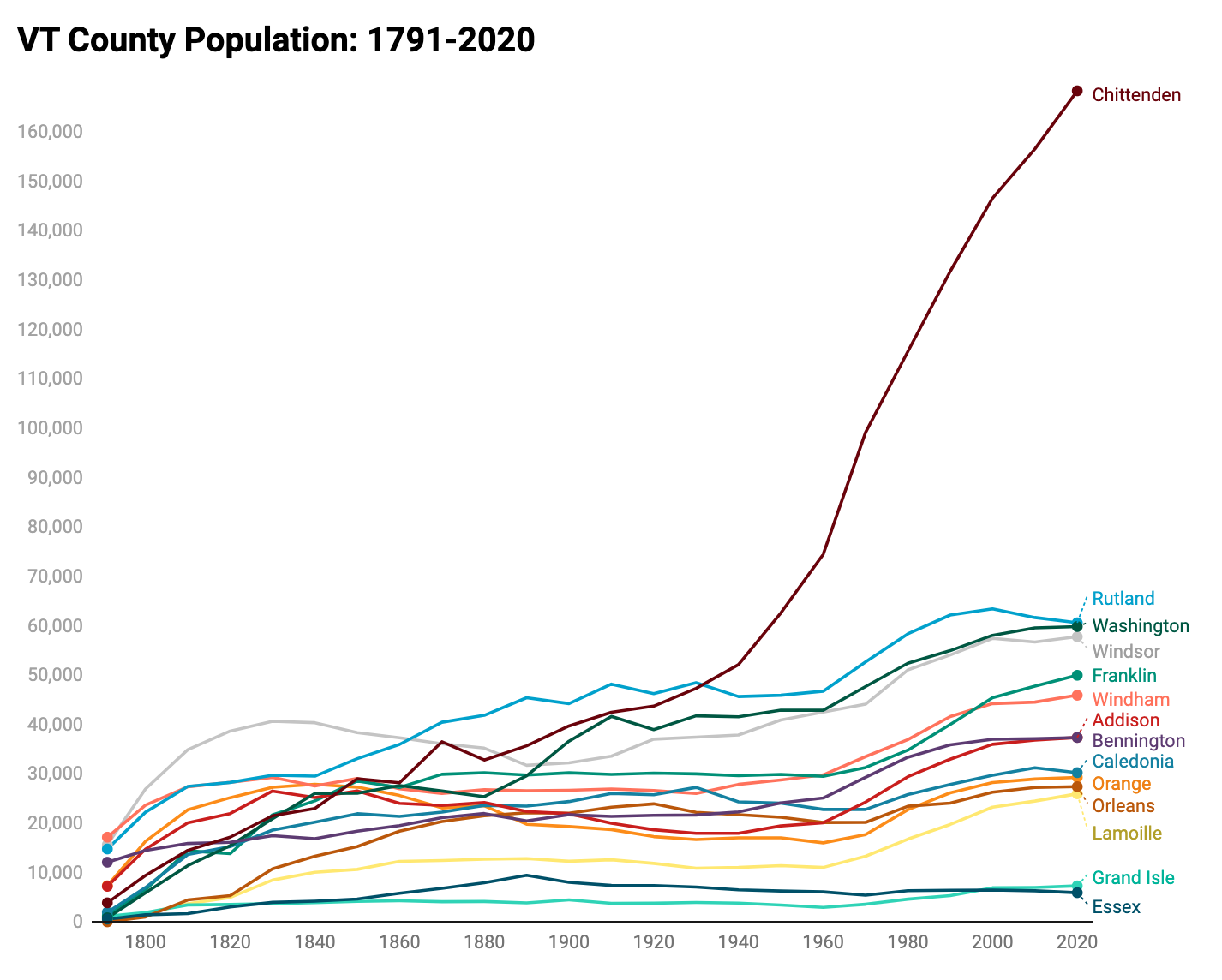
For example, Rep. John Killacky’s (D-South Burlington) district has grown by 30 percent in the last decade, while the population in McCoy’s district fell by 21 percent. These shifts within existing districts create the need for boundaries to be adjusted every 10 years.
It’s tedious work, Tom Little, chair of the apportionment board, told lawmakers earlier this week.
“Every time you adjust a district line, you adjust a district line for two districts — the one you’re looking at and the one next door,” Little said.
This can have a “potential ripple or domino effect” on surrounding districts that invariably “are not going to make everyone happy.”
The apportionment board met 30 times in 2021 before delivering its final report to the legislature after a 4-3 vote.
Some fault the board’s partisan structure for its inability to reach consensus. The seven-member body is composed of a chair, Little, appointed by the chief justice of the Vermont Supreme Court; three citizens appointed by the Democratic, Republican and Progressive parties; and three citizens appointed from each of those parties by Gov. Phil Scott.
Rep. Katherine Sims (D-Craftsbury) thinks the process is flawed for two reasons. The first is that the apportionment board puts a huge amount of work into making a recommendation, and then that recommendation has historically never been adopted by the General Assembly.
“At the very least, it’s a waste of the BLA’s time and energy,” Sims said.
The bigger problem, Sims said, is that “the incumbents have the last say in the process.”
She’s introduced a bill that would require the apportionment board to explore other models and issue a report to the legislature about how the 2022 process could be improved. Some states have redistricting commissions that take the work out of the hands of lawmakers.
In response to criticism from colleagues, Gannon stressed that a shortened timeline had forced a change in procedure. The 2020 Census figures came in five months late, preventing the apportionment board from finishing its work in August, which would have given lawmakers time to hold public hearings in the fall.
Those House hearings, as well as feedback from local boards on both plans, will still take place in coming weeks — virtually, most likely, due to the pandemic, he said.
The districts need to be set by April 1 so candidates know what seats they can run for in time for the August primaries and the November general election, Chris Winters, deputy secretary of state, told lawmakers.
Gannon said the only goal of floating the alternative plan is to ensure cities and towns have time to weigh in on both plans in time.
"All we’re trying to do in this process is ensure we have the maximum amount of information so we can make the best, appropriate decision,” Gannon said.
Tags: Redistricting , Democrats , Republicans. Progressives , Phil Scott , Katherine Sims , Pattie McCoy , Heidi Scheuermann , Vermont , U.S. Census , House , Senate , single-member districts , Web Only , Image
Thursday, January 13, 2022
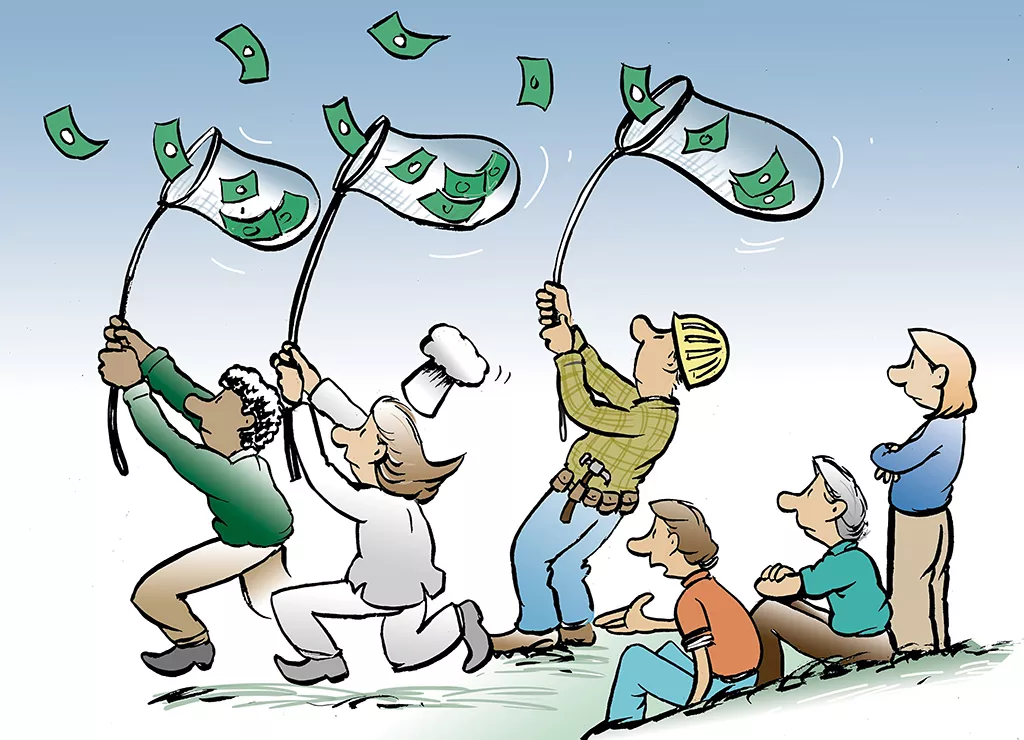
That's the finding of the economists charged with tracking state revenues and helping Gov. Phil Scott and legislative leaders understand the economic forces buffeting the state.
Economists Jeff Carr and Tom Kavet on Thursday told members of the state Emergency Board to expect general fund tax revenues to be $44 million more this fiscal year than they had predicted in July. If their annual mid-year adjustment proves accurate, the state would enjoy a 7.4 percent increase in a general fund that would swell to $1.9 billion. That would come on the heels of last year’s 7.8 percent increase.
The main reason tax revenues continue to surge is because stimulus funds are causing people to keep people spending.
“We’re getting to the point where that $10.1 billion in federal … dollars that have come to Vermont over the last couple of years are starting to wind their way through the system,” Carr told the board.
Vermont has benefitted from the third largest influx of federal pandemic dollars in the nation per capita — $16,214 per person — behind only Washington, D.C., and New York, Carr's report shows.
Kavet described the amount of federal stimulus as “unprecedented” and far beyond the economic damage caused by the pandemic. “We had a hole and we’re filling it five times over with federal stimulus,” Kavet said. “The economy can’t respond. It can’t produce that much that quickly.”
Tax revenues would have been even higher if houses and cars had been more readily available, Kavet said. Lack of supply is one of the reasons that home prices, up 17 percent through the third quarter of 2021, are soaring.
“Jeff [Carr] sold his home in a matter of hours way above list [price],” Kavet said. “It’s a supercharged market.”
Such top line assessments will help policy makers decide whether to continue various pandemic assistance programs and how much to spend in areas such as education, infrastructure, workforce development and climate change.
Rep. Janet Ancel (D-Calais) said she wanted more detail about those who may not have seen their stock portfolios grow. “What it doesn’t give us is a picture of who is hurting in this economy,” she said.
Kavet said employers trying to attract workers are raising wages at the lower end of the scale. However, he acknowledged that “fortunes have diverged starkly.”
“It looks like there is greater inequality of both wealth and income post-pandemic than pre-pandemic,” he said.
Sen. Jane Kitchel (D-Caledonia) said she, too, was perplexed by the increase in requests for financial help for food and rent at the same time economic indicators like tax revenue are robust.
“It’s kind of an interesting dynamic to have a growing demand for assistance for those basics in this environment,” she said.
Carr warned, however, that the federal funds won’t last forever, and future tax revenues could sink. It’s possible that tax revenue from cannabis sales could help fill the difference, he said. He’s forecasting $3.9 million in cannabis revenue in 2023 and $8.5 million in 2024.
Without those funds, however, Carr predicts general fund revenues would drop by $17 million in 2024 as the stimulus funds dry up and tax revenues come back to earth.
Tags: Gov. Phil Scott. tax revenue , covid-19 , pandemic , Jeff Carr , Tom Kavet , Jane Kitchel , Janet Ancel , Web Only , Image
Tuesday, January 11, 2022
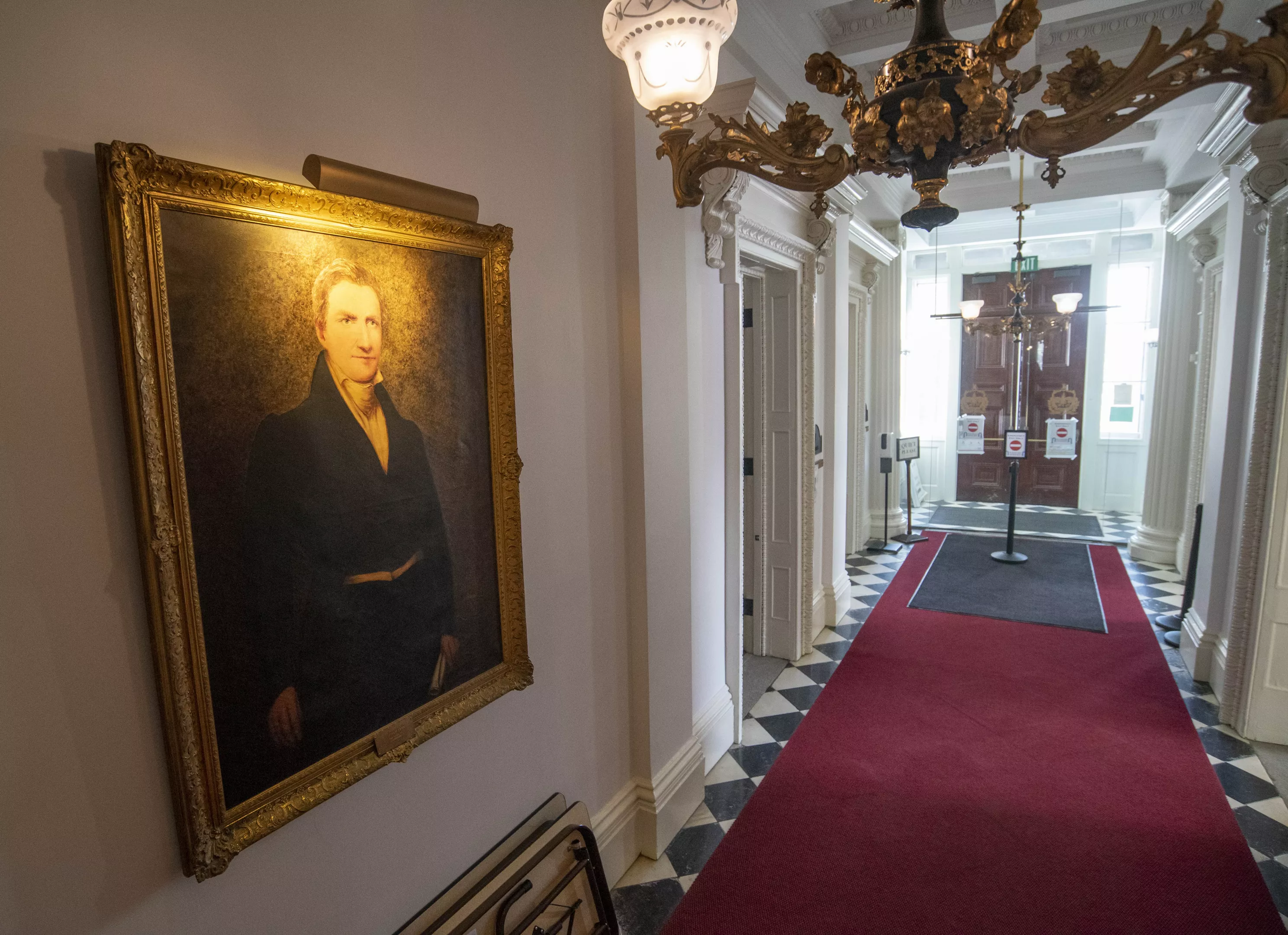
And he championed free speech, winning reelection to Congress from the Vergennes jail cell where he was imprisoned for criticizing President John Adams.
The businessman, soldier, printer and newspaper publisher was also a slaveholder.
Census records from 1810 show that after moving from Vermont to Kentucky, Lyon owned 10 slaves, a fact that complicates his legacy and calls into question whether his portrait ought to continue hanging in the Statehouse.
“He was quite a rabble rouser,” said Paul Carnahan, a librarian at the Vermont Historical Society. “I wouldn’t put it past to him to own slaves.”
Lyon’s history as slaveholder came to light this week when the Washington Post published a database listing more than 1,700 members of Congress known to have owned slaves. The paper built the database by examining thousands of pages of Census records for all known members of Congress during the 18th and 19th centuries, and reviewed other records, too.
Tags: Senator , slavery , Matthew Lyon , Washington Post , Bernie Sanders , Web Only , Image
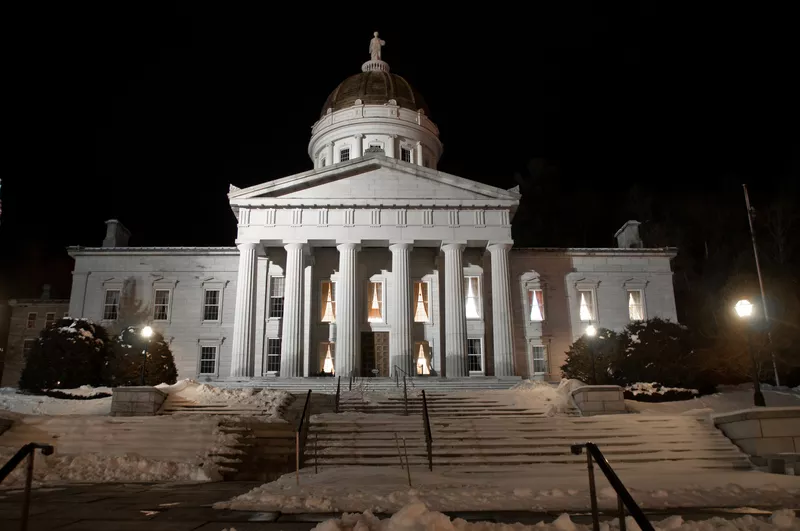
“We need to step back and make sure we are meeting the needs of families experiencing unemployment right now,” said Sen. Kesha Ram Hinsdale (D-Chittenden), a cosponsor of S.221, which was introduced last week. Ram Hinsdale said she has heard about people who have missed weeks of work as COVID-19 infections moved through their families. If they can’t afford to miss work, she said, they face difficult choices.
“In this moment, people are choosing to go to work sick because there are no immediate resources to help them stay home,” she said.
Tags: Unemployment insurance , Vermont , Statehouse , Senate , Michael Harrington , Labor Department , Web Only , Image