

Thursday, January 9, 2014
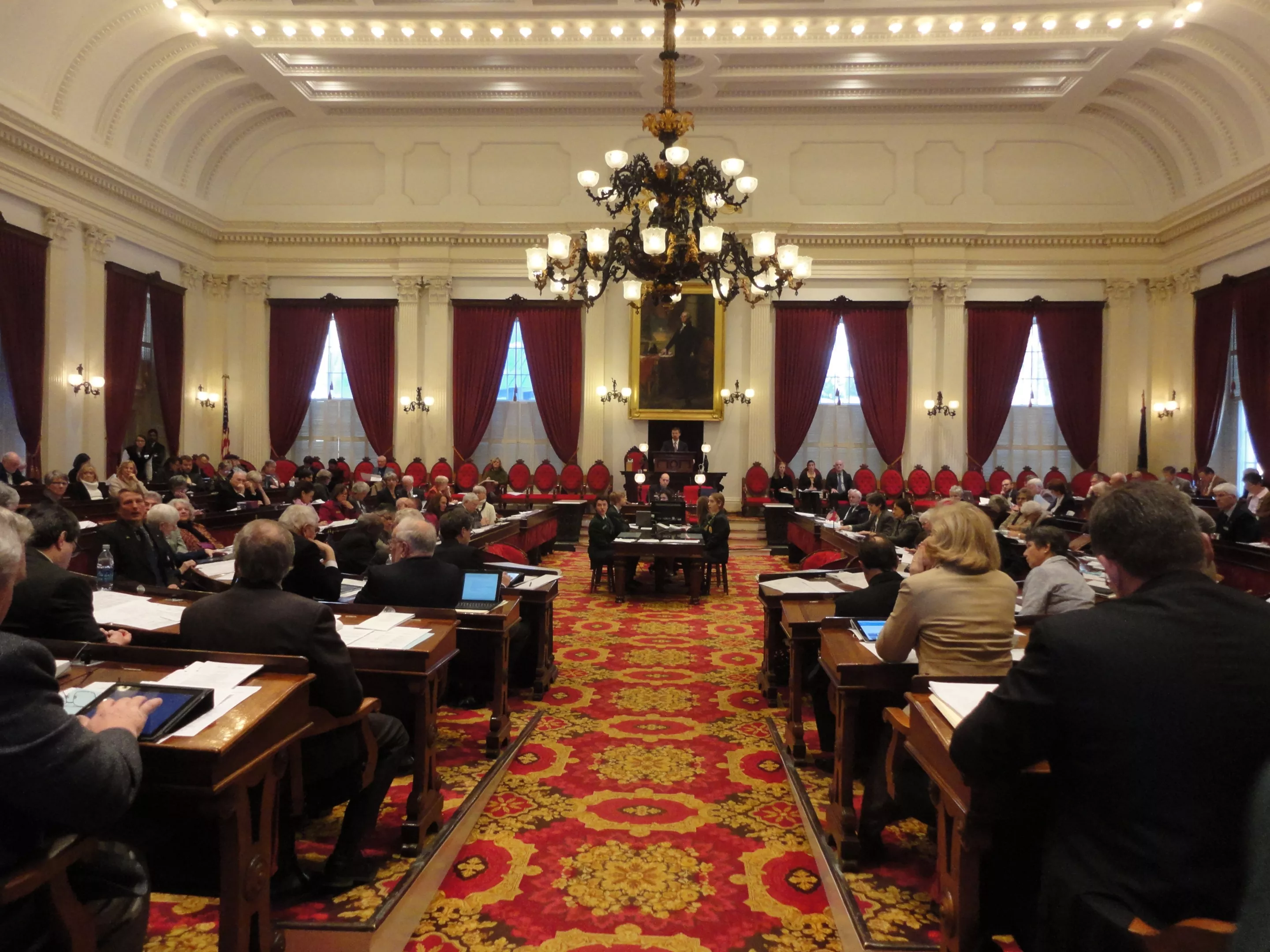
In the seven and a half years since the United States Supreme Court struck down Vermont's restrictive political fundraising rules, lawmakers have struggled in vain to replace them.
But on Thursday afternoon, after just 25 minutes of debate, the House voted overwhelmingly in favor of a campaign finance compromise hammered out over the legislative off-season by House and Senate negotiators.
The vote was 124-15.
If passed by the Senate next week and signed by Gov. Peter Shumlin, the legislation would double to $4,000 the amount statewide candidates could raise from a single person or corporation. And it would quintuple to $10,000 the amount political parties could raise from the same sources.
Candidates for the House and Senate, both of whom can currently raise $2,000 from such entities, would be restricted to donations of $1,000 and $1,500 respectively. (See this week's Fair Game for more on the bill.)
Immediate reaction to Gov. Peter Shumlin's state of the state address yesterday focused on his declaration that drug addiction is a public health crisis that should be tackled with prevention and treatment rather than "simply doling out punishment."
Advocates for criminal justice reform were overjoyed that the governor used his bully pulpit to declare that drug crime is primarily a "health crisis," not simply a law enforcement problem.
"I think this is profound,' said State Rep. Bill Lippert, chair of the House Judiciary Committee, in an interview. "This is a really big deal. There is a fundamental shift that's been articulated."
But Shumlin's speech also included little-noticed proposals that came from the more traditional tough-on-crime playbook.
Wednesday, January 8, 2014
Gov. Peter Shumlin devoted his State of the State address Wednesday to highlighting what he called a "rising tide of drug addiction and drug-related crime" that he said threatens the quality of life in Vermont.
During a 34-minute speech, Shumlin said Vermont is imperiled by opiate addicts who cannot access treatment and commit crimes to raise money for drugs. The governor proposed steps to bolster treatment for addicts, shift the focus of the court system from punishment to a treatment and slap tougher sentences on out-of-state dealers who bring drugs to Vermont.
"In every corner of our state, heroin and opiate drug addiction threatens us. It threatens the safety that has always blessed our state," Shumlin said. "It is a crisis bubbling just beneath the surface that may be invisible to many, but is already highly visible to law enforcement, medical personnel, social service and addiction treatment providers, and too many Vermont families. It requires all of us to take action before the quality of life that we cherish so much is compromised."
Tuesday, January 7, 2014
Gov. Peter Shumlin is calling in reinforcements on Vermont Health Connect, the troubled website that has been the crucible of his most recent months in office.
That was the news out of the Statehouse Tuesday morning, where Shumlin made the unusual move of testifying before a joint meeting of the Senate Health and Welfare and House Health Care committees.
He pledged more hands on deck for the day-to-day management of the troubled health care exchange, in response to a request from Commissioner Mark Larson. The governor announced that Commerce Secretary Lawrence Miller — who Shumlin singled out for his private-sector business savvy — will assist with improvements to the exchange over the next three months.
Monday, January 6, 2014
One of the Vermont legislature's first acts upon reconvening this week may be to vastly increase the amount of money in state politics.
After failing to reach compromise last spring over competing campaign finance bills, House and Senate negotiators narrowed their differences during the legislative off-season and are scheduled to sign off on a final bill Tuesday morning. Both houses could pass the new version by the end of the week and send it to Gov. Peter Shumlin.
But despite being referred to as "campaign finance reform," the working compromise would actually increase the amount of money that statewide candidates, political parties and political action committees could raise from individuals and corporations. That has Vermont Public Interest Research Group executive director Paul Burns questioning whether the bill is any better than current law.
"It's a hard case to make to say this is going to offer any significant improvements in the area of money and politics in Vermont," he says. "And coming up on the anniversary of Citizens United, it's certainly a big disappointment to see a state like Vermont not taking more aggressive action in this area."
Wednesday, December 11, 2013
We're in the home stretch of 2013, people. As we at Seven Days plot our year-end coverage, enjoy this week's news and politics stories:
- Figuring out how much was spent in support of and opposition to basing the F-35 in Vermont is a tough task.
- Meanwhile, the Air Force says the F-35 is definitely a go, but airport neighbors remain split on the jet.
- It's been a long time coming for Vermont's shoreline protection proposal. As the last northeastern state without statewide regulations, is 2014 the year?
- A recent workshop gave Vermont farmers the Myers-Briggs personality type test.
- In this week's cover story, learn how one artist/developer is doing his part to revitalize White River Junction, building by building.
- Meet the man whose job it is to test strains of medical marijuana for a Montpelier dispensary.
- And in Fair Game: After coming close last year, tax reform is looking unlikely to get much traction in the 2014 Statehouse session. Plus, find out why Rep. Peter Welch's anti-ethanol push is making for strange bedfellows.
Pick this week's Seven Days up in print, online or on the iOS app.
Cover photo by Sarah Priestap
Tags: cannabis related , Web Only
Monday, November 25, 2013
In an uncharacteristic rebuke of one his own, Gov. Peter Shumlin said Monday he was "tremendously disappointed" with his chief health care reform administrator for misleading a legislative committee about a security lapse in the state's new health insurance exchange.
The official, Department of Vermont Health Access Commissioner Mark Larson, sent a letter of apology Monday morning to members of the House Health Care Committee. Larson said that after listening to a recording of his testimony at a November 5 committee hearing, he had come to the conclusion that he had been insufficiently candid with committee members.
The Associated Press' Dave Gram reported Friday that Larson's department had reported what it believed to be an isolated security breach to federal authorities prior to the commissioner's appearance before the committee. But Larson told committee members that DVHA had investigated only one complaint and believed it to be unfounded, according to Gram.
In his letter to legislators, Larson wrote that he "failed to disclose" the security breach to legislators, a lapse he said violated his responsibility to be fully transparent with his fellow public servants.
Tuesday, November 12, 2013
Vermont's high rate of suicide with firearms was the dominant theme of a well-attended and well-mannered forum held Monday night in Burlington City Hall.
Organized by advocates of gun-safety measures in a state with few firearms regulations, the event took place 50 yards from the site of a fatal shooting almost exactly two years ago. Josh Pfenning, 35, died on November 10, 2011, from a self-inflicted gunshot wound while camped in City Hall Park during the Occupy Burlington protests.
The way in which Pfenning died is not unusual in Vermont. With the exception of Pennsylvania, Vermont has the Northeast's highest per-capita rate of gun-related deaths, most of which take the form of suicide, said Eliot Nelson, a pediatrician at Fletcher Allen Health Care.
Vermonters are far more likely to kill themselves than one another, noted Sean Ackerman, a Fletcher Allen resident in child psychiatry. The state suicide rate stands at 16 deaths per 100,000 residents and the homicide rate is 1.6 per 100,000, he said, adding that more than half of suicides are carried out with firearms.
Thursday, October 31, 2013
Acknowledging that a poorly functioning website was making it impossible to hit the state's enrollment goals, Gov. Peter Shumlin this afternoon announced he was extending the deadline for small businesses and individuals to sign up for Vermont Health Connect from Jan. 1 to March 31. In the meantime, they will be allowed to continue using their existing plans.
Additionally, Shumlin has deputized the two insurers offering plans in the market, Blue Cross Blue Shield Vermont and MVP Health Care, to act as "agents" of Vermont Heath Connect: Instead of signing up directly on the bug-ridden state website, businesses can sign up through the insurance companies, which will then register the plans with the exchange.
"These two additional options should give Vermonters going into the holiday season some (assurance) knowing there is no way they will lose insurance on January 1," Shumlin said during a press conference while standing in front of a phalanx of lawmakers, insurers and administration officials.
The announcement represents a dramatic reversal for the administration, which had been holding to the Jan. 1 deadline in the face of growing concerns about the website.
Wednesday, October 30, 2013
While you're putting together your Halloween getup tonight — bonus candy for anyone in a homemade F-35 costume — give this week's news and politics stories in Seven Days a read. Here's what you'll find.
- Development in Colchester has prompted some residents to advocate for tighter hunting restrictions — a microcosm of issues affecting Vermont hunters and wildlife statewide.
- Vermont's law against sex between prison guards and inmates gets an unexpected test: a female prison guard who authorities say had the baby of an inmate.
- You can sell your old smartphone to an "ATM" and get instant cash back at kiosks that recently appeared in local malls. Good idea?
- In Fair Game: Local fights over the F-35 rage on, but the only three people whose opinion matters are still M.I.A. Plus, a Burlington Prog is hit by friendly fire for her pro-F-35 vote, and Sen. Patrick Leahy tries to rein in the NSA.
Pick up this week's issue in print, online or on the app. Finally, go Sox.