

Friday, November 4, 2016

“The idea was, ‘Why don’t we just show you doing things in everyday life and let your personality shine through?’ I guess,” Young recalls.
What exactly is the 38-year-old web developer’s personality?
“I think I’m a little quirky,” he says. “But it’s like, ‘What does Sam love about the Northeast Kingdom and what do we love about this place?’”
Porch berries, for one thing. Yes, porch berries:
Tags: Porch berries , Sam Young , Heidi Lauren Duke , Northeast Kingdom , Image , Web Only , Video
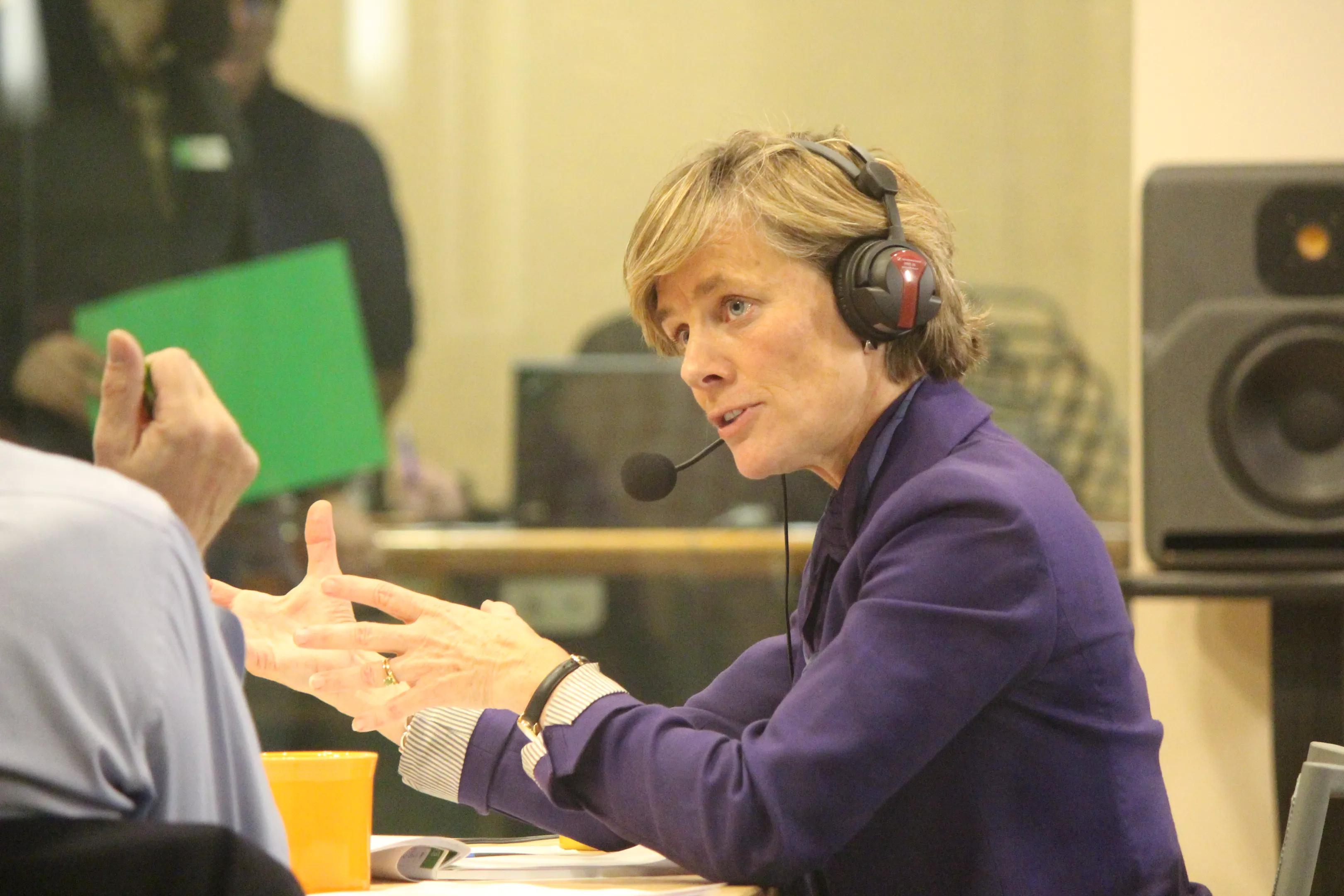
The two major-party candidates were joined by Liberty Union nominee Bill Lee, the retired Red Sox pitcher, who chimed in with occasionally amusing, sometimes pointed, but often off-point comments. Asked whether even he would vote for himself, Lee conceded that he was “up in the air” about the prospect, but he also declared, “I know everything.”
The debate’s most spirited moments came when the three candidates were given the chance to pose questions to one another. Minter asked Scott why he would not join her call for universal background checks on gun sales. When Scott responded, “It isn’t the gun, it’s the violence,” Minter fired back.
“We do have a problem, Phil,” she said, arguing that universal background checks reduce fatal domestic assaults and pointing out that 86 percent of Vermonters support the proposal. “This is a way we can actually reduce the violence, Phil.”
Scott sniped back. “I understand, Sue, because you govern by polling. You run your campaign by polling,” he said. “I’m going to stick with my notion that we should enforce the laws that are on the books.”
Tags: Sue Minter , Phil Scott , Bill Lee , Peter Shumllin , Image , Web Only
Thursday, November 3, 2016
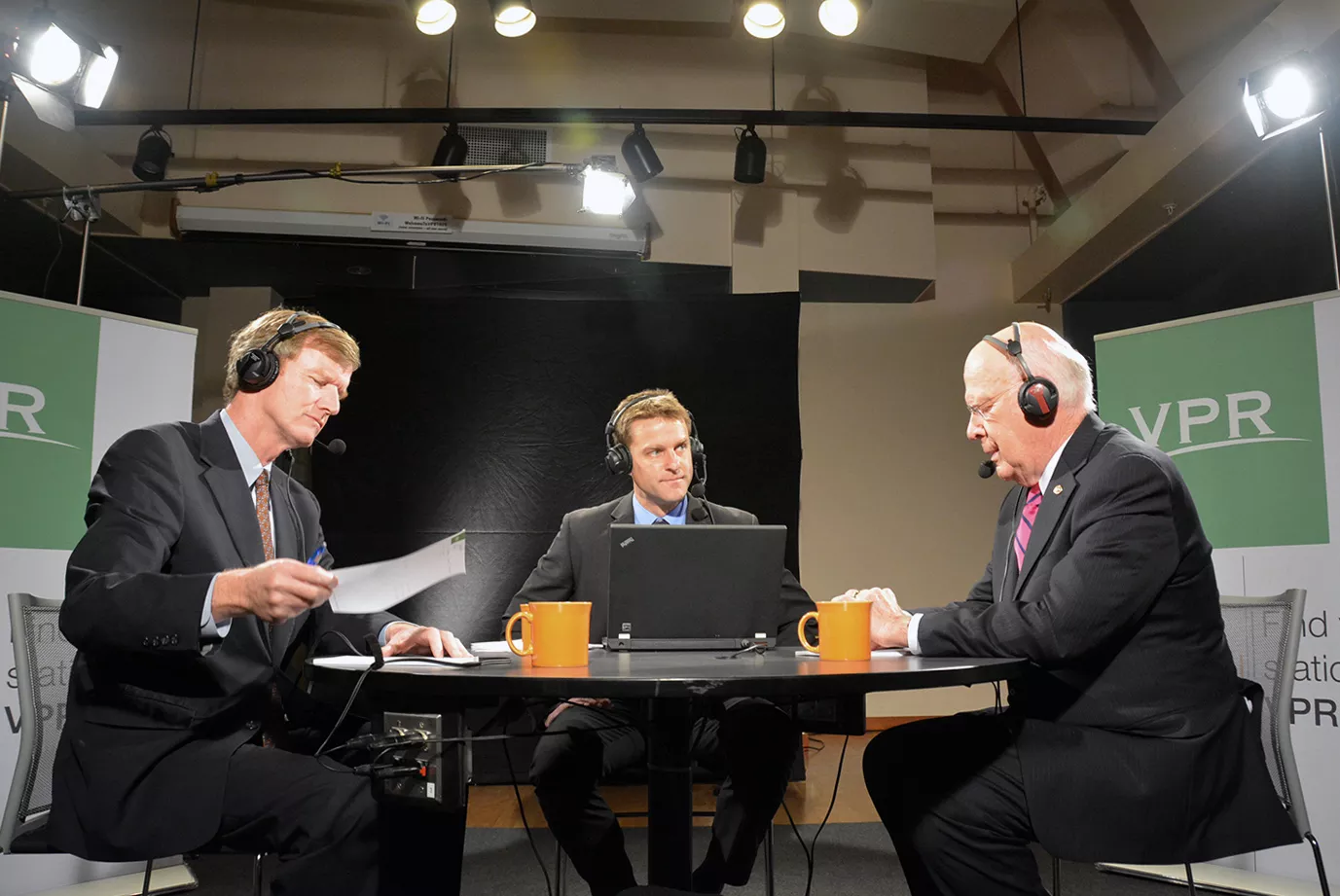
"Sen. Leahy, thanks again for agreeing to our first debate, five days before the election," Milne said, noting that the New Hampshire Senate and Vermont gubernatorial races had each featured more than a dozen such forums. "So, uh, thanks for really stepping up and giving Vermonters a chance to understand what the differences are between the two of us."
In fact, the VPR debate was their third of the campaign season, though it was their first — and last — one-on-one encounter. Judging by its bitter tone, neither candidate seemed happy to be there — or with one another.
"You've admitted that you've taken, I think, about $20,000 of travel from special interests to places like Las Vegas and Paris," Milne continued, asking whether Leahy felt "uncomfortable" having accepted free airfare and accommodations.
The incumbent Democrat said he'd cleared his 2004 trip to Paris — sponsored by the Center for Strategic and International Studies — with the Senate Ethics Committee and later worked with then-senator Barack Obama to enact "very strong restrictions" on free travel.
Tags: Scott Milne , Patrick Leahy , Peter Hirschfeld , Vermont Public Radio , debate , Image , Web Only
Wednesday, November 2, 2016
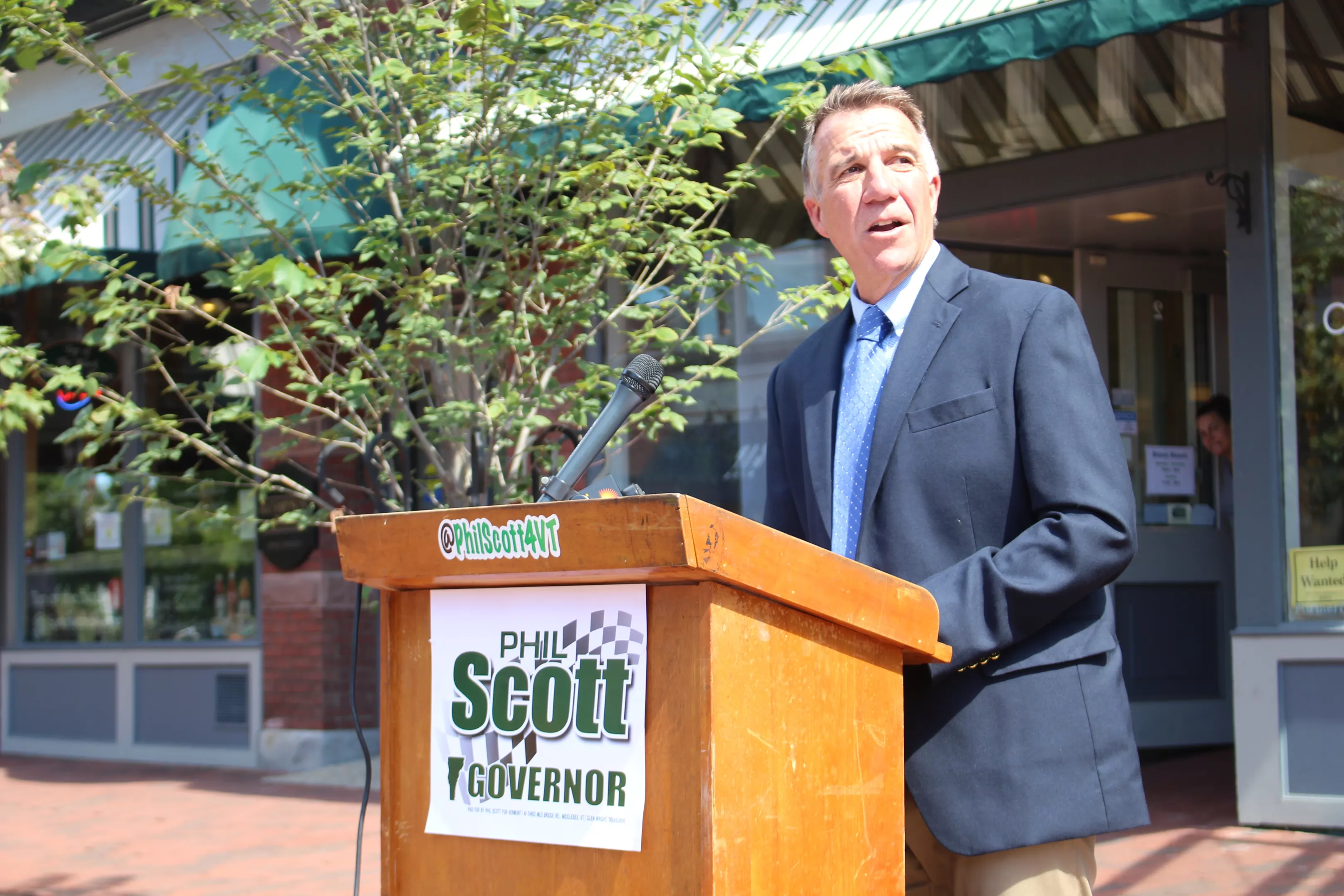
In recent days, the Vermont Right to Life Committee spent $4,591 on a mailer promoting Scott, Republican lieutenant gubernatorial candidate Randy Brock, Republican attorney general candidate Deb Bucknam and a slew of GOP legislative candidates. According to VRLC treasurer Sharon Toborg, the organization wrote its supporters "to let them know where the candidates stand and who we think the better candidates are in various races."
In the postcard, VRLC acknowledges that Scott considers himself pro-choice, but it says he has "consistently stated his support for some key pro-life legislative initiatives, such as parental notification and limits on late-term abortions." Democratic gubernatorial nominee Sue Minter, it continues, "would govern in lock step with the powerful abortion lobby."
Tags: Vermont Right to Life Committee , Sharon Toborg , Sue Minter , Phil Scott , Christina Amestoy , Ethan Latour , Image , Video , Web Only
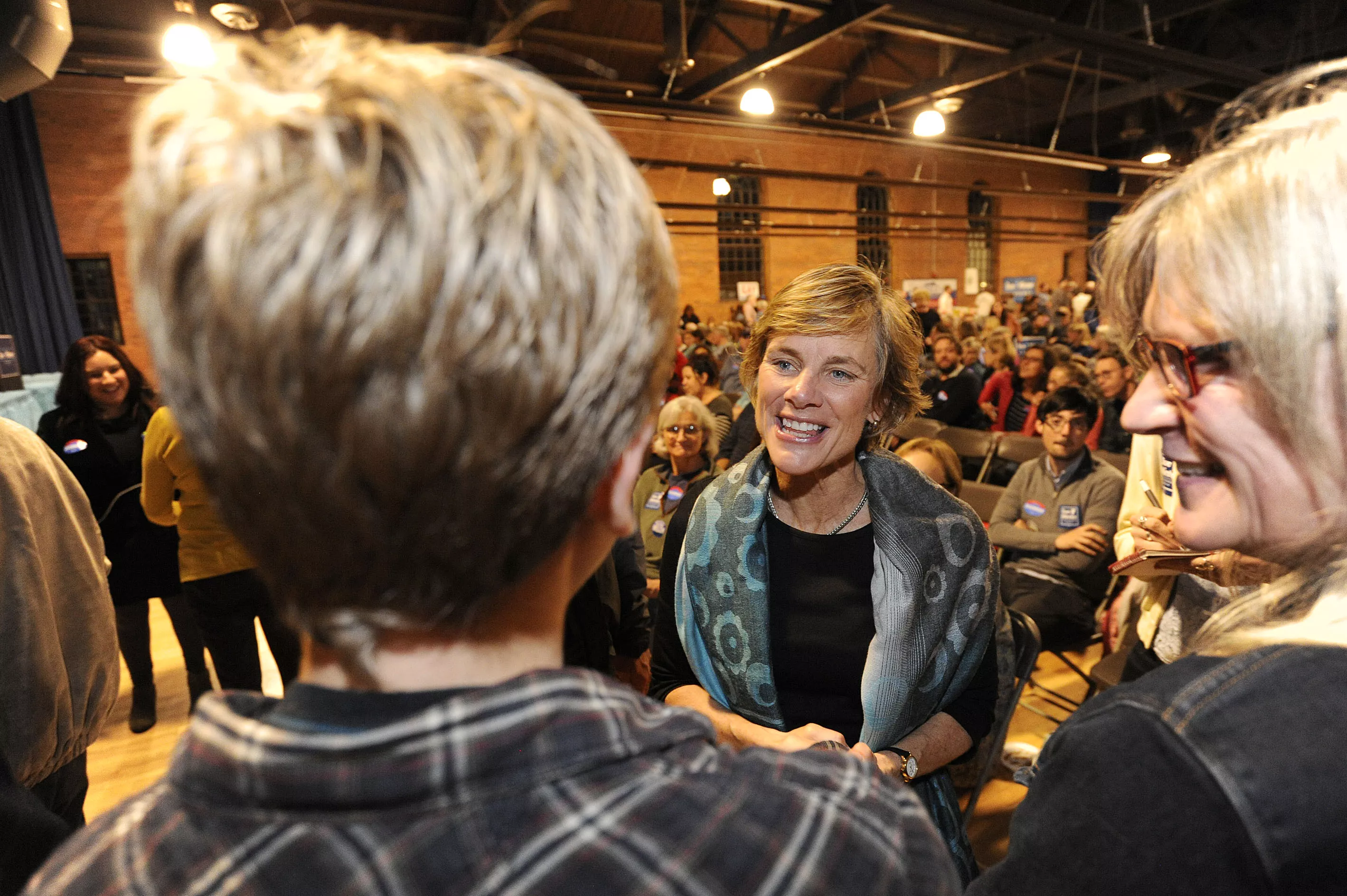
The national teachers union, whose Vermont affiliate endorsed Minter in August, contributed $75,000 over the past week to Our Vermont, a super PAC founded and largely funded by the Democratic Governors Association. Our Vermont has spent nearly $639,000 over the past three weeks and more than $1.3 million since the August primary.
"Educators strongly support Sue Minter because she is dedicated to students, educators, public schools and a thriving middle class," NEA political director Carrie Pugh said in a written statement. "Sue will be a governor who will work tirelessly to ensure that all students have the opportunity for a high quality public education, regardless of their ZIP code. She will put the interests of Vermont's children first, while making sure that educators have a partner in creating Vermont's education policy."
While the NEA may support Minter for her education policies, the ads it is sponsoring don't mention the subject. One features Sen. Bernie Sanders (I-Vt.) discussing his support for Minter. The other attacks Minter's opponent, Republican Lt. Gov. Phil Scott, for his position on abortion.
Tags: National Education Association , Sue Minter , Phil Scott , Democratic Governors Association , Planned Parenthood , Image , Video , Web Only
Monday, October 31, 2016
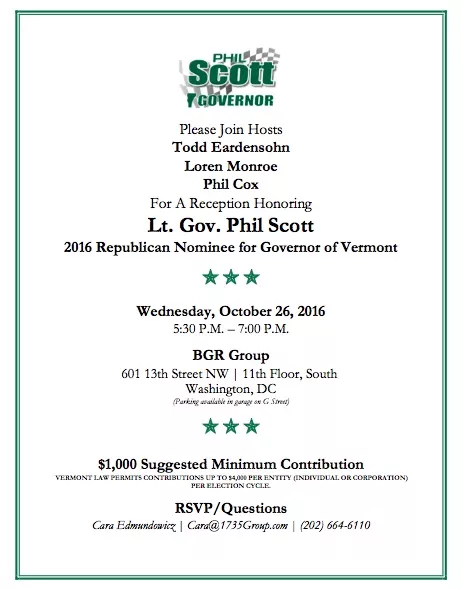
According to Scott spokesman Ethan Latour, the incumbent lieutenant governor raised $18,000 last Wednesday during his one-day trip to the nation's capital. While there, he was feted at an evening fundraiser at the headquarters of the BGR Group, a Republican-leaning lobbying firm.
"He went because campaigns — particularly this one, with so much outside spending to compete with — cost a lot of money," Latour explained.
According to an invitation Latour provided Seven Days, the event was hosted by BGR managing director and chief financial officer Todd Eardensohn, BGR lobbyist Loren Monroe and 50 State lobbyist Phil Cox. The invitation suggested a minimum contribution of $1,000 per attendee.
Tags: Phil Scott , Sue Minter , BGR Group , fundraising , Image , Web Only
Friday, October 28, 2016
The Morgan resident and retired Statehouse lobbyist spent years volunteering for Planned Parenthood and served a stint on its board of directors in the 1980s. She says she has known Scott, the Republican nominee for governor, for just as long — and she's always known him to be pro-choice.
So when Moot saw the first of two recent Planned Parenthood Action Fund ads questioning Scott's commitment to abortion rights, she jotted off a rant on Facebook. Scott's campaign contacted her and asked whether she would appear in a video responding to the attacks. She complied.
"I will tell you something: It broke my heart to do that," Moot says. "I'm sorry to be emotional. It broke my heart to do that ad."
Tags: Planned Parenthood , Phil Scott , Sue Minter , Image , Video , Web Only
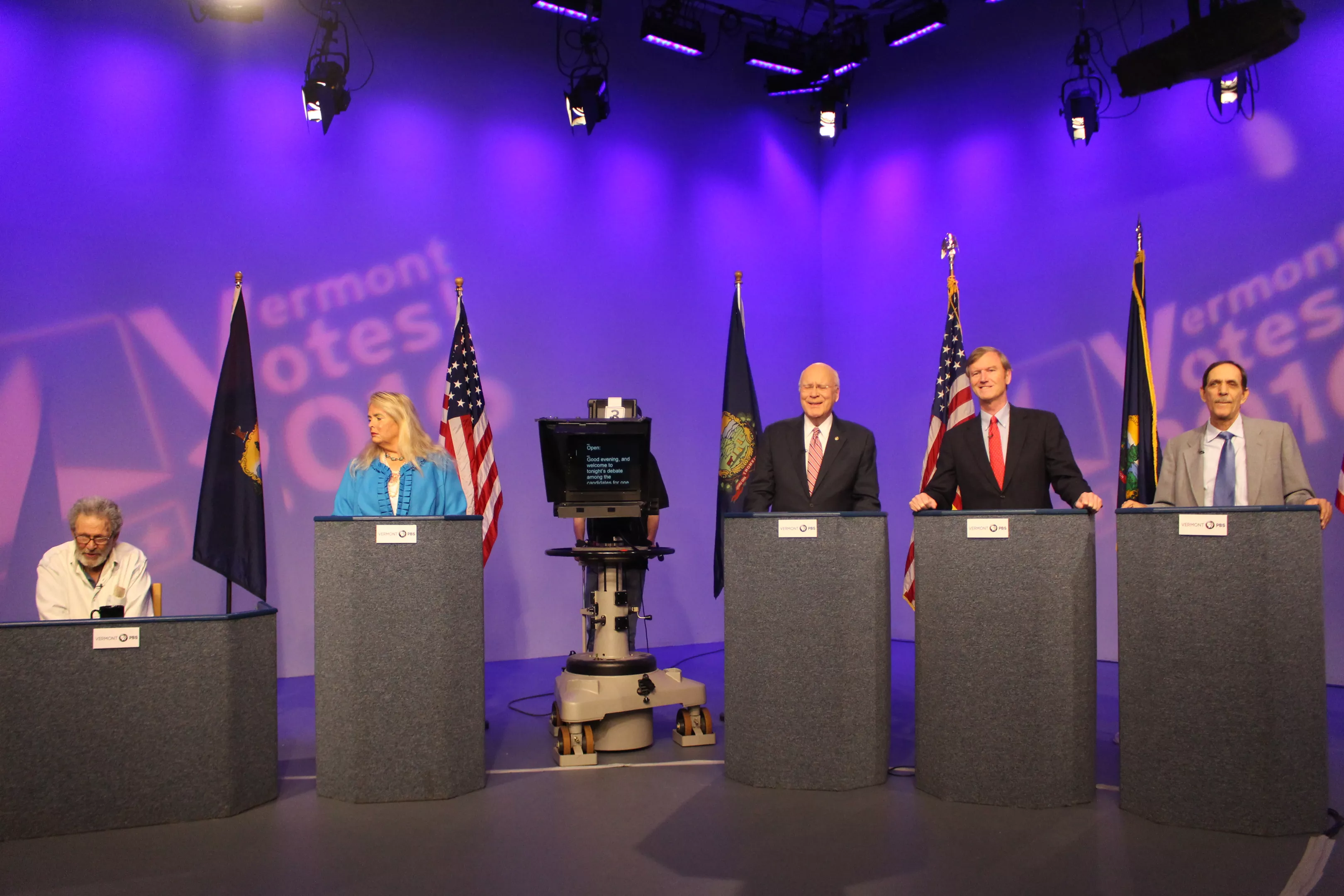
"Well, we do have term limits. It's called elections," said Sen. Patrick Leahy (D-Vt.), who has served seven terms and is seeking an eighth.
"I know my predecessor was elected the year I was born and served 'til I got there," the incumbent said, referring to the late senator George Aiken, who served from 1941 to 1975. "I think Vermont gained a great deal because of his tenure and his seniority."
Leahy, a Middlesex resident, argued that such a constitutional amendment "won't pass" and said that if voters felt he had "been there too long," they could "vote for somebody else."
Tags: cannabis related , Cris Ericson , debate , Jerry Trudell , Patrick Leahy , Peter Diamondstone , Scott Milne , U.S. Senate , Vermont PBS , Image , Web Only
Thursday, October 27, 2016

The RGA outfit, called A Stronger Vermont, has spent more than $580,000 in the past two weeks backing Lt. Gov. Phil Scott's campaign, bringing its total this election cycle to nearly $2.4 million. The DGA super PAC, called Our Vermont, has spent just $145,000 in that period, bringing its campaign total to $814,000.
But those top-line numbers only tell half the story. While the DGA has been spending less on its own super PAC, it has been steering large sums of money to one associated with Planned Parenthood.
Tags: Planned Parenthood , Democratic Governors Association , Republican Governors Association , Sue Minter , Phil Scott , Image , Video , Web Only
Wednesday, October 26, 2016
The so-called All-Payer Accountable Care Organization Model would reimburse participating providers for health outcomes, rather than for every procedure they perform. Advocates argue that it would slow rising health care costs and improve patient care.
Gov. Peter Shumlin's administration spent years working with Vermont's medical community and negotiating with the federal government to obtain an all-payer waiver. In September, Shumlin reached a verbal agreement with U.S. Secretary of Health and Human Services Sylvia Mathews Burwell to more forward with it.
The GMCB, which regulates the state's health care system, held several public meetings in recent weeks to discuss the draft agreement. Wednesday's vote empowers the board's chair, Al Gobeille, to sign off on the plan. The other required signatories are Shumlin and Burwell.
Tags: All-payer waiver , Green Mountain Care Board , Al Gobeille , Peter Shumlin , Image , Web Only