

Thursday, May 2, 2013
On the front lawn of the Statehouse Wednesday, hundreds of activists converged for a sun-soaked rally to demand a state budget that "puts people first."
But nary a May Day protester could be found within the Senate chamber that morning as legislators debated perhaps the most consequential bill this year concerning economic fairness.
There, by a vote of 24 to 5, the Senate approved $10 million in new taxes, the majority of which would be paid by wealthy Vermonters.
The plan raises $7.4 million of that by capping the mortgage interest deduction at $12,000 and setting a minimum tax of three percent for those earning more than $125,000 a year. It raises much of the rest by taxing bottled water and satellite TV.
More important than what was in the Senate's version of the tax bill was what wasn't.
Despite Gov. Peter Shumlin's repeated calls to pay for new spending by slashing $17 million from the Earned Income Tax Credit, the Senate didn't touch the thing. It was so loathed by lawmakers as a regressive scheme to put low-income, working Vermonters on the hook that Shumlin's proposal was barely mentioned during hours of floor debate.
Instead, the Senate largely approved a far more progressive plan drafted by Senate Finance Committee chairman Tim Ashe (D/P-Chittenden).
But neither Ashe's capital-P Progressive bona fides nor his efforts to spare the EITC shielded his plan from criticism from the left.
Wednesday, May 1, 2013
Cassandra gets a bad rap.
The royal character from classical Greek drama is misperceived today as the archetypal false prophet. But in Agamemnon, the playwright Aeschylus casts Cassandra as a tragic heroine; her accurate warnings of doom are ridiculed as the ravings of a madwoman.
Paul Ehrlich, who spoke to a packed house at the University of Vermont on Tuesday, might be seen as a contemporary Cassandra.
A biologist and professor at Stanford University, Ehrlich has been forecasting global doom for the past 45 years. He's the author of a 1968 best-seller, The Population Bomb, which helped initiate worldwide debate on issues of sustainability.
Ehrlich's enemies — and they are legion — are quick to cite this passage from the best known of his 40 books: "The battle to feed all of humanity is over. In the 1970s hundreds of millions of people will starve to death in spite of any crash programs embarked upon now."
Was that prophecy false in its essence, or only in its time frame?
Monday, April 29, 2013
Burlington should encourage other towns and cities around the state to propose their own charter changes related to firearms, the Vermont legislature's leading gun-control advocate told a city council committee on Monday.
"The more towns you have presenting charter changes on this, the more it will prod the legislature to do something," said State Rep. Linda Waite-Simpson (D-Essex Junction). She added that it will be more difficult for the legislature to reject a charter change related to gun control if other municipalities join Burlington in advocating such regulations.
The city council's charter change committee is hearing testimony related to a proposed ordinance that would ban assault weapons and high-capacity ammunition clips in the city. The full council voted 10-3 in favor of further considering a resolution containing those restrictions that was offered in January by City Councilor Norm Blais (D-Ward 6).
He and the other two members of the charter-change committee seemed receptive to Waite-Simpson's suggestion. Councilor Tom Ayres (D-Ward 7) said it would be vital to "try to have rational and respectful discussions" with residents of the Northeast Kingdom, "where there's bound to be opposition" to gun control of any sort.
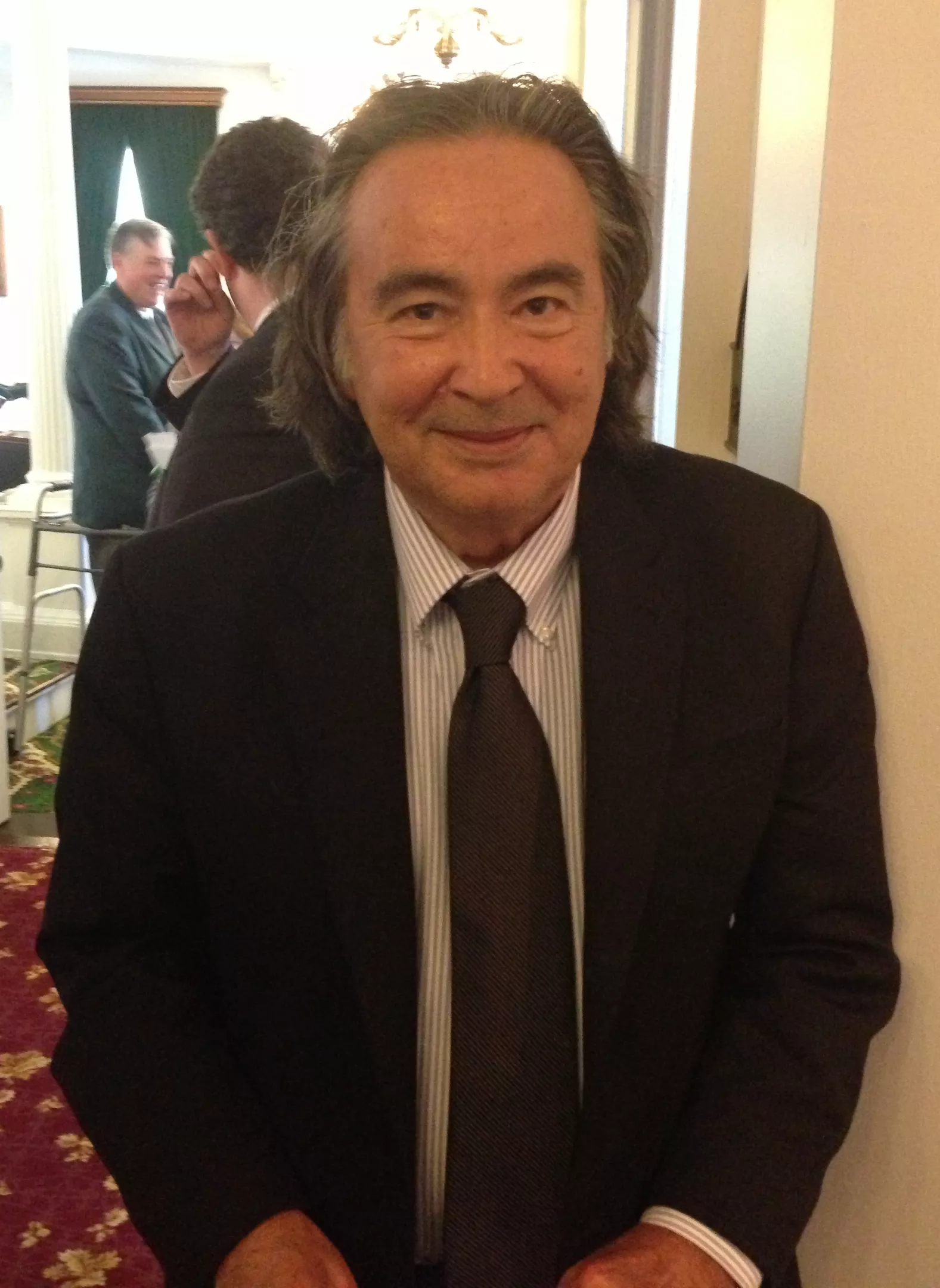
Waite-Simpson (pictured) noted she has received assurance from legislative leaders that the issue will be taken up in local meetings after the current session ends. The hope is that consensus can be reached on some aspects of gun control, she said. Waite-Simpson's own set of proposed regulations never got to the floor of the Vermont House despite the emotional upwelling that followed a lone gunman's massacre of 26 first-graders and educators in Newtown, Connecticut, late last year.
Many Vermonters' resistance to any restrictions on guns remains unyielding, Waite-Simpson said. She cited two examples of the state's status as an outlier.
Vermont's 720 medical marijuana users can finally say good-bye to sketchy black-market drug deals and weak, amateur-grown ditch weed. Nearly nine years after the state's medical marijuana law took effect, patients who use cannabis to relieve symptoms of their chronic ailments will soon have a safe, legal and reliable place to buy their medication. And, they'll know the products they're buying are potent.
Starting in mid-February, Lindsey Wells, administrator of Vermont's Medical Marijuana Program in the Department of Public Safety, began notifying all registry patients by mail that two of the state's three licensed dispensaries — Champlain Valley Dispensary, of Burlington, and Vermont Patients Alliance, of Montpelier — are slated to open on unspecified dates in June. A third licensed registry — Rutland County Organics, in Brandon — is tentatively scheduled to open by July 4.
Wells' letter, obtained by Seven Days last week, outlines dispensary-specific info for patients, including contact information, hours of operation, potential pricing programs and a list of available products. And already, their offerings are impressive.
Rutland County Organics is offering four different strains: Sour Diesel, a sativa recommended for relieving pain, anxiety and nausea; an indica called Cataract Kush, recommended for pain relief, anti-spasticity and ocular issues; Sensi Big Bud, an indica for pain relief, anti-anxiety and muscle spasms; and Bluecheese, a hybrid strain for relieving neuropathy, pain and nausea.
Tags: cannabis related , Web Only

Updated below with comment from Gov. Peter Shumlin
Ooooof.
Hard to react in any other way to this devastating lede from the Associated Press' Dave Gram:
Two days after Tropical Storm Irene’s remnants devastated much of Vermont, with bodies still missing and residents stranded in their homes, two Vermont Fish & Wildlife Department game wardens were given a special assignment: to rescue houseplants belonging to Secretary of Natural Resources Deb Markowitz.
The wardens allegedly trucked half a dozen plants — "including two small trees, one of which was a dracaena majoris from Markowitz's childhood" — from the Waterbury state office complex 14 miles to the secretary's Montpelier home.
Gram reports there's some disagreement over whether Markowitz herself issued the dracaena-saving order or whether she just, um, hinted strongly enough to prompt Fish & Wildlife Commissioner Patrick Berry to do the deed.
Either way, what the hell were they thinking?
Read Gram's full story in the Burlington Free Press, Rutland Herald or pretty much any other newspaper in the state.
UPDATE MONDAY AT 9:50 p.m.:
Asked for comment on the AP story, a spokeswoman for Gov. Peter Shumlin said Monday the governor first learned of the potted plant incident last week as Gram reported the story.
The spokeswoman, Sue Allen, said in a written statement that Shumlin "recognizes that post-Irene was a chaotic time, including for state workers flooded out of" the Waterbury office complex.
"That said, this was an error in judgment and a bad use of warden's [sic] time, and that has been communicated to the Secretary and Commissioner," Allen said. "The governor feels strongly that Deb Markowitz and Patrick Berry are the best advocates for Vermont's natural and wildlife environments."
Here's what's happening in Vermont news and politics this week. Lots doing in the Statehouse, as the Legislature careens toward the finish line. Got a submission for next week's calendar? Email by Friday to submit.
Monday, April 29
- Congressman Peter Welch is in the Middle East this week. Details are being withheld for security reasons, but the rep departed Sunday with fellow members of the House National Security, Homeland Defense and Foreign Operations Subcommittee (or, as the kids refer to it, NSHDAFOS) for a trip that includes Afghanistan, Pakistan and Turkey.
- At 11:30 a.m., the Burlington City Council's charter- change committee takes up the dormant assault-weapons-ban proposal. In city hall, conference room 10.
- At noon, the Senate holds a "token" session. You sure that's not, "tokin'" session? I'm looking at you, Sen. Zuckerman.
- The University of Vermont is holding public forums with candidates seeking Jane Knodell's old job of UVM provost. First one is today at 3:30 p.m. in Billings Library. Full list.
Tags: cannabis related , Web Only
Friday, April 26, 2013
Here's the problem: Most Vermonters support renewable energy, but when it comes down to individual proposals — be it for wind turbines, solar panels or biomass plants — these projects can be divisive, controversial and unpopular.
One solution, according to Andreas Wieg, of Berlin's German Cooperative and Raiffeisen Federation: energy cooperatives. Along with Belgian energy consultant Dirk Vansintjan, Wieg is barnstorming through Vermont this week on behalf of the Heinrich Boell Foundation, a nonprofit that promotes civil society and a healthy environment. The pair will be in Burlington tomorrow, April 27, for a forum called "Vermont's Energy Choices: Old Dirty Problems, Clean Energy Solutions."
Both European energy experts are promoting a grassroots, "bottom-up" approach to the so-called energy transition. Germany in particular has experienced meteoric growth in new cooperatives in recent years; roughly 650 new energy cooperatives have been founded in the last five years, encompassing about 100,000 members.
Wieg attributes the growth to a German law called the Renewable Energy Sources Act, which established a "feed-in tariff" system guaranteeing investors a set per-kilowatt-hour price for energy generation. (Vermont enacted a similar tariff in 2009.) Cooperatives allow residents — typically in rural areas in Germany — to band together and invest collectively in renewable energy projects.
This isn't to say that Germans wholeheartedly embrace renewable energy development. In a telephone interview, Wieg says that, just as in Vermont, Germany has experienced backlash against proposed turbines, solar panels and biomass plants. The problem of acceptance for renewable energy — "especially for wind turbines," Wieg says — "is a huge problem in Germany, and it is one of the key problems we must solve in the future."
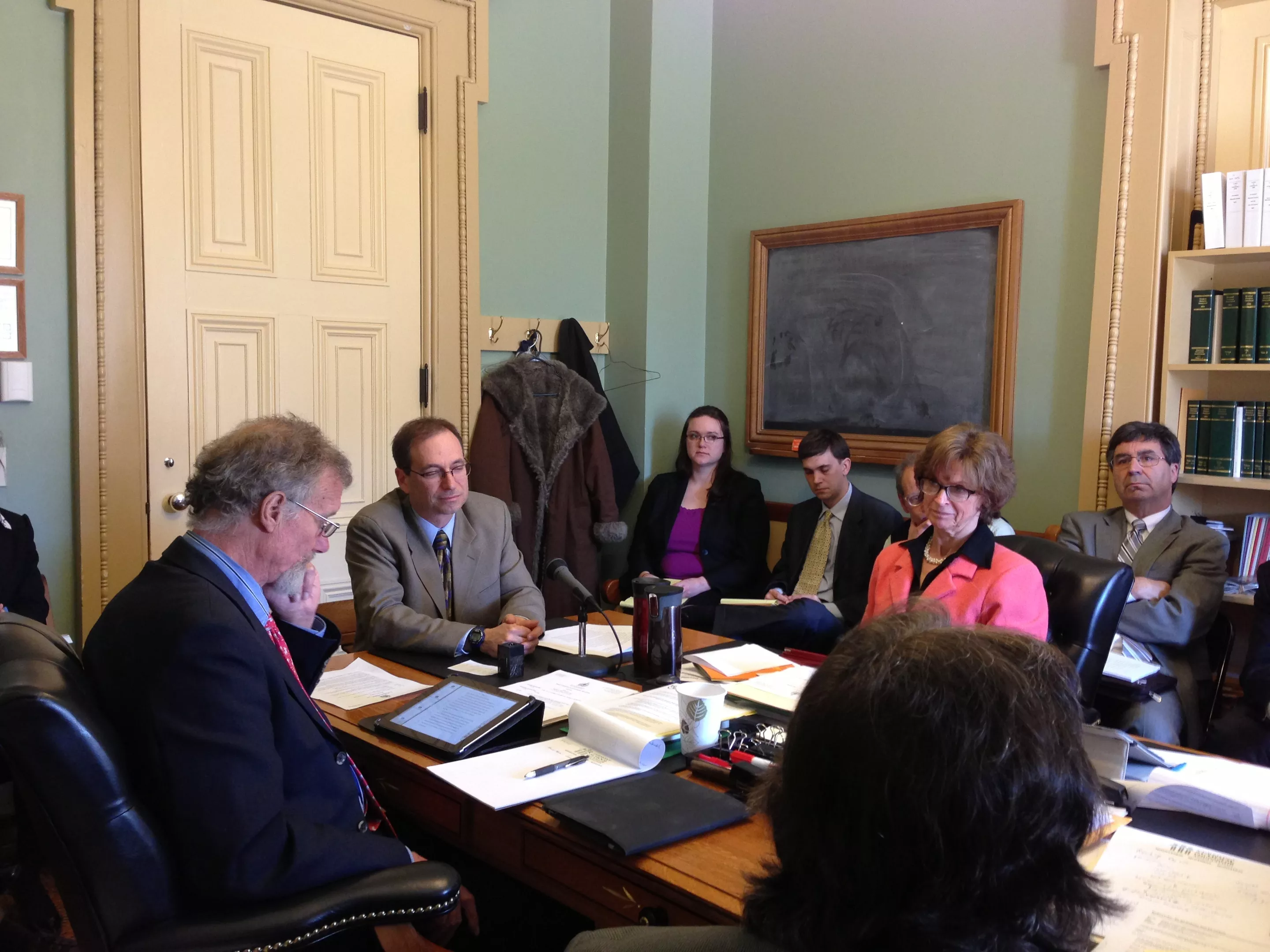
As his committee weighed a sugar-sweetened beverage tax in February, Rep. Mike Fisher (D-Lincoln) asked a simple question of industry lobbyist Andrew MacLean: Just how much money had the American Beverage Association spent on an ad campaign slamming the proposed tax?
MacLean told the House Health Care Committee chairman he'd get back to him. Then he reversed course, telling lawmakers and the media they'd have to wait until the official reporting deadline this week.
Now we know why.
The beverage industry spent an astounding $606,000 on lobbying and advertising in the first three months of the year as it fought to kill the soda tax.
In that time, according to records provided by MacLean and the secretary of state's office, the Vermont Beverage Association and the American Beverage Association paid Vermont-based lobbyists $32,000 and $21,000, respectively. The latter group, meanwhile, spent $553,000 on a statewide newspaper and radio advertising campaign.
(Pictured above: Fisher, at head of table, testifies before the Senate Government Operations Committee in March as MacLean, with arms crossed at right, listens.)
"I had no idea how much of a jobs bill this was," Fisher quipped upon learning the figures. "It's an impressive amount of money they spent trying to influence our decision on a sugar-sweetened beverage tax."
And it worked.
Thursday, April 25, 2013
Just two years into his tenure, Gov. Peter Shumlin picked up a rare opportunity this week to select a second nominee to the Vermont Supreme Court.
And Justice Brian Burgess' decision to retire this August may not be the last on Shumlin's watch. Court-watchers (there ain't that many in Vermont) say they expect another vacancy on the five-member court in the next few years — possibly Justice John Dooley, who is 69 and has served on the court since 1987.
At the very least, that means Shumlin's imprint on the court might be here to stay for quite some time. Given that Burgess, who was appointed by Republican governor Jim Douglas in 2005, was one of the court's more conservative members, it also means that whoever Shumlin picks could move an already liberal court even further to the left.
So who's on the short list?
Wednesday, April 24, 2013
With boxes of fudge and ice cream serving as props, opponents of the F-35 fighter jet staged a press conference/protest outside the Burlington office of Sen. Patrick Leahy on Wednesday.
The event wasn’t just desserts, however. The activists also enlisted a local grandmother who warned that basing the planes at the Burlington International Airport (BTV) could force her to move from the home she has occupied for the past 40 years.
The two boxes of fudge resting on top of the Democracy sculpture on Main Street were a reference to a recent Boston Globe story reporting that the Pentagon had “fudged” an assessment identifying BTV as the top choice for the F-35 bed-down. The Globe said the results of an evaluation process had been manipulated in order to ensure the plane would be based in Leahy’s state. The senator had pressed the Air Force to bring the F-35 to Burlington, the Globe also reported, citing anonymous officials as its sources for the account.