

Saturday, May 11, 2013
Updated with comment from City Attorney Eileen Blackwood
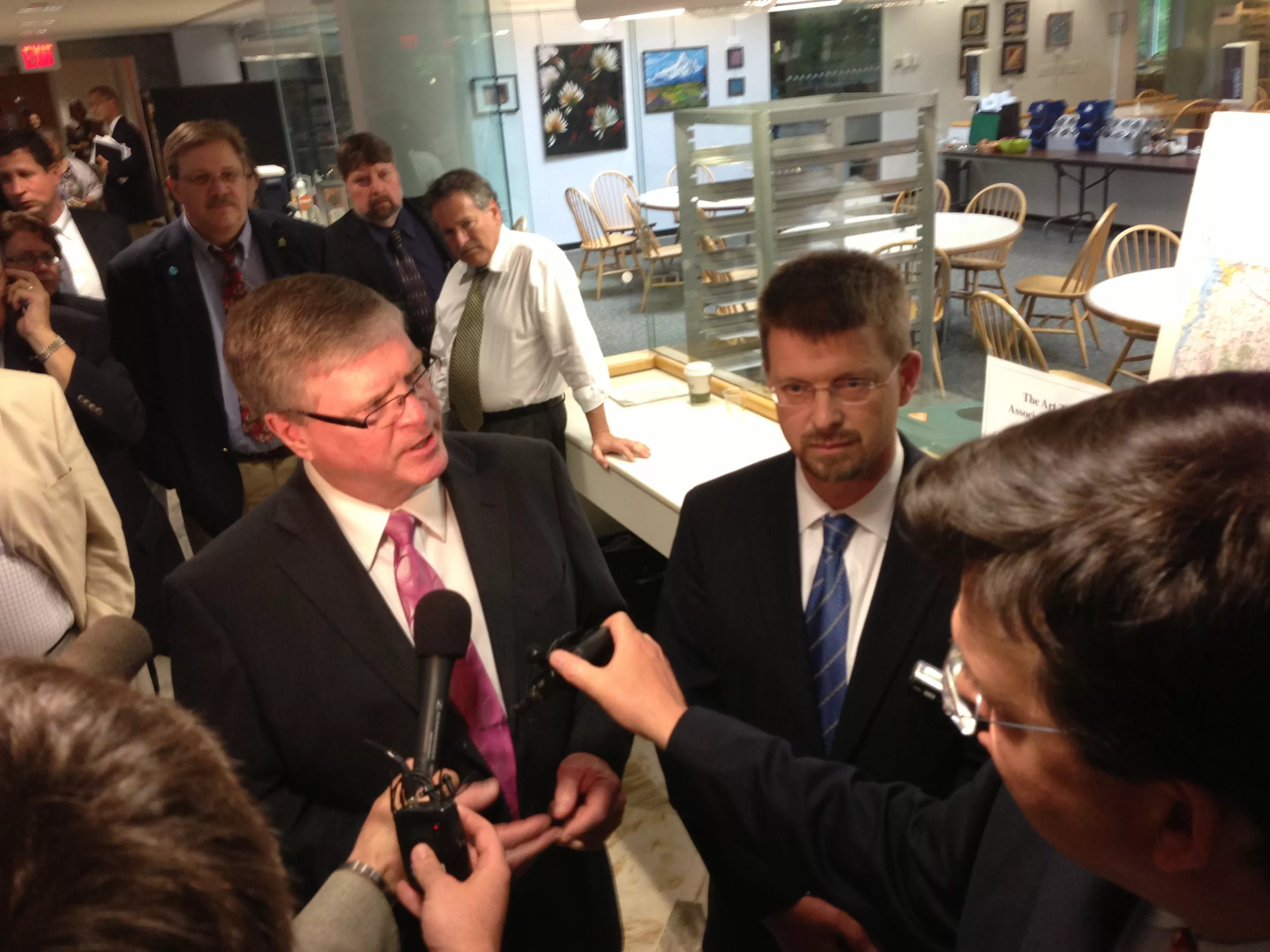
Negotiations aimed at settling CitiCapital’s $33.5 million lawsuit against Burlington Telecom have collapsed, Mayor Miro Weinberger said on Saturday.
The two sides proved unable to reach an out-of-court agreement in talks that got underway in January. BT and Citi met for only a single two-day negotiating session. They did not hold a second round of talks in March, as had earlier been scheduled, the mayor disclosed in an interview in Battery Park during Kids' Day celebrations.
“It didn’t make sense to continue those talks,” Weinberger said, declining to specify the reasons for the breakdown. Because the dispute remains in litigation, the mayor said it would be improper for him to comment in detail.
The battle for control of the telecom network equipment leased to BT by CitiCapital thus returns to federal court in Burlington for adjudication of the lawsuit filed 20 months ago, after BT ceased making payments on its lease agreement.
The Weinberger administration had hoped to negotiate a deal with Citi that would clear the way for BT to be sold to private interests or to a co-op that some Burlington residents are forming. No buyer is likely to take the financially troubled utility off local taxpayers’ hands until the fight with CitiCapital is resolved. The New York-based creditor wants to be paid $33.5 million it says it is owed for the fiber-optic system or have the court order return of BT's infrastructure.
BT has been making small monthly payments to Citi, but at the current pace, it would take decades to cover the full amount.
It could also take more than a year for the court battle to be decided.
“We will continue to do everything we can to defend the taxpayers against further BT liability,” Weinberger said.
For three peaceful days this week, Gov. Peter Shumlin and the Democratic legislature appeared to have resolved a months-long feud over taxes. But in a dramatic turn of events on Friday, that harmony dissolved into discord — stalling the legislature's adjournment and prompting the very real threat of a gubernatorial veto.
Suffice it to say, "Kumbaya" is no longer playing on the Statehouse jukebox.
Dividing the Dems is a push by leaders of the House and Senate tax-writing committees — Rep. Janet Ancel (D-Calais) and Sen. Tim Ashe (D/P-Chittenden) — to enact progressive reforms to the tax code in the closing days of the legislative session. While declining to fully describe their plan, they say it would lower income taxes for the vast majority of Vermonters and raise them for a small minority — all in a revenue-neutral manner.
But the governor deeply opposes the plan, saying it violates the terms of an agreement he reached with House Speaker Shap Smith (D-Morrisville) and Senate President Pro Tem John Campbell (D-Windsor) earlier this week to avoid new taxes and spending. Shumlin claims that despite the legislators' assurances, their "on-the-fly" reforms would result in higher taxes overall and put at risk a recovering economy.
Throughout the Statehouse on Friday, the question on everybody's minds was whether the legislature would complete its business late Saturday and adjourn for the year. To do so, conference committees writing the budget and tax bills had to wrap up their work early Friday afternoon — but that deadline blew by without any signs of progress.
At issue was whether Smith and Campbell would side with their committee chairs, Ancel and Ashe, and provoke a confrontation with the governor — or whether they'd pull the two back, close up shop and go home.
Friday, May 10, 2013
When he unveiled a deal Tuesday to balance the budget without raising taxes, Gov. Peter Shumlin seemed to have squelched the legislature's efforts to thrust a greater share of the state's tax burden on wealthy Vermonters.
But proponents of a more progressive tax code appear poised Friday to make one last stand.
In the days since the deal was struck, leaders of the House and Senate tax-writing committees have been talking up the idea of moving forward with proposals to limit income tax deductions that mostly benefit the wealthy. In keeping with the framework of the deal with the governor, any revenue gained by doing so would be returned to middle- and lower-income Vermonters through slightly reduced tax rates.
"The goal of my committee has been to make the tax code fairer, and we believe that can be achieved in a revenue-neutral framework," says Senate Finance Committee Chairman Tim Ashe (D/P-Chittenden). "While reducing the special advantages to some deductions, we can lower taxes for as many as 200,000 people."
While Ashe and House Ways & Means Committee Chairwoman Janet Ancel (D-Calais) have been pushing behind-the-scenes to build support for their proposal, Shumlin has indicated he opposes it.
"I have made very clear that the consensus that has been built in this building, which I have urged, is to not take action on tax policy, but to finish up the work that we have, balance the budget and get home," Shumlin said during a Wednesday press conference. "And I think Vermonters want the legislature to do just that."
Now the question is whether House Speaker Shap Smith (D-Morrisville) and Senate President John Campbell (D-Windsor) are willing to risk a final confrontation with the governor by backing Ashe's and Ancel's plan.
Thursday, May 9, 2013
"Our representative democracy is broken," Sen. Ginny Lyons (D-Chittenden) told reporters at a Statehouse press conference Thursday morning. "As we look at Washington and ask Washington for help, we're frequently met with closed doors. But those doors are very much open to the influence of corporate money."
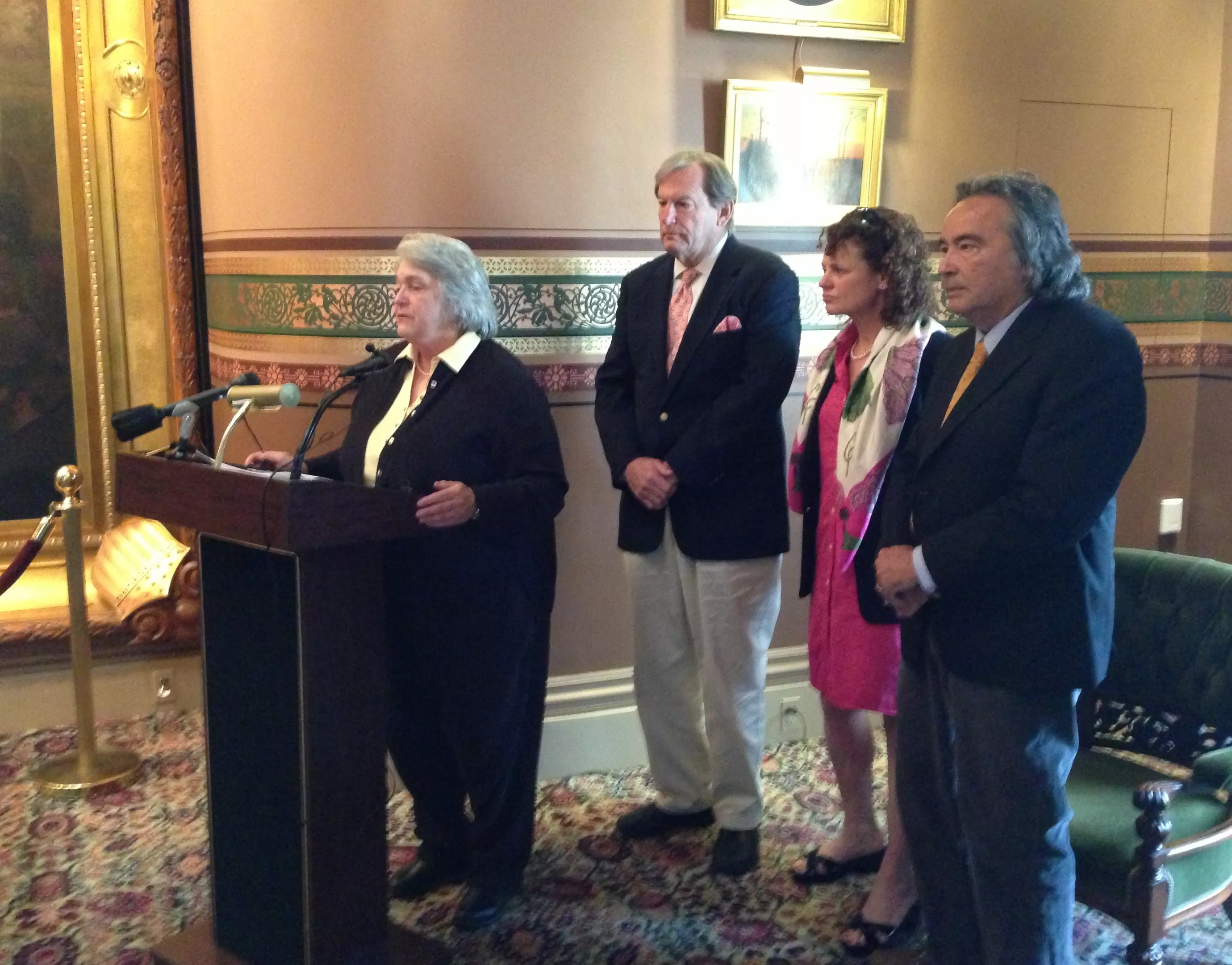
For that reason, Lyons said, Vermont must once again call for a constitutional amendment reversing Citizens United and other recent U.S. Supreme Court decisions that abolished limits on corporate spending in politics.
But as Sen. Nero fiddled, Rome was burning all around her.
Just a day before Lyons' press conference, the Vermont House voted 96 to 49 in favor of a so-called "campaign finance reform" bill that actually increases the amount individuals, corporations and unions can donate to statewide candidates, political action committees and parties.
Under the guise of stemming the flow of special interest money into Vermont politics, the House further opened the floodgates. And it didn't even consider the one provision that could realistically reduce corporate cash in Vermont: banning direct corporate contributions to political candidates.
Wednesday, May 8, 2013
In the end, as always, it was all about Sen. Peter Galbraith.
Throughout this year's labyrinthine debate over whether to allow terminally ill patients to end their own lives, the loquacious Democrat from Windham County has been behind every turn.
Wednesday night was no different.
By a vote of 17 to 13, the Senate amended the ever-changing end-of-life choices bill to ameliorate Galbraith's concerns while still providing dying Vermonters a legal avenue to end their own lives. The latest version now moves back to the House, where it's expected to pass, and then on to the governor, who has signaled he will sign it.
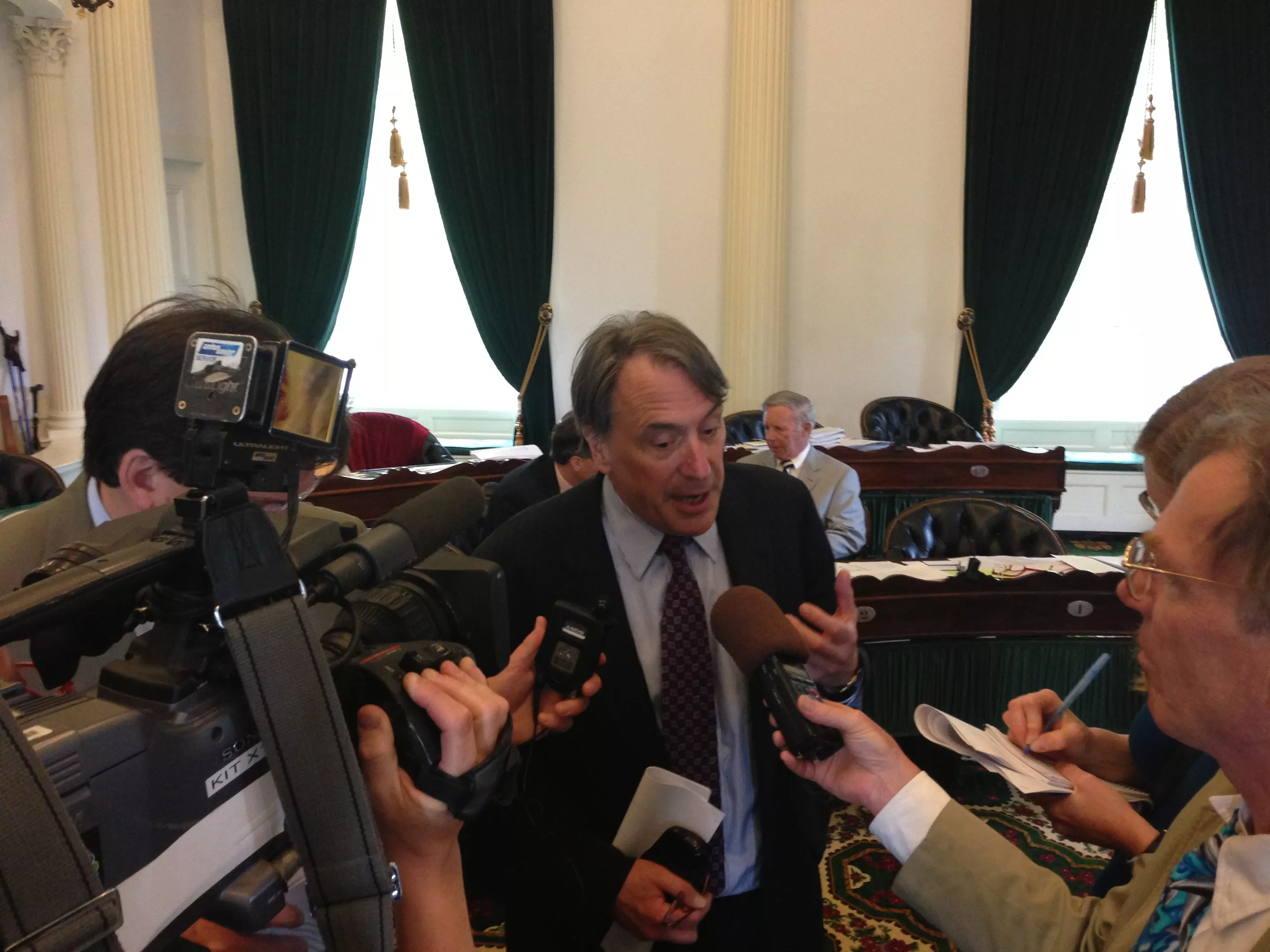
"I think what we have found here is something that strikes a balance," Galbraith (pictured above) told his colleagues. "It isn't perfect. It isn't what I would like to have seen, but I think it accommodates what I think is in the best interest of Vermonters."
The compromise essentially enacts for three years a state-sanctioned process for doctors to prescribe lethal medication to patients expected to live six months or less. In July 2016, that process would sunset, and be replaced by a stripped-down law simply indemnifying doctors who prescribe such drugs.
Gabraith and Sen. Bob Hartwell (D-Bennington) have long opposed the more comprehensive approach, which is modeled on a 1994 Oregon law. In February, they joined 13 opponents of the bill — along with the tie-breaking Lt. Gov. Phil Scott — in replacing it with the stripped-down version. But last week, the House voted 81-64 to return to the original Oregon-style language and send it back to the Senate.
That left the bill's proponents with little option but to find some sort of compromise that could appeal to Galbraith or Hartwell without alienating its stronger supporters in the House.
In this week's Home & Garden issue of Seven Days...
- Federal law says domestic abusers are prohibited from possessing firearms, but Vermont has few safeguards to keep guns out of the wrong hands.
- Vermont and other maple-producing states are in the midst of a "liquid gold rush" — but is big maple a bubble in danger of bursting?
- No one checked on Burlington's livable wage ordinance for 12 years. What's next?
- It's commencement season, which means a few lucky folks will have honorary degrees bestowed upon them by Vermont colleges.
- In Fair Game, Paul Heintz breaks down yesterday's grand bargain on taxes and the state budget between Gov. Peter Shumlin and legislative leaders.
- Lastly, "Stuck in Vermont" features a character that might be familiar to lawmakers, lobbyists, reporters and anyone else who makes the Burlington-Montpelier commute: Buddy Longworth, the most interesting bus driver on the road.

Just back from a congressional oversight trip to the Middle East, South Asia and Europe, Congressman Peter Welch (D-Vt.) said this week he's "skeptical" of suggestions that the U.S. should intervene in Syria's growing internal conflict, saying, "There's no good option."
"There would be an enormous hazard to our country that we could Americanize what is a Syrian civil war," Welch said. "The humanitarian situation is dire. The potential for chaos and things getting worse is dire. But that doesn't mean there's an easy solution about what we should do. In my view, the president is being quite wise to be restrained. Have we not learned anything from Iraq and Afghanistan?"
Welch's week-long trip brought him and four U.S. senators to Turkey, Pakistan, Afghanistan and Germany. While in Turkey, the delegation visited the Kilis refugee camp near the country's border with Syria. The camp houses some 14,000 refugees from the Syrian conflict.
Welch's trip came just days before Israel conducted air strikes near the Syrian capital of Damascus and as President Obama faced escalating calls to intervene in the conflict.
But citing the practical challenges of lethal intervention, Welch said, "I have a lot of skepticism [about] the armchair general politicians here in D.C. that are acting as though it's a simple matter of a no-fly-zone or arming rebels."
Monday, May 6, 2013
It's the last week of the legislative session in Montpelier — or so they say!
Here's what else is happening in Vermont news and politics this week. Got a newsworthy event for next week's calendar? Email by Friday to submit.
Monday, May 6
- The House gavels in at 1 p.m. On the lengthy calendar: third reading for the immigrant driver's-license bill.
- The House and Senate set to work resolving differnences in their versions of the tax and budget bills. Conference committees begin at 2 p.m. (budget bill) and 5:30 p.m. (tax bill) and are scheduled to continue all week.
- The Legislature might be in crunch mode, but Gov. Peter Shumlin is apparently leaving the arm-twisting to his staff today. The gov's schedule: 9 a.m. in Johnson for a ceremonial lease signing, 10 a.m. in Morrisville for a library centennial, and noon in Montpelier for a state employees recognition luncheon at the Elks Club.
- Live at 5:25 p.m., State Auditor Doug Hoffer will be on Channel 17. Watch live.
- At 7 p.m., the Burlington City Council meets at city hall, where they'll vote on the appointment of Bob Rusten as Mayor Miro Weinberger's pick for chief administrative officer.
Rest of the week after the break...
Sen. Patrick Leahy (D-VT) said Sunday morning he believes the U.S. is moving closer to providing lethal weapons to Syrian rebels.
Leahy made the remarks during a rare appearance on NBC's "Meet the Press" in a segment focused on Syria's escalating civil war, U.S. homeland security and immigration reform.
Leahy's appearance on the Sunday talk show came just hours after air strikes were carried out — presumably by Israel — on military installations outside Damascus. Asked by moderator David Gregory whether the U.S. was edging toward providing "lethal aid" to Syria, Leahy said he believed so.
"Our problem in who to supply is that some of these groups are strong Islamists — al-Qaeda and others — and we've seen, like in Libya and Egypt and elsewhere, the Islamists tend to get the upper hand if they get in there," Leahy said. "But we have given hundreds of millions of dollars in refugee aid. We have given anti-aircraft equipment to Turkey. And the idea of getting weapons in — if we know the right people to get them, my guess is we'll give them to them."
Vermont's senior senator was joined during the segment by former New York City mayor Rudy Giuliani, Woodrow Wilson Center president Jane Harman and Congressman Tom Cotton (R-Ark.).
You can watch the full 23-minute panel discussion here.
Here's an excerpt of the Syria debate. Below that is an excerpt of Leahy discussing the chances of comprehensive immigration reform.
Thursday, May 2, 2013
A national search launched last year for a new chief administrative officer of Burlington has ended just a few miles from where it began.
Saying it is “in many ways the most important appointment I have to make,” Mayor Miro Weinberger announced on Thursday that he has chosen Bob Rusten, a top South Burlington official, to fill the post. Weinberger noted that he had personally interviewed about a dozen candidates for the CAO job.
Rusten, 62, would bring diversified administrative and political experience to the city’s number-two post if confirmed by the city council next week. He currently holds three positions in South Burlington: deputy city manager, chief financial officer and treasurer. He also served 10 years in the Vermont House as a Democrat representing Halifax, which Rusten described at a city hall press conference as a conservative Republican district.
“The person the city needs at this time is someone with deep municipal finance experience,” Weinberger said.
The mayor touted Rusten’s handling of the same thorny assignments he would be given in Burlington: fixing an underfunded pension system, cleaning up a fiscal mess and negotiating sustainable deals with municipal labor unions.
In a memorandum sent to the city council yesterday, Weinberger said Rusten “co-negotiated an $8.2 million refunding of an underfunded pension system.” The mayor also pointed to Rusten’s work on a team that “unearthed the severe nature of South Burlington’s financial troubles” and helped solve “cumulative fiscal problems exceeding $17 million.”