

Thursday, February 13, 2014
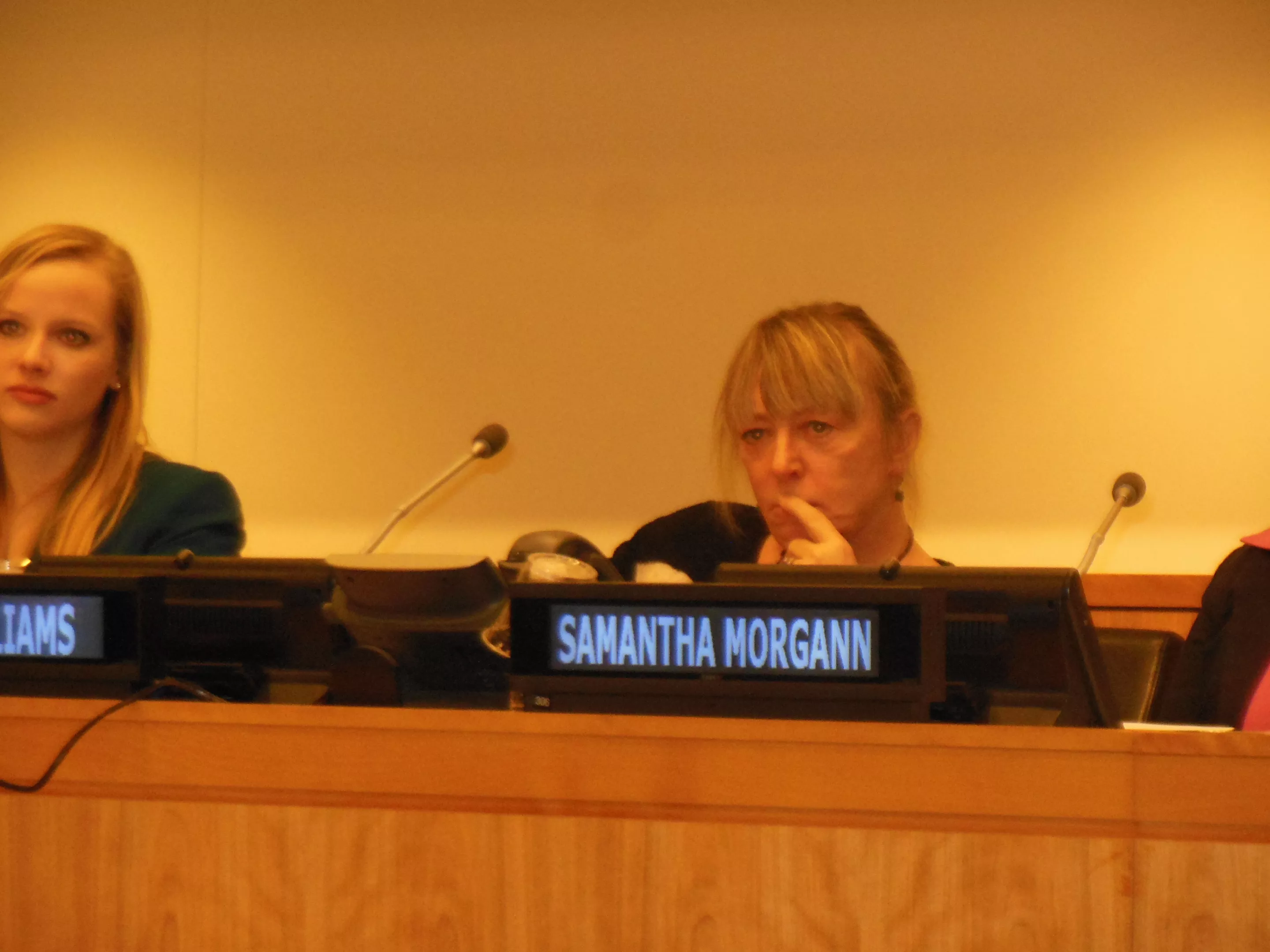
An audience of about 200 college students listened raptly at United Nations headquarters in New York on Tuesday as Jody Williams recounted her life journey from small-town Vermont to international activism and acclaim.
Williams, 63, was awarded the Nobel Peace Prize in 1997 for her leadership of a grassroots campaign that led to a global treaty banning production and use of landmines.
It was schoolyard bullying in Putney that first provoked her to confront the harmful exercise of power, Williams recalled. She said she stood up to “the stud of fourth grade who was being mean to a little, nonathletic kid.” And that boldness arose, Williams explained, from having earlier seen her parents defend her older brother, Steve, whom “kids nearby loved to torture” because he was deaf.
Tags: Nobel Peace Prize , land mines , Jody Williams , war , Image , Web Only
Tuesday, February 11, 2014
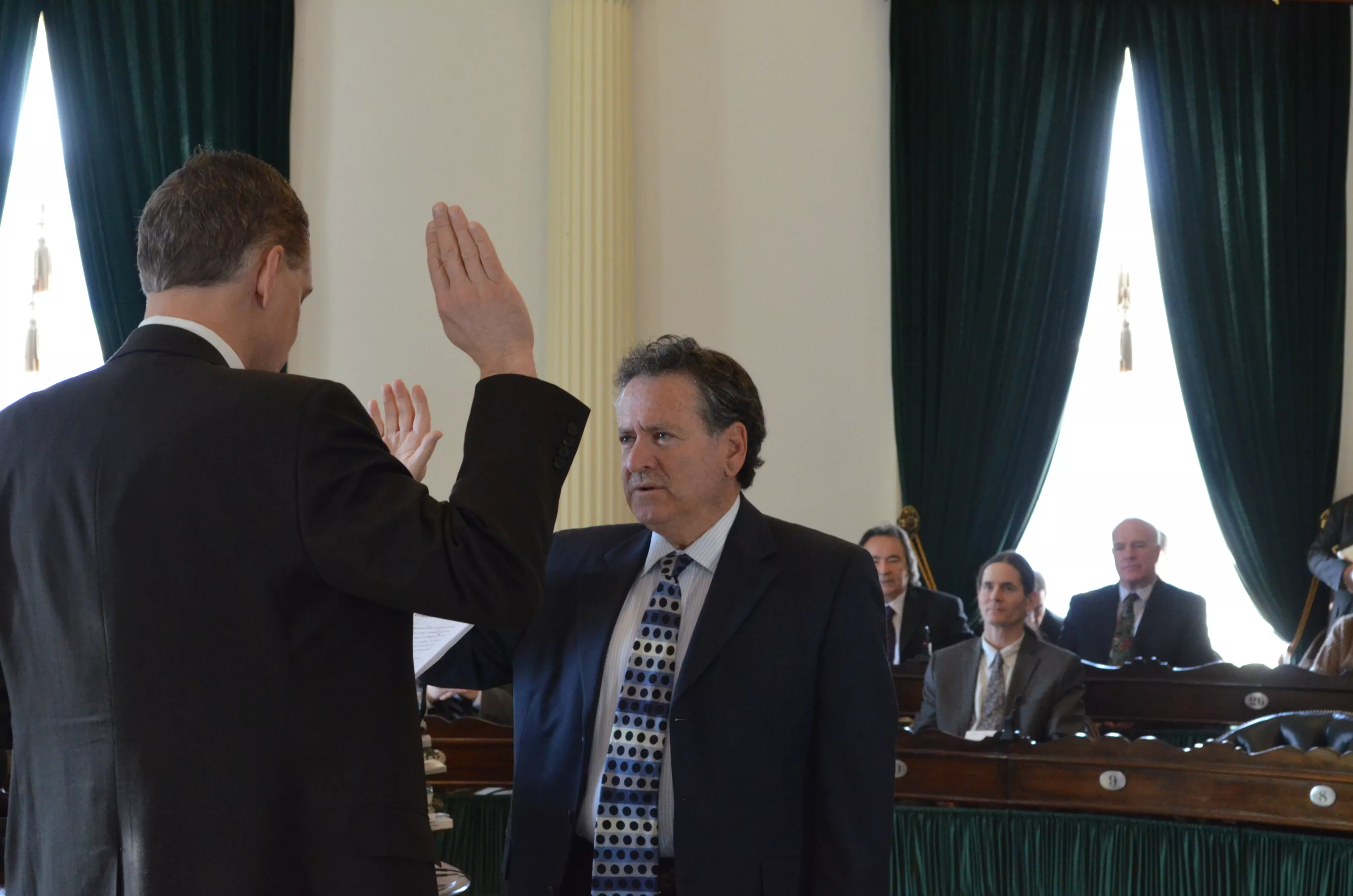
Seat number nine in the Vermont Senate has been vacant for the last month, a visible reminder of the absence of the late senator Sally Fox. On Tuesday morning, her husband of 35 years, Michael Sirotkin, was sworn in, filling the seat in her stead.
The ceremony was poignant but efficient, and moments later, Sirotkin was voting “aye” on the first bill to come before him. The legislation — on the regulation of malt beverages — had been introduced by his wife.
Gov. Peter Shumlin appointed Sirotkin to the position shortly after Fox died of cancer in January, but encouraged him to take several weeks before reporting for duty at the bustling Statehouse. Sirotkin is one of six senators representing Chittenden County.
Tags: Michael Sirotkin , Sally Fox , Dick Sears , Vermont Senate , Image , Web Only
Monday, February 10, 2014
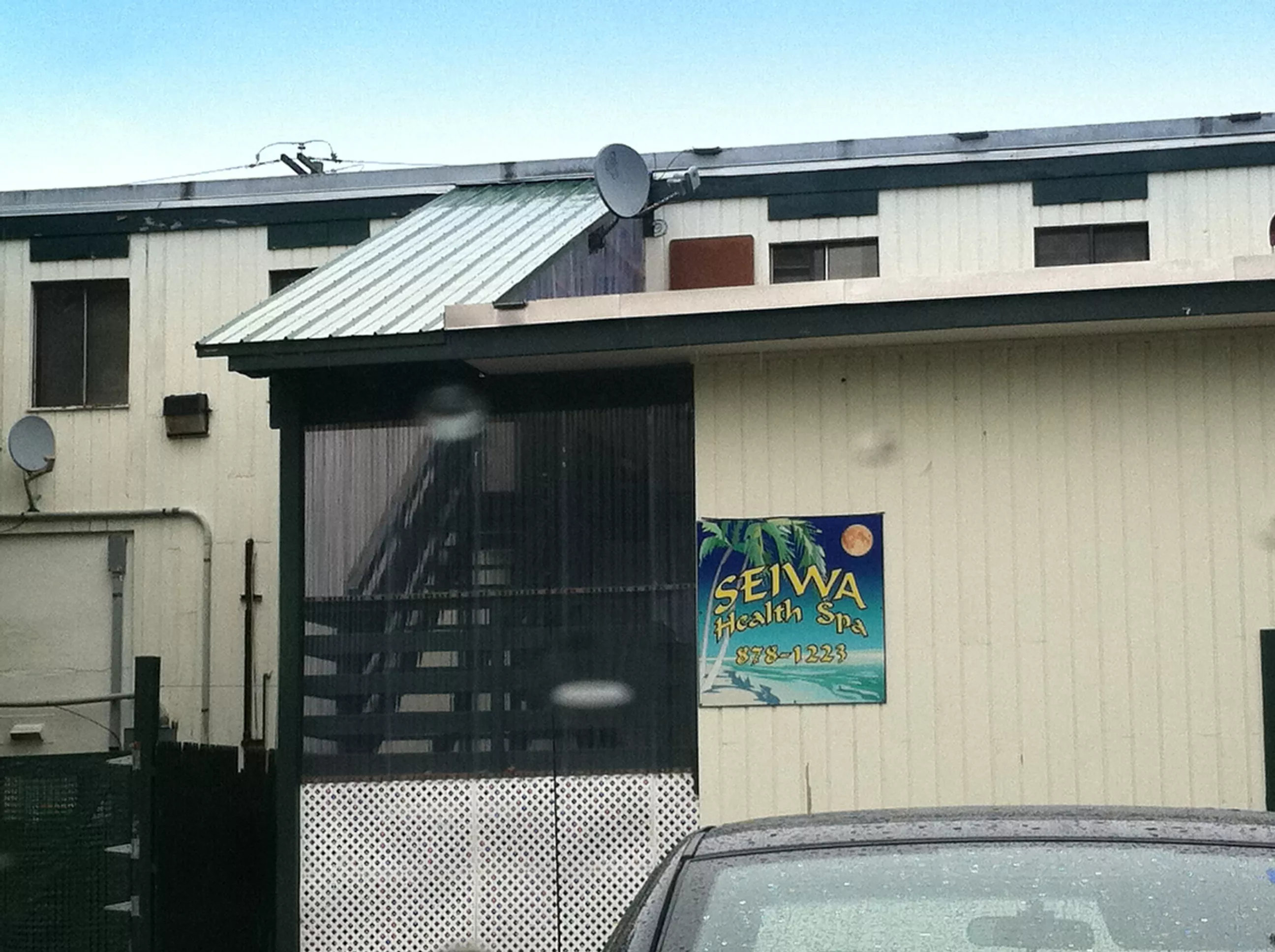
On Tuesday, the Village of Essex Junction Board of Trustees will consider proposed changes to its land development code that would make it more difficult to open massage parlors that allow criminal activities on their premises. The measure, introduced by village trustee Elaine Sopchak, comes in response to revelations last year by Seven Days that at least three Chittenden County massage parlors, including the now-defunct Seiwa Spa in Essex Junction (seen right in a May 2013 photo), were allegedly offering sex for money, possibly by female workers who were the victims of human trafficking.
The proposal, scheduled for discussion at the board's February 11 meeting, would create a new section of the village's land development code that specifically targets massage establishments. According to Sopchak, the new code would define what constitutes a massage parlor and would require a public hearing before one may open, as well as routine inspections and an annually renewable business permit.
The new code would also place physical restrictions on such businesses, such as prohibiting sleeping quarters on the premises, banning locks on massage room doors and not allowing customers to enter and exit from the rear of the building. Sopchak, who's been working closely on the new code with Essex Police Chief Brad LaRose, said that many of the proposed changes are borrowed from a model ordinances developed by the Polaris Project, an international anti-human-trafficking group based in Washington, D.C.
Gov. Peter Shumlin made his Sunday morning talk show debut this weekend with an appearance on ABC's "This Week."
The topic? You guessed it: Vermont's "full-blown heroin crisis."
Shumlin appeared with guest host Martha Raddatz, ABC News correspondent Dr. Richard Besser and journalist Seth Mnookin, who wrote last week in Slate about his own struggle with heroin addiction. The segment segued from actor Philip Seymour Hoffman's death by heroin overdose last week to Shumlin's State of the State address, in which he focused on Vermont's "growing epidemic" of opiate abuse.
Friday, February 7, 2014
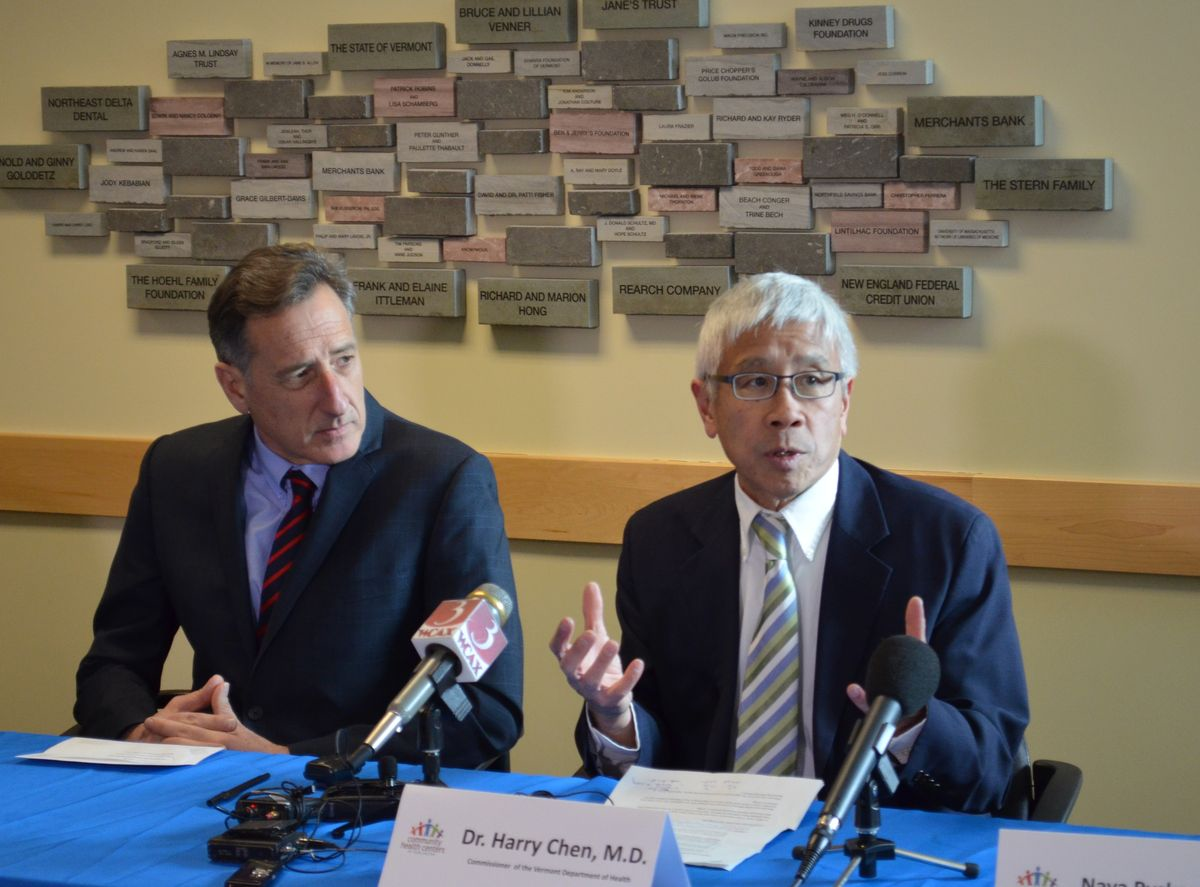
Gov. Peter Shumlin said Friday that while in Las Vegas this week, he "made a couple of fundraising visits" to potential donors to the Democratic Governors Association. But he would not say whether he raised any gold for his own reelection campaign while on his trip to the Silver State.
Shumlin traveled to Vegas on Wednesday to attend the National Association of Home Builders' annual meeting and trade show, at which the gov said he "spoke with the home builders about jobs and the work we're doing in Vermont to try to boost housing." The two-day trip was paid for by the DGA, a partisan electoral organization of which he is chairman.
As Seven Days reported this week, the organization's nonprofit advocacy arm and its super PAC raised $28 million last year. Most of that came from five- and six-figure contributions from special interest groups, including labor unions and the pharmaceutical, insurance, telecom and tech industries.
Neither the DGA nor the governor's office responded to questions posed by Seven Days over the past week about whether Shumlin would be taking part in any fundraising activities while out-of-state. But Shumlin confirmed at a Friday press conference at Burlington's Community Health Center that he had.

Updated below with comment from Department of Vermont Health Access Commissioner Mark Larson, who says the Newsweek story is inaccurate and "inflammatory."
How bungled was the rollout of Vermont Health Connect, the state's trouble-plagued health insurance exchange?
In a word, argues veteran reporter and New York Times alum Lynnley Browning, very. But Browning takes a full 3,400 words to make that point in a brutal new story published on Newsweek's website Thursday evening.
In it, Browning writes that Vermont state officials "glossed over ominous warning signs and Keystone Cops-like planning" as they worked with contractor CGI Federal to build the federally mandated exchange.

It was only a drill. Five Vermont state troopers were moving through Burlington Town Center on Thursday evening, when suddenly, they came under fire. Four journalists had infiltrated the deserted mall and wouldn't stop shooting at them.
Click. Click. Click.
Undettered by the paparazzi's cameras, the troopers went on with their demonstration, proceeding from the mall's Bank Street entrance in a diamond formation, making their way down to the J. Crew store with guns drawn, turning around and exiting the way they came.
Thursday, February 6, 2014
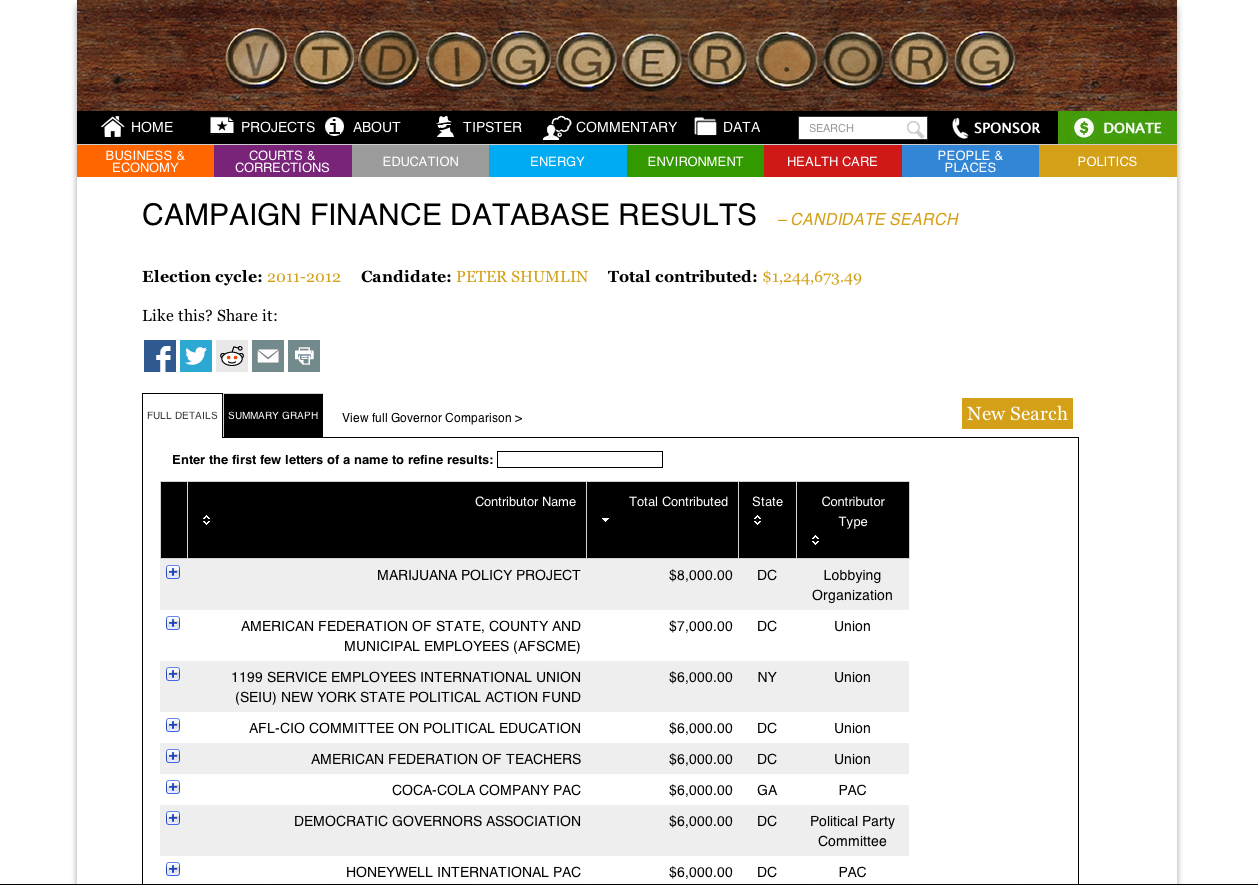
Who donated the most money to State Treasurer Beth Pearce's first bid for public office in 2012? Which Vermont politicians took campaign cash from tobacco giant Philip Morris during the last election cycle? How much money did renewable energy entrepreneur David Blittersdorf pump into Vermont politics in 2012?
Before this week, those questions were pretty tough to answer.*
To arrive at the first, you'd have to sift through seven PDFs (from seven reporting deadlines) of often handwritten disclosure forms, some as much as 12 pages long. To answer the second, you'd have to do the same as the first for each of the 205 candidates who reported fundraising activities last election. And to answer the third, you'd have to do the same as the second, but you'd also have to keep an eye out for all the entities through which Blittersdorf makes campaign contributions.
Now you don't. And that's thanks to nonprofit news organization VTDigger — not the state of Vermont.
Tuesday, February 4, 2014
The administration of Mayor Miro Weinberger appears to have negotiated a good deal for the city in the proposed $10.5 million settlement of Citibank's $33.5 million lawsuit over troubles at Burlington Telecom.
While the settlement would pay off the city-owned utility's debt to Citibank, it does not immediately reimburse taxpayers for an additional $16.9 million improperly spent by BT — although Weinberger said in announcing the deal Monday that it could eventually lead to at least partial reimbursement.
And the settlement may eventually come at the price of ceding control of the city-owned utility to private interests, as well as requiring taxpayers to cover at least a portion of the $1.3 million city contribution to the settlement.
The plan unveiled Monday will likely lead to the city ceding majority ownership to an outside partner or partners within four years, Weinberger said. While corporate interests would be most likely to have the necessary cash, the local group working to form a telecom co-op could conceivably emerge as the new owner, Weinberger said.
Alan Matson, a leader of the co-op effort, said in an interview that his group will seek to “seize this opportunity” to keep BT in local hands and under democratic control. But the fledgling co-op, which has so far raised less than $300,000 from supporters, will have to achieve a stunning financial breakthrough in order to come up with the $6 million “bridge loan” the city needs to pay off part of its debt to Citibank.
Weinberger said at the news conference that “investment banks” would be the likeliest source of the bridge financing.
Monday, February 3, 2014
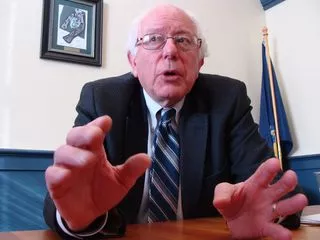
Sen. Bernie Sanders (I-Vt.) ramped up his political fundraising last year as he hinted at a possible 2016 run for president, according to new documents filed late last week.
In the second half of 2013, Sanders raised nearly $327,000 for Progressive Voters of America, a "leadership political action committee" he recently revived. The second-term senator, who does not face reelection until 2018, raised an additional $15,000 for his traditional campaign account in the final three months of the year.
Year-end fundraising and spending reports filed Friday with the Federal Election Committee show that all three members of Vermont's congressional delegation — Sanders, Sen. Patrick Leahy (D-Vt.) and Congressman Peter Welch (D-Vt.) — have come to rely upon so-called leadership PACs to conduct political business. In addition to their traditional campaign accounts, members of Congress can establish such entities to raise money and spend it for political purposes, though not explicitly on their own reelection campaigns.
Before last year, Leahy led the way in steering support to a leadership PAC; his is called Green Mountain PAC. But in March, Welch filed paperwork to establish his own, called Maple PAC. And in July, Sanders announced to his email list that he would focus on building up Progressive Voters of America, a leadership PAC he founded in 2004, but which never previously raised more than $51,000 per quarter. Sanders said at the time he hoped to use the group to "create a strong grass-roots movement in all 50 states, and work hard to elect progressive candidates at the local, state and national level."
Tags: Senator , Bernie Sanders , Presidential Campaign , fundraising , Video , Recommended Reading , Web Only , Image