

Monday, November 11, 2013
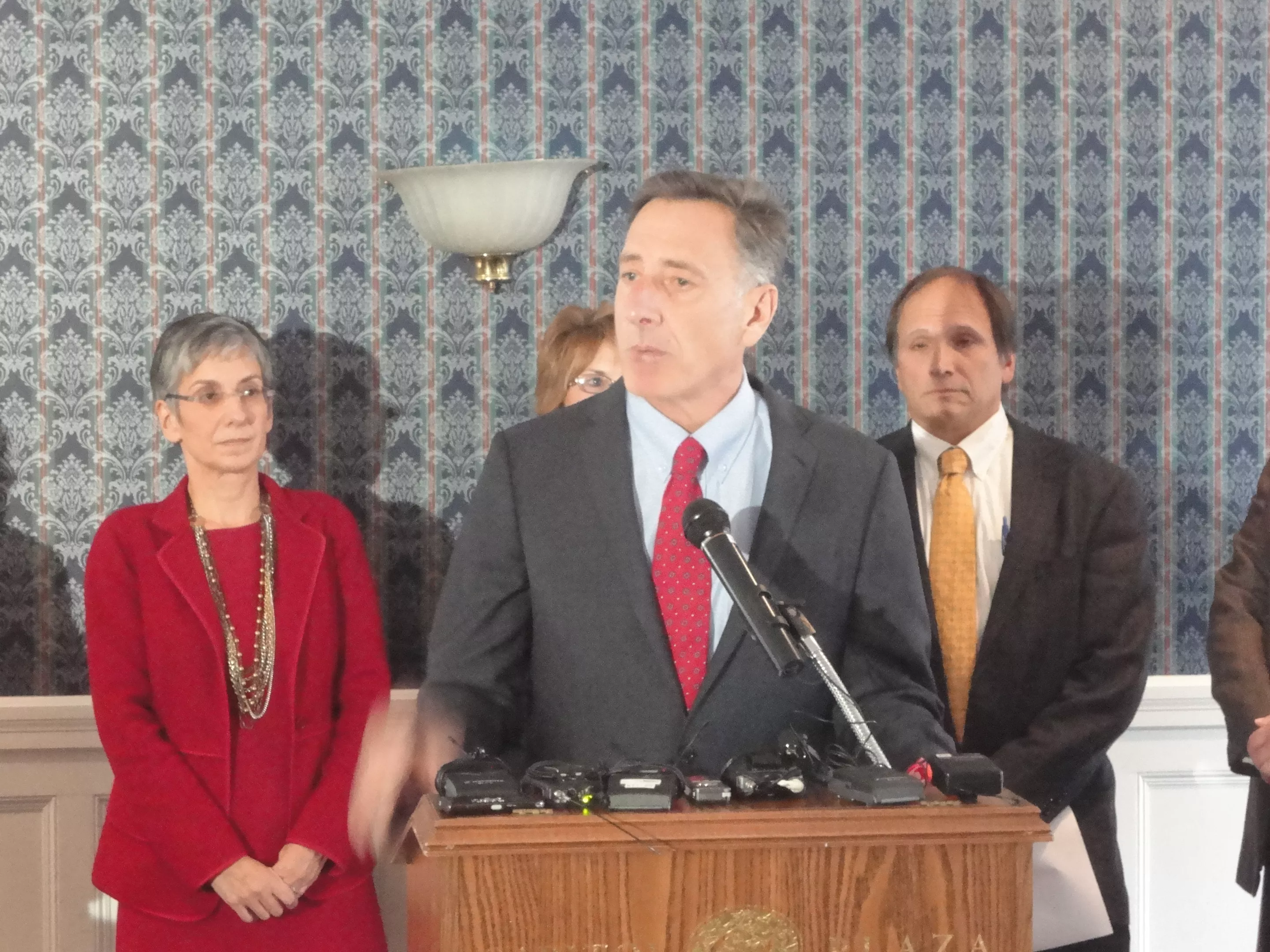
Gov. Peter Shumlin said Monday he's "hopeful" the state's ailing health insurance exchange will be able to process payments electronically by the end of November.
But citing his administration's inability to meet previous deadlines to fix that component of Vermont Health Connect, the governor declined to say when it would be fully functional.
"We're testing it right now, as you know. We're hopeful that those tests will continue to go very well," Shumlin said at a Montpelier press conference Monday afternoon. "As I've told you, I've learned a lesson as governor: I'll never say a date again. But I'm very hopeful that we'll have it up and running by the end of the month. That's my hope. I'm not promising. That's what we're working really hard to try and do."
Wednesday, November 6, 2013
Happy November, everyone. If you're cooped up inside bemoaning the chill in the air and the absence of sunlight, hey, more time for reading Seven Days. And more time for a couch tour, if you're a Phish-head — our own Paul Heintz took a break from politics this week to look back at the Vermont band's 30 years on the jam circuit. Once you're finished with that long read, here are this week's newsy stories:
- Burlington's Little Italy is gone but not forgotten. A new project revives the history of the demolished neighborhood (while urban planners wonder how to make Burlington a little more like it once was).
- Reducing Vermont's prison population? That's easier said than done. More local inmates are being shipped out of state.
- The feds are cutting aid, so Rutland's food shelf is stepping up to fill the gap for the hungry.
- In this month's Poli Psy column, Judith Levine takes a closer look at the rise of robots.
- This Vermont Health Connect mess is a something-burger, all right. In Fair Game, Paul Heintz says the health exchange's failure to launch is Gov. Peter Shumlin's biggest crisis yet.
- And lastly, a story for Veterans Day: How one Burlington woman takes unofficial care of Burlington's monument to military history.
Read it all in print, online or on the iOS app.
Thursday, October 31, 2013
Acknowledging that a poorly functioning website was making it impossible to hit the state's enrollment goals, Gov. Peter Shumlin this afternoon announced he was extending the deadline for small businesses and individuals to sign up for Vermont Health Connect from Jan. 1 to March 31. In the meantime, they will be allowed to continue using their existing plans.
Additionally, Shumlin has deputized the two insurers offering plans in the market, Blue Cross Blue Shield Vermont and MVP Health Care, to act as "agents" of Vermont Heath Connect: Instead of signing up directly on the bug-ridden state website, businesses can sign up through the insurance companies, which will then register the plans with the exchange.
"These two additional options should give Vermonters going into the holiday season some (assurance) knowing there is no way they will lose insurance on January 1," Shumlin said during a press conference while standing in front of a phalanx of lawmakers, insurers and administration officials.
The announcement represents a dramatic reversal for the administration, which had been holding to the Jan. 1 deadline in the face of growing concerns about the website.
Friday, October 25, 2013
Update: At 11:15 a.m. on Friday, October 25, University of Vermont president Tom Sullivan sent an email to the school's faculty and staff with the news that "Sodexo employees will not experience changes in the current definition of employment status and associated benefits until further notice in order for the University to complete its analysis based on a full review of all relevant data and facts."
As reasons for the announcement, the president cited "a very tight timeframe" for affected employees to find health care; the "challenges" and "uncertainties" surrounding current health-care options; "The University’s obligation to complete its review of the proposed changes under the contract with Sodexo"; and the upcoming negotiations over a new contract with Sodexo ahead of the current one's expiration in June 2015.
______
When Sodexo revealed last month that it was changing the definition of a full-time employee to someone who works an average of 30 hours per week — according to the rules of the Affordable Care Act — many cried foul at colleges around the state who subcontract their dining services to the multinational company.
Only full-timers are eligible for company benefits, so when the new policy takes effect on January 1, many seasonal employees stand to be stripped of their health and dental insurance, sick and vacation days, and retirement packages. On the campuses of the University of Vermont and the Vermont state colleges, two coalitions of staff, faculty, students and labor groups have sprung up demanding that the schools intervene.
When the UVM trustees convene this weekend, one of those groups will use a public comment period on Saturday morning to present a petition — directed at UVM president Tom Sullivan and vice president for finance Richard Cate, who negotiate the school’s dining services contract — with more than 1000 signatures.
Denise Youngblood, a history professor and president of United Academics, the school’s faculty union, will also address the trustees. In her talk, Youngblood says, she’ll ask the board to urge that Sullivan and Cate take advantage of a clause in the current contract that requires the school’s approval for any change Sodexo makes in its employees’ working conditions. The existing contract will expire after 2015.
“We believe that UVM should live up to its proclaimed social justice values,” says Youngblood. “Every employee who works on this campus should have a fair benefits package. No UVM employees are being treated the way Sodexo employees are being treated.”
Thursday, October 24, 2013

In his feistiest exchange with the press in months, Gov. Peter Shumlin on Thursday sought to reassure Vermonters that his administration is doing everything possible to remedy problems plaguing its new online health insurance portal.
But even as he expressed confidence that Vermont Health Connect's performance is improving every day, Shumlin avoided making specific promises about when the system would be fully functional.
"The bottom line is that I can't stand here truthfully, look you in the eye, and say, 'Hey, we've got this figured out right on a tight schedule to the moment, as we would with a road project,'" the governor told reporters at a press conference in the Pavilion State Office Building. "We're doing everything in our power to improve the structure that we have in place. I'm confident that we're going to get there. If we don't, I can assure you that we will have a path that will get us where we need to go."
Thursday, October 17, 2013
The Vermont Tech Jam comes to Burlington this Friday and Saturday, and Seven Days is marking the occasion with a package of technology-focused stories in this week's issue. Read about the world-leading companies that call Vermont home, one of iTunes' most popular kids podcasts, and an eerily intelligent robot that lives in Lincoln.
If you're looking for something even newsier, we've got that, too.
- Vermont's government is, generally speaking, not exactly tech-savvy. But the state is taking baby steps towards "open data," a movement to increase transparency and citizen engagement.
- On the subject of government and technology, what can Vermont Health Connect learn from the state's previous IT debacles?
- Are stoic state troopers and irreverent Twitter culture a good fit? It turns out they are, at least for the Vermont State Police.
- A few dozen new units are being added to Burlington's famously tight rental market — and that's raising fears of gentrification in the Old North End.
- In Fair Game: The Shumlin administration spent big bucks on PR for its health exchange rollout, but it didn't get much for the money. Plus, Burlington arts-and-culture magazine Thread walks the line between independent news outlet and Democratic Party propaganda.
Get this week's issue on paper, online or on the app.
Tuesday, October 15, 2013
As the state moves closer to throwing the switch on health care reform in January, Vermonters are hopping online to use the Vermont Health Connect website. The new exchange, which has taken months and millions of dollars to build, displays all of the plan options and features a calculator that tallies what subsidies you may be eligible to receive.
But what if you just want to know how your asthma medication will affect your potential insurance rates? Or how much you can expect to pay if your child breaks her foot? Vermont Health Connect might not be able to answer quick and dirty questions like that — but an app built in 24 hours by volunteers could.
A team of employees from a Burlington-based health care software firm built just such a thing during last weekend’s third annual HackVT, a hackathon hosted at MyWebGrocer’s Champlain Mill HQ in Winooski. Thirty-one teams of participants stayed up all night to code some kind of Vermont-themed app in 24 hours. This year’s projects included a mobile app to navigate state parks, a "livability index" for Vermont cities and towns and an app to help users learn healthy food and exercise habits — oh hey, that last one was the app that my team built, full disclosure.
But the winner was a "Health Connect Scenario Calculator," built by a team of Galen Healthcare employees calling themselves the "Galenerds." The app allows prospective health care buyers to compare the costs of different levels of insurance under the exchange — plus the cost of not having insurance — based on a user-selected combination of scenarios and medical events. Are you single, making $40,000 a year and want to know what it would cost if you got in a car crash? The app can help you figure that out. Married and planning to get pregnant? You can input those options, too.
Monday, October 14, 2013

Vermont Public Radio's Bob Kinzel is totally a Negative Nancy.
At least, that's the conclusion a Washington, D.C. consulting firm drew in April after the state of Vermont paid the company $18,000 for intel on reporters covering the roll-out of the state's new health care exchange.
The Vermont Press Bureau's Peter Hirschfeld had the details in a shocking Sunday story in the Rutland Herald and Barre-Montpelier Times Argus outlining the lengths to which Gov. Peter Shumlin's administration has gone to manipulate press coverage of the exchange, called Vermont Health Connect.
Friday, October 4, 2013
In Health Exchange Roll-Out, Shumlin Distinguishes Between "Nothing-Burgers" and "Something-Burgers"

Two days after his administration launched a new web-based health insurance marketplace, Gov. Peter Shumlin said Thursday that problems plaguing Vermont Health Connect were a little more "something-burger" than "nothing-burger."
At the same time, Shumlin said his administration was "making great progress" in resolving glitches and accelerating connectivity to the online exchange, through which 100,000 Vermonters are expected to buy health insurance.
"This is a good news story," the governor said Thursday afternoon at a Statehouse press conference. "This is the biggest technology transformation in health care in the history of America. We are delivering on the promise that was made to help low-income people get access to insurance."
In discussing the system's roll-out, Shumlin found himself revisiting a prime metaphor he cooked up at another press conference two weeks before. At the time, the governor was asked about his administration's recent admission that Vermont Health Connect's online payment processing system would not debut until November 1 — a month later than promised.
Thursday, October 3, 2013
It's a big news week in Vermont with the long-awaited launch of the state's health care exchange. We've got stories about that and more in this week's Seven Days.
- Republican political operative Darcie Johnston is devoted to stopping health care reform in Vermont. How's it going?
- No dancing in Burlington restaurants? A puritanical "rule" in the Queen City could be overhauled soon.
- In this week's Fair Game: Vermont pols rail against the federal shutdown, Vermont Health Connect launches, Leahy wines and dines some big-bucks donors and the Free Press sells its HQ.
- In the cover story, Paula Routly profiles Captain Richard Phillips, the Underhill merchant mariner whose ordeal with Somali pirates is the subject of a new Tom Hanks film, Captain Phillips. The real captain is back in the same waters where he was taken hostage in 2009.
Read these stories and more in print, online or on our iOS app.
Cover photo of Captain Phillips by Oliver Parini