

Tuesday, April 18, 2017
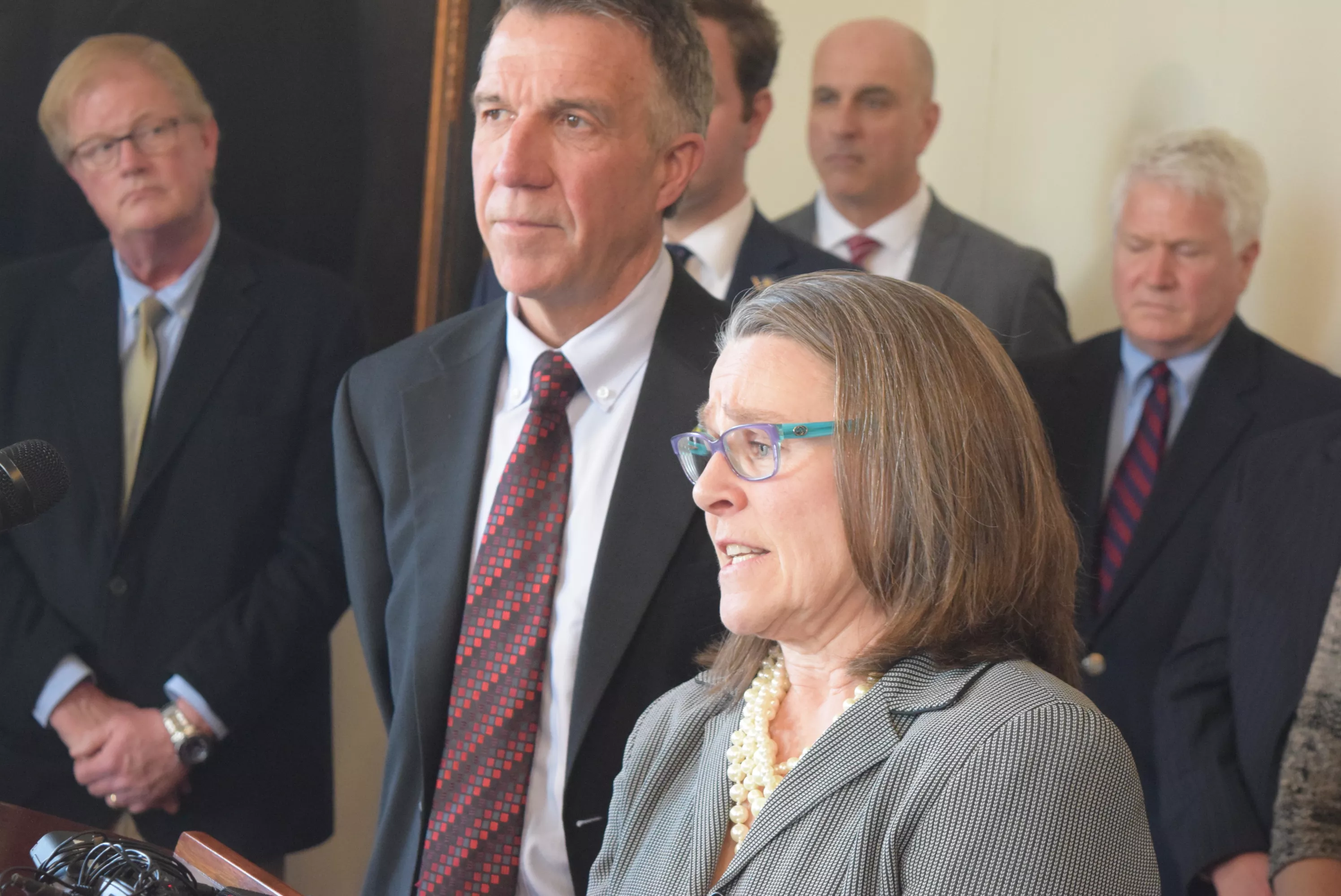
As in Washington, this spat pits Democrats against Republicans.
Gov. Phil Scott, a Republican who took office in January, is questioning whether his predecessor, Peter Shumlin, properly nominated Robin Lunge for her position on the Green Mountain Care Board.
“We haven’t been able to find any of the paperwork,” Scott said.
Apparently, official documents detailing her appointment — announced in November — never went from the governor’s office to the Senate, or to the Secretary of State’s Office, as they normally would.
That raises questions about whether Lunge — who has served on the board for more than four months — can legitimately continue to work on the $95,000-a-year job, Scott said. The five-member board oversees health care spending in Vermont; one of its powers is regulating hospital budgets.
The Democratic Senate, which votes on nominees, plans to push ahead with Lunge’s confirmation, possibly this week, said Senate Health and Welfare Committee Chair Claire Ayer (D-Addison).
“We’re going to vote for her,” Ayer said.
Tags: Peter Shumlin , Phil Scott , Robin Lunge , Green Mountain Care Board , Vermont Senate , Image , Web Only
Friday, April 7, 2017
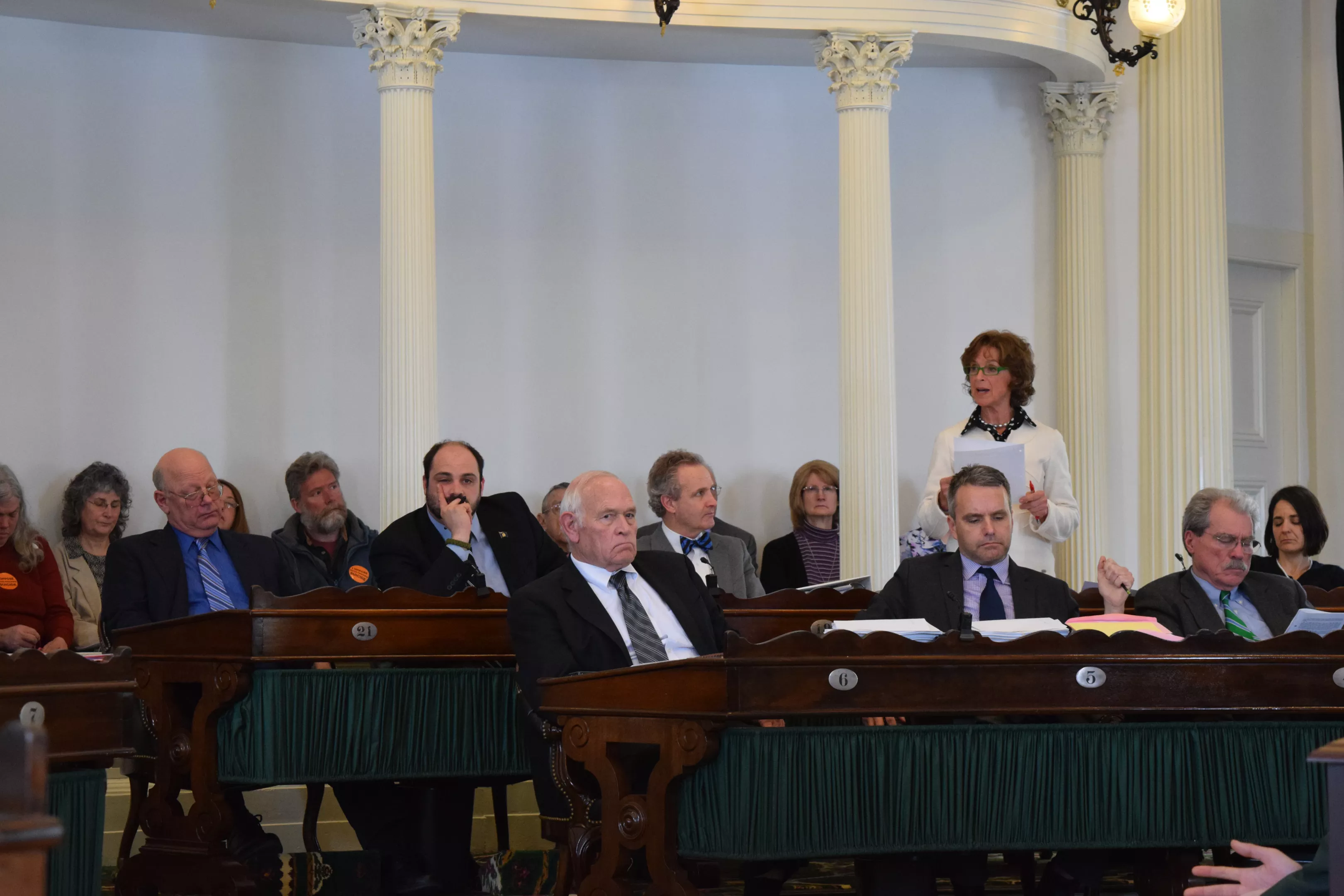
U.S. District Court Judge Geoffrey Crawford ruled that two medical organizations failed to show that their members — two doctors, a nurse and a pharmacist who oppose the law for religious and ethical reasons — faced any harm.
“Plaintiffs do not claim that any disciplinary action has been taken against their members,” Crawford wrote in his Wednesday ruling. “There is no credible threat of prosecution of Plaintiff’s members by Vermont’s medical regulators.”
Tags: end-of-life law , physician-assisted suicide , Vermont legislature , Vermont Alliance for Ethical Healthcare , federal court , Image , Web Only
Monday, March 27, 2017
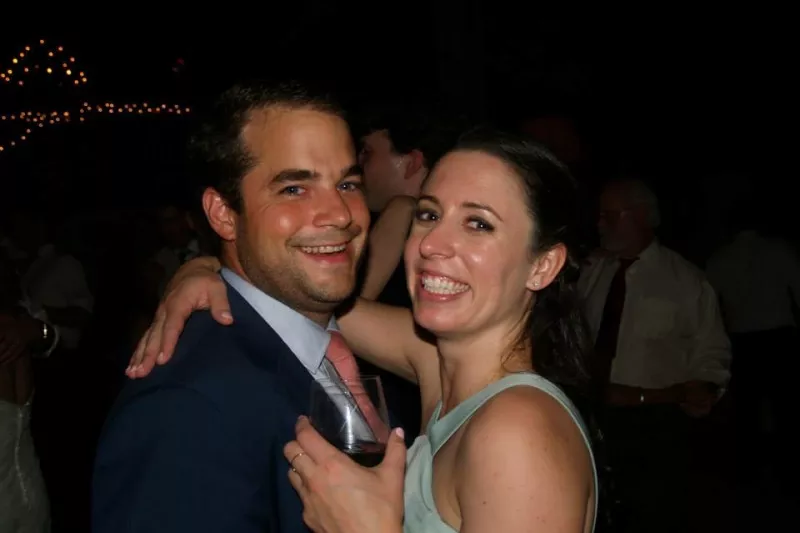
Despite a tough prognosis, 30-year-old McLaren was upbeat Monday in a telephone interview from the Spaulding Rehabilitation Hospital in Boston where he is undergoing physical therapy.
“I am OK. I am as good as I possibly could be,” McLaren said in an interview with Seven Days.
He expressed gratitude for all the love and support he has received from family, friends and his fiancée, Burlington lawyer Adrienne Shea.
Tags: Ryan McLaren , Adrienne Shea , Kelly Brush Davisson , Burlington School Board , Image , Web Only
Friday, March 24, 2017
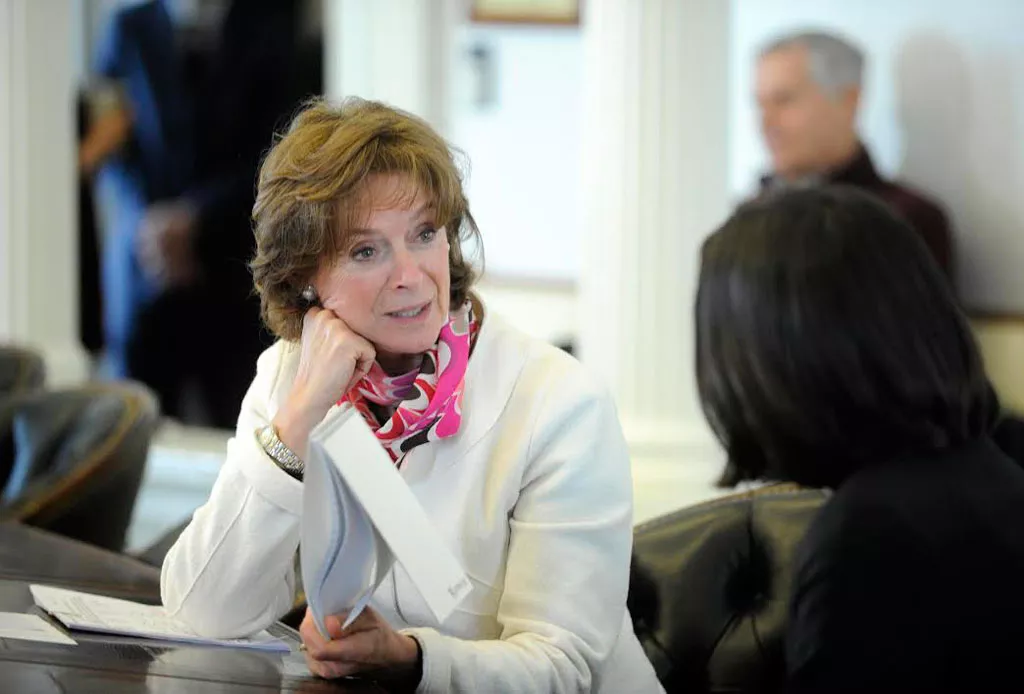
“We have a plan, we’ve got a bill, we’re closing in on exactly how much money we need to do what we want,” said Sen. Claire Ayer (D-Addison), chair of the Senate Health and Welfare Committee, after emerging from a closed-door meeting with Scott Friday morning.
“We agree that there’s urgency to act,” she added. “We’re not in total agreement, but we’re pretty close.”
There’s broad awareness that the entire system is in shambles, with inpatient bed shortages, patients lingering for days or weeks in emergency rooms and low pay for mental health workers.
Ayer’s committee has approved a bill calling for a variety of studies, with an eye toward identifying longer-term fixes in 2018. In the meantime, the bill would establish a minimum $15-an-hour pay rate for all designated agency staffers. Earlier this week, Senate President Pro Tempore Tim Ashe (D/P-Chittenden) vowed that the pay issue would be addressed.
The price tag was originally thought to be $30 million, but that’s been pared down to less than $15 million because at least half the money would come from federal matching funds. That reduced figure was presented to Scott Friday morning.
“We’re having constructive discussions,” Scott said in a written statement. “There is consensus to try to improve the delivery of mental health services to Vermonters.”
His statement closed with a call to make the fix “budget-neutral.”
The legislation is now before the Senate Appropriations Committee. The crossover deadline for money bills was Friday; committee chair Jane Kitchel (D-Caledonia) said she would insert language “that would basically articulate our intent to address this funding need. It gives us time to really refine those numbers.”
Kitchel was loath to give a precise figure, but estimated that $16 million would be federal — making the state responsible for roughly $14 million. Her committee will look for ways to further reduce the figure, make it as “manageable” as possible, “and make sure we’re putting the money where the acute need is,” she said.
Possible options for reducing the cost of the wage fix include phasing in wage increases over time and trimming budgets in other areas of the system in anticipation of lower expenses if the staffing crisis eases on the front lines of mental health care.
Postscript: Friday morning’s meeting with Scott was supposed to include all five members of the Senate Health and Welfare Committee, and was listed on the panel’s official agenda. But when the five senators gathered outside Scott’s Statehouse office and saw Your Correspondent waiting outside, they went into a brief huddle with Ashe’s chief of staff, Peter Sterling.
Ayer then entered the governor’s office. A few minutes later, she came out and announced that the meeting would include only her and committee vice chair Ginny Lyons (D-Chittenden). The other three members were sent away.
“We just want to have a discussion with the governor, okay?” Ayer said.
“So did I cause this?” I asked.
“Yes, you did,” she said in a cheery voice.
“So it’s not a quorum,” I said.
“It’s not a quorum,” Sterling echoed.
I feel so accomplished. If they can’t think of anything else to put on my tombstone, they can always use “Once Caused a Quorum Kerfuffle.”
Tags: Claire Ayer , Jane Kitchel , Phil Scott , Tim Ashe , Peter Sterling , mental health , Image , Web Only

The bill’s prospects remain in limbo, however, as senators later put the bill, S.88, on hold. Supporters indicated that while they had just enough votes to keep the bill alive, they lack sufficient backing to pass it.
“We wanted to give senators more time to be educated on the bill and address some of the concerns,” said Sen. Debbie Ingram (D-Chittenden), a leading supporter of raising the smoking age.
One of those concerns is money the state would lose by collecting less in cigarette taxes. Under the bill as written, the state would lose an estimated $1.4 million next year from cigarettes not sold to consumers under age 21.
Tags: cannabis related , David Zuckerman , Debbie Ingram , legal smoking age , Image , Web Only
Friday, March 10, 2017
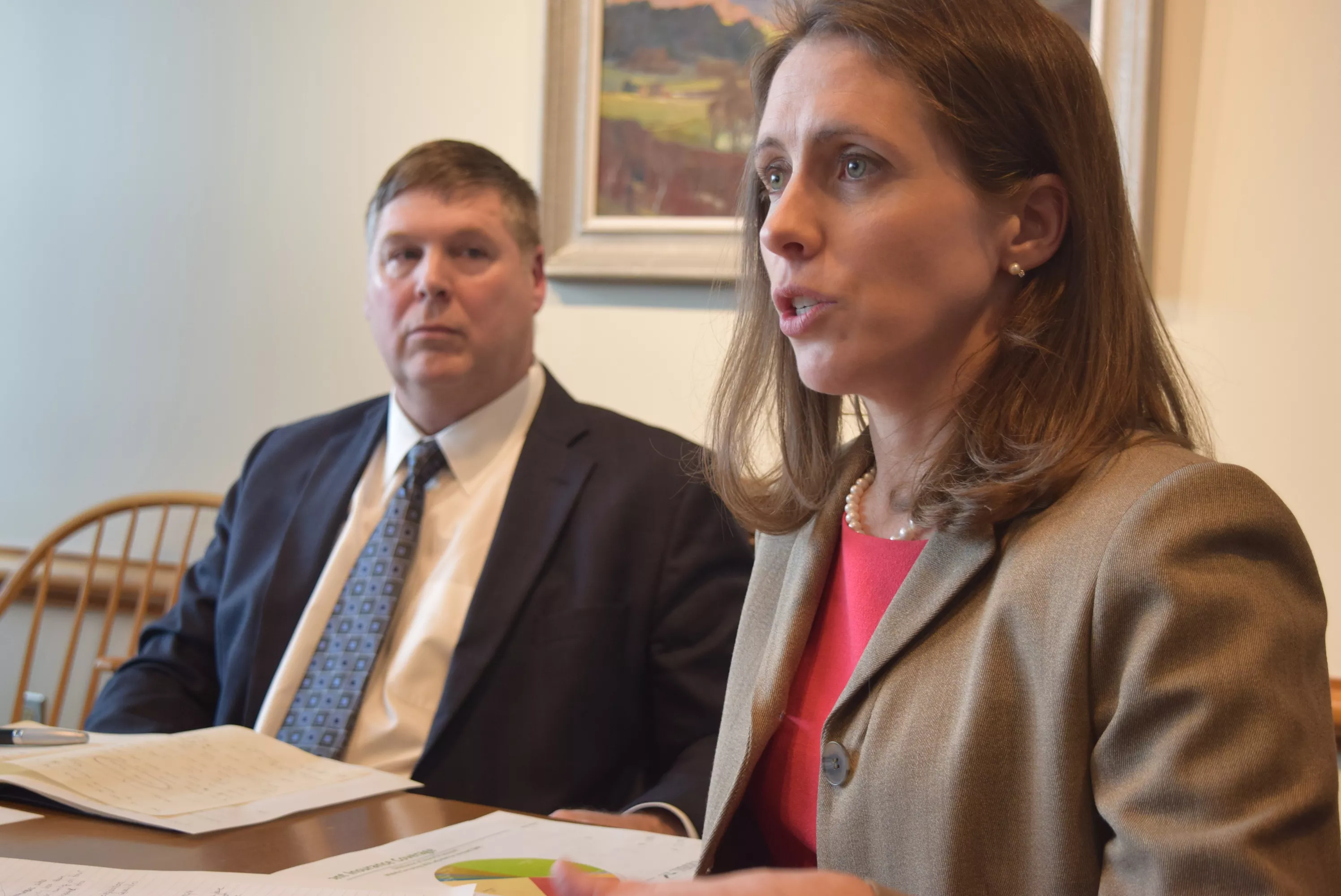
“We think Vermonters should know this,” Al Gobeille, secretary of the Agency of Human Services, said at a media briefing in Montpelier. “You cannot tell from the coverage of these bills what impact this will have on Vermonters and we think that’s important.”
The Republican House majority’s proposal passed two key committees in Washington on Thursday and could reach the House floor by the end of March, according to news reports. The plan would replace federal insurance subsidies with individual tax credits and grants. President Donald Trump has endorsed the plan.
Tags: Vermont , Al Gobeille , Donald Trump , Affordable Care Act , Congress , Medicaid , Image , Web Only
Wednesday, March 8, 2017
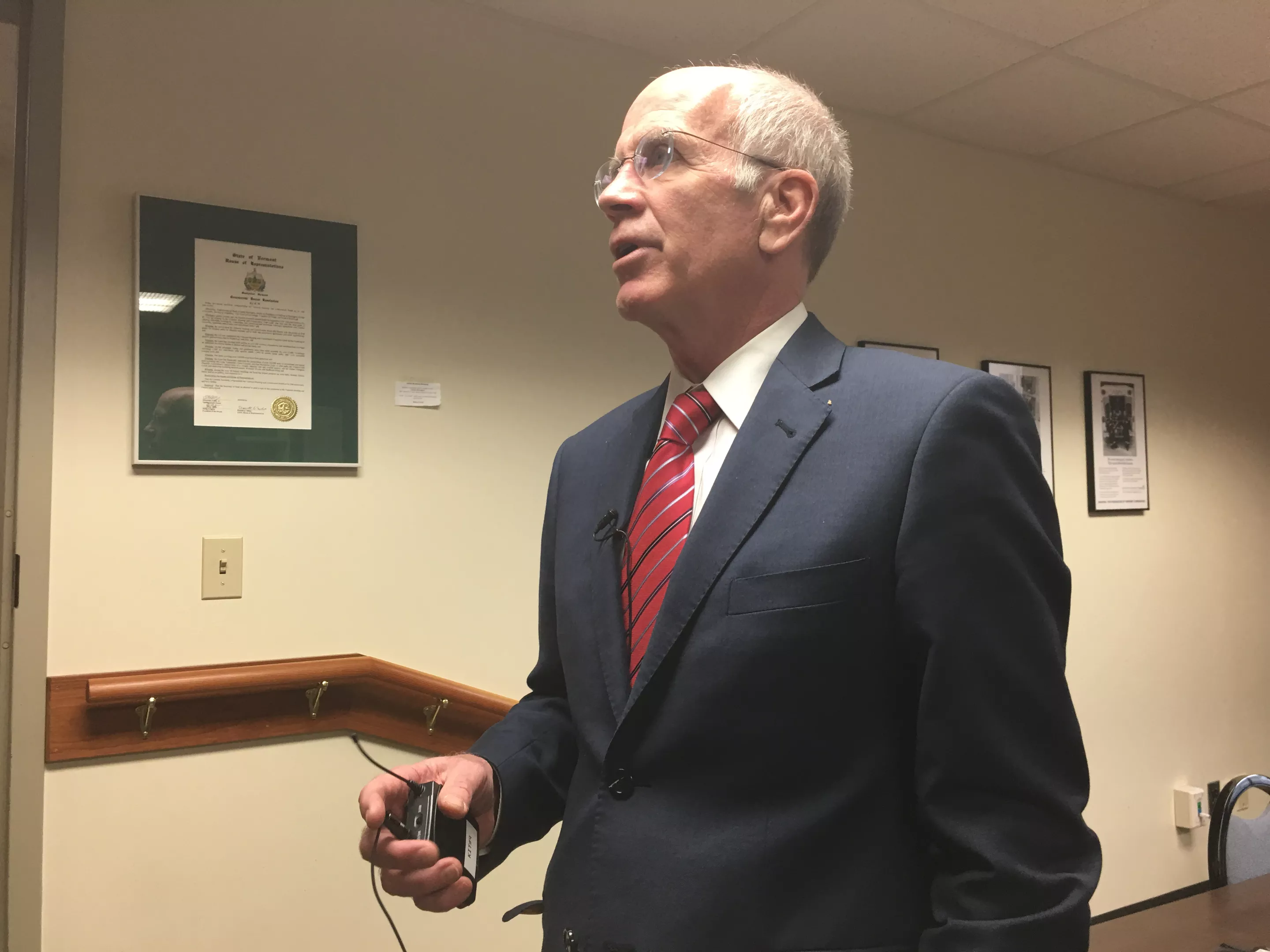
When approaching the self-proclaimed Master of the Deal, it’s best to offer him a chance to play dealmaker.
That’s what Congressman Peter Welch (D-Vt.) took away from a Wednesday meeting with President Donald Trump. The subject: a bill championed by Welch and Congressman Elijah Cummings (D-Md.) that would allow the federal government to negotiate lower drug prices for the Medicare program, which is currently forbidden by federal law.
“President Trump was knowledgeable and enthusiastic about this,” Welch reported. “He was not having staff whispering in his ear telling him what was going on. This was him totally in control and vividly aware of how expensive these prescription drugs are.”
The Oval Office sit-down included Welch, Cummings, and Dr. Redonda Miller, president of the Johns Hopkins Hospital, as well as Health and Human Services Secretary Tom Price, a former Georgia congressman.
Welch and Cummings have introduced the same legislation for eight years, and always run into what Welch called a “stone wall of resistance” from House Republicans.
When Price was serving in Congress, he was one of those devout stonewallers. He has also faced ethical questions about some very profitable trades in health care stocks he made when he had access to inside information as a member of a key House subcommittee.
It must have made Price a bit uncomfortable to hear his boss praising the idea. And Welch didn’t shy away from pointing out the discrepancy.
“I mentioned that Secretary Price had always been resistant to this when he was my colleague in the House,” Welch said, “so the president asked Price about that, and he said he’s against price fixing, price setting. And the president seemed undeterred by that, because I pointed out that price negotiation is what you do between a willing buyer and a willing seller.”
Welch called it “surprising” that Republicans oppose free-market dealmaking in the case of drug prices. “And the president said it’s probably because Big Pharma is very powerful in lobbying and campaign contributions,” Welch concluded. “So he gets that.”
Welch left the session optimistic, but with eyes wide open. “The proof will be, do we get a bill passed?” he said. “But bottom line, our only chance to succeed is to have his support.”
At the end of the meeting, Trump handed Welch’s and Cummings’ bill to Secretary Price with instructions to provide an official response. One hopes that Price didn’t find a convenient shredder on his way out of the Oval Office.
Tags: Peter Welch , Donald Trump , Elijah Cummings , Tom Price , Medicare , prescription drug prices , Redonda Miller , Image , Web Only
Friday, February 24, 2017
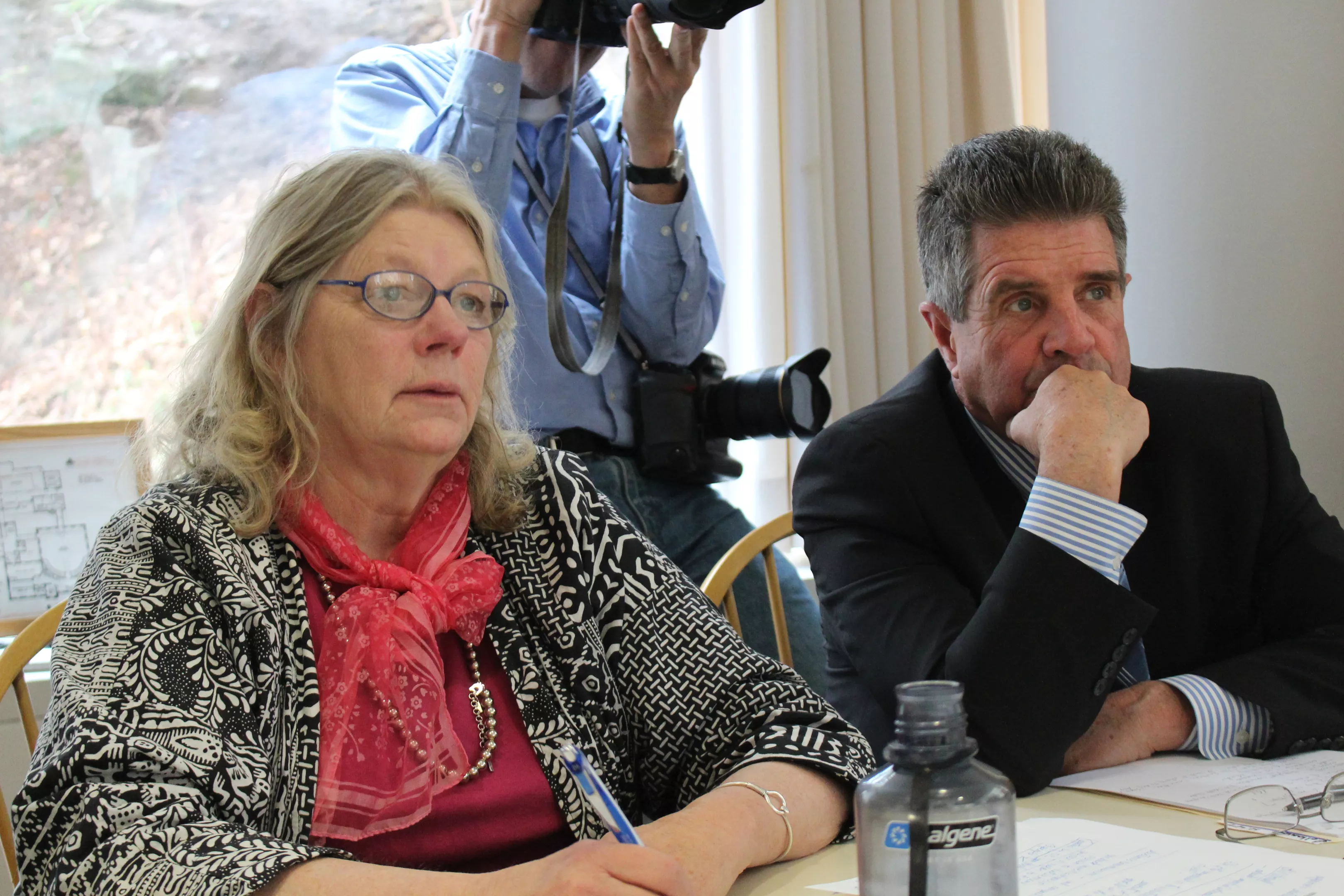
Mental health providers panicked after a Vermont Supreme Court ruling last May, which, in their interpretation, drastically expanded their “duty to warn” when releasing patients from their care.
Before the so-called Kuligoski case, providers had to warn people when there was an imminent threat to an identifiable victim. The court ruling expanded the obligation to also apply to “foreseeable victims or to those whose membership in a particular class ... places them within a zone of danger.”
The Senate voted to restore the previous standard — essentially voiding the court’s ruling. According to Sen. Jeanette White (D-Windham), who presented the bill, an “identifiable victim” doesn’t have to be a particular person. She noted that it could extend “to a situation where a patient says, ‘I hate barbers. I’ve got a gun. And I’m going to go kill a barber.’”
Tags: Vermont Senate , Kuligoski , Vermont Supreme Court , Image , Web Only
Wednesday, February 22, 2017
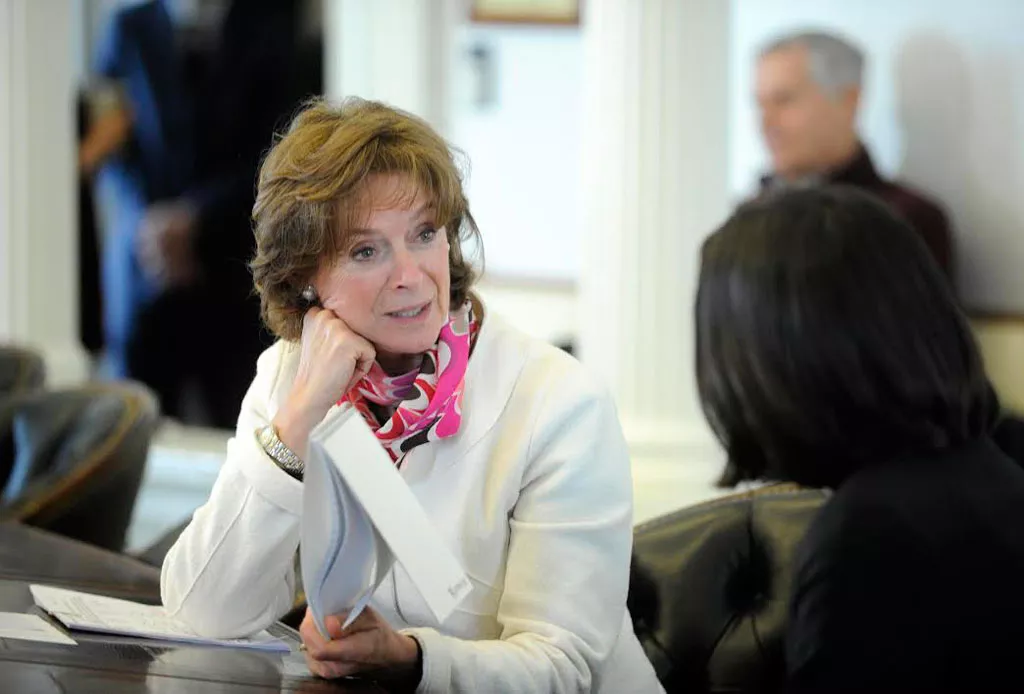
On Thursday morning, the Senate Health and Welfare Committee took a first look at a draft bill aiming to identify solutions for the system's intractable problems. The bill has yet to be formally introduced, but is poised for quick approval. Committee chair Claire Ayer (D-Addison) expects to move the bill out of committee by the end of next week.
"The rationale behind the bill is to take a look at a system that should work, that was designed to work, but that isn't working," Ayer explained.
The bill's scope takes in the entire system, but focuses on a few known trouble spots: chronic underfunding and understaffing at community-based agencies, a rising tide of geriatric and forensic psychiatric patients, and improving the coordination between different parts of the system.
Tags: Senate Health and Welfare Committee , Claire Ayer , Al Gobeille , designated agencies , mental health care , Image , Web Only
Wednesday, February 15, 2017

The Himalayan Cataract Project announced Wednesday that the organization is one of eight from around the world to make it to the final round of the 100&Change grant competition sponsored by the MacArthur Foundation.
When Job Heintz, chief executive officer for the organization, heard the news about two weeks ago, "I sat down," he said. "It's exciting beyond compare."
The Himalayan Cataract Project, which has a budget of just under $10 million, performs low-cost, en masse cataract surgeries in remote locations around the world. The grant money would be used to eliminate needless cataract blindness in three countries — Ghana, Ethiopia, and Nepal.
The Chicago-based MacArthur Foundation launched the 100&Change grant competition last year to "solve critical problems of our time," according to a press release. The funds can be used for up to six years.
HCP was selected from 1,904 proposals from around the world, according to the press release. About 800 went on to the second round, and the final selection was made by MacArthur's board of directors. The proposals were judged on four criteria: verifiability, durability, meaningfulness and feasibility.
Over the next six months, HCP will receive training and technical assistance from the MacArthur Foundation to refine its proposal. Next September, the foundation will select five finalists who will present at a live event in December.
HCP was founded in 1994 as the result of a partnership between Dr. Geoff Tabin, who lived in Vermont at the time, and Dr. Sanduk Ruit of Nepal. Since then, they have performed 6.6 million cataract surgeries in a dozen countries at a cost of $25 per surgery.
The grant money would create "an adaptable 'train the trainer' model that can be replicated and scaled around the world," according to the MacArthur Foundation website. The money would be used to train more health professionals, provide equipment and "increase the innovation," Heintz said. HCP also plans to partner with IBM Watson Health to create a platform to log surgeries and track their data more comprehensively.
HCP will pursue the work regardless of whether they win the competition, Heintz said. "Boy, 100 million would help," he added.
Other semifinalists include the Internet Archive's project to provide free digital access to books for libraries and students, the Carter Center's effort to cure river blindness in Africa, and the Human Diagnosis Project's proposal to offer underserved American patients "virtual access to specialist medical care."
After being selected from 1,900 applicants, the odds are "a heck of a lot better," Heintz said. "We're very confident in what we proposed to do. We're also very aware and humbled by the other semifinalists."
Heintz highlighted the benefits for Vermont as well. "It'll bring a ray of hope to the state, to the NGO community here," he said. "We started here, stayed here, and are growing here."
Tags: Himalayan Cataract Project , Job Heintz , MacArthur Foundation , 100&Change , Image , Web Only