

Tuesday, April 6, 2021

The strategy, dubbed Vermont Forward, will reopen the state in four steps that are staggered monthly until July 4, when Gov. Phil Scott expects to remove the mask mandate and restrictions on gatherings. Senior state officials characterized the plan at a press conference as gradual and said it will align with progress in the vaccination campaign.
"We're in the last laps of this very long and difficult race," Scott said. "This plan shows how we'll finish strong."
Tags: Gov. Phil Scott , Mark Levine , Vermont Forward , COVID-19 , COVID-19 vaccine , reopening plan , gathering restrictions , quarantine , cross-state travel , Web Only , Image
Monday, April 5, 2021

Scott cited the same statistics his administration used to justify the move when it was announced last week, noting in a press release that just 20 percent of BIPOC Vermonters have been vaccinated compared to 33 percent of non-Hispanic white Vermonters.
He also argued that the approach aligns well with the state's long-stated goal of prioritizing those most likely to suffer the worst impacts from infection, given research showing the BIPOC population faces a higher risk of developing complications that can lead to hospitalization.
Tags: Phil Scott , Fox News , Web Only , Image
Friday, April 2, 2021
Two variants of the coronavirus have now been found in several Vermont counties, and the state’s infection rate has risen 85 percent since March 1. That rate is expected to keep rising until the end of the month.
On Wednesday, Vermont broke its record for daily new cases with 261. The previous record was 255, set on March 25.
Tags: COVID-19 , Phil Scott , Vermont , press conference , coronavirus , Web Only , Image
Tuesday, March 30, 2021
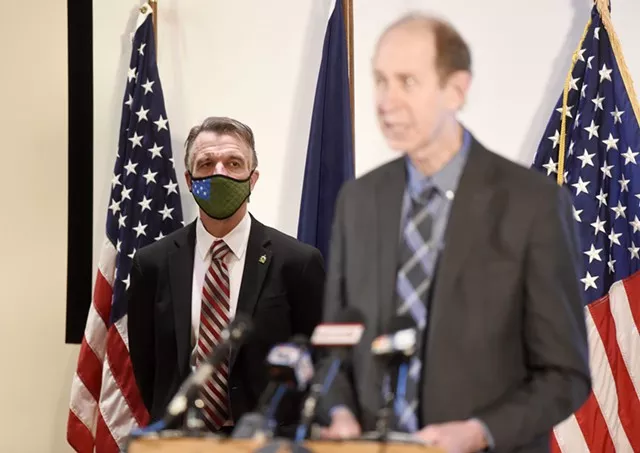
More than 200,000 Vermonters have received at least one shot of COVID-19 vaccine, leading to fewer deaths and hospitalizations than during January, said Mike Pieciak, commissioner of the Department of Financial Regulation. Pieciak, who is in charge of modeling COVID-19 numbers for the state, said only about 9 percent of recent cases in Vermont are among people 60 and over — the group most at risk of serious complications from the virus.
Despite that good news, the state on Friday reported 255 new cases, the highest daily count since the pandemic began. The numbers have eased up only slightly since: 122 new cases on Saturday, 238 on Sunday, 173 on Monday and 73 new cases on Tuesday.
Case numbers have risen 53 percent among people in their twenties in the last month, Pieciak said, the group that will be eligible last for vaccinations. Vermont's positivity rate has risen to 2 precent, and the death count now stands at 225, with 25 people hospitalized.
Tuesday, March 23, 2021
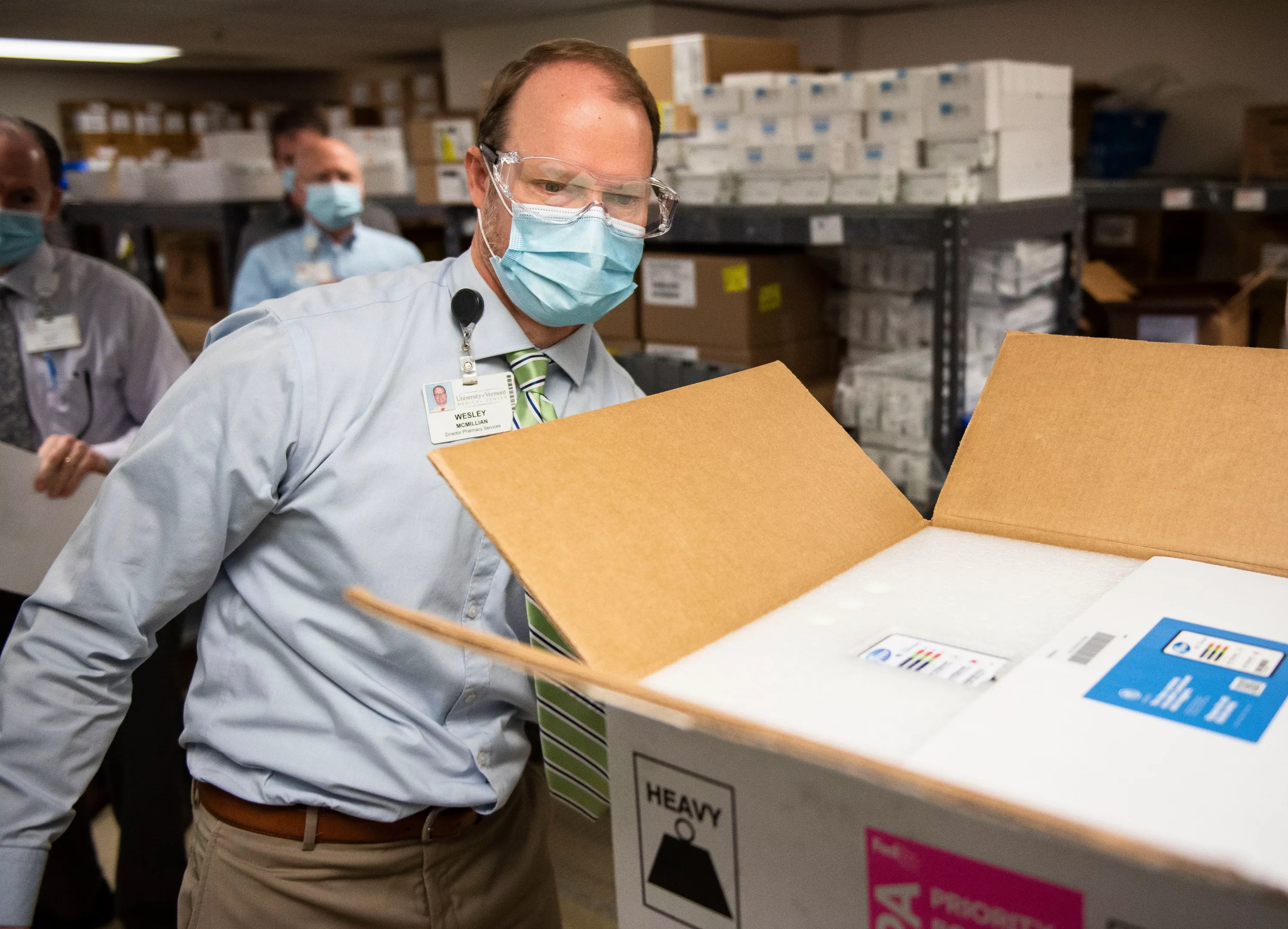
The state is now shifting much of its focus to younger Vermonters. Everyone 16 and older will be able to sign up for vaccination appointments by April 19, with smaller "age bands" eligible in the preceding weeks.
“Hopefully those age groups will see a variety of messaging campaigns on social media and traditional media,” Health Commissioner Mark Levine said on Tuesday at one of the state’s twice-weekly COVID-19 briefings.
Levine said state officials will employ a persuasive, not dictatorial, tone with young people, many of whom might not think COVID-19 could have much impact on them. He said symptoms such as chronic fatigue, brain fog, memory loss and shortness of breath can occur weeks and months after infection with the virus, even in the young.
“I don’t wish that on anybody,” Levine said of such symptoms. “These can creep up on them over months and be debilitating.”
Tags: COVID-19 , vaccines , Statehouse , Web Only , Image
Friday, March 19, 2021

A broad COVID-19 recovery bill that would plow $105 million into everything from business grants to affordable housing to free diapers advanced toward approval Friday afternoon.
The Senate unanimously approved H. 315, setting it up for a final vote next week. The bill is lawmakers’ latest attempt to ensure a combination of federal and state funds are spent as soon as possible on programs that will help the state “build back better,” as Sen. Jane Kitchel (D-Caledonia) put it.
“It seems like this bill has touched just about every committee in the Senate,” Kitchel, chair of the Senate Appropriations Committee, told her colleagues.
The bill still needs to return to the House for final reconciliation with the Senate’s numerous changes. But House leaders have been in close communication with their Senate colleagues and are committed to ironing out any differences quickly, said Connor Kennedy, spokesperson for House Speaker Jill Krowinski (D-Burlington).
“We’re probably at the five-yard line, to be honest,” Kennedy said.
About $80 million of the money is coming from $1.25 billion Vermont received from the American Rescue Plan Act of 2021. Some funds are left over from last year's federal CARES Act. The balance will be from state funds, which are flush thanks to a surprise $210 million largely from higher-than-expected tax revenues.
The bill includes funding for a number of key Democratic priorities, including affordable housing, grants for struggling businesses, environmental cleanup and workforce development.
One of the largest chunks is $15 million to help schools address indoor air quality, a significant concern as children have returned to the classroom during the pandemic. There’s also $14 million to help clean up and redevelop some of the state’s numerous contaminated industrial sites, or brownfields. Another $10 million would help affordable-housing developers get projects moving that would help hundreds of homeless people still living in motels around the state, Kitchel said.
The Senate also increased to $10 million funds for “gap grants” to businesses that didn’t qualify for previous funding, such as for new businesses that couldn’t demonstrate previous revenues. Outdoor recreation would also enjoy a big boost, with $5 million going to the Agency of Natural Resources for trail work and another $5 million dedicated to the Vermont Outdoor Recreation Economic Collaborative, an economic development effort around recreation businesses.
The bill includes a number of education initiatives, including $3 million to train teachers to improve how they teach literacy, $1.4 million to train new nurses in collaboration with nursing homes, and $1 million to help schools find students they’ve lost track of during the pandemic, a phenomenon she referred to as "ghosting."
"We're really going to have to make some concerted effort to reconnect students with schools," Kitchel said.
Not all expenditures are big-ticket items, however. The Senate also set aside $25,000 for an audit of state deputies, and increased by $82,000 the funds set aside for needy families with children to pay for diapers.
Senate Minority Leader Randy Brock (R-Franklin) asked whether what was characterized as one-time spending would result in programs that the state would need to continue paying for when federal relief dollars dry up. Kitchel said her committee was "absolutely vigilant" to make sure that wasn't the case.
The bill references holding $20 million in reserve to help solve the state’s pension crisis, but Kitchel said her committee didn’t have the time to drill down on that issue and will have to return to it later in the session.
“We intend to address this problem before we leave this year,” she said.
Tags: COVID-19 , Vermont Senate , Web Only , Image

Gov. Phil Scott on Friday released a full timeline for when every Vermonter can expect to be eligible for a coronavirus vaccine, saying the state plans to open sign-ups for new age groups each of the next four weeks until the entire adult population is eligible by April 19 — and immunized by July 1.
Vermonters ages 60 and older can start making appointments on Thursday, March 25, Scott said. The next age-band — 50-and-older — can then sign up Monday, March 29. The state will then open up new bands each of the next three weeks, on the following schedule.
- April 5: age 40 and older
- April 12: age 30 and-older
- April 19: age 16 and older
"To put a finer point on it," Scott said, "for high school seniors, this timeline means that in June ... you should be able to have a more traditional graduation and celebrate what you've accomplished with your friends and family."
Scott on Friday also reaffirmed his desire to have the state's economy largely reopened around the Fourth of July, and said he will provide a full plan for "emerging from the pandemic" within the next few weeks.

Whether the state can meet these goals will depend on vaccine supply and the trajectory of the virus, officials said. But the announcements, which come a year to the day since Vermont's first confirmed COVID-19 deaths, still offer the clearest picture yet of when the state expects to regain a sense of normalcy.
"Normal to me is not a small cookout in your backyard with a couple of friends," Scott said. "It's when things will feel similar to pre-pandemic."
The state has the necessary infrastructure to provide about 35,000 vaccine doses per week, according to Human Services Secretary Mike Smith.
While Friday’s news was largely encouraging, officials stressed that Vermont cannot claim victory yet, particularly in light of news this week that another, more contagious, variant of the virus has been found here.
On Thursday, the Vermont Health Department announced that it had confirmed three cases of the B.1.429 variant, a strain first identified in California that is about 20 percent more contagious. Another variant found in Vermont earlier this month — B.1.1.7, which originated in the United Kingdom — is believed to be up to 50 percent more contagious.

The strains must be confirmed using genetic sequencing, and with the health department sending out only 20 samples per week, it’s likely that the variants are more prevalent than is known.
With this in mind, Health Commissioner Mark Levine encouraged people to follow best health practices and get tested if they do not feel well.
“This is the only way for us to stay ahead in the race,” he said
Tags: Vermont , Vaccine , Restrictions , COVID-19 , Gov. Phil Scott , Web Only , Image
Thursday, March 18, 2021

In a Thursday afternoon press release, the department said it has confirmed three cases involving the "B.1.429" variant. Two of those cases were from samples taken in Chittenden and Franklin counties, while the third's origin is pending.
The announcement comes a little over a week after the state confirmed the presence of the B.1.1.7 variant that originated in the United Kingdom. That variant has now appeared in eight Vermont test samples, the health department said.
“These variants of the COVID-19 virus can move more easily from person to person,” Health Commissioner Mark Levine said in the press release. “This is setting us up for a race of sorts between the presence of strains of a highly contagious virus, our rapidly progressing vaccination program, and the need for each of us to continue to focus on prevention and getting tested.”
Friday, March 12, 2021
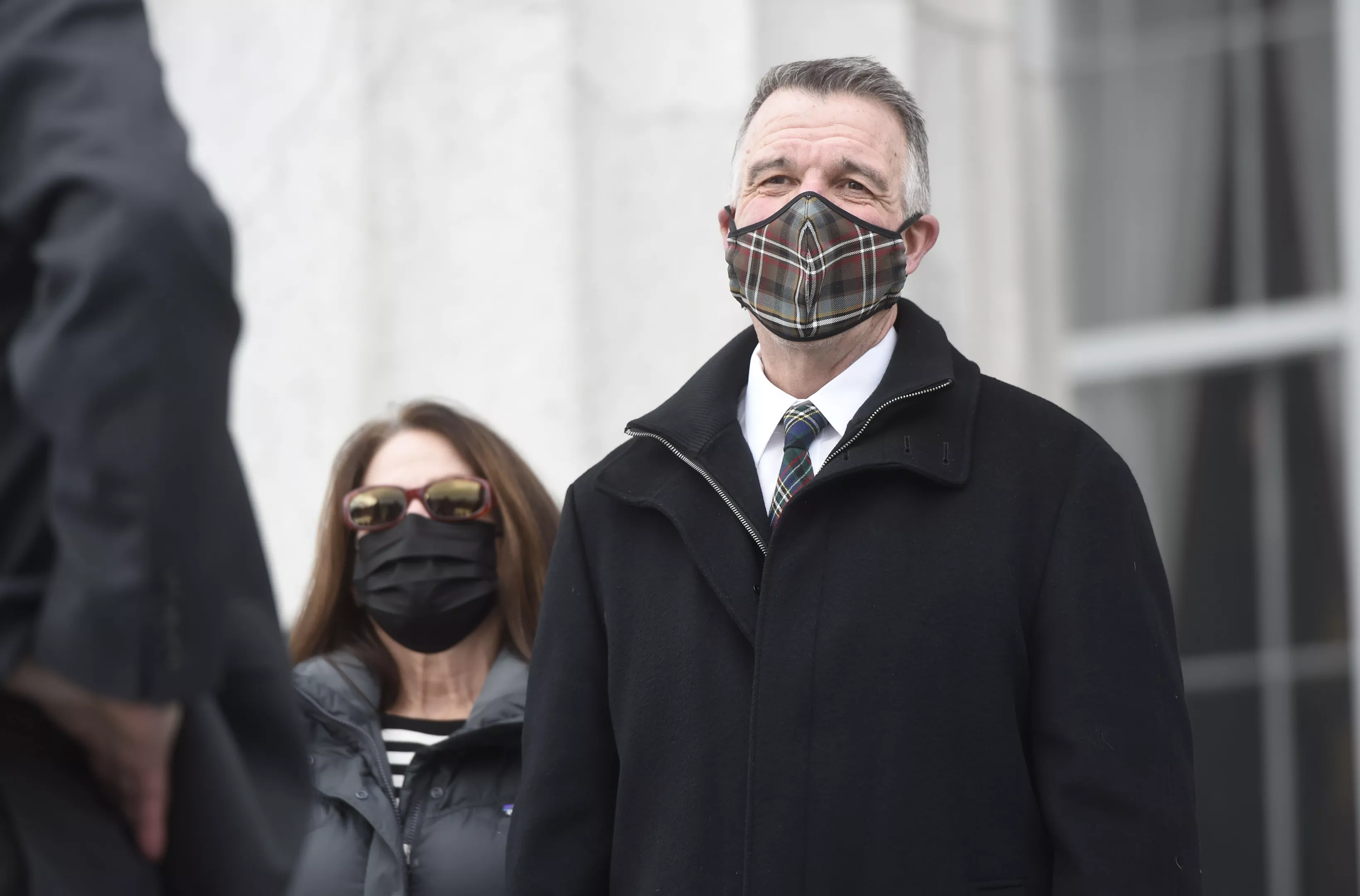
Gov. Phil Scott announced on Friday that unvaccinated people from two separate households can socialize, as long as they wear masks and keep a six-foot distance. Vaccinated Vermonters can also be a part of those gatherings, Scott said.
Earlier this week, the state said vaccinated households could get together and include one unvaccinated household. Friday's change, which is effective immediately, is the next most substantial shift in guidance for social gatherings since Thanksgiving, when Vermont banned such get-togethers due to climbing case counts.
Earlier in the pandemic, unvaccinated Vermonters were allowed to convene with one other “trusted household.” The new rule permits unvaccinated households to have multiple trusted households, as long as they gather with just one of those households at a time.
People from multiple households can now also dine out together. Up to six people can be seated at the same table in a restaurant, Scott said.
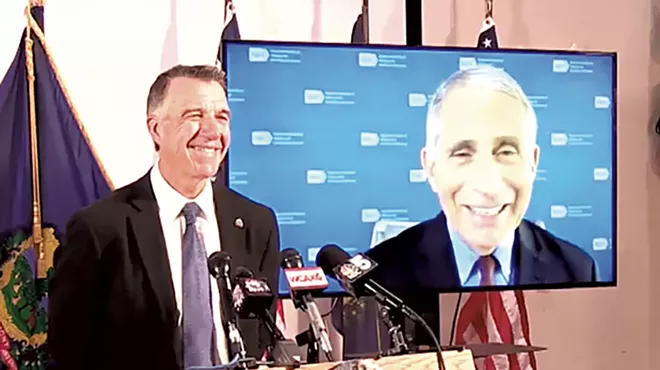
“I know these changes are not as big as many other states, including those in our region,” Scott said. “But we feel they’re positive and safe steps forward, and you can expect more ‘spigot turns’ next week.”
Tags: Vermont , COVID-19 , coronavirus , vaccine , eligibility , restrictions , gatherings , Phil Scott , governor , Mark Levine , health , Web Only , Image
Tuesday, March 9, 2021
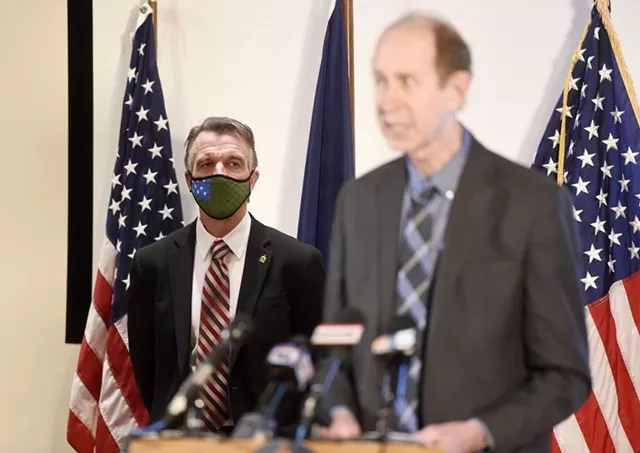
Starting next week, BIPOC Vermonters eligible for a vaccine can bring household members to be inoculated, even if they aren’t otherwise eligible. The state employed a similar strategy for New American households.
The move comes in response to data that shows BIPOC Vermonters have been more likely to be infected with COVID-19, Health Commissioner Mark Levine said on Tuesday during one of two weekly briefings on the coronavirus. They are also less likely to obtain vaccinations than white, non-Hispanic Vermonters, he said.
BIPOC Vermonters make up only 6 percent of the state’s population but have had 18 percent of its COVID-19 cases, Levine said, with significantly higher rates of hospitalization. About 20 percent of white Vermonters have received at least one dose of the vaccine, compared to 9 percent of Black Vermonters and 3.8 percent of Indigenous Vermonters.
Tags: COVID-19 , vaccine , Vermont , BIPOC , eligibility , Web Only , Image