

Thursday, February 14, 2019
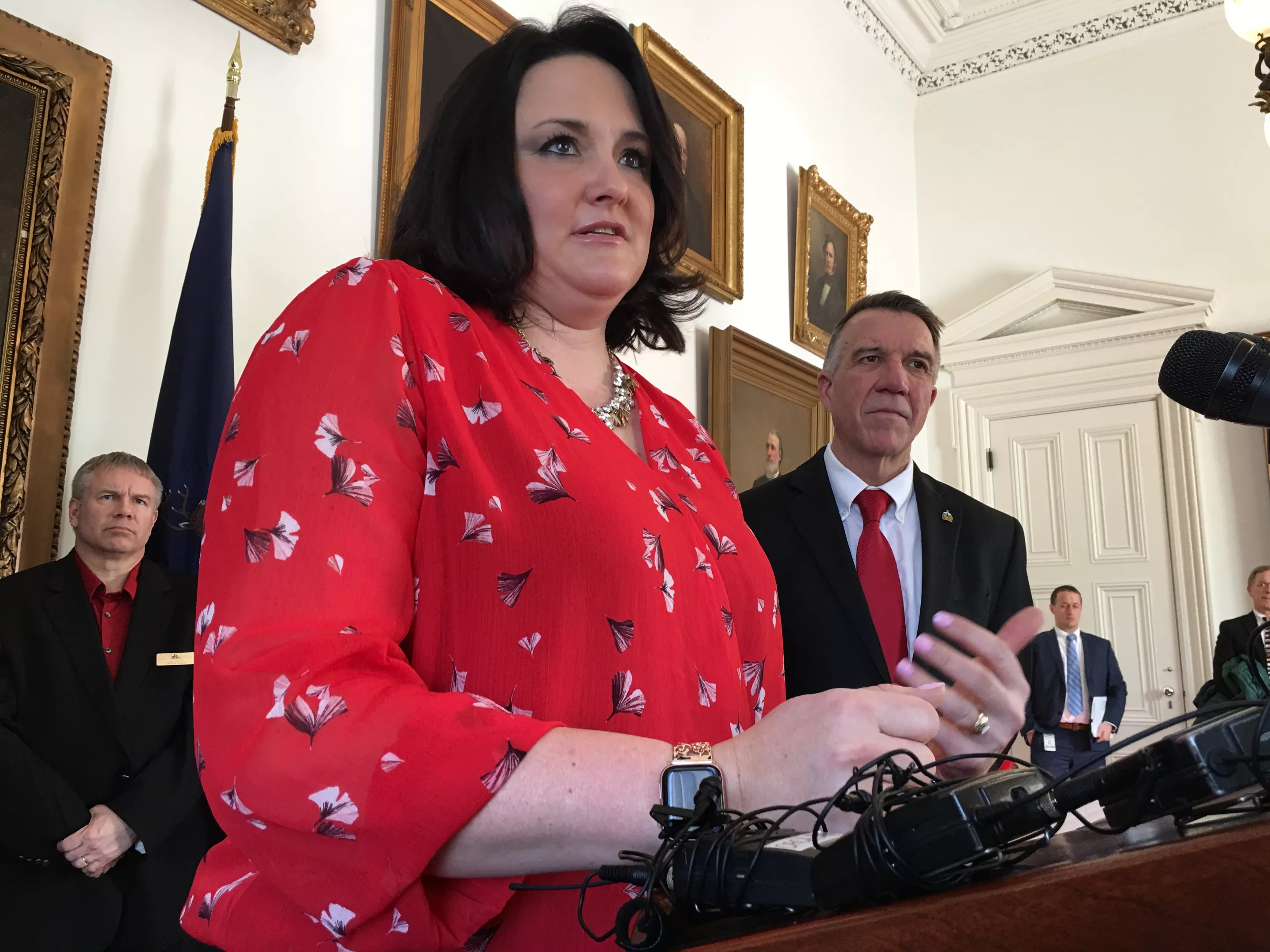
The governor praised the Fair Haven community for its "courage in supporting each other."
The arrest of 18-year-old Jack Sawyer and the revelation of his detailed plans to shoot "as many as I can get" proved to be a turning point for Scott. In the aftermath, the governor reversed his longstanding opposition to gun-safety legislation. In April, he signed a package of gun bills into law.
Brooke Olsen-Farrell, superintendent of the Addison-Rutland Supervisory Union, spoke of the "tremendously resilient community" at the high school. "Everyone has banded together to really support one another," she added.

Tags: Phil Scott , Jack Sawyer , Brooke Olson-Farrell , Don Tinney , Fair Haven , school shooting , Parkland , attack , Image , Web Only
Thursday, February 7, 2019
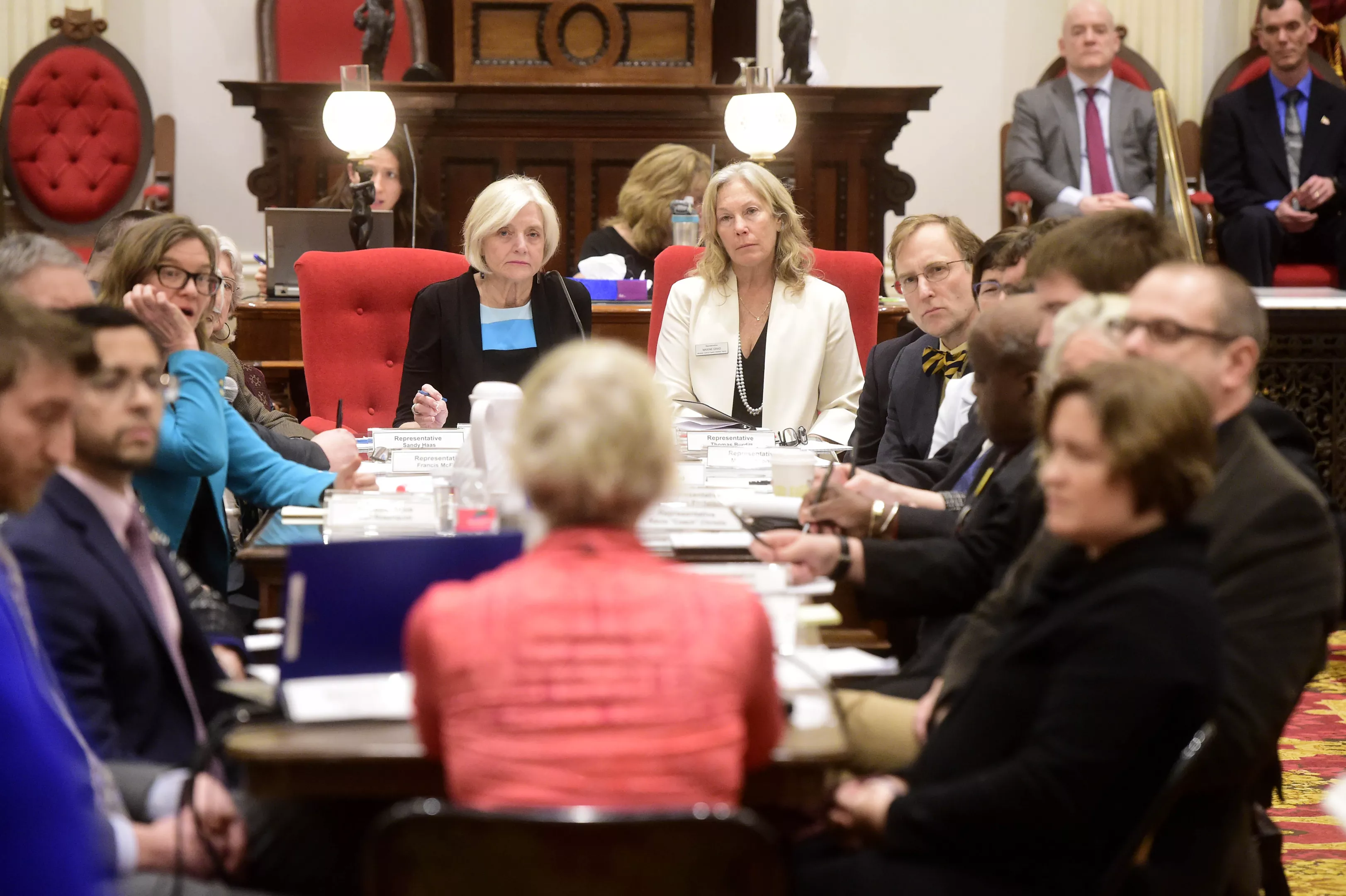
The Thursday morning vote on H.57 was 8-3, with all three Republican members voting no. The yes votes came from the panel's six Democrats plus Reps. Sandy Haas (P-Rochester) and Kelly Pajala (I-Londonderry).
The bill was amended in an effort to clarify its intent. Opponents had claimed that H.57 would open the door to unlimited abortion rights. Supporters argued that the bill would not supersede federal laws, and that state law has contained no limits on abortion access since 1972 without any nightmare scenarios coming to pass.
The new version of H.57 eliminates a provision declaring that fetuses have no rights. It also adds language specifying that the bill would not supersede the federal ban on late-term dilation and extraction procedures, which abortion opponents refer to as "partial-birth abortions."
Fetuses currently have no rights in Vermont law due to the 1989 Vermont Supreme Court decision in State v. Oliver. The case involved a traffic crash resulting in the death of a fetus. The court ruled that there was no legal basis to charge the offending driver with negligent operation of a vehicle resulting in death.
The House Judiciary Committee will take up the bill next week.
Tags: Kelly Pajala , Sandy Haas , Vermont , abortion , bill , House , Statehouse , Image , Web Only
Wednesday, February 6, 2019
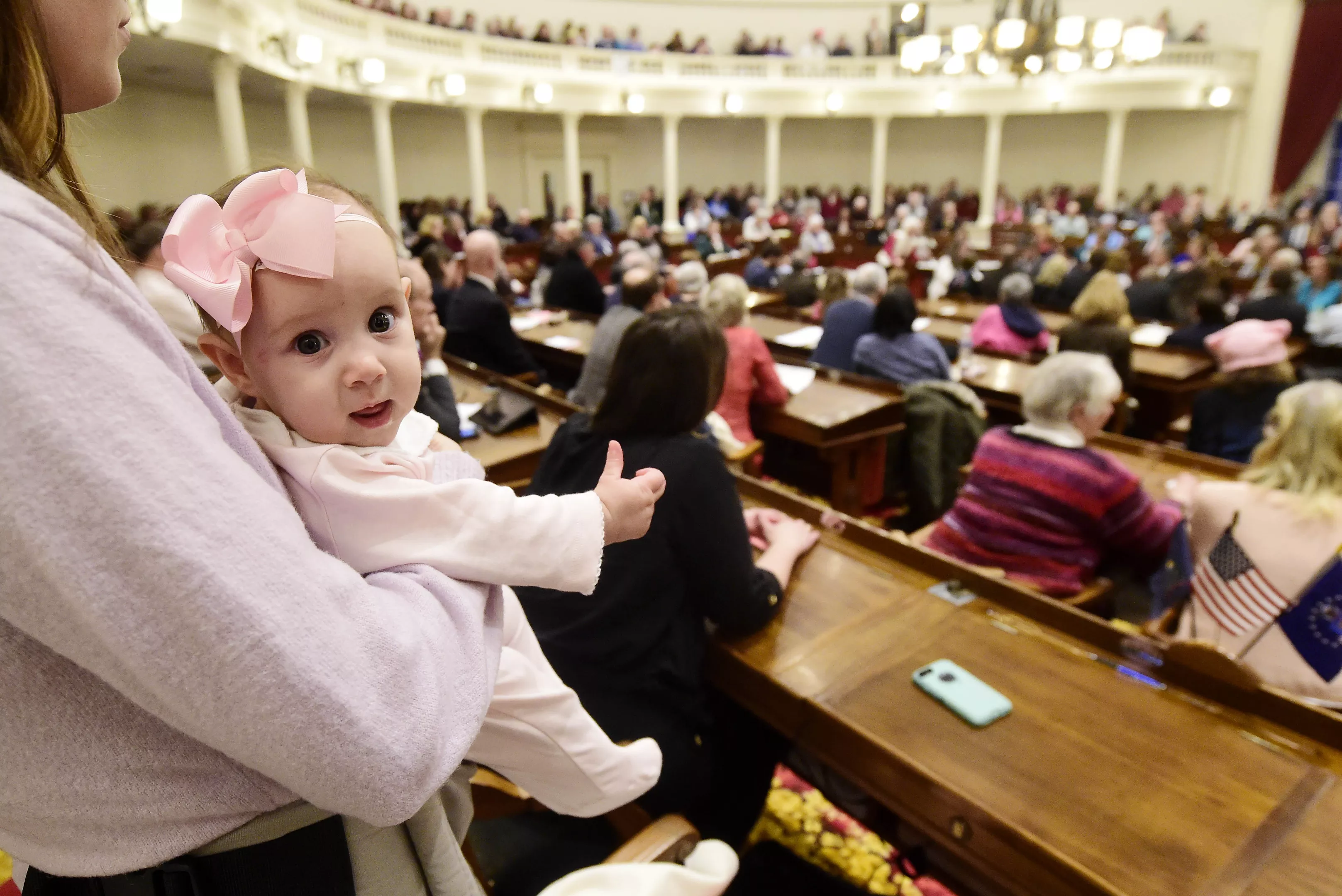
Anti-abortion groups and the Vermont Republican Party had urged members to attend the hearing and speak out against H.57, a bill that would establish reproductive rights in state law. “This is a watershed moment,” VTGOP chair Deb Billado said. “We wanted to urge people to be there and express their opinions.”
Opponents say the bill would go beyond current legal protections and create an absolute right to abortion — including late-term abortion. “The bill implies that at eight months and 30 days, you can abort a baby,” Billado said. “I find this to be a horrific thing.”
Supporters say that federal law supersedes state law and would prevent any expansion of abortion rights beyond current practice.
Tags: Ann Pugh , Rebecca Kelley , Deb Billado , Corey Parent , Greg Darling , Dotty Kyle , Vermont , abortion , H.57 , Statehouse , Montpelier , House , pro-choice , Roe v. Wade , anti-abortion , VTGOP , Phil Scott , governor , Statehouse , Image , Web Only
Thursday, January 31, 2019
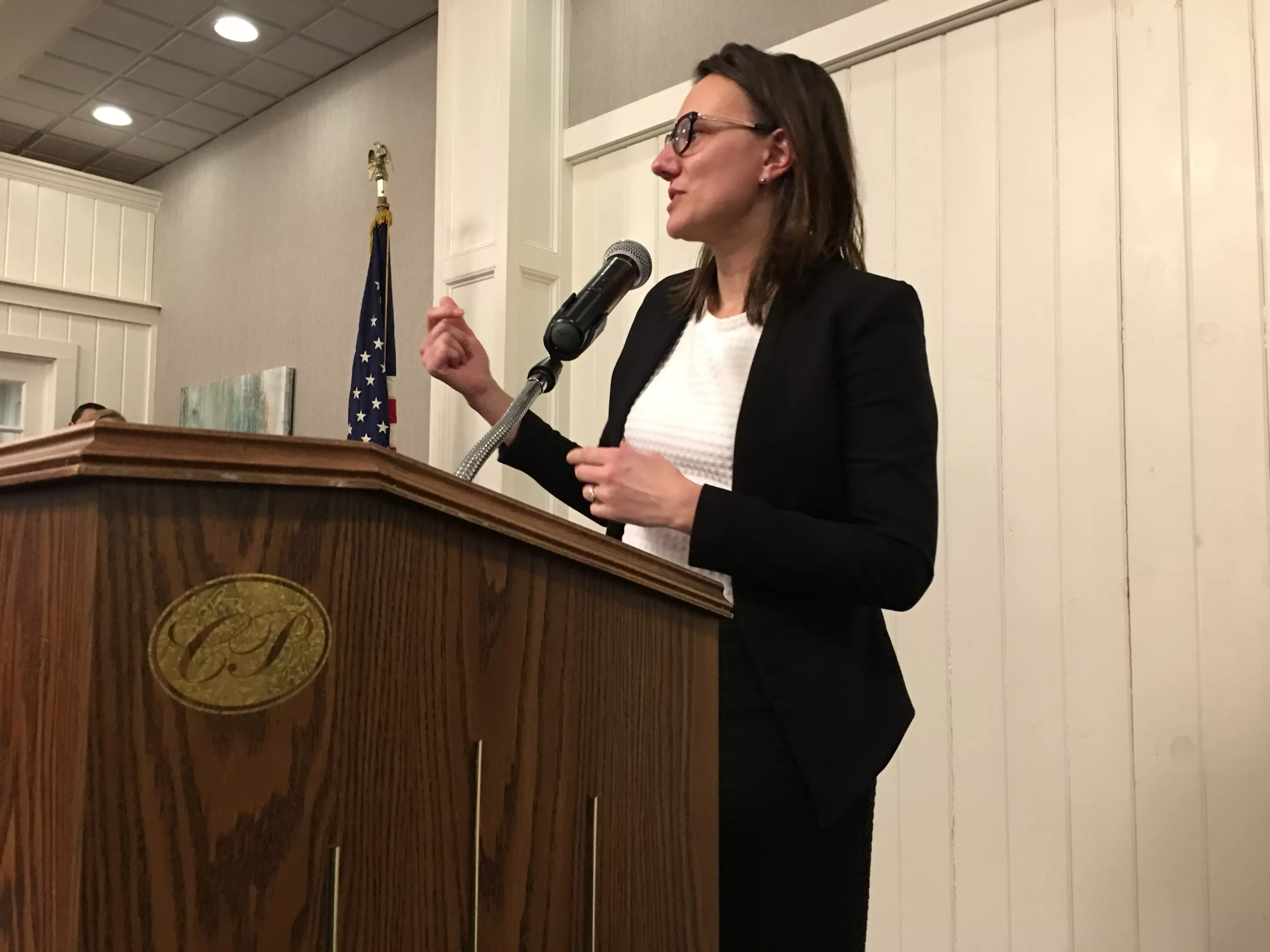
The guest of honor was House Majority Leader Jill Krowinski (D-Burlington). Multiple Democrats praised her work as a party builder — and talked of her as a future candidate for U.S. Congress. Clearly, Krowinski is seen as a rising star in Vermont Democratic circles.
Proceeds from the "Speaker's Soiree" went to the state party, not to lawmakers or their political action committee.
In 2015, the legislature passed a bill prohibiting lawmakers from seeking lobbyist contributions during sessions. The following year, House Democrats dissolved their political action committee. Their fundraising events continued, but the proceeds went to the Vermont Democratic Party.
The invitation to the ninth-annual soiree included a small-print disclaimer to display compliance with the law: "House Democrats are not soliciting funds from lobbyists or lobbyist employers for this event."
Tags: Jill Krowinski , Gaye Symington , Mitzi Johnson , Justin Johnson , Vermont , Speaker's Soiree , Statehouse , Image , Web Only
Wednesday, January 30, 2019
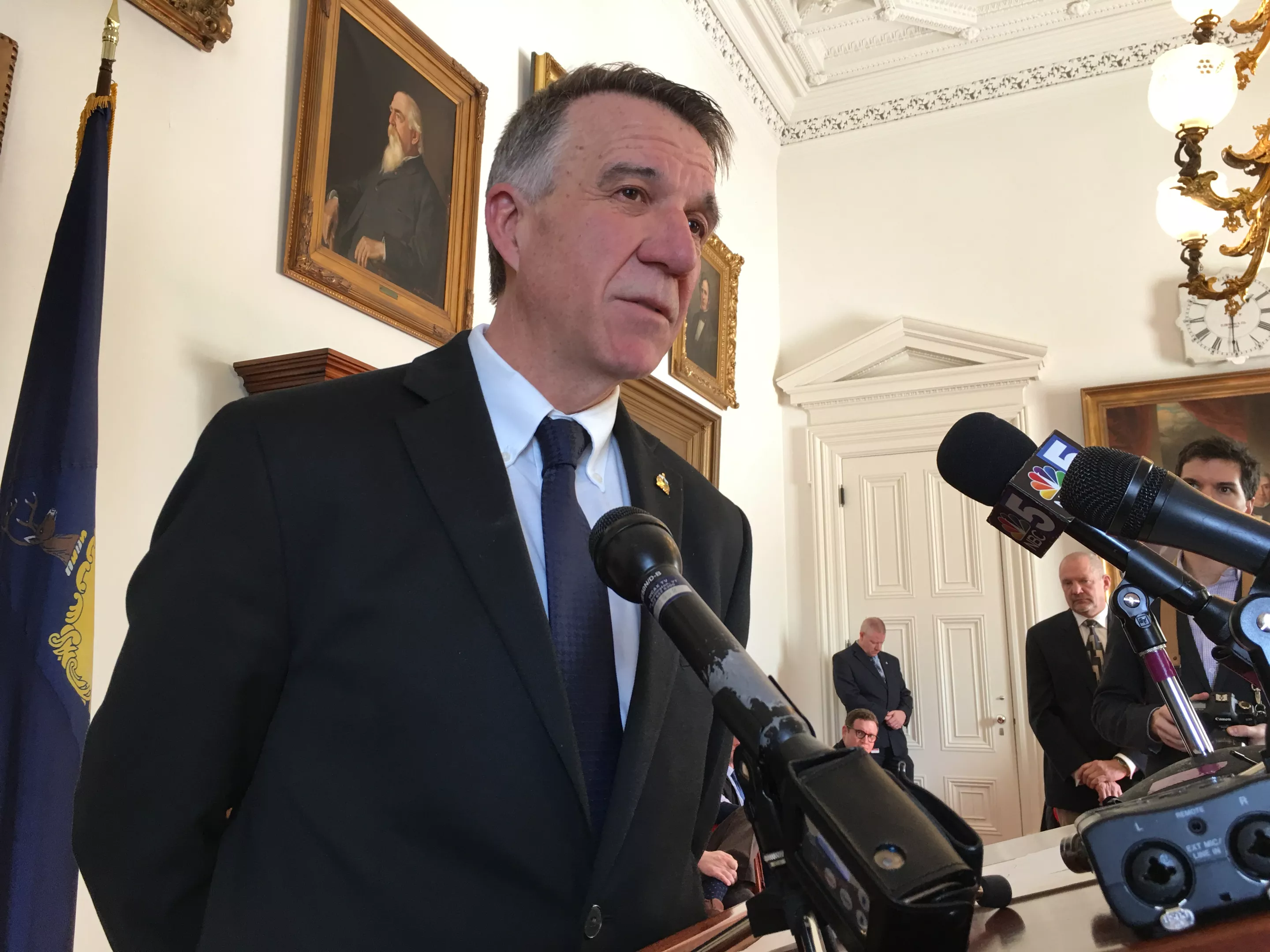
When asked if he had a preference in the next election, Scott replied, "I do not have a candidate I favor for 2020."
Asked if he would like to see a competitive Republican primary, Scott said, "It wouldn't bother me." When asked if a contested primary would be a good thing, he said, "From my standpoint, I think it would be." He would not suggest any alternative candidates.
Scott refused to endorse Trump in 2016. Since then, Scott has repeatedly distanced himself from the president, sometimes drawing the ire of VTGOP loyalists for doing so.
Scott's criticism has often focused on Trump's style. "Leaders should unite, not divide," Scott said, during the final debate of his reelection campaign. He has drawn a contrast between the rough-and-tumble of national politics and his own efforts to maintain an atmosphere of civility in Montpelier. He has differed with Trump on numerous issues as well.
In 2017, Scott signed a bill that set limits on state or local law enforcement agencies' participation in federal immigration-enforcement actions. He has been critical of Trump's hard line on the issue and opposed the separation of immigrant families at the border with Mexico. He also slammed Trump's decision to withdraw from the Paris climate accords. And he refused to sign a Republican Governors Association letter endorsing Brett Kavanaugh's nomination to serve as a justice on the U.S. Supreme Court.
Tags: Phil Scott , Donald Trump , Image , Web Only
Friday, January 25, 2019
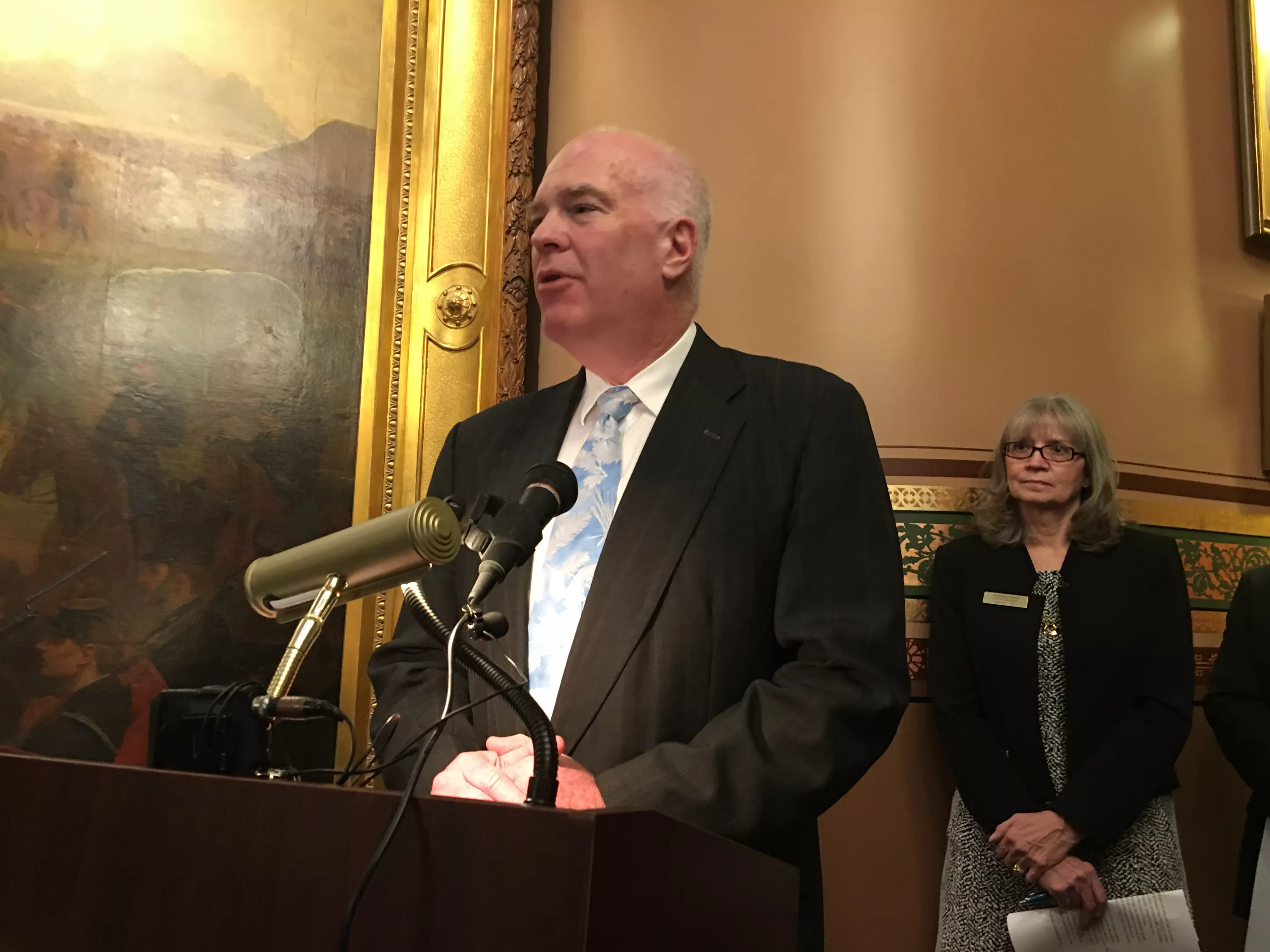
Their first press conference of the new session was far different in tone from past Republican events. "There's a new wind blowing in the Statehouse," Senate Minority Leader Joe Benning (R-Caledonia) said. "We have the opportunity to address problems and not be labeled as the party of 'No.'"
Republican lawmakers called the Friday morning presser to give their reaction to Scott's budget speech, delivered Thursday afternoon. They praised the Republican governor's speech as a responsible approach to finding common ground with the Democratic majority.
Tags: Joe Benning , Phil Scott , Vermont , legislature , budget , Image , Web Only
Thursday, January 24, 2019
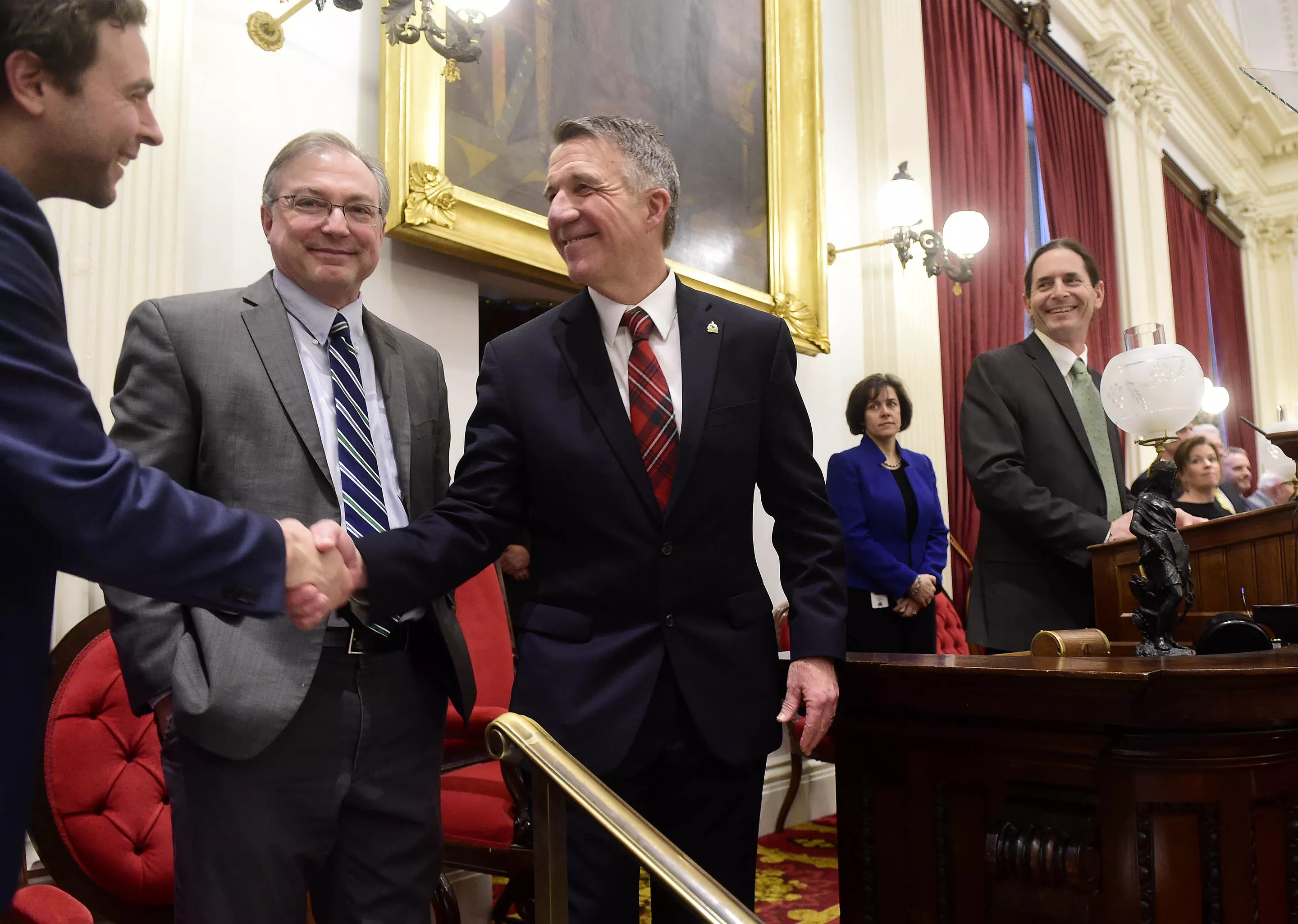
Some things have changed. Scott actually pitched new or increased taxes and fees — a departure from his first term. And in an address Thursday afternoon to the House and Senate, he didn't unveil any big surprises of the kind that have led to past battles with the Democratic legislature. The budget "did not immediately set up a showdown," said Senate President Pro Tempore Tim Ashe (D/P-Chittenden) shortly after Scott's speech. "Even where there are differences, there is space for discussion."
Which does not guarantee an absence of showdowns. Lawmakers have yet to actually read Scott's proposed budget. Their initial reactions were entirely based on listening to the governor's address. A likely flashpoint will come later in the session, after voters approve school budgets and the Agency of Education sets property tax rates. In 2018, Scott sought to keep residential and nonresidential rates level, sparking a standoff that extended the legislative session by almost two months.
Tags: Phil Scott , Tim Ashe , budget , Image , Web Only
Thursday, January 17, 2019
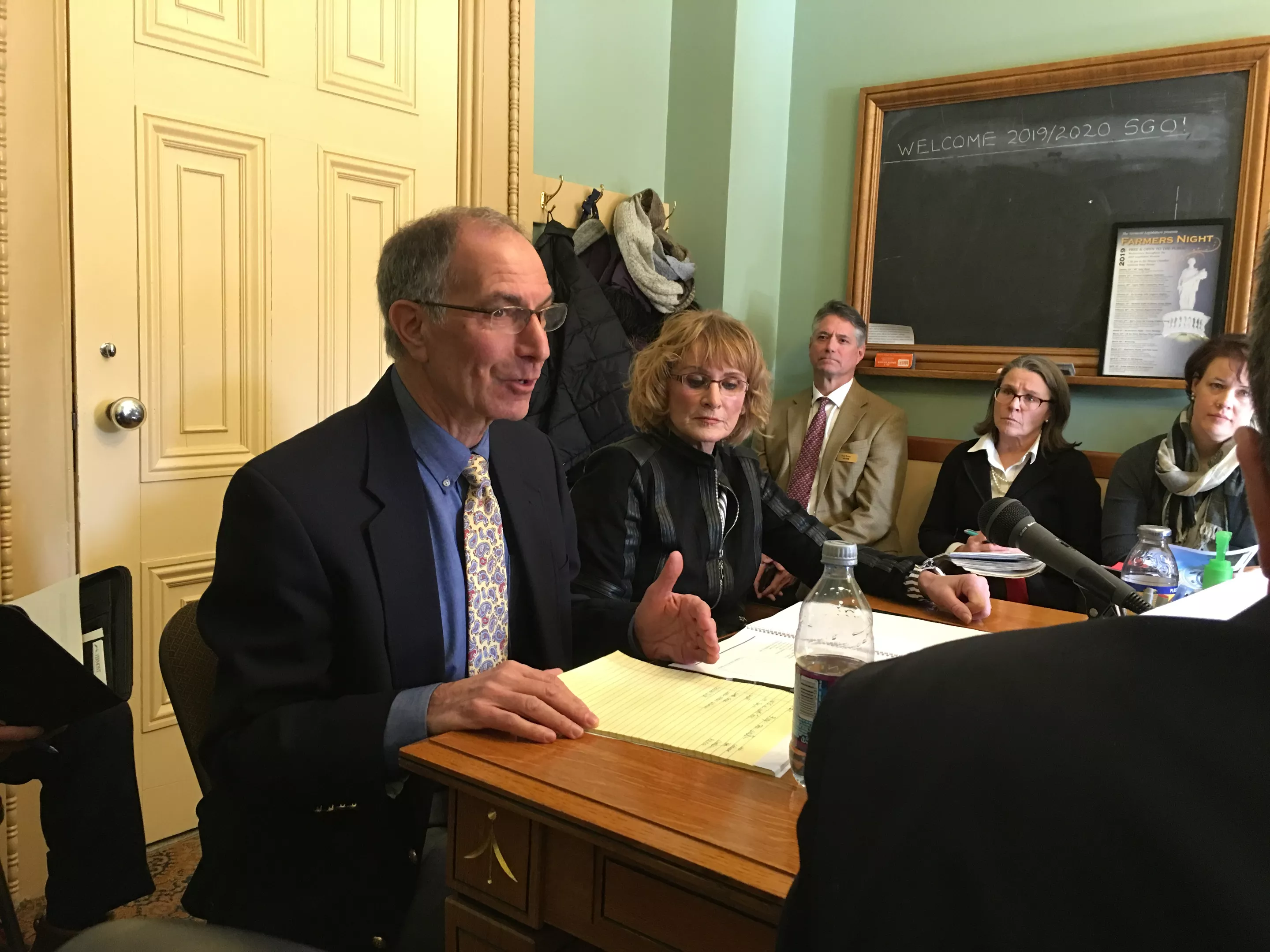
Commission chair Madeline Motta and executive director Larry Novins presented the panel's first annual report to the Senate Government Operations Committee Thursday afternoon and laid out their case for expanded authority.
The mostly powerless ethics commission was created by the legislature in 2017. It was given no investigative authority and a single, part-time executive director. The panel's primary function is to receive ethics complaints and refer them to the appropriate enforcement agency, such as the Attorney General's Office or the Department of Human Resources.
At Thursday's hearing, Motta and Novins argued for the power to investigate allegations of conflicts-of-interest. "We should have the authority to reach out to all parties," Novins said. "It's difficult to weigh a complaint without hearing from all those involved, and the subject of a complaint should have the opportunity to respond."
Tags: Madeline Motta , Larry Novins , Jeanette White , Jaye Pershing Johnson , Phil Scott , Eric LaMontagne , Image , Web Only
Friday, January 11, 2019
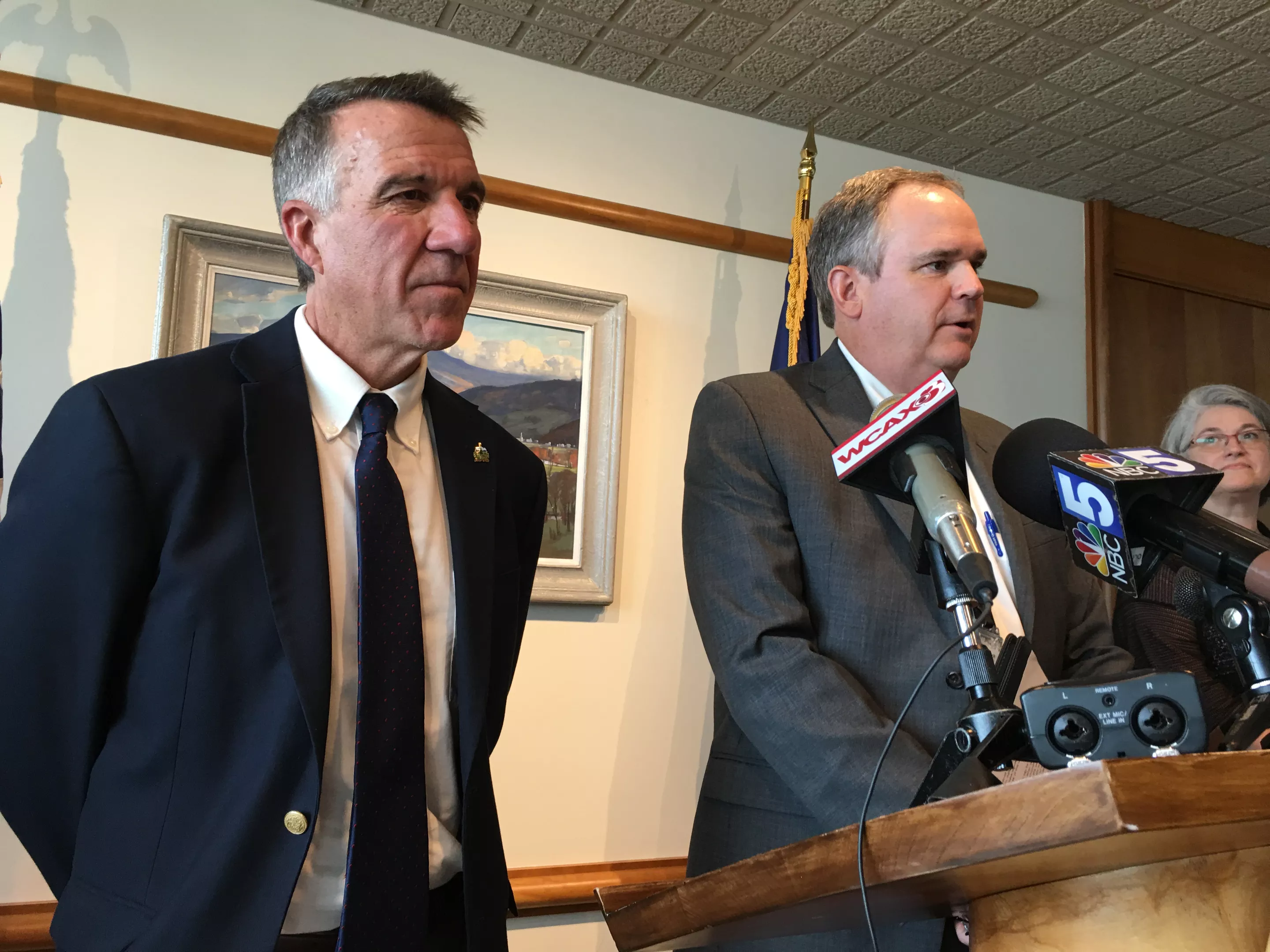
Gov. Phil Scott's administration is discussing a dramatic restructuring of Vermont's public schools. There is no specific proposal, but rather a planning memo that envisions sweeping change in the school system.
At this point, the memo is described as a thought experiment that may or may not lead to a specific reform proposal. Basic elements of it include a single statewide school district, statewide school choice including nonsectarian independent schools, a statewide teacher contract, an end to the Vermont Board of Education, the transfer of all public school property to the state and a thorough reform of the school funding system.
The memo promises to ensure "local participation" but would effectively end local control. School boards would be abolished in favor of four elected regional boards, each of which would hire a superintendent. Budgetary authority would flow from the superintendent to the education secretary; the regional boards would not have a say.
Tags: Dan French , Phil Scott , Vermont , governor , education , single-district , Image , Web Only
Thursday, January 10, 2019
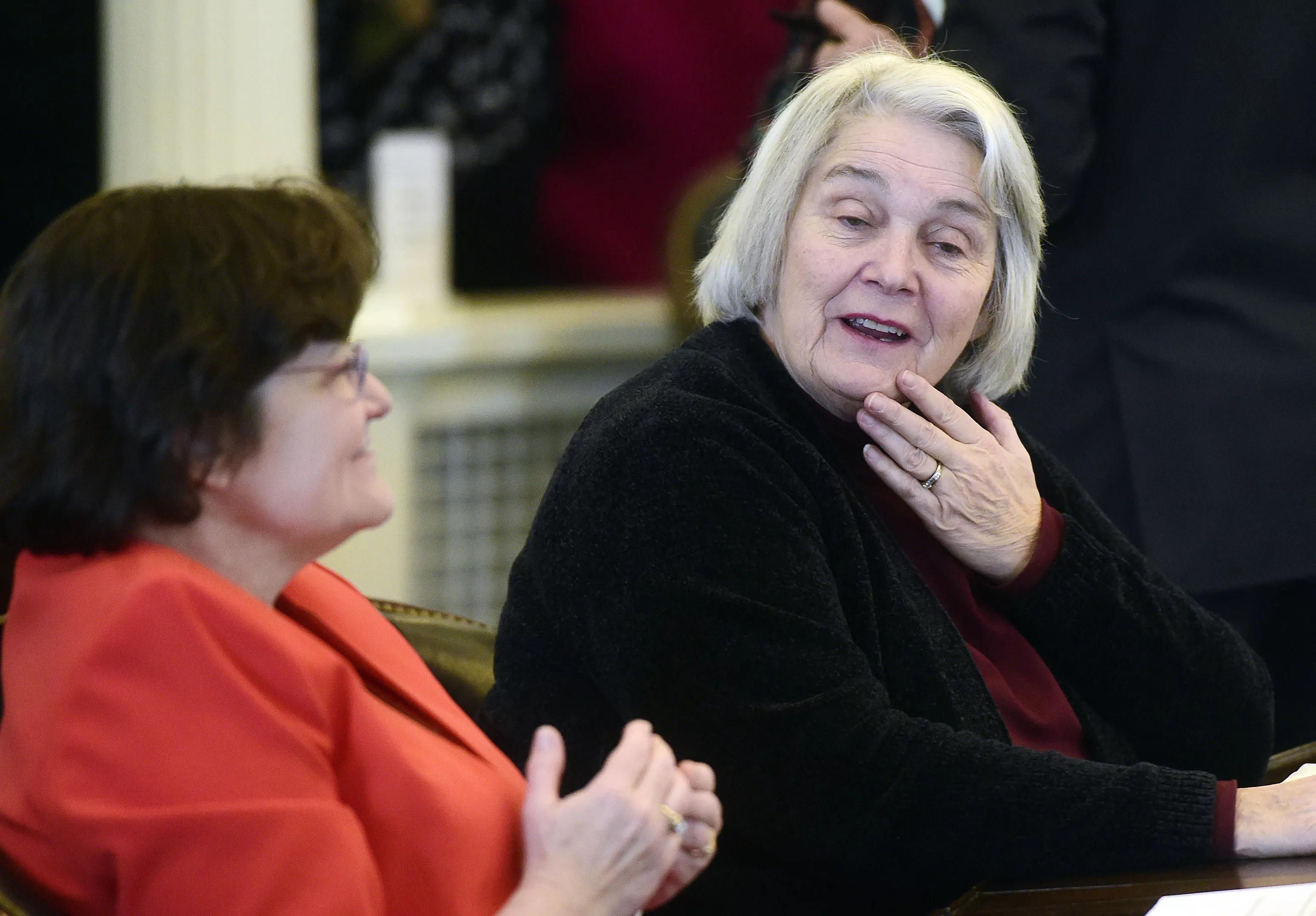
The new chairs replace two members who chose not to seek reelection last year. Sen. Ginny Lyons (D-Chittenden) will replace former senator Claire Ayer, a Democrat, as chair of the Health and Welfare Committee. Sen. Joe Benning (R-Caledonia) will chair the Institutions Committee, a post formerly occupied by Republican Peg Flory.
Benning also replaces Flory as the only Republican committee chair. "Even with the diminished number of Republicans, we respect the minority's point of view and want to include them in leadership roles," said Senate President Pro Tempore Tim Ashe (D/P-Chittenden). Only six of the Senate's 30 members are Republicans; the GOP lost one seat in last November's elections.
Senate committee seats are assigned by a three-member panel called the Committee on Committees. Its members are Ashe, Lt. Gov. David Zuckerman and Sen. Dick Mazza (D-Grand Isle).
Tags: Tim Ashe , Becca Balint , Chris Pearson , Andrew Perchlik , Joe Benning , Ginny Lyons , Claire Ayer , Peg Flory , Anthony Pollina , Image , Web Only