

Wednesday, September 16, 2020

The bill, which also called for clarification of rules for the development of recreational trails, was far more limited than the comprehensive reform bill passed earlier this year by the House.
That narrower scope of the Senate version of H.926 has disappointed some who had hoped for a sweeping reform of the state's seminal land-use law.
The measure nevertheless won wide support in the chamber. The portion of the bill requiring large development projects to avoid fragmenting forestland and blocking wildlife corridors passed 24-6. The trails piece passed unanimously.
“Act 250 has helped us live in greater harmony with nature and with each other,” Sen. Chris Bray (D-Addison) said. “But Act 250 is not a relic. As we change, and as our use of land changes, so too does Act 250 need to change with it.”
Tags: Act 250 , forest fragmentation , wildlife corridors , recreational trails , Web Only , Image
Tuesday, September 15, 2020

Scott’s rejection of the Global Warming Solutions Act was expected given his oft-cited concern about the bill — not about its goals, which he says he supports, but the way it goes about achieving them. He asked the legislature to consider revising H.688, which seems unlikely given the rapidly approaching end of an already extended legislative session and the apparent veto-proof support the bill enjoys in both chambers.
Tags: Global Warming Solutions Act , Phil Scott , climate crisis , Vermont , governor , Web Only , Image
Wednesday, September 9, 2020
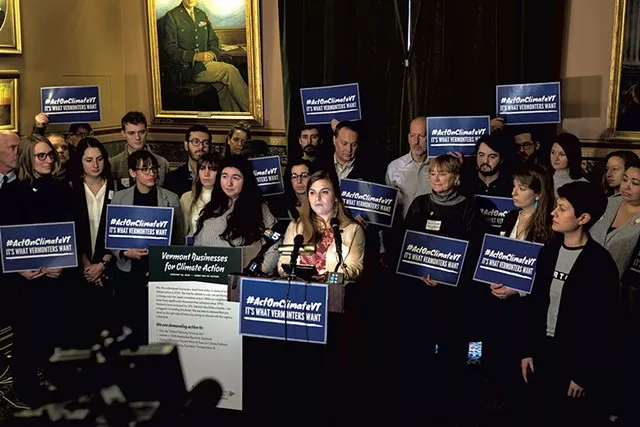
The House passed H.688, the Global Warming Solutions Act, by a 102-45 vote, sending it to Gov. Phil Scott’s desk in the coming days. The Senate had approved the bill in June by a wide margin.
During an emotionally charged vote, supportive lawmakers lined up to laud the bill as vital to ensuring that the state meets its greenhouse gas emission targets, while critics called it foolhardy to allow residents to sue the state should it miss those goals.
“I want to look my daughter in the eye and tell her this vote is for her and the children she may have,” Rep. Mary Sullivan (D-Burlington) said. “The time to act was decades ago, but better late than never.”
Tags: Global Warming Solutions Act , Phil Scott , governor , veto , passed , House , override , Web Only , Image
Monday, September 7, 2020
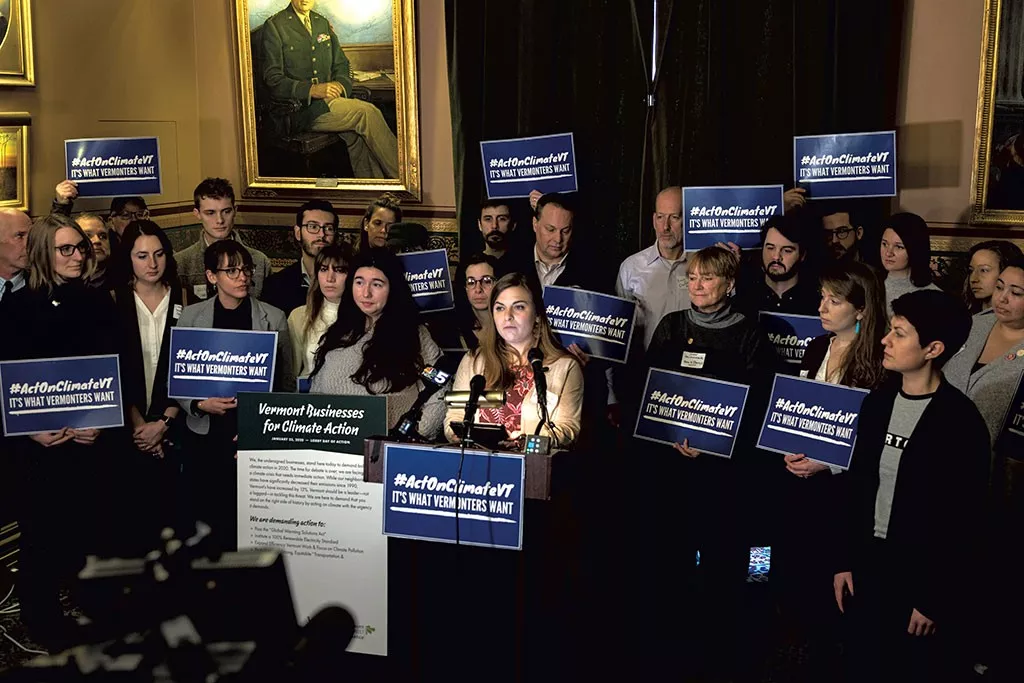
A last-ditch effort by Gov. Phil Scott to convince lawmakers not to give citizens the right to sue the state if it misses its greenhouse gas emissions targets appears to have failed.
That means the bill, H.688, would be sent to Scott’s desk for a signature that looks unlikely. Scott has said he supports the intent of the law but has also steadfastly opposed key provisions, including the right to sue. He reiterated several such concerns in a letter to legislative leaders on August 12.
Environmental Conservation Commissioner Peter Walke noted that the Senate never responded to the letter and House leaders merely replied to the administration that they weren’t interested in the governor’s points.
Tags: climate , greenhouse gas emissions , Phil Scott , veto , Web Only , Image
Tuesday, July 14, 2020
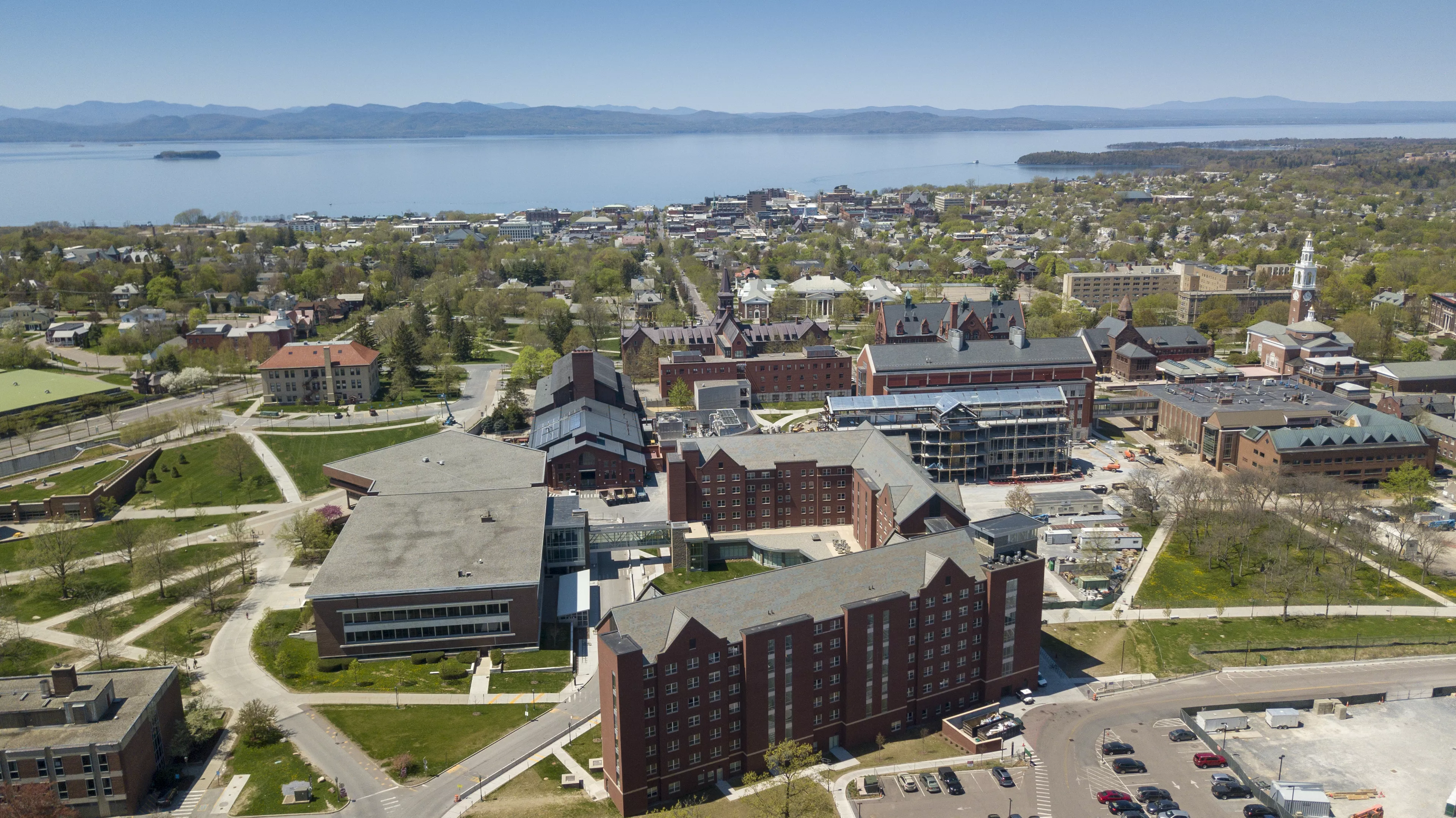
UVM's board of trustees on Tuesday endorsed a plan that will prevent any new fossil fuel investments and require the university to cease any existing commitments in the coming years. At a press conference following the vote, president Suresh Garimella said the decision "marked an important milestone" in the university's long-standing leadership on environmental issues.
"By voting today to divest the university's endowment of fossil fuel investments, we're extending a tradition of significant and decisive steps the university has taken that set UVM apart," Garimella said.
Fossil fuel companies comprise about 6.7 percent of UVM's $536 million endowment portfolio, including direct, commingled and private investments.
Student activists have repeatedly argued that UVM's financial support of the worst contributors to climate change undermines its commitment to sustainability.
But trustees have resisted the demands and rejected several proposals over the years on the argument that divestment would limit the endowment's potential growth and jeopardize the university's financial future.
“Our primary responsibility is to protect the endowment,” David Daigle, a former border member, said in 2013 when the board shot down a divestment proposal, the Burlington Free Press reported. "My continuing fear is that this proposal would have a significant impact on the ability to balance the risks and rewards within the endowment by cutting out a substantial portion of the economy.”
The university has defended its investment portfolio by highlighting other sustainable efforts, such as its Clean Energy Fund, which campus leaders say has contributed more than $1.5 million in dozens of green campus projects.
But critics weren't satisfied. Last year, student activists formed a group called Organize UVM that has continued to demand the university divest, bringing more than 100 people out to a January board meeting.
In response, UVM trustees created the Sustainability Work Group to explore the concept further. The group met four times since March and received more than 420 public comment submissions prior to adopting its recommendations, which the trustees approved on Tuesday.
As part of the pledge, the university will immediately end new direct investments in fossil fuels, fully divest from any public fossil fuel investments by July 2023 and allow any pre-existing, multi-year private investments to lapse. UVM stopped acquiring the latter in 2017, and trustee Ron Lumbra estimated the final commitment should expire by the end of the decade, though the vast majority of investments will be ended within the next three years.
The board will also ask fund managers to "factor the financial risks of climate change into their investment decision-making process," according to a press release.
UVM joins three other Vermont colleges — Goddard, Sterling and Middlebury — that have committed to divestment, a step taken by more than 1,000 organizations worldwide, according to gofossilfree.org.
At his press conference, Garimella commended students for their continued advocacy. "I'm really proud of the way they approached this issue in a constructive — and therefore, I think, effective — fashion," Garimella said.
Lumbra agreed. "The board appreciates all the research they conducted and their sincere effort to understand the full complexity of the issue," he said.
At the same time, the trustee acknowledged that financial considerations factored heavily into the decision. He said the long-term outlook of fossil fuel stocks have become bleak due in part to the rise of the green economy, which has in turn offered new and profitable ways to invest in sustainable companies.
"The world's changed," Lumbra said. "The opportunity for us to divest now, and do it in the right way, and keep the mission of the university focused on the environment, all came together at this time."
Organize UVM noted the board's vote in an Instagram post that praised the efforts of both current and former students.
"This could not have happened without each and every 3k+ of you who signed our petition, came to a board meeting, a regular meeting, posted, emailed a board member, or showed your support in any way," reads the post. "It also would not have happened without the 10+ years of fossil fuel divestment movements before this one."
Noting that UVM remains "far from perfect," the group vowed to continue its efforts.
"But for now, we celebrate," the group wrote. "Thank you all for fighting to protect our planet!"
Tags: University of Vermont , divestment , fossil fuels , endowment , Web Only , Image
Thursday, June 18, 2020

The Senate sidestepped the acrimony that flared a day earlier when two senators blasted the process that shaped the bill.
Sen. John Rodgers (D- Essex/Orleans) took issue on Wednesday with the Senate Natural Resources and Energy Committee's work, noting that neither he nor Sen. Corey Parent (R-Franklin), both members of the committee, had been able to vote on an amendment earlier this week due to telecommunications difficulties.
The residents of his rural district are frustrated about their inability to participate in online legislative hearings, especially on bills of such consequence, Rodgers said.
Tags: act 250 , development , affordable housing , Web Only , Image
Tuesday, March 31, 2020
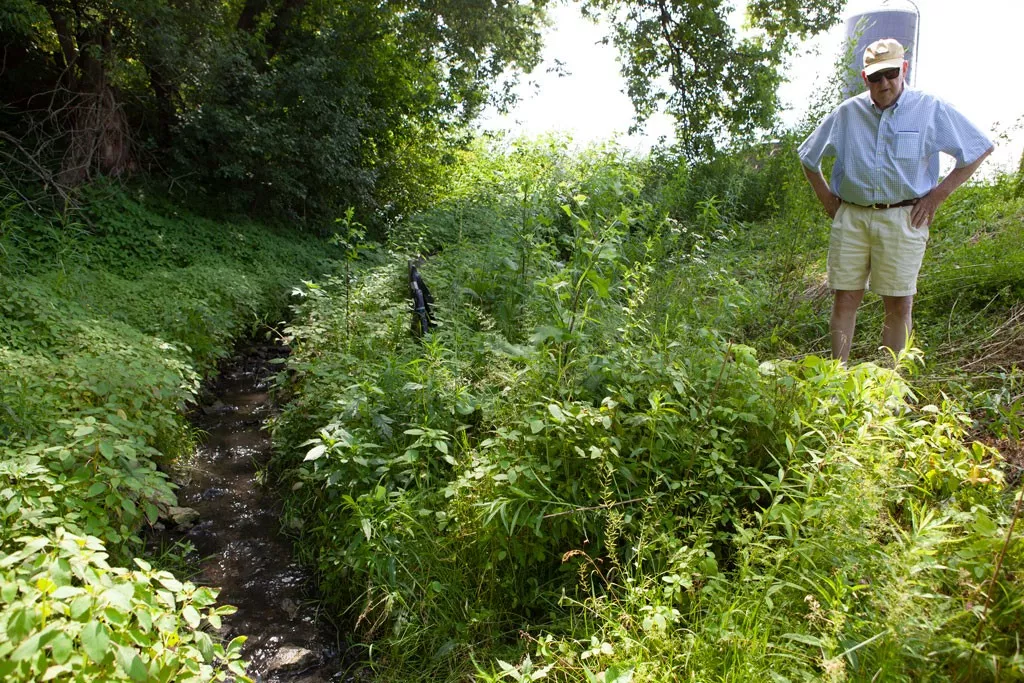
That’s the takeaway of a new report on just how extensively the contamination has spread beyond the base, according to state officials.
“It’s a large plume. In some places, it’s probably over a mile long,” said Richard Spiese, a hazardous site manager with the state Department of Environmental Conservation. “And it goes from the source area all the way to the Winooski River.”
Multiple tributaries running from the base — located on the north side of the Burlington International Airport runway — are contaminated with PFAS, the same perfluorinated chemicals used to make products such as Teflon cookware and waterproof clothing. The chemicals, which were discovered in 2016 in wells around the former ChemFab factory in North Bennington, were also used in firefighting foam on the base and at airports around the nation.
Their durability has earned PFAS the moniker "forever chemicals," and communities, airports and municipal water systems are spending billions to understand and clean up the contamination.
Last year, Seven Days reported how PFAS chemicals have contaminated a well at the Belter dairy farm just north of the base. The well had been used by John Belter’s family to water his 400 cows for decades, and after the discovery, the state paid for a filtration system.
But additional testing was needed to better understand the extent of the contamination, including in creeks and rivers. Now that report – a 991-page volume released by the Air Guard recently — clearly shows that the chemicals have migrated off the base and into groundwater, creeks and the Winooski itself, Spiese said.
Proving the base is the source of the contamination may take additional time, but the connection it makes is very strong, he said.
“I think the data is there to show that PFAS from the base is what is impacting the Belter well,” Spiese said.
Belter was not immediately available for comment on Tuesday.
Spiese noted that the Guard has been cooperative and has been performing the costly, detailed studies needed.
The report, by the Virginia-based engineering firm Parsons, states that the “data indicates an exposure pathway exists” between the base and the river. Regarding the well, however, the report merely states that such a pathway “may be complete.” The report says additional study is needed to confirm that, and other sources may also be responsible.
While he has yet to finish his analysis of the report, Spiese likened that last claim to an obviously guilty defendant pleading not guilty at the start of a legal process process.
“It’s all part of the game, and we’ll get them to admit it one way or another eventually, even if they don’t come out and say it,” he said.
He noted that Saint-Gobain Performance Plastics is spending $60 million to clean up the groundwater contamination around its plant in North Bennington, but it has yet to admit responsibility.
In a press release, the Guard acknowledged the findings and stressed that drinking water in the area is safe, noting the businesses and homes are served by the Champlain Water District, whose water supply has not been affected.
"This has been a very thorough process to determine potential impacts from the use of PFAS on our base, and I am encouraged that we can now move toward the next phase of this critically important work." said Col. Adam Rice, 158th Fighter Wing vice commander. "We take this issue very seriously and want to reassure our employees and the community that drinking water has not been impacted, and there is no threat to human health."
Spiese agrees that human health is not immediately at risk unless someone were to catch and eat fish from the small tributaries most affected, which he notes is unlikely.
There is no PFAS limit for surface waters in Vermont yet, but the drinking water standard is 20 parts per trillion for the five compounds regulated by the state. One of the tributaries tested at 10,619 parts per trillion — 500 times the drinking water limit.

Once the contaminated water reaches the Winooski, however, it is quickly diluted. Tests in the Winooski downstream from the tributaries of concern showed levels below 10 parts per trillion, just slightly higher than the levels detected in the river above the base.
Spiese said he was “relieved” that numbers in the Winooski itself are so low, and he doubts that the state will respond by issuing an order not to eat fish from the river. That remains an option, however.
More study is needed to come up with a remediation plan, a process that could take years. The base already operates a trench system that captures some of the water running off the most contaminated area, pumps it back uphill and treats it.
That location — which has produced water samples nearing 50,000 parts per trillion, or 2,500 times the state standard — is where firefighters for decades set all manner of things ablaze and practiced putting them out with the PFAS-laden foam. The base has since switched to a less toxic foam.
Future cleanup could involve removing and disposing the most contaminated soil. Contaminated soil can also sometimes be kept in place by installing underground curtains and capping the area to keep water from leaching through. Other technologies might be able to bind the contamination to the soil so it doesn’t seep out, Spiese said.
“It will be challenging; it will be very expensive. But that’s not to say it’s impossible,” he said.
Tags: PFAS , Vermont Air National Guard , DEC , Web Only , Image
Friday, March 27, 2020
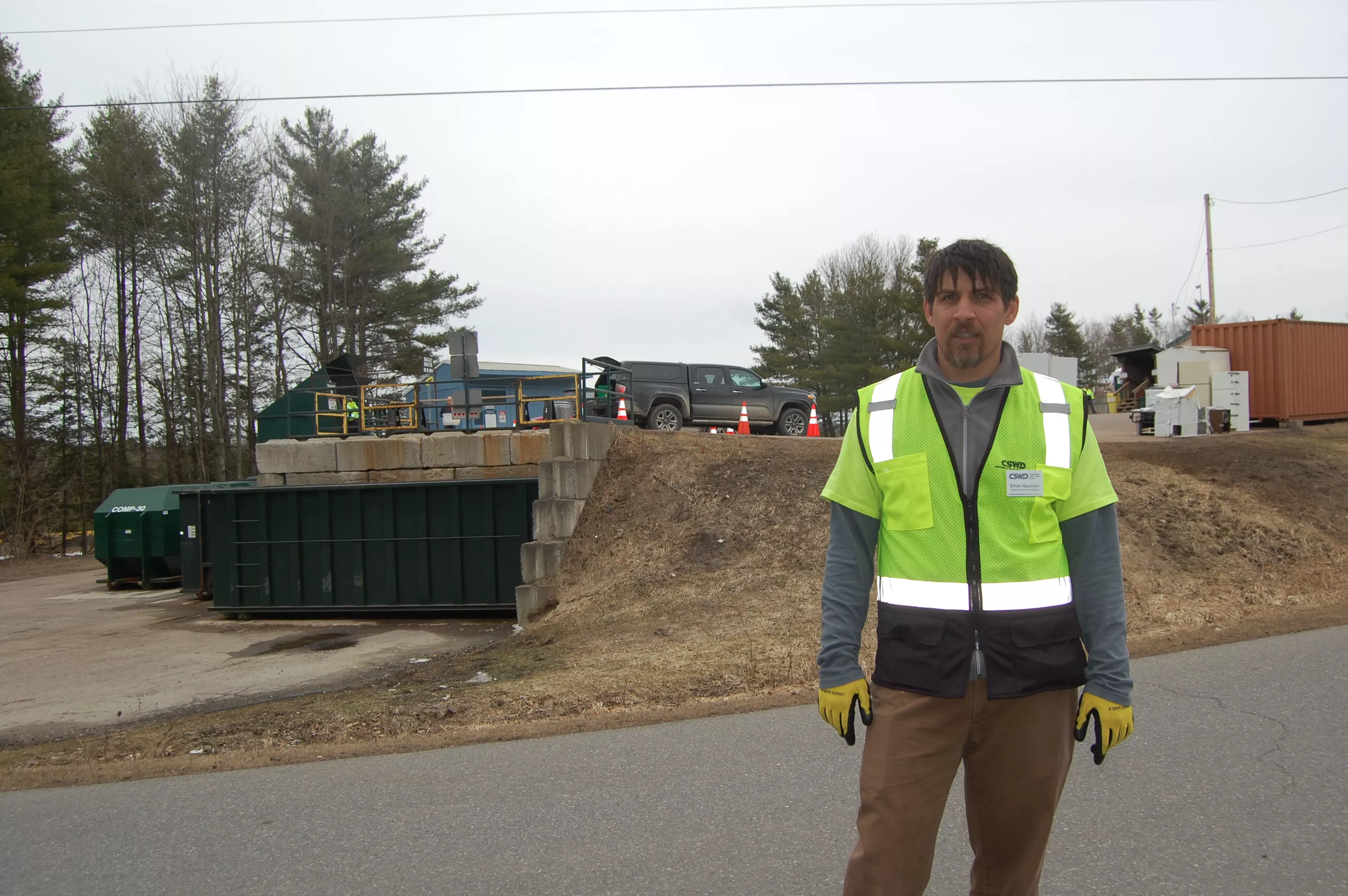
No staff member has tested positive for coronavirus, but some are off the job and home in self-quarantine awaiting test results, spokesperson Alise Certa said Thursday.
The resulting staff shortage forced the closure of five drop-off centers. The Environmental Depot hazardous waste facility is also closed. Only the Williston drop-off center, on Redmond Road, remains open.
Tags: coronavirus , Chittenden Solid Waste District , Web Only , Image
Wednesday, March 11, 2020
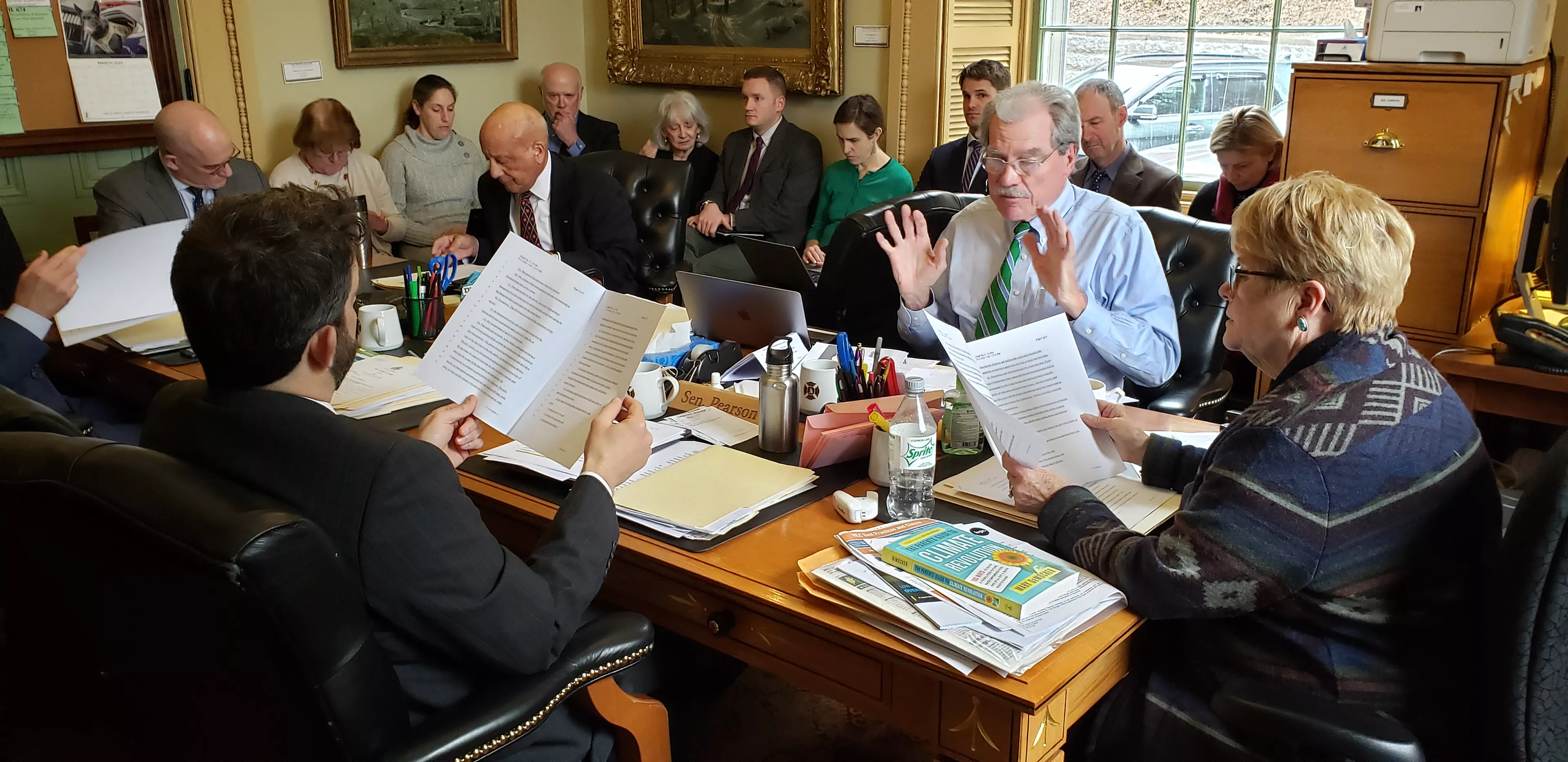
A biomass energy plant in northeastern Vermont would get a 10-year lease on life under a bill moving through the state Senate, despite concerns about the plant’s efficiency and carbon emissions.
The 20-megawatt facility in rural Ryegate burns 250,000 tons of wood chips per year from trees in Vermont and New Hampshire forests. Utilities in Vermont are required to purchase its electricity at highly subsidized rates.
But that long-term power contract with the state is up in 2022. Lawmakers are seeking to ensure that the plant — which employs 20 people and pumps $7 million annually into the local forest products industry — can continue to operate for at least another decade.
The plant enjoys about $5 million annually in rate subsidies, which equals $50 million over the life of the current contract, according to the Department of Public Service. Biomass plants in New Hampshire have shuttered in recent years after subsidies were revoked and the plants couldn't compete with cheaper energy sources.
Tags: biomass , Ryegate , renewable energy , Web Only , Image
Friday, February 21, 2020
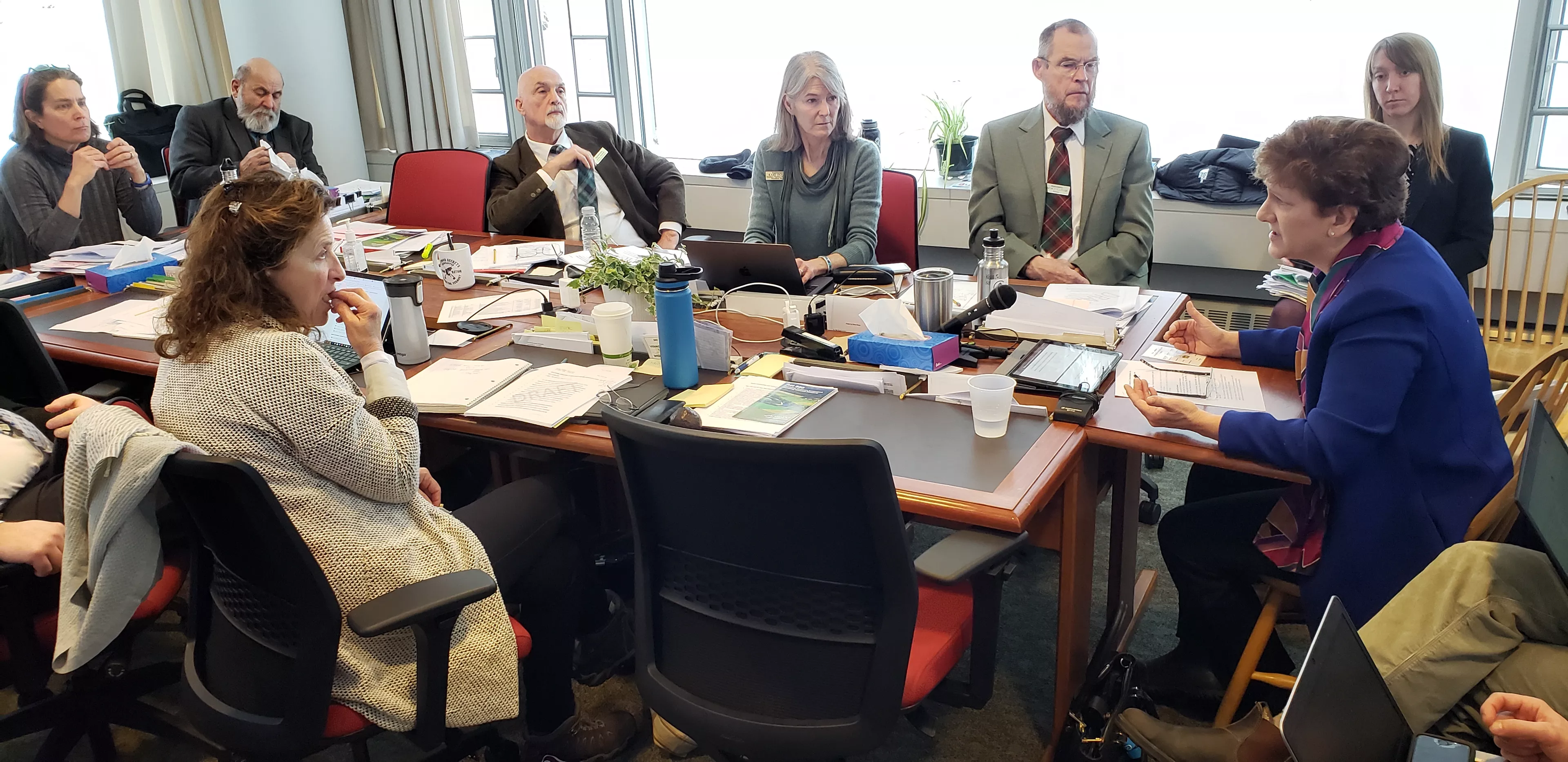
The powerful House Ways and Means Committee stripped from a bill proposed fee increases meant to pay an estimated $600,000 annually for a centralized, professional review board that would have taken over many responsibilities of volunteer local review panels.
“I don’t think the new professional board is a good idea,” said Janet Ancel (D-Calais), chair of the committee. “I think it's overly expensive, I think it will reduce access to the process, and I think it will result in more lawyering up.”
Even members of the House committee that voted last week in favor of the proposal seemed content to let it collapse.
Tags: Act 250 , Janet Ancel , Amy Sheldon , Web Only , Image