

Friday, March 26, 2021
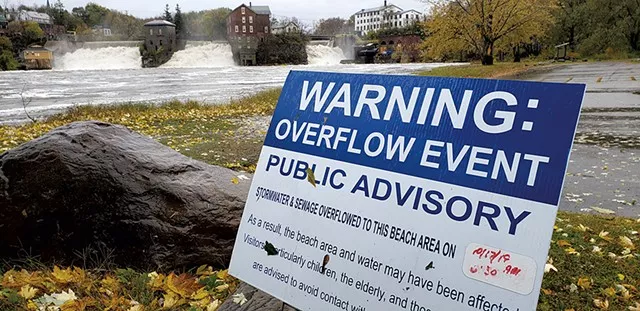
Lawmakers have been deluged in recent weeks with concerns from environmental groups and residents who worry that streamlining wastewater permits for new housing projects would only further pollute the state’s streams, rivers and lakes.
One of the most controversial provisions of the bill would delegate the state's authority to issue new water and wastewater permits to municipalities, replacing the current “redundant and costly” system, Senate President Pro Tempore Becca Balint (D-Windham) said.
Tags: water pollution , James Ehlers , Vermont Senate , Web Only , Image
Thursday, February 4, 2021
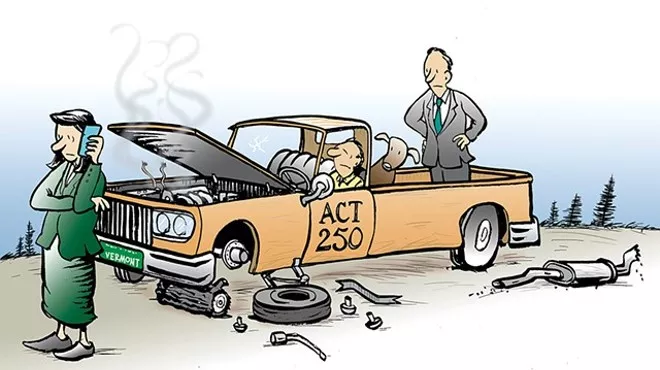
The 22-8 vote by the full Senate follows the Natural Resources and Energy Committee's unanimous vote to reject the order last week.
Scott’s January 14 order sought to shift decision-making power from the nine district commissions that currently review development applications to a professional, statewide Natural Resources Board.
Tags: Act 250 , Phil Scott , executive order , environment , development , Web Only , Image
Friday, January 29, 2021

A Senate committee voted unanimously Friday to reject Gov. Phil Scott’s executive order to reform the administration of Act 250 following scathing testimony from one witness about the governor's motives.
Scott’s January 14 order sought to streamline the administration of the land-use law by creating a statewide board to decide major projects, taking the place of the nine district commissions that do so now.
The Senate Natural Resources & Energy Committee voted 5-0 to block the order, setting up a vote by the full Senate next week.
Sen. Mark MacDonald (D-Orange) said he was surprised the Scott administration had pushed to reform the law through executive fiat, lamenting the governor’s “take or leave it” approach.
“I would vote to leave it, and hope that the next time the governor proposes an executive order it’s because a consensus has been reached,” MacDonald said.
Scott's spokesperson, Jason Maulucci, asked how many
"The Administration's position on the Governor's initiative itself is that we appreciate the Legislature's willingness to continue this important discussion and we hope to convince them of the merits of the proposal," Maulucci said in a statement.
The Senate committee passed a resolution that presumes only one chamber of the General Assembly needs to reject the order to block it, which is a point of legal contention. Scott claims rejection by both chambers of the General Assembly would be required to block his order, though that’s not how state law reads.
He argues the state law unconstitutionally limits his executive authority and federal caselaw backs him up. The Senate resolution sidesteps that constitutional argument.
Even Sen. Richard Westman (R-Lamoille) voted to reject his fellow Republican's executive order. He stressed that he hoped lawmakers would solicit a wider range of testimony on Act 250 in the future.
“There are a lot of people who would like to testify on this issue,” Westman said, “way beyond the number that we have had in.”
The highlight of the morning’s testimony was Ed Stanak, a Barre Progressive and longtime Act 250 district coordinator, who said Scott’s reform efforts were misguided. He noted that Scott’s objections to the law stem from Scott's attempt to open a motorcycle shop in Morrisville 40 years ago.
“Scott claims that unreasonable delays in obtaining an Act 250 permit subsequently forced him to abandon his business proposal, and he has been hellbent on reforming Act 250 ever since,” Stanak said.
In fact, the record from 1983 shows Scott’s development partner started construction without permits, never completed the Act 250 review and withdrew the application four years later. Scott has since used this “tale of woe” in stump speeches and has publicly said the failed project changed his life, Stanak testified.
“The misplaced bitterness of a young businessman became a pillar upon which a political career has been built, and continues to this day,” Stanak said.
Scott's executive order would destroy the time-tested Act 250 district commission process through “brazen political power” based on Scott’s “imagined understanding of the Act 250 process."
Scott has argued that a more professional, consolidated permit process would provide developers with a more predictable, less expensive and protracted review process that still protects the environment.
Julie Moore, the secretary of the Agency of Natural Resources and the administration’s chief advocate for Act 250 reform, said she was disappointed by the committee’s action.
“The remote environment we are all working in is clearly challenging, and made harder when legislative committees are unable to provide a complete picture of their days’ planned work,” Moore said.
She declined to comment on Stanak's charaterizations.
Sen. Chris Bray (D-Addison), said while Stanak’s "personal interpretations" of the governor's thinking made him “a little uncomfortable,” he praised his committee for “handling a sensitive matter with finesse.”
Tags: Act 250 , Phil Scott , executive order , Senate , Web Only , Image
Thursday, January 21, 2021

Scott issued an executive order last week shifting power from the nine volunteer district commissions that administer Act 250’s development regulations to a single, professional statewide board.
“We can and must protect our environment and support regional economic development reliant on vibrant downtowns and village centers,” Scott said in a press release. “That’s our focus in this work, because we cannot achieve these goals with the outdated and cumbersome administrative structure we have today.”
Passed in 1970 in response to unchecked growth that followed completion of interstate highways, Act 250 established statewide standards even while setting up district commissions to retain local control. Today, critics contend that the decentralized model creates inconsistency in its administration and duplication of effort when local decisions on large projects are inevitably appealed.
Tags: Act 250 , Phil Scott , environment , district commissions , Web Only , Image
Monday, December 21, 2020

Officials in Massachusetts, Connecticut, Rhode Island and Washington, D.C., on Monday pledged to join the regional compact known as the Transportation and Climate Initiative.
Eight states in the Northeast and mid-Atlantic area, including Vermont, signed a related document pledging to stay involved in the planning process but opting not to join the program at this time.
Scott has long expressed concern that the agreement would force Vermonters to pay more for gas, which has only deepened during the pandemic, said Peter Walke, commissioner of the Department of Environmental Conservation, who has represented Vermont in TCI discussions.
Scott also wants to monitor initiatives by the incoming administration in Washington and the work of the new Vermont Climate Council before committing to the compact as it is now structured, Walke said.
Tags: Transportation Climate Initiative , emissions , electric vehicles , Web Only , Image
Thursday, December 3, 2020
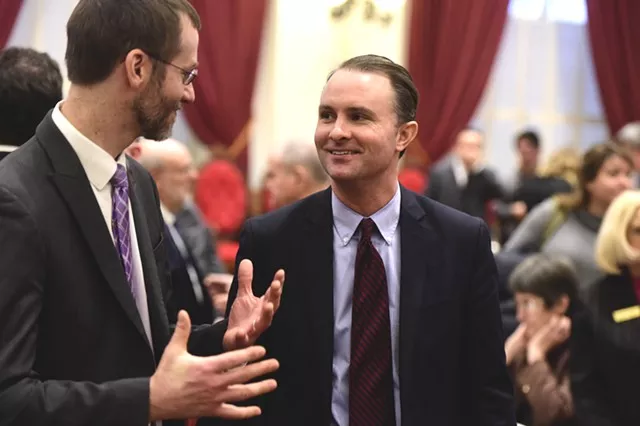
Donovan said the Global Warming Solutions Act that was passed this year over a veto by Gov. Phil Scott is constitutional, despite Scott's claim to the contrary.
The escalation in the war of words over the controversial law could lead to a rare court standoff between the Republican governor and the Democratic attorney general.
“The Global Warming Solutions Act is constitutional and good policy,” Donovan said in a press release. “Vermont should be a leader in addressing global warming and should do what we can to meet our climate goals. There is nothing wrong with holding government accountable to the will of its people.”
Scott argued in his veto message and through administration officials that the legislature overstepped its authority by handing responsibility for crafting the state’s climate plan over to a 23-member Vermont Climate Council.
The panel held its first meeting last month, and its chair, Administration Secretary Susanne Young, reiterated her boss’s concerns. “If we cannot work out our differences and our concerns with the legislature, we may have no choice except to ask for clarity from the judicial branch,” Young said.
But in a letter to Jaye Johnson, Scott’s general counsel, Deputy Attorney General Joshua Diamond said claims of illegality “are without merit.”
Scott has argued that the legislature improperly delegated its authority to the climate panel. A court would likely find the law contains “sufficient policy standard and guidance to pass constitutional muster,” Diamond wrote.
Diamond takes an equally dim view of the Scott’s claim that the Climate Council encroaches on his executive powers. While 15 members of the council are appointed by the legislature, Diamond notes that it will be up to Scott's Agency of Natural Resources to implement the greenhouse gas emission reductions called for in the plan.
“Please know that if the Scott Administration decides to mount a constitutional challenge, the AGO will aggressively and dutifully defend [the law] and Vermont’s historic effort to combat global warming,” Diamond wrote.
Tags: global warming solutions act , Gov. Phil Scott , Attorney General T.J. Donovan , climate , emissions. , Web Only , Image
Tuesday, November 17, 2020
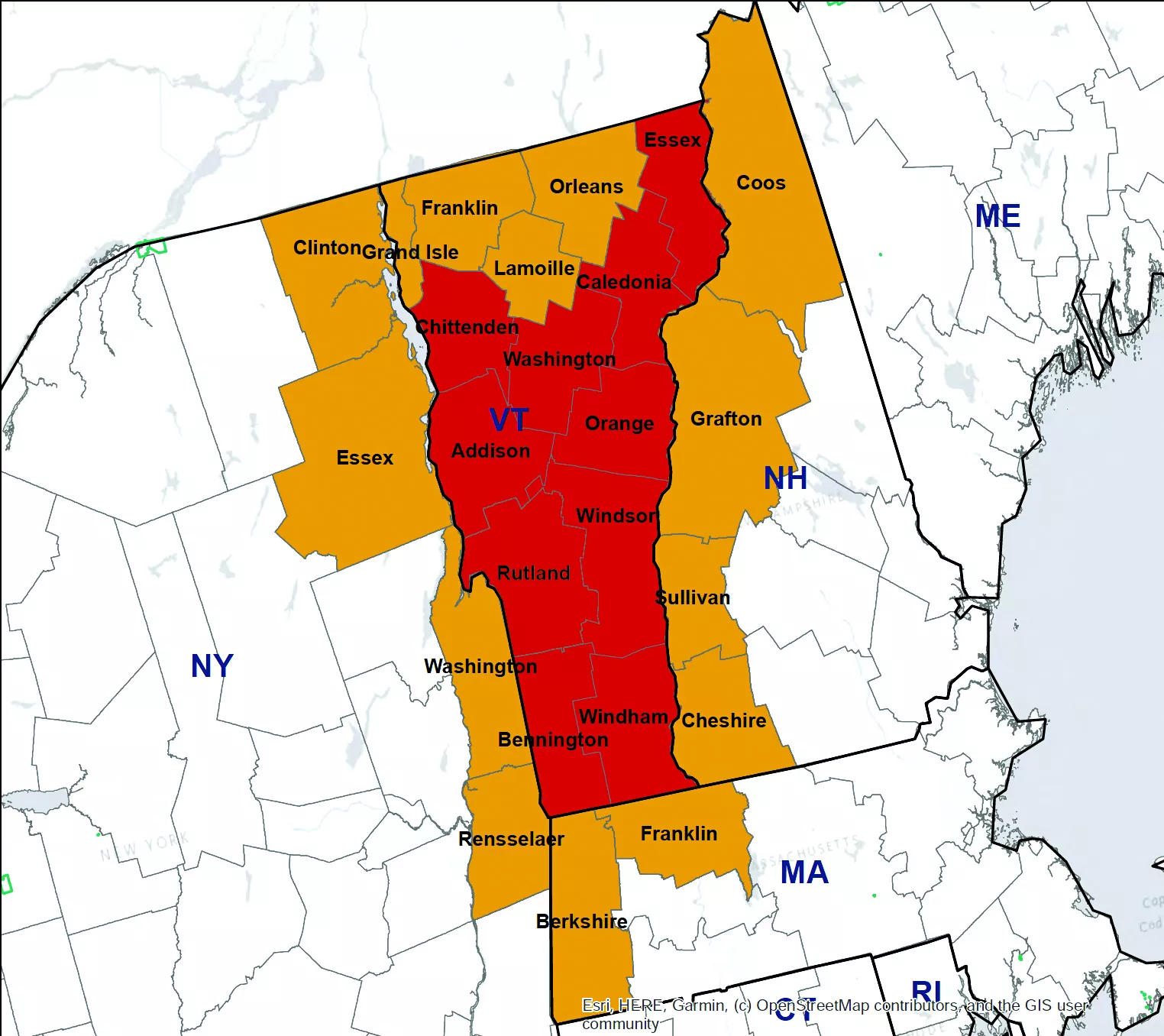
The counties are Addison, Bennington, Chittenden, Washington, Rutland, Windham, Windsor, Orange, Essex and Caledonia. Under federal law, the adjoining counties are also eligible for aid, meaning that farmers in all of Vermont and certain counties in New York, Massachusetts and New Hampshire will also qualify for aid over the next eight months.
Vermont farmers estimated at least $27 million in crop losses due to the drought. Corn and hay yields were down by as much as 75 percent, steams and farm ponds ran dry, and farmers were forced to haul water and feed animals harvested hay when pastures dried up. In Ferrisburgh, farmer Erik Andrus lost acres of rice that he'd planted.
Tags: drought , disaster , agriculture , Web Only , Image
Thursday, September 24, 2020

The Senate on Thursday advanced the bill, H.99, on a vote of 25-5, virtually ensuring that it would receive final passage on Friday before heading to the governor's desk. The House passed the bill last week.
The vote followed a vigorous debate that pitted lawmakers who want Vermont to join 11 other states with bans against senators who feel the bill is an overreach that would do little to save the species it seeks to protect.
“This bill is about supply and demand,” Sen. Alison Clarkson (D-Windsor) told her colleagues. “By reducing demand for items made of endangered species parts, Vermont will play a small but significant part in helping many endangered species survive.”
Tags: endangered species , ivory ban , poaching , elephants , Vermont , Web Only , Image
Tuesday, September 22, 2020
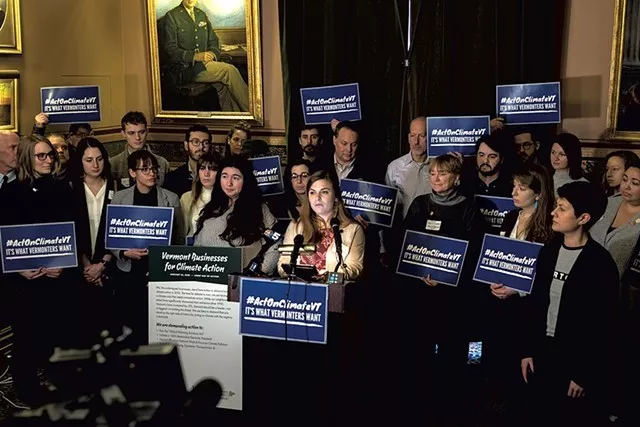
The Senate voted 22-8 to override Gov. Phil Scott’ veto of H.688, the Global Warming Solutions Act, enough to win the two-thirds approval needed in the chamber. The House did the same last week with a 103-47 vote.
Unlike House members, however, senators chose not to debate the merits of the override, instead moving straight to a vote without comment.
The vote is the second successful veto override of the extended legislative session. The first was when the legislature overturned Scott's veto of an increase in the minimum wage in February.
Tags: climate change , Global Warming Solutions Act , Gov. Phil Scott , veto , Web Only , Image
Thursday, September 17, 2020

The final tally was 103-47, surpassing the 100 votes needed for a veto override in the House. The Senate is virtually assured to do the same in the coming days, meaning the bill, H.688, will soon become the law of the land.
“A vision without a plan is a hallucination,” Rep. Tim Briglin (D-Thetford), a bill sponsor and chair of the House Energy and Technology Committee, said after the vote. “H.688 moves us from aspiration to accountability.”
Tags: climate change , global warming solutions act , greenhouse gas emissions , Web Only , Image