

Sunday, January 31, 2016
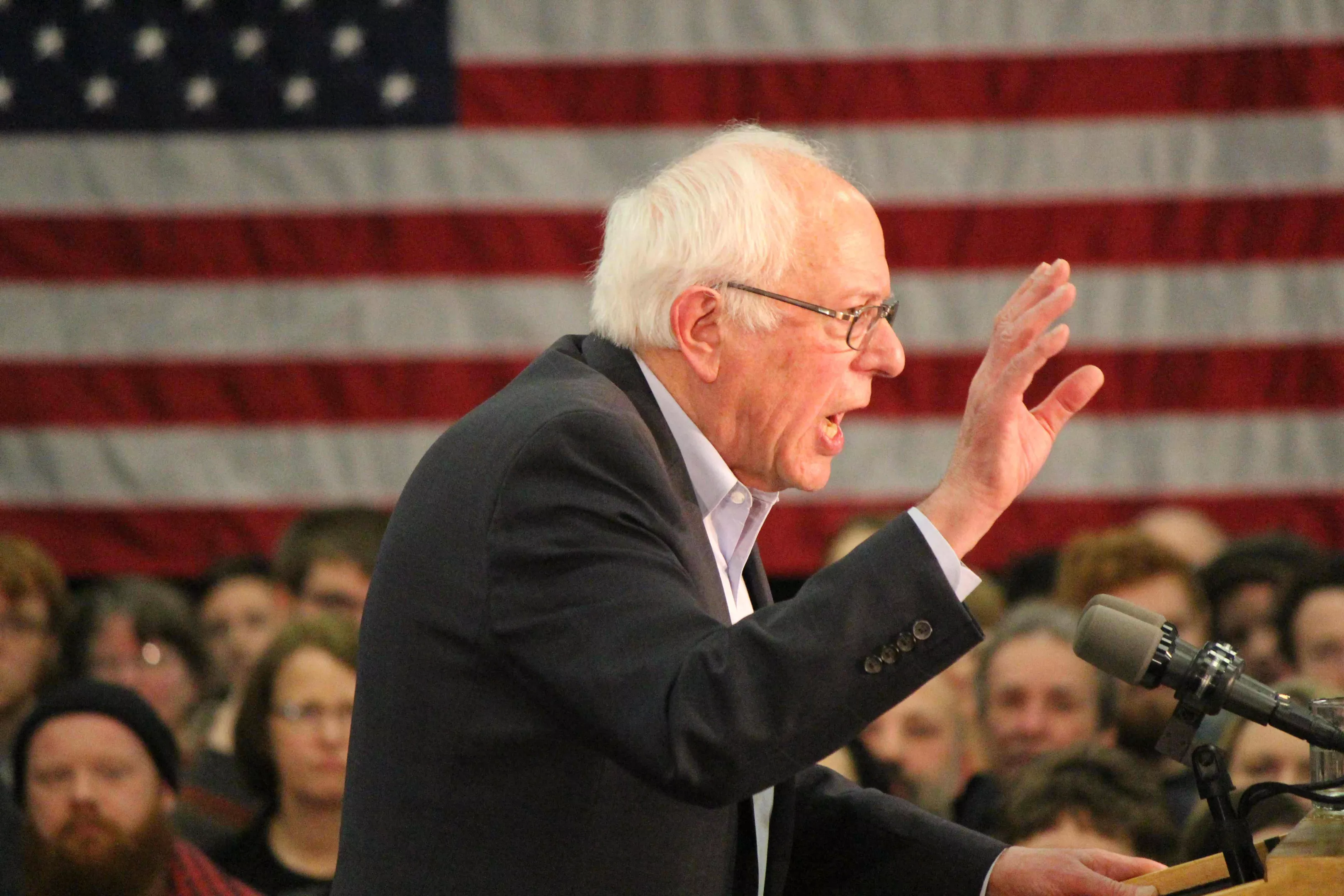
In the month preceding Monday's Iowa caucuses, Sen. Bernie Sanders (I-Vt) raised a jaw-dropping $20 million, his campaign announced Sunday afternoon.
The money came in the form of mostly small-dollar donations. Since joining the race last April, according to spokesman Michael Briggs, Sanders has collected more than 3.25 million individual contributions. Briggs called that a record for a presidential candidate at this stage of the race.
"The numbers we’ve seen since January 1 put our campaign on pace to beat Secretary [Hillary] Clinton’s goal of $50 million in the first quarter of 2016," campaign manager Jeff Weaver said in a statement, referring to Sanders' chief rival for the Democratic nomination. "Working Americans chipping in a few dollars each month are not only challenging but beating the greatest fundraising machine ever assembled."
Team Sanders made the announcement hours before the campaigns were due to file end-of-year fundraising and spending data from 2015 with the Federal Election Commission. The Vermont senator had previously disclosed raising $33 million in the last quarter of the year, bringing his campaign total at that time to $73 million.
Though news of Sanders’ January haul spread like wildfire Sunday in the national news media, the candidate himself didn’t even mention the number later that afternoon during a rally in Waterloo. Instead, he focused on how many donors had contributed to his campaign.
Tags: Senator , Bernie Sanders , presidential campaign , fundraising , government reform , Image , Recommended Reading , Web Only
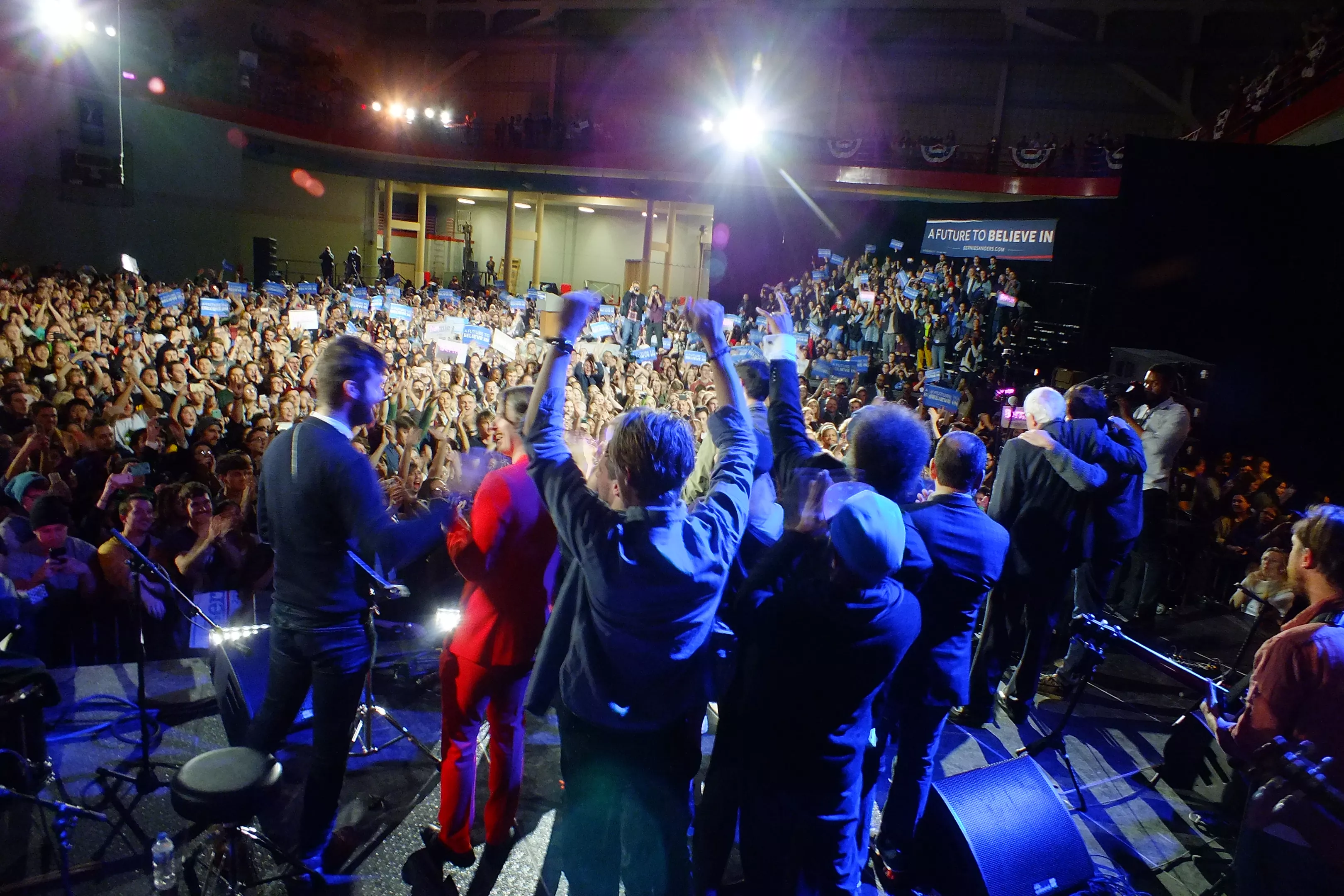
“We don’t see people like this all the time,” the Vampire Weekend frontman said as he introduced the headliner of a Saturday night concert in Iowa City.
The clean-cut rock star had just busted out a version of “Unbelievers,” prefaced by a sheepish acknowledgment of the irony of the song selection. He pointed to large, blue banner hanging to his right, behind another, bigger stage. “A future to believe in,” it read.
“So I want to say that, maybe when the song was written it came from a place of frustration or nihilism about the world,” Koenig explained. “But we’re so excited to be here, because we feel the same way that you do about Bernie: He’s a man we believe in.”
After imploring his audience of 3,800 to check out the next act on YouTube — “it’s not boring; it’s amazing” — Koenig asked them to “make some noise for Sen. Bernie Sanders!”
The crowd complied. Throughout the University of Iowa athletic complex, students roared with approval — fists raised and cellphones held high.
“Whoa,” Sanders said when he reached the podium. “There’s a lot of people here.”
Then he got down to business.
Tags: Bernie Sanders , cannabis related , Dirty Projectors , Foster the People , presidential campaign , Senator , University of Iowa , Vampire Weekend , Image , Recommended Reading , Video , Web Only
Saturday, January 30, 2016
Republicans, Sen. Claire McCaskill (D-Mo.) told the New York Times this month, "can’t wait to run an ad with a hammer and sickle."
“He’s entitled to his positions, and it’s a big-tent party, but as far as having him at the top of the ticket, it would be a meltdown all the way down the ballot," added Missouri Gov. Jay Nixon.
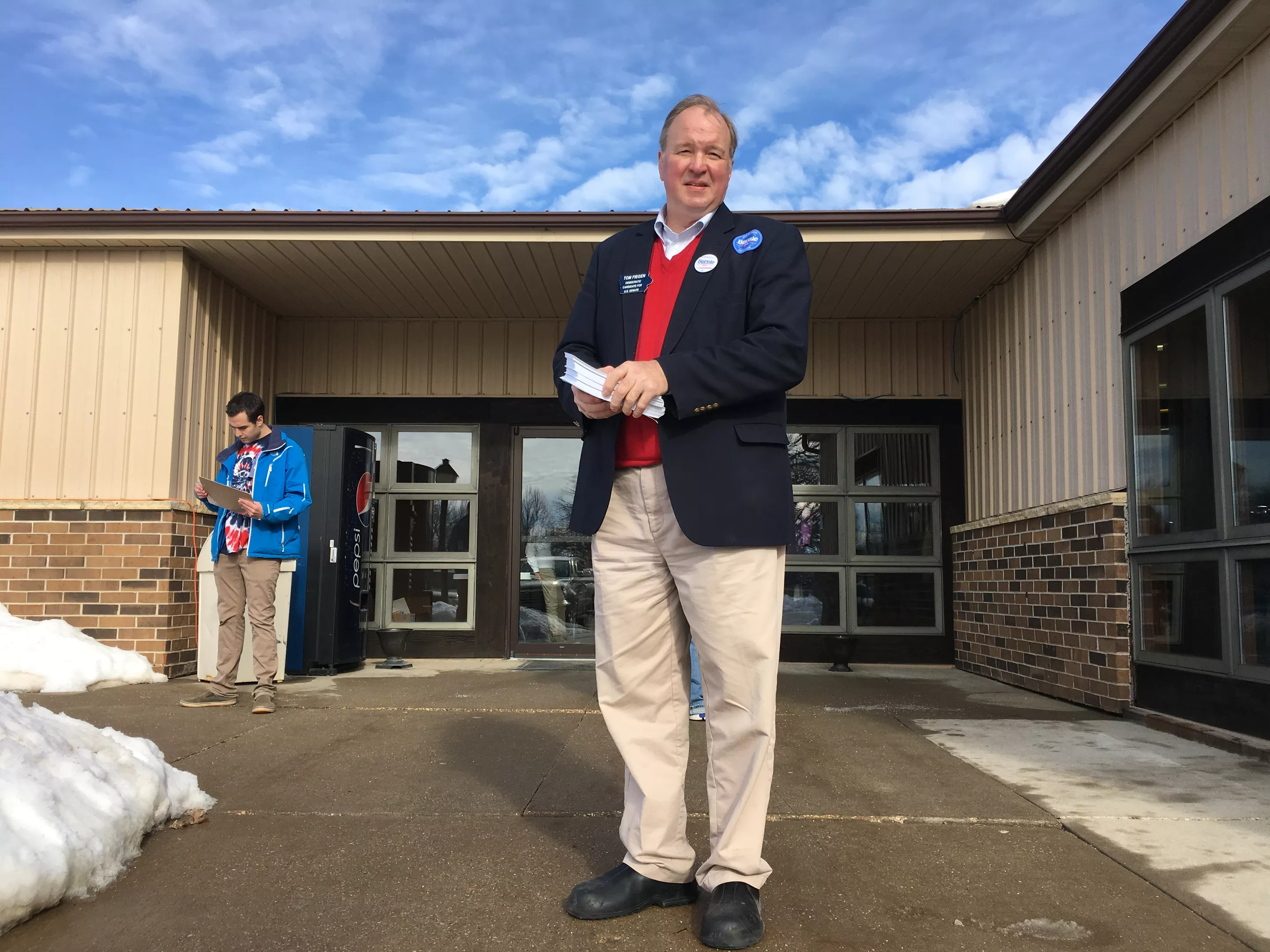
Tom Fiegen disagrees.
"Just the opposite of what the corporate Democrats, the old-guard Democrats are saying," the former Iowa state senator said. "Rather than dragging the ticket down, he's the only way the Democratic Party is gonna survive."
Now a candidate for the U.S. Senate, Fiegen stood sentry outside a Sanders rally Saturday morning in the eastern Iowa town of Manchester, proudly sporting a Sanders sticker and handing out his own campaign literature. Fiegen endorsed Sanders at the Iowa Democratic Party's Jefferson-Jackson Dinner last October and, these days, he sounds an awful lot like the candidate he supports.
Tags: Senator , Bernie Sanders , presidential campaign , Tom Fiegen , campaign trail , government reform , Image , Recommended Reading , Web Only
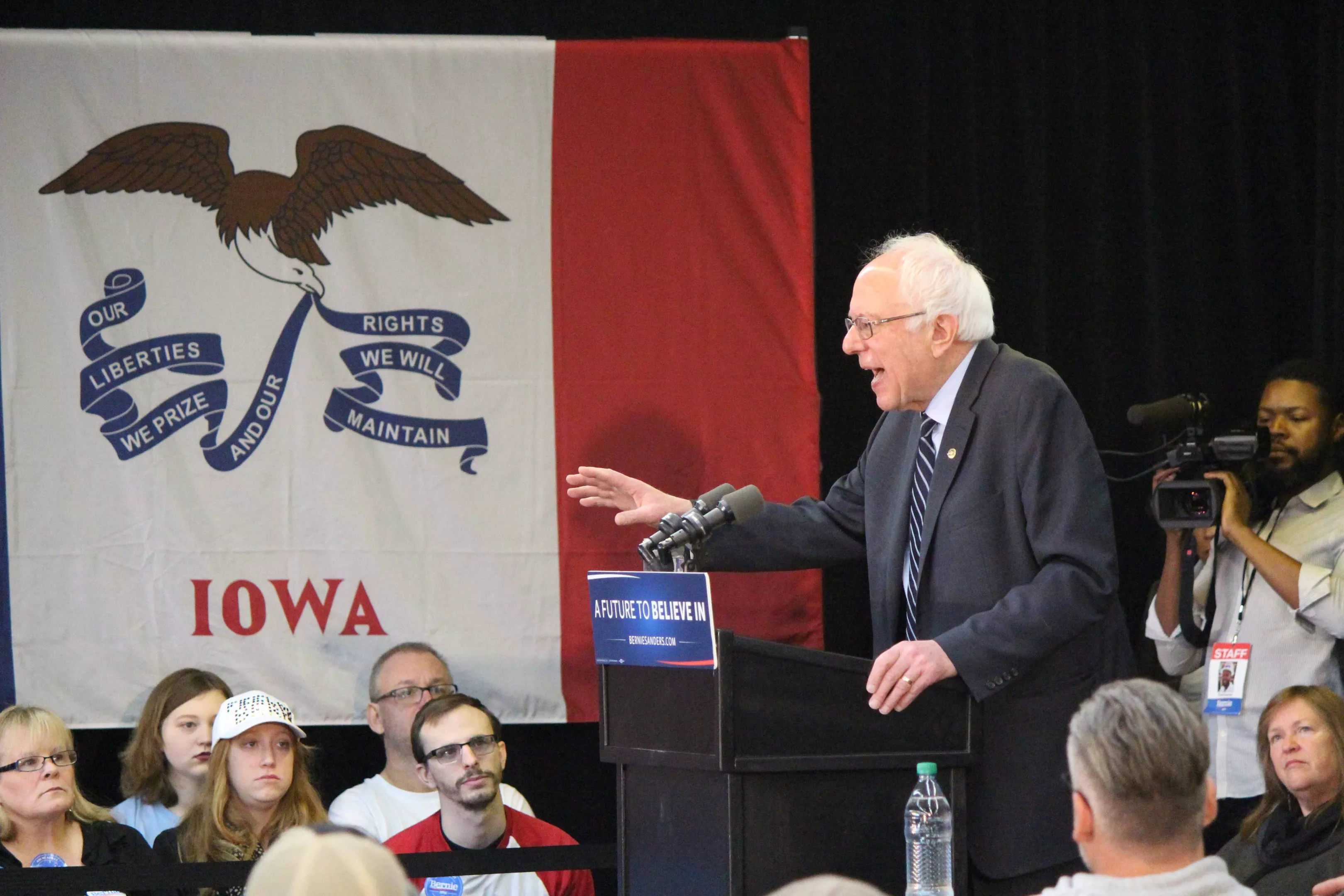
In a brief appearance in Manchester, Iowa, Sanders did manage to lump the media in with his other favorite bogeymen.
“Some people say, well, ‘This is an ambitious agenda. Can’t happen.’ Really? Really? Why not? Why can’t it happen?” he asked a small crowd gathered at the Delaware County Fairgrounds. “Because we don’t have the courage to stand up to the insurance companies and the drug companies and Wall Street and corporate America and the corporate media? Is that why it can’t happen? I don’t believe that. I think we can do that.”
The Times was the latest in a series of newspapers to pick Clinton over Sanders. Last week, the Des Moines Register, Concord Monitor and Boston Globe all endorsed the former secretary of state.
“Hillary Clinton is the right choice for the Democrats to present a vision for America that is radically different from the one that leading Republican candidates offer,” the Times wrote. “A vision in which middle-class Americans have a real shot at prosperity, women’s rights are enhanced, undocumented immigrants are given a chance at legitimacy, international alliances are nurtured and the country is kept safe.”
Tags: Senator , Bernie Sanders , presidential campaign , New York Times , endorsement , Washington Post , Image , Recommended Reading , Web Only
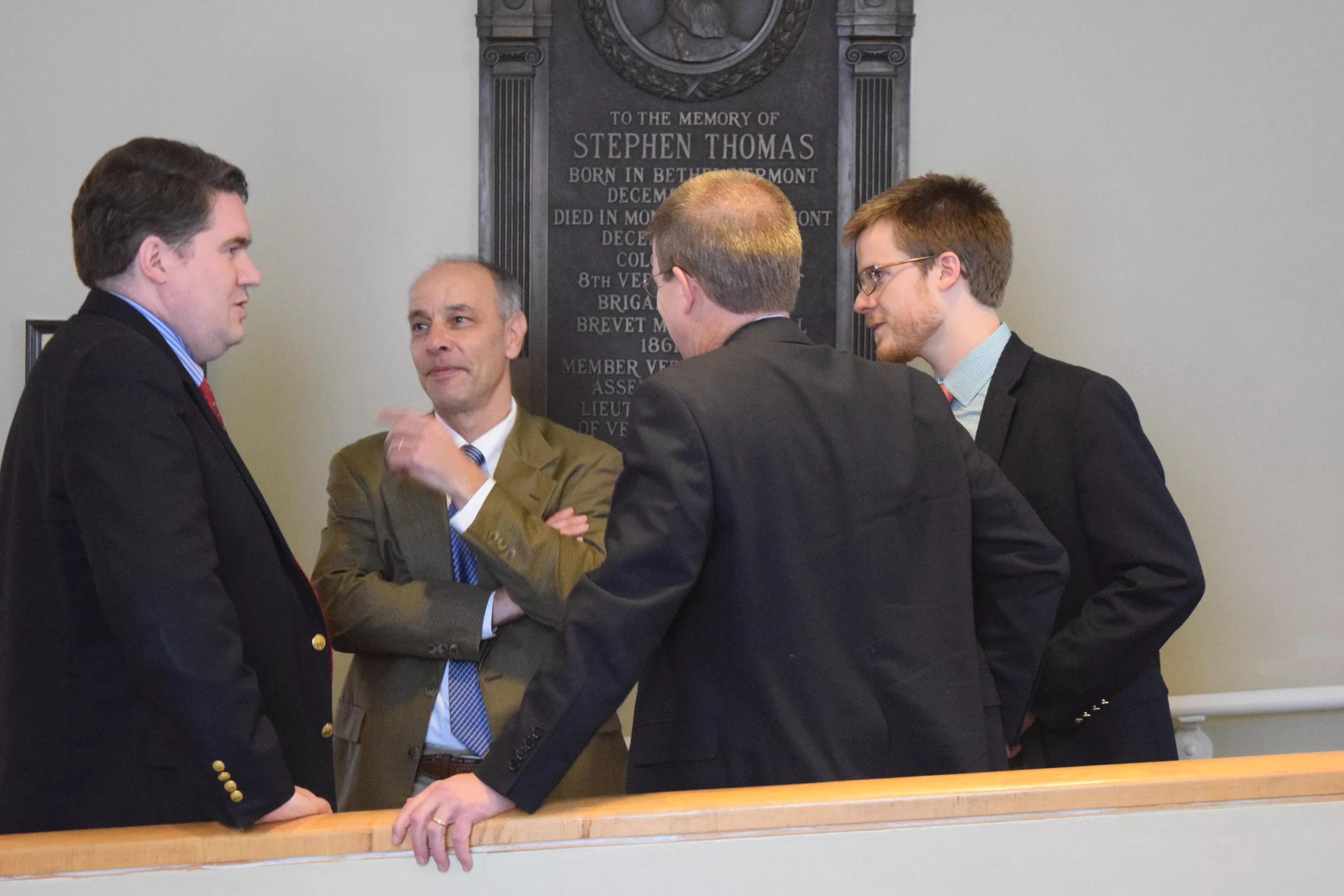
The House voted 92-32 at about 1 a.m. to pass a measure that eases the impact of school spending caps that lawmakers had approved last year. Gov. Peter Shumlin planned to sign the bill Saturday, pending a review by his staff.
What brought on the odd-hour session? Political muscle-flexing between minority Republicans and majority Democrats. Republicans tried to delay action on a bill they claimed doesn’t contain costs sufficiently, but other than depriving members of a few hours of sleep, Democrats ensured Republicans ultimately had no impact on the outcome.
The bill, which the Senate approved Thursday, raises last year’s spending caps by 0.9 percent to account for increases in school districts’ health insurance costs, exempts districts that spend less than the state per-pupil average from penalties for going over the caps and eases penalties for others. The measure removes the caps for 2018, a particular sticking point for House Republicans.
Tags: Vermont House , Shap Smith , education spending , Don Turner , Image , Web Only
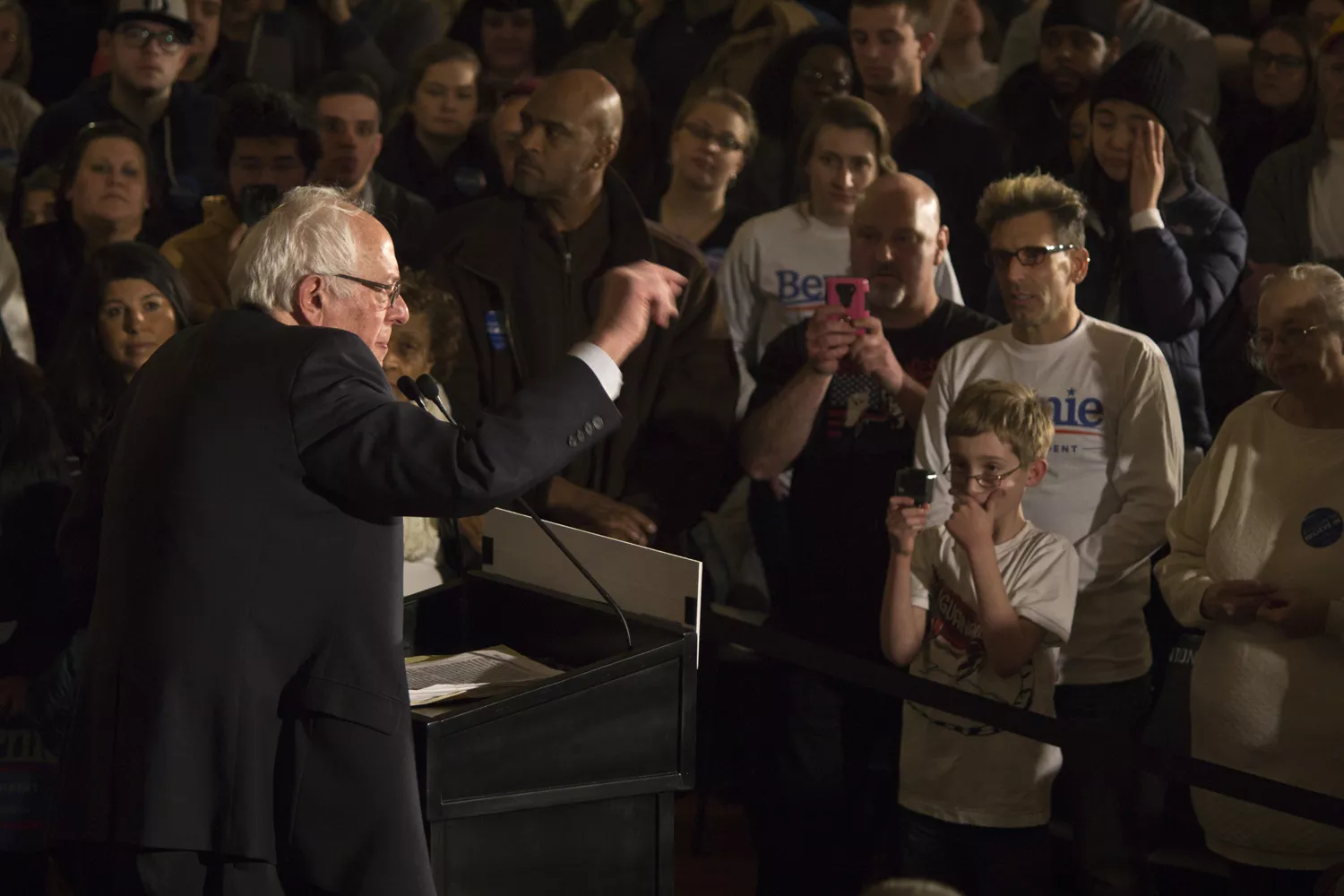
Sanders quickly turned his attention to a favorite subject: the role of wealthy campaign donors in the American political system.
"I do not believe people fought and died for democracy so that billionaires could buy elections!" he shouted.
On Friday night, Sanders returned to Dubuque. This time, he arrived in a bus bearing his logo, trailed by another one filled with reporters. And this time, his audience in a cavernous hall at the Grand River Event Center numbered closer to 1,300.
But some things — such as Sanders' age-old message — never change.
"Democracy is not a spectator sport. Professional football is a spectator sport," he told his rapt audience Friday night. "Democracy is a system that people fought and died for — to make sure that ordinary people could control the destiny of their country and not just kings and queens and billionaires."
Tags: Senator , Bernie Sanders , Hillary Clinton , presidential campaign , Iowa , Dubuque , Davenport , Recommended Reading , Image , Web Only
Friday, January 29, 2016
After spending more than 11 years in Washington, D.C., Graff moved to Burlington last fall and said he'd explore a run for the state's second-in-command. Just one catch: The Vermont Constitution states that candidates for the position must have lived in the state for four years before the election.
Graff made his case that he should be eligible for the position before a legislative committee Wednesday, stating that though he'd moved away, Vermont has always been his "mental home."
The denizens of Twitter seized on that phrase, asking the big questions: How do you get food delivered to #mymentalhome? What are the taxes like there? And, most importantly — it's Vermont, after all — what is #mymentalhome's carbon footprint?
The hashtag originated with Shay Totten (who, full disclosure, is a former Seven Days political columnist). But others jumped in on the action, too.
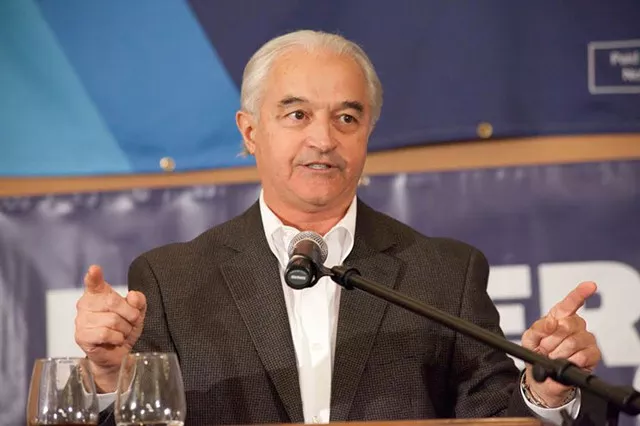
After meeting with Federal Bureau of Investigation agents Friday to discuss allegations against Attorney General Bill Sorrell, the Vermont State Police announced that “no state-based investigation will be commenced.”
Left unsaid was whether federal officials would launch their own review. Paul Holstein, chief counsel for the Albany division of the FBI, which has jurisdiction over Vermont, declined to comment.
Last week, a panel of 11 state’s attorneys released the results of a nearly nine-month investigation into a series of allegations made by Vermont Republican Party vice chair Brady Toensing and based on reporting by Seven Days and the New York Times. The panel dismissed several of Toensing’s six allegations but referred the most serious to the state police.
That allegation centers around a Washington, D.C., dinner Sorrell attended in December 2013, during which representatives of a Texas law firm gave him an envelope stuffed with $10,000 worth of campaign donations. At the same dinner, according to a sworn affidavit signed by Sorrell, the firm asked him to file suit against the oil and gas industry. Sorrell later did so and hired the Texas firm, Baron & Budd, to represent the state.
VSP spokesman Scott Waterman said Wednesday that Friday’s meeting with the feds was being held “to determine if an investigation is warranted and who has jurisdiction to perform the investigation if one occurs.” As Seven Days reported in December, state and federal officials have previously met to discuss the matter.
Tags: Bill Sorrell , Brady Toensing , Vermont State Police , Federal Bureau of Investigation , Image , Web Only
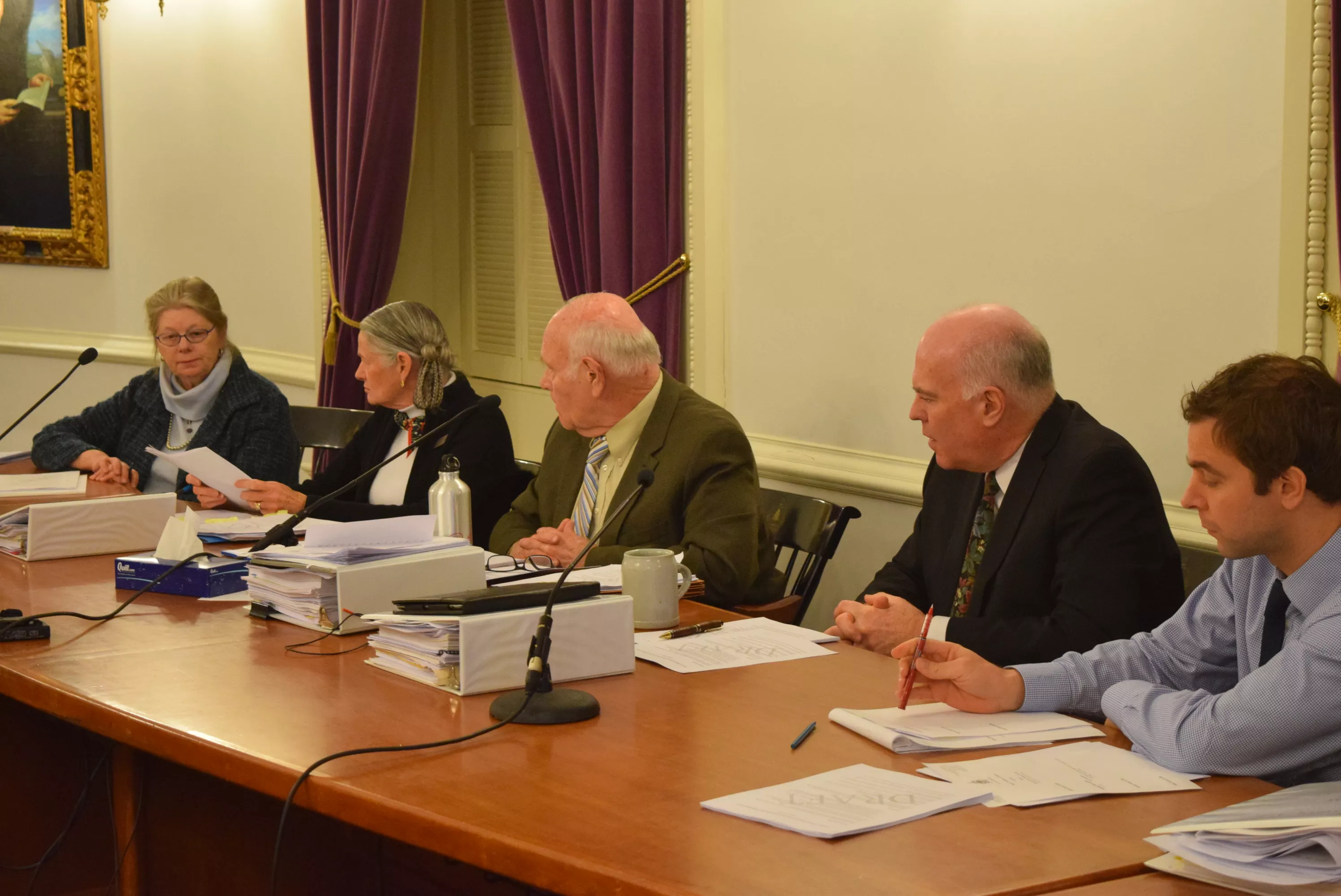
“It’s a huge step in the right direction,” said Sen. Jeanette White (D-Windham), a legalization supporter. She acknowledged the bill does not go as far as she would like. It would not, she noted, legalize home growing of marijuana.
The bill would allow Vermont residents to legally possess up to an ounce of marijuana and for out-of-staters to have a quarter of an ounce. The state would issue permits to up to 30 growers of varying sizes and to 20 to 40 marijuana stores.* Revenue raised would go entirely to drug treatment and prevention, law enforcement and implementation of legalization.
The bill, which still has to clear the Senate's Finance and Appropriations committees, appears headed for a vote on the Senate floor.
Thursday, January 28, 2016
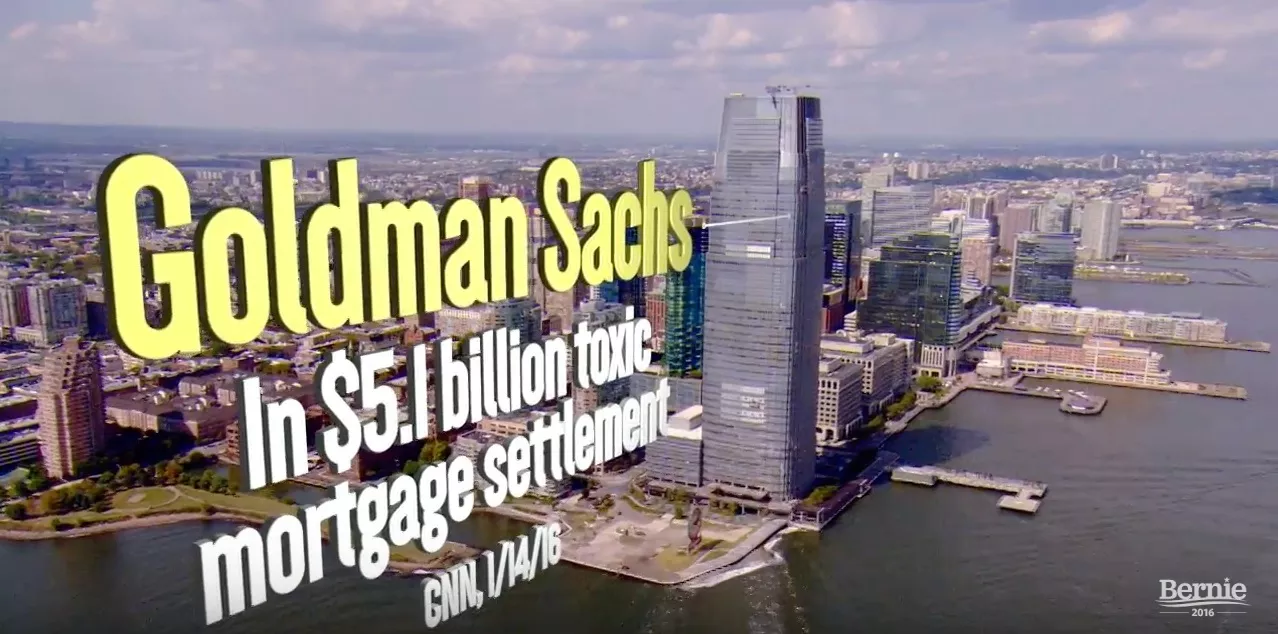
These days, Sanders is getting pretty close to the line.
On Thursday, four days before the Iowa caucuses, the senator released a new ad ostensibly criticizing the investment bank Goldman Sachs for its role in the 2008 financial crisis. But the real target of the ad is clear: Democratic rival Hillary Clinton, who has accepted $2.2 million in speaking fees from Goldman over the past decade.
"How does Wall Street get away with it? Millions in campaign contributions and speaking fees," a narrator intones. "Our economy works for Wall Street because it’s rigged by Wall Street. And that’s the problem. As long as Washington is bought and paid for, we can’t build an economy that works for people."
Tags: Senator , Bernie Sanders , Hillary Clinton , presidential campaign , Wall Street , government reform , Image , Recommended Reading , Video , Web Only