

Monday, June 30, 2014

Arguably the best-dressed and indisputably the oldest of the men in suits was 96-year-old Tony Pomerleau, who was there to dole out something more concrete to the Club: $1 million.
To put that in perspective: According to GuideStar, the Club recorded $1.4 million in revenue in 2012— most of which came from grants and donations. The gift, to be paid in installments over the next decade, is the largest in the club's history, according to its executive director, Mary Alice MacKenzie.
"If Tony Pomerleau didn't give one more gift in his life he would go down in history as one of the most generous Vermonters this state has ever seen," MacKenzie said. "But he hasn't stopped and we are very very lucky that he has believed that what we are doing with our education program is worthy of a very very big gift from him."
Friday, June 27, 2014

Instead, the finance committee has approved a motion to ink a contract with a financial consultant — Ed Gomeau, according to one its members, Scot Shumksi. Gomeau has previously served as the New Haven Public Schools’ finance director in Connecticut, and as business manager for the Addison Northeast Supervisory Union in Vermont, according to the Addison Independent.
The school board is also looking for a permanent finance director to replace David Larcombe, who is resigning on June 30. It recently appointed an acting superintendent to oversee the schools while it searches for a replacement for Jeanne Collins, who is also stepping down at the end of the month.
Weinberger made his offer on April 28, after the public learned that serious budgeting problems had led to the district’s repeat deficits. The City Council voted 12-1 in favor of the arrangement.
Tags: Miro Weinberger , Burlington School Board , Image , Web Only
Thursday, June 26, 2014

It's spurred a national debate about the EPA's role in governing waters and preventing pollution. Under the proposed rule, which is open for formal public comment until October 20, the EPA argues that the Clean Water Act applies to more than just major rivers and streams. The proposed rule would clarify that seasonal and rain-dependent streams, as well as wetlands near rivers and streams, would be protected under the Clean Water Act, and as such be subject to regulation for pollution and quality standards.
"We want to ensure that the whole system, from the headwaters down to the mouth, is protected," said Ellen Gilinsky, the senior water advisor for the EPA, during a site visit on Wednesday morning. In boots and rain gear, Gilinsky and other delegates from EPA offices in D.C. and Boston looked on as a soil conservationist with the Natural Resources Conservation Service led a tour of a restored wetland in Leicester. An NRCS easement turned the former agricultural land along the Otter Creek back into a functioning flood plain.
The so-called "Waters of the U.S." rule wasn't a hot topic of debate during the morning field trip — but it had been the night before, during a roundtable discussion at the University of Vermont.
The EPA contends that the new rule would reduce confusion by clarifying what bodies of water the Clean Water Act governs. They're not expanding jurisdiction or broadening coverage of the act, according to an EPA website about the proposed rule — though that's exactly what critics have alleged. Last week a group of 30 Republican U.S. Senators introduced legislation to stop the proposed rule, which critics have called a "power grab."

Burlington's ordinance, implemented in 2012, has withstood a legal challenge, but that federal court decision is currently under appeal. Both the Burlington and the Massachusetts laws carved out 35- foot buffer zones.
Michael DePrimo, a Connecticut-based lawyer representing the plaintiffs in the Burlington case, was also lead counsel in the McCullen v. Coakley case up until it reached the Supreme Court. Reached Thursday, he said the city would be foolish to continue to defend the ordinance. "If they want to continue fighting, then they are wasting the taxpayer money."
DePrimo expressed confidence that Thursday's ruling spells the end for Burlington's ordinance. "The Supreme Court declared the Massachusetts statute unconstitutional. The Burlington ordinance was patterned on the Massachusetts statute," DePrimo said. "The McCullen case applies directly to the Burlington ordinance, and in my view the Burlington ordinance now cannot stand. It is unconstitutional."
Wednesday, June 25, 2014
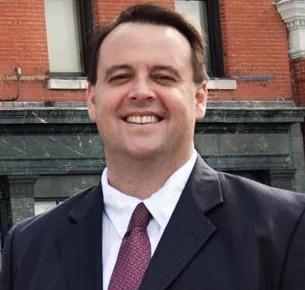
Howard has deep roots in the Vermont political realm. He spent more than a decade in the Statehouse as a representative from Rutland, chaired the Vermont Democratic Party for several years, and, in 2010, challenged Phil Scott in an unsuccessful bid for lieutenant governor.
Mitchell held multiple labor jobs in California, Florida and South America before arriving at the VSEA in December 2011. His leadership rankled some within the 5,500-member union, and several state officials said their relationship with him was less amicable than with past directors. But Howard praised Mitchell for growing the union’s membership base. “I think we have an unprecedented amount of new energy and activity and people stepping up to take leadership roles,” he said.
In a written statement, Howard also explained that the board of trustees gave him unambiguous instructions: Stay the course laid out by your predecessor. "Board members made it clear during the interview process that they really like the direction VSEA is going in and they did not want it to change. I assured them that I don’t either.”
According to Howard, VSEA members are now on the same page about the future direction of the union. “I really think they are excited about the idea that their union is really about them and not about insiders in Montpelier making deals on their behalf.”
Tuesday, June 24, 2014

In addition to the two restroom closures, during the last 18 months, SeeClickFix, Burlington's crowd-sourced app for reporting low-level problems to city officials, documented 32 needle discoveries.
Beyond that, Councilor Selene Colburn (P-Ward 1) said the committee isn't sure of the scope of the problem, but one of their goals is to figure out a way to quantify it.
Councilor David Hartnett (D-Ward 4), the owner of the Mobile Short Stop in the New North End, said he's observed firsthand an uptick in the needles discovered in his restrooms. He bought a "sharps" container (a catch-all for sharp biowaste products) to dispose of needles he finds. "We used to just put them in Coke bottles or styrofoam cups," he said.
Tags: Burlington City Council , Drugs , Burlington , Image , Web Only
On Monday evening, all but one councilor voted to send to a proposal to its ordinance committee that would prohibit smoking "strictly on the bricks" of Church Street.
In 2012, Mayor Bob Kiss vetoed a law that would have banned smoking in a larger section of the city's downtown, and several years earlier the council struck down a similar proposal.
"It's not like this is a new idea," said Councilor Karen Paul (D-Ward 6), one of the co-sponsors. But, she added, it has "evolved for the better." Paul and other supporters made the case that it's necessary to protect people from secondhand smoke, and it would promote Burlington's image as a healthy city.
Tags: Miro Weinberger , Burlington City Council , Church Street , Image , Web Only
Monday, June 23, 2014
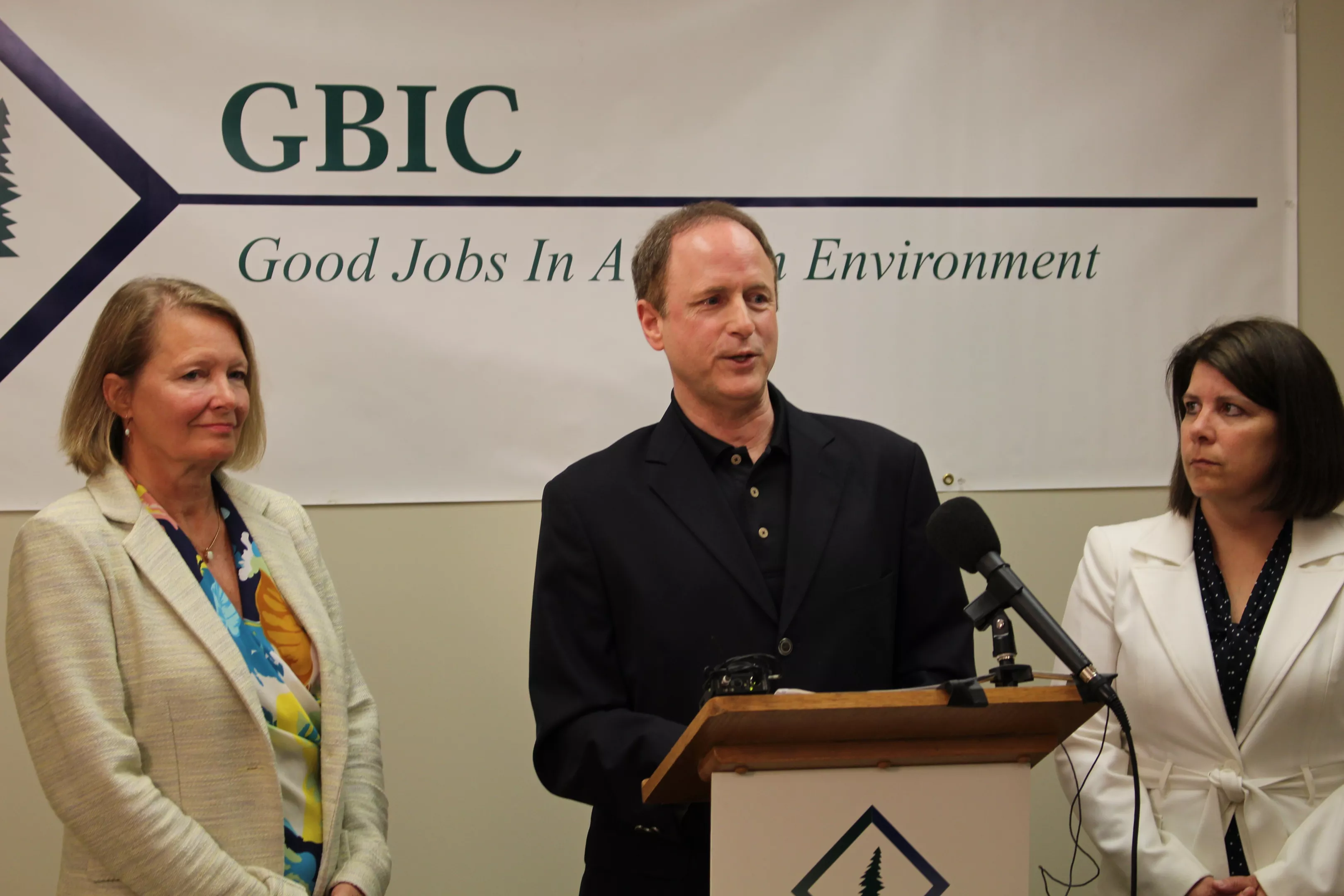
But whether and when a deal might go down — and what that might mean for IBM's estimated 4,000 Vermont jobs — has been anything but clear.
"The media keeps reporting that the IBM campus is rumored to be sold. None of us know this," Greater Burlington Industrial Corporation president Frank Cioffi said Monday during a press conference at GBIC's Burlington headquarters. "These are public corporations, and none of us are going to know anything until it really happens."
So what exactly prompted Cioffi to convene the media to discuss steps the state might take to keep IBM, or at least its workers, in Vermont?
"Just rumors are abounding everywhere," he said.
Friday, June 20, 2014

The current head of the DCF Rutland office, John Zalenski, is being replaced on an interim basis by a higher-up from the Agency of Human Services, field services director Lynne Klamm.
Zalenski has been reassigned to the DCF central office, pending a review of his actions that could last one month, DCF Commissioner Dave Yacovone said in an interview.
Zalenski will not be involved in case work, Yacovone said. Zalenski, who could not be immediately reached for comment, is a member of the Vermont State Employees Association and has due process rights, Yacovone noted.
Klamm formerly worked at the Rutland DCF office. The AHS is the umbrella organization that encompasses DCF.
“We are immediately implementing several actions to help keep children safer,” said AHS Secretary Doug Racine. “Paramount is ensuring the district office in Rutland has strong supervision and staff, and has comprehensive procedures in place to protect Vermont’s children.”
Tags: DCF , statehouse , Gov. Shumlin , crime , child protection , Image , Web Only
The Burlington School Board announced Friday that Stephanie Phillips, a longtime educator who's been the district's curriculum director since 2006, will take the helm as acting superintendent.
She'll replace outgoing Supt. Jeanne Collins, whose resignation takes effect June 30.
In mid-May, Collins and the board negotiated her departure after a string of financial problems came to light. Under that agreement, the board agreed to send off Collins, who had two years left in her contract, with $225,000. Before the end of the month, Collins had secured a job as superintendent for the Rutland Northeast Supervisory Union.
In a statement issued by the board, chairman Patrick Halladay describes Phillips as a "quiet but confident leader" who is well-respected by teachers and administrators.
"Having been curriculum director, Stephanie is uniquely positioned to prepare the district for successful implementation of the new federal common core standards this fall.”