

Wednesday, March 13, 2013
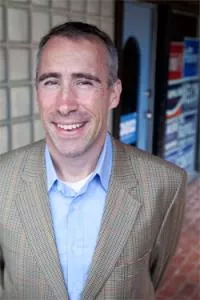
After less than two years in the volunteer position, party chairman Jake Perkinson unexpectedly announced Wednesday that he plans to resign from the post on Saturday. He said vice chairwoman Dottie Deans of North Pomfret would lead the party on an interim basis, until the party elects a new chair.
The 42-year-old Burlington lawyer cited competing professional and family obligations and said the party would be just fine without him. While he hinted that he'd "had discussions with people" about possible job opportunities, he has no other immediate plans at present.
"I've always got things both from a business and a personal perspective I'm interested in pursuing, and the reality is the party takes a lot of time," Perkinson says. "The party's in a great position right now to go forward, and I don't have the arrogance to think I'm the only one to move it forward."
Tuesday, March 12, 2013
Like many Vermonters, Andrew J. Hall is a connoisseur of fine art and lives on a farm in a small town. He's even got a homegrown business selling grass-fed cows and pigs. So what separates Hall from his Reading neighbors? His $100 million pay package from a bailed-out bank, mostly.
Bloomberg News published an extensive story with video on Hall on its website today. Hall used to be an oil trader with Citigroup before that bank sold off his Phibro unit to another company, and now he's also the CEO of a hedge fund. Hall pulled down that $100 million payday the same year Citigroup was bailed out by taxpayers to the tune of $45 billion.
His pay was criticized in 2009 by Kenneth Feinberg, who oversaw compensation at rescued banks for the U.S. Treasury Department, and Vikram Pandit, Citigroup’s then-CEO. The lender agreed to sell Phibro to Occidental that year, saying 2009 pay for some executives would be deferred and reinvested.
Monday, March 11, 2013
Vermont's cities and towns will see a few newcomers taking office this week after Town Meeting Day. Here's to small-town democracy. It's also gun-control advocates' turn to rally at the Statehouse on Wednesday, and the week ends with St. Patrick's Day on Sunday. (Here's a reminder that you shouldn't drink green beer and you REALLY shouldn't drink Irish car bombs on Sunday.)
Andy Bromage is off this week, so send your submissions for next week's political calendar to me instead.
Monday, March 11
7 p.m.: The Burlington City Council meets for the first time since Town Meeting Day. See the agenda here.

Fall asleep during high school civics class?
Never fear. New York Times Supreme Court correspondent Adam Liptak has a solid thumbsucker in today's Grey Lady about the power disparity between large states and small in the U.S. Senate and the Electoral College.
Liptak's dateline? RutVegas, Vt. (Wait, sorry. I know I'm not supposed to use that term anymore.)
The roads in Rutland are paved in gold, Liptak writes, while just over the border in Washington County, N.Y., "the landscape abruptly turns from spiffy to scruffy."
Why's that? Cuz our 625,000 residents have two U.S. senators, while New York's 19 million also have, um, two senators. So we get way more federal pork per capita. Which is a major bummer for them.
While the Great Compromise of 1787 isn't exactly breaking news, Liptak does a good job explaining how this intentionally unfair deal has only grown less fair for residents of large states and for the liberals who mostly live in them (crunchy Vermont being the exception). And the story includes a couple of tasty Vermont tidbits, such as these:
- Vermonters have 30 times the voting power of New Yorkers in the U.S. Senate. That's the greatest disparity between neighboring states in the country. (The disparity between the most and least populated states, California and Wyoming, is twice that.)
- "Among the nation's five smallest states, only Vermont tilts liberal, while Alaska, Wyoming and the Dakotas have each voted Republican in every presidential election since 1968," Liptak writes.
- The feds have spent $2500 per person in Rutland since 2009, compared with $600 per person in Washington County, N.Y.
Also worth checking out: The Times's hilare-lare infographic with a photo montage of 62 senators who represent one-fourth of the nation's population (there's Sen. Bernie Sanders in the upper-left-hand corner appearing to be blowing out a bunch of hot air) and another six senators who also represent one-fourth of the population. Check it here.
You can read Liptak's story in full here. Oh, and if any New Yorkers are reading this: Sorry, homies.
Tags: Senator , Bernie Sanders , Web Only , Image
Friday, March 8, 2013
After saying he'll vote for Obama's pick for CIA chief, Sanders changes his mind.
Bucking a president they support and a party with which they caucus, Vermont's U.S. Senate delegation cast two of just three liberal votes against Central Intelligence Agency director nominee John Brennan Thursday afternoon.
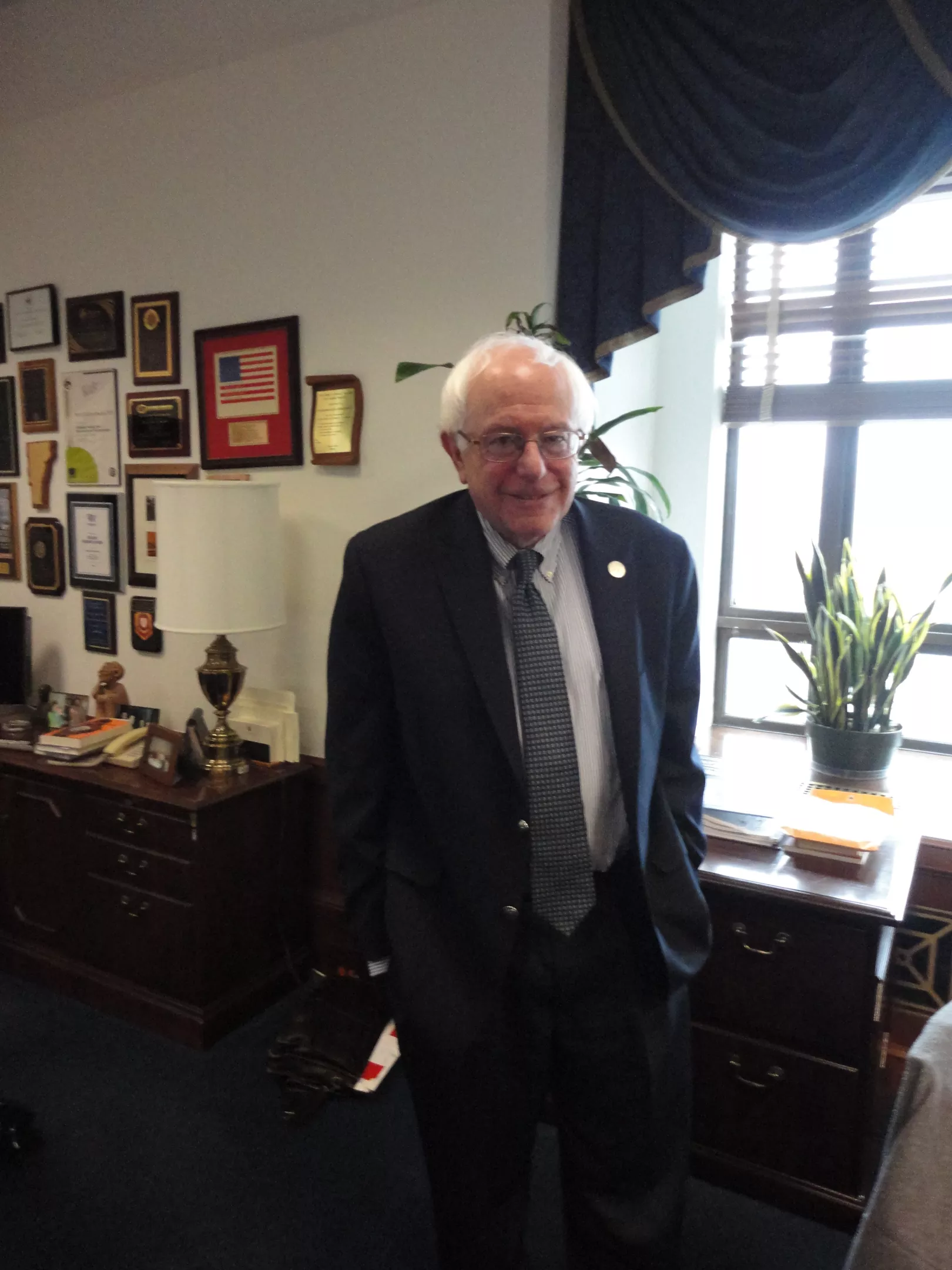
In so doing, Sens. Patrick Leahy (D-VT) and Bernie Sanders (I-VT) made strange bedfellows with a group of conservative Republicans and libertarians who sought to block Brennan's nomination due to concerns with the Obama administration's drone program.
The vote came a day after Sen. Rand Paul (R-Kentucky) captivated the Capitol with a 13-hour, talking filibuster seeking to stall Brennan's nomination.
Leahy and Sanders joined Oregon Democrat Jeff Merkley and 31 Republicans in opposing Obama's CIA pick, while 13 Republicans joined the Democratic majority to vote 63 to 34 in favor of Brennan's confirmation.
The votes were reversals for both Leahy and Sanders. The former said in January that he'd back Brennan, before indicating to Seven Days on Wednesday that he was considering opposing him. Sanders, in contrast, told the paper that day he planned to support Brennan — before evidently changing his mind.
Asked during an interview in his Capitol Hill office Wednesday whether he expected to vote for Brennan, Sanders said, "I do, yah, with reluctance, but I will."
Explaining that reluctance, Sanders said, "I have concerns about this drone business. We've gotten a little bit more information. It's an issue that I will stay on."
Those concerns apparently grew overnight.
After casting his nay vote on Thursday, Sanders said in a written statement, "With regard to the use of drones and other methods employed by the Central Intelligence Agency, I am not convinced that Mr. Brennan is adequately sensitive to the important balancing act required to make protecting our civil liberties an integral part of ensuring our national security."
Sanders' staff declined to answer questions about his reversal Thursday.
Tags: Senator , Bernie Sanders , Image , Recommended Reading , Web Only

State politics took the week off, but local politics picked up the slack. Here's this week's accounting of winners and losers in Vermont news and politics for the week ending Friday, March 8:
Winners:
Burlington Progressives —The Queen City’s favorite third- (or is it second-?) party expanded itspresence on the Burlington City Council Tuesday with wins by Prog Jane Knodelland Prog-leaning independent Sharon Bushor.
Schoolbudgets — Enrollment’s down, budgets are up andVermont voters arejust lovin’ it!
TIF towns — Gov. Peter Shumlin says he wants to "wipe the slate clean" for four top towns that former state auditor Tom Salmon said owed the state $6 million in TIF cash. Runner-up loser: Salmon.
Tar Sand-ernistas — Twenty-eight towns say no to tar sand transpo' through Vermont. Now remind me who cares?
Losers after the break...
Tags: The Scoreboard , Web Only , Image
Thursday, March 7, 2013
Every Town Meeting Day, the Vermont media run a few heart-warming stories that reinforce the Rockwellian ideal of what it means to participate in local, direct democracy — such as this chestnut from WCAX about "Newark's Tasty Town Meeting Day Tradition."
(Spoiler alert: it involves "casseroles and salads galore.")
And then there's Steven Pappas' town meeting takedown. In a piece headlined "Has Town Meeting Run Its Course?" (behind the paywall), the editor of the Barre-Montpelier Times Argus calls for ending the cherished tradition and replacing it with voting booths.
The piece begins:
I’m going to make a motion. I know it will eventually get a second, and plenty of discussion.
In the end, I expect it will fail.
My motion is this: “I move that all town and school budgets, as well as election of local officers, across Vermont be decided by Australian ballot, hereby ending the ‘traditional town meeting’ as we know it.”
For real. Once and for all. It’s a relic, and its worn parts are really starting to show.
Damn. At first, I thought Pappas was joking — that this was some ironic set-up or journalistic bait-and-switch that, in the end, would call for fixing town meeting's broken parts but not scrapping the whole enterprise.
I mean, really. The editor of state capital's daily newspaper crapping on, of all things, town meeting? That's got to be satire, right?
Nope. As the piece goes along, it becomes crystal clear the dude's dead serious.
Wednesday, March 6, 2013
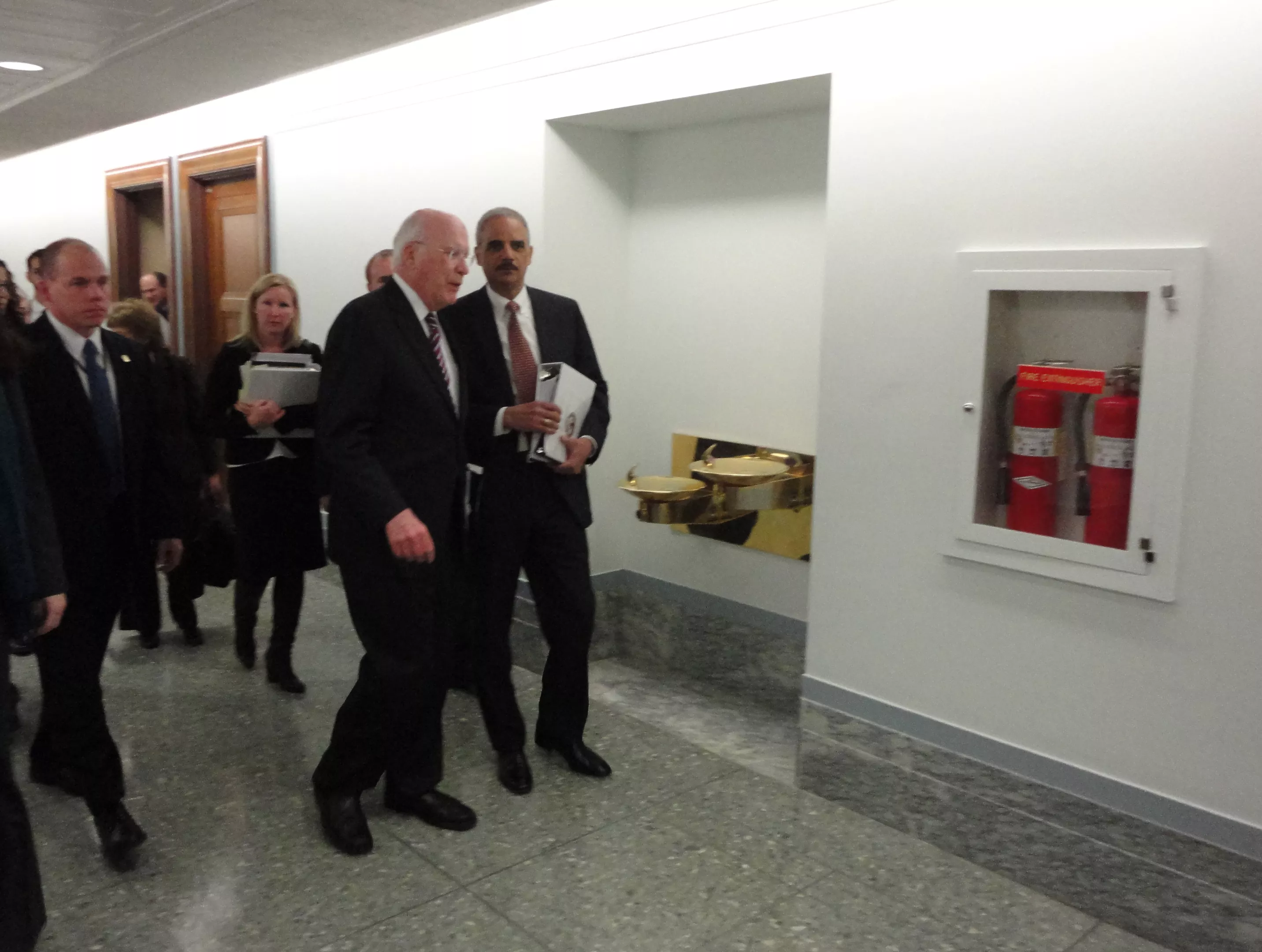
Sen. Patrick Leahy said Wednesday he's considering reversing course and voting against confirming John Brennan to lead the Central Intelligence Agency.
The Senate Judiciary Committee chairman said he'd do so to protest the Obama administration's continued unwillingness to provide his committee access to top secret legal memos justifying the use of drone strikes against American citizens abroad.
"I may cast a vote that would be a shot across the bow," Leahy told Seven Days Wednesday afternoon.
The move would be a dramatic reversal for Leahy, who said in January that he'd back Brennan's confirmation. It comes as a small group of Republican senators, led by Kentucky's Rand Paul, spent the afternoon filibustering consideration of Brennan's confirmation.
Asked whether he'd informed the White House of his change of heart, Leahy said he hadn't.
"I'll probably let them figure it out," he said.
Town Meeting Day in South Burlington presented voters with a clear choice on their city’s direction, and they delivered a decisive verdict: Out with the new, in with the old.
Incumbent city councilors Sandy Dooley and Paul Engels were buried in a landslide that swept challengers Pat Nowak and Chris Shaw onto the five-member panel. Dooley and especially Engels presented themselves as a new guard with progressive views, while painting Shaw and Nowak as exponents of an old, pro-development way of conducting the city’s affairs.
But the more than 2-1 rejection of the incumbents by voters does not necessarily signify a triumph of the right over the left. Council candidates in South Burlington don’t run with party labels. And Dooley and Engels were members of a body that made some broadly unpopular moves that had nothing to do with liberal or conservative attitudes. Those actions left them on the defensive throughout an intensely fought campaign.
“It was a combination of things — interim zoning, the F-35, Cairns Arena, the National Gardening Association” that accounted for the outcome, Engels said on the morning after.
Interim zoning refers to a two-year freeze the council imposed on most development in the city, with the aim of enabling four study groups to develop recommendations for South Burlington’s future. “The developers were against that from day one,” comments council chair Rosanne Greco, who remains in office but who will almost certainly have to surrender her gavel when the new council convenes.
“The development community bought this election,” Greco added, referring in part to the heavy advertising on behalf of Nowak and Shaw that ran in South Burlington’s weekly paper.
Tuesday, March 5, 2013
One-party rule in Burlington will have to wait.
One year after Mayor Miro Weinberger won a landslide election, ending Democrats' 30-year exile from Burlington City Hall, his party failed to win enough seats to claim a majority on the 14-member city council. Democrats picked up an open seat in the New North End, long a Republican stronghold, but Progressives recaptured a seat in the Old North End and an independent in Ward 1 hung onto her seat.
In the end, voters went for the better known candidates — and the result will be more divided government in the Queen City.
But the big story of the night was the drubbing of incumbent South Burlington city councilors Sandy Dooley and Paul Engels, who lost by two-to-one margins to challengers Chris Shaw and Patricia Nowak. The incumbents found themselves on the defensive about their vote against basing F-35 fighter jets at Burlington International Airport, and about the firing and $140,000 severance paid out to city manager Sandy Miller.