

Thursday, December 6, 2012
The revolving door between Vermont's small worlds of press and politics has spun again.
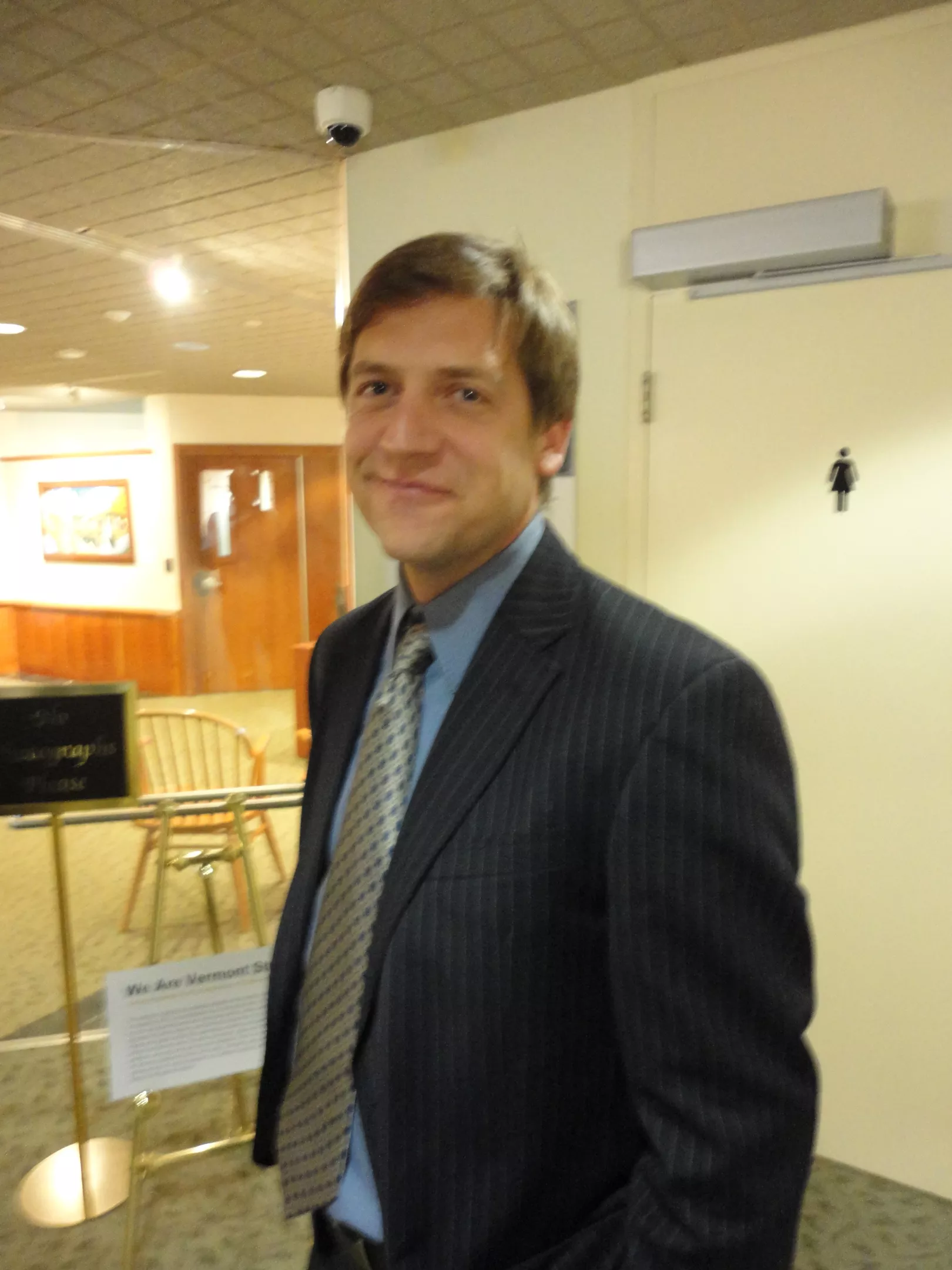
Speaking at his weekly press conference Thursday, Gov. Peter Shumlin named former Vermont Press Bureau chief Louis Porter as his next secretary of civil and military affairs. Porter, who most recently served as "Lake Champlain lakekeeper" for the Conservation Law Foundation, will be charged with implementing Shumlin's agenda in the legislature.
Or, as Shumlin put it, "ensuring that the legislators do everything we want and should do."
With Porter's former colleagues gathered around a conference table in the governor's office, Shumlin said, "He's someone whose integrity and extraordinary intelligence and commitment to what's best about Vermont has always impressed me."
The Calais native worked in journalism for 10 years — his last five in the Press Bureau, which provides Statehouse news coverage for the Rutland Herald and the Barre-Montpelier Times Argus. At the CLF, Porter has been an outspoken advocate for Vermont's rivers and lakes — particularly in the wake of Tropical Storm Irene.
He was highly critical of the Shumlin administration's failure to enforce environmental laws after Irene, telling Seven Days in June, "To tell you the truth, I think both ANR’s actions after Irene and the statements from the governor both contributed to bad work in the river. Both had a hand in that."
One year after Barton Chronicle publisher Chris Braithwaite was arrested atop Lowell Mountain while covering a protest at the site of the controversial wind development, the state yesterday dismissed the trespassing charges leveled against the longtime Northeast Kingdom newsman.
Braithwaite was arrested last December along with six protesters at the site of Green Mountain Power's Kingdom Community Wind development. As the Burlington Free Press this morning reports:
Orleans County sheriff’s deputies arrested Braithwaite along with six protesters who refused to leave. The Orleans County State’s Attorney’s Office pursued all the charges, claiming Braithwaite had no more right to be on the mountain that day than the protesters. The six protesters were found guilty of trespass by a jury in August.
Braithwaite's case was set for a jury trial starting December 13 in Vermont Superior Court in Orleans County. On Tuesday, Braithwaite's lawyer, Phil White, filed a motion to dismiss the charges after receiving subpoenaed documents from Green Mountain Power. Those documents are sealed, and the motion White filed is redacted (download that motion here). However, the Free Press is reporting the documents regarded GMP's "internal policy for handling protesters and media coverage of them."
Deputy State’s Attorney Sarah Baker filed a notice of dismissal with the court yesterday afternoon, before the court could rule on White's motion to dismiss.
Seven Days snagged a few minutes with Braithwaite this morning, when he spoke to us by phone from his office in Barton. He says he signed a nondisclosure agreement in order to view the GMP documents, and couldn't say much about their contents — but added he's trying to get the documents unsealed, and hopes other newspapers will do the same.
"I wish I could tell you why this was dismissed, but I can’t," he says. "We’ll try and change that."
Wednesday, December 5, 2012
In this week's issue of Seven Days, now available in print and online...
- More homeless Vermonters than ever are currently living in motels. Critics say that's not helping them find permanent homes.
- The feds crack down on Vermont businesses that are failing to comply with the Americans with Disabilities Act.
- Some magazines and books are banned behind bars in Vermont, although exactly which ones are forbidden seems to vary depending who you talk to.
- One Vermont teen is sharing her story of how the foster-care system failed her. With the closure of one social-service agency, the state's foster-care system is facing new struggles.
- In Fair Game: Sen. Bernie Sanders is taking a hard line against Medicare cuts in fiscal cliff negotiations, but Sen. Patrick Leahy and Rep. Peter Welch won't go that far. Plus, the secretary of state proposes new campaign finance regulations, and local politicos find new jobs.
Illustration by Stefan Bumbeck
Tags: Senator , Bernie Sanders , Web Only
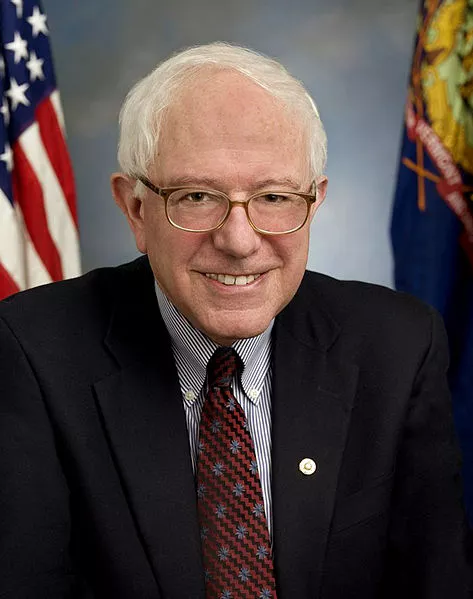
In remarks Tuesday at the U.S. Capitol, Senate Majority Leader Harry Reid (D-Nev.) made clear he's serious about breaking the logjam in the Senate by reforming the body's onerous filibuster rules.
"We're going to change the rules. We cannot continue in this way. So I hope we can get something Republicans will work with us on," Reid said, according to several press accounts.
"But it won't be a handshake," he added, referring to a previous attempt to broker a truce. "We tried that last time; it didn't work."
Many in Reid's caucus are jonesing for a change to current Senate rules that allow the minority to block or slow legislative action. Led by more junior members like Sen. Jeff Merkley (D-Ore.) and Tom Udall (D-NM), they say the Senate should no longer require 60 votes to begin debate and should force those threatening to filibuster a bill to hold the floor and actually debate it.
Perhaps most controversially, the Senate agitators hope to strike during a brief window in January, at the start of the next Congress, when just a simple majority — not a two-thirds vote — is required to change Senate rules.
So where do Vermont's senators stand on filibuster reform?
Tuesday, December 4, 2012
Consider it a good sign for the growing movement for divestment from fossil fuels: Middlebury College president Ronald Liebowitz announced today that the college is initiating a "formal process" to investigate divestment.
In an email to students, faculty and staff, Liebowitz also revealed that approximately 3.6 percent of the college's $900 million endowment — that is, roughly $32 million dollars — is invested in fossil fuel companies. That marks the first time the college has disclosed how much of is endowment is tied up in the industry.
While the announcement isn't, by any means, a firm commitment to divest, the email sparked encouragement among students on campus campaigning for divestment. The divestment movement is spreading to college campuses across the country as climate activist and Vermont resident Bill McKibben headlines a bus tour to encourage schools, churches and foundations to strip their endowment funds of investments in the 200 top fossil fuel companies. McKibben told Seven Days last month that while divestment won't financially cripple the powerful industry, it could represent an "inherently moral call, saying if it’s wrong to wreck the climate, it’s wrong to profit from that wreckage."
McKibben, who also serves as a scholar-in-residence at Middlebury College, responded to Liebowitz's email on Tuesday with a statement through his environmental group 350.org. "President Liebowitz used just the right tone and took precisely the right step," McKibben's statement read. "It won't be easy to divest, but I have no doubt that Middlebury — home of the first environmental studies dept in the nation — will do the right thing in the right way. It makes me proud to be a Panther."
UPDATED BELOW
Savvy Burlington-area residents have long used the hashtag #BTV to consolidate local content on Twitter, from the mundane (sunset pictures and lunch updates) to the serious (emergency management during storms). But #BTV is a simple hashtag that could stand for many things, and it's come under threat before — chiefly from users talking smack about state-run TV stations in Bahrain, Botswana and other B countries. (See "Burlington Meets Bahrain: When Twitter Hashtags Collide" from 2011 for more about that.)
But today, hashtag-jacking reached new heights when Bloomberg TV barged in. This did not go over well with Burlingtonians.
The news network had tried to use #BTV before, notably to collect Hurricane Sandy photos last month. But those tweets never caught enough traction to overwhelm Burlington content — until today, when the network pledged to use #BTV-tagged tweets in its iPad app while it aired a lunch-hour interview with President Barack Obama. Unfortunately for Vermonters, Obamarama trumped the Queen City, at least for a little while.
(Quick side note if you're new to Twitter and/or hashtaggery: No one "owns" a hashtag, so it's not like Burlington residents can complain to Twitter about having their hashtag swiped. A hashtag is really little more than a search archive of the tweets that include it. That's why Burlington locals were worried that their content would be utterly overwhelmed by Bloomberg TV's 105,000+ followers.)
The only way to fight back when someone jacks your hashtag? Flood it with your own content. This inspired a lovely round of trolling from Burlington Tweeters — which, in full disclosure, was egged on by this professional Twitter jockey. Below is a Storify showing the chronology of the great #BTV hashtag war of 2012, with political tweets on one side and gratuitous Lake Champlain photos on the other.
Vermont environmentalists are sounding the alarm: Groups such as 350.org, the National Wildlife Federation and the Natural Resources Defense Council are warning that new Canadian regulatory filings suggest a Canadian oil company may have plans to transport tar sands oil through Vermont to the Maine coast.
The Canadian company Enbridge Oil applied in November to the Canadian National Energy Board to reverse the flow of oil on a pipeline between Ontario and Quebec. The reversal would provide a route for exporting tar sands oil from the Canadian west. Environmentalists suspect that it's just a matter of time before Enbridge looks to the Portland Montreal Pipe Line, which cuts through a corner of the Northeast Kingdom on its way to Maine, to extend the route for tar sands oil.
VTDigger.com is taking a detailed look at these concerns — which, so far, Enbridge denies:
Enbridge spokesman Graham White said the purpose of the company’s move to reverse the pipeline is to bring “Canadian light crude to Canadian refineries.” He said the company would be better served by focusing on its Canadian refining processes instead of exporting tar sands oil to foreign ports.
“The economics [of exporting through the East Coast] just don’t make sense, quite frankly,” White said.
But that doesn't comfort David Stember, 350.org's tar sands campaign coordinator for the eastern region. "It's obviously to their advantage not to show their hand until they need to," Stember told Seven Days late last week. "That's strictly a process of trying to minimize the damage."
Monday, December 3, 2012
In their final minutes of life, Lorraine and Bill Currier fought valiantly for their lives against a cold and calculating serial murderer with no obvious modus operandi and who targeted them for no other reason than the random circumstances of where and how they lived.
In a compelling and at times emotional press conference in the federal courthouse in Burlington this afternoon, Vermont authorities released new and previously undisclosed information about the abduction and murder of the Essex couple first reported missing on June 9, 2011. Those details included the fact that both Curriers nearly escaped their kidnapper and that Lorraine Currier had been sexually assaulted before being strangled to death.
Police also explained why authorities withheld from the press these and other critical details turned up in their search of the Curriers' home. According to U.S. Attorney Tristram Coffin (pictured), those details helped confirm for investigators that the Curriers had been abducted and murdered by Israel Keyes, a 34-year-old self-employed carpenter and Army veteran.
Keyes was being detained in Alaska on charges related to the murder of 18-year-old Samantha Koenig of Anchorage. At about 11:15 Sunday morning, Alaska authorities informed authorities in Vermont that Keyes had been found dead in his jail cell of an apparent suicide. Keyes' method of suicide had not yet been made public.
According to Coffin, Vermont investigators were first contacted in April by authorities in Anchorage who became convinced that Keyes had committed other murders around the country. In the course of the Alaska investigation, Keyes confessed to murdering four people in Washington State and one in New York State as well as Koenig. In subsequent interviews, Keyes also confessed to killing the Curriers in Vermont.
"Keyes provided substantial, non-public information regarding the deaths of Bill and Lorraine Currier," Coffin said. "Although searches in Essex and Coventry, Vermont were unable to locate the Curriers' remains, investigators obtained enough details to confirm that Keyes did murder the Curriers."
The prime suspect in the 2011 murder of missing Essex couple Bill and Lorraine Currier — who authorities now say was a serial killer — committed suicide in an Alaska prison cell on Sunday while awaiting trial for another murder.
Israel Keyes, a 34-year-old self-employed carpenter and Army veteran, was identified publicly for the first time yesterday as the suspect in the Currier murder. Citing anonymous sources, WCAX identified Keyes as the prime suspect months ago following a massive — and unsuccessful — search of the Coventry landfill looking for evidence of the couple's remains. No other news outlet could confirm that information.
Federal officials made the startling revelation at a press conference in Anchorage on Sunday that Keyes (pictured in this undated photo) was a serial killer and confessed to committing at least seven murders over a period of 10 years. Authorities say that, in addition to the Curriers, Keyes confessed before his death to killing four people in Washington State and one in New York, where Keyes owned a cabin, though authorities reportedly have no names or details with which to confirm that information.
In Alaska, he was awaiting trial for the murder of 18-year-old Samantha Koenig, a barista he abducted earlier this year.
From the Anchorage Daily News:
His victims all appeared to be strangers to him, prey from random encounters. And investigators suspect he killed more than the eight they've zeroed in on. He'd fly someplace, rent a car, then drive hundreds of miles away, the FBI said. While he stole from Koenig using her ATM card, and confessed to bank robberies in Texas and New York, his motive did not appear to be financial, authorities said.
Authorities haven't said how Keyes killed himself, but U.S. Attorney for Vermont Tristram Coffin has scheduled a press conference for today at 1:30 at the federal courthouse in Burlington to give an update on the situation.
Here's what's happening in Vermont news and politics this week. Got an event for next week's calendar? Email by Friday to submit.
Monday, December 3
- Monday and Tuesday are big days for Gov. Peter Shumlin. He'll be in Los Angeles for the annual meeting (and holiday party!) of the Democratic Governors Association — he's expected to be elected its next chairman.
- At 10:30 a.m., U.S. Rep. Peter Welch (D-VT) will be at Cathedral Square Senior Living in Burlington for a press conference promoting open enrollment in Medicare, which extends through December 7. No word on enrollment dates for Obamacare.
- Vermont authorities have finally confirmed the suspected killer of Bill and Lorraine Currier of Essex, who disappeared without a trace in 2011. He is Israel Keyes, a confessed serial killer, and on Sunday morning, he apparently killed himself in an Alaska jail cell, where he was being held in the murder of an Anchorage barista. At 1:30 p.m., U.S. Attorney for Vermont Tristram Coffin III holds a press conference at the federal courthouse in Burlington presumably to discuss details.
- At 6 p.m., the Burlington City Council holds a special work session on ward redistricting. Wards 1, 7 and 4 are outside the acceptable deviation for representation, based on the 2010 Census, so the whole damn thing has to get redrawn.
Rest of the week after the break...