

Thursday, September 20, 2012
Editor's note: This post is by Seven Days contributor Kevin J. Kelley.
Burlington Mayor Miro Weinberger unveiled a proposal Thursday to link Pine and Battery streets through what's now a privately-owned rail yard — a plan that appears as sketchy as it is bold.
The loosely formulated plan to build a network of car, truck, pedestrian, bicyle and transit connections through property partly owned by Vermont Rail System is intended, in part, to address some local residents' objections concerning the King/Maple streets terminus of the long-stalled Champlain Parkway.
At a press conference held in the busy and noisy rail yard, Weinberger had literally lined up many of the political players essential to moving the project forward. On hand to voice support were Secretary of Transportation Brian Searles; Democratic city council President Joan Shannon (who noted she has long been an opponent of the Champlain Parkway); Progressive councilor Rachel Siegel; and real-estate developer Ernie Pomerleau, a regular contributor to Republican candidates.
The distribution of costs for the plan seems to be firmly in place as well. The Federal Highway Administration has agreed to pay 80 percent of the price, Weinberger said, while VTrans, the state's transportation agency, is pledging to push the legislature to approve a 10-percent share.
Not lined up, however, is a specific way for the city to cover its 10-percent share of a project for which there is no cost estimate.
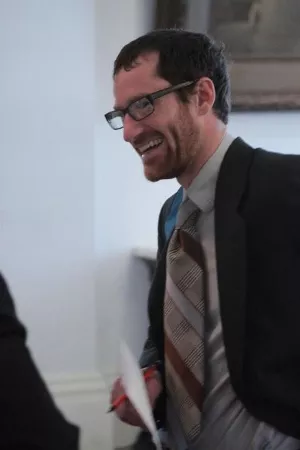
An avid kayaker since age 12, Panebaker told me the new gig advocating for river conservation and access was "a dream job." After I wrote a short item about his departure, he sent me a joking email demanding a correction:
I want to point out an error in your Fair Game column this week. You wrote American Whitewater is: 'a conservation and recreation nonprofit dedicated to protecting totally gnarly white-water runs.' It's actually dedicated to protecting 'sick, baller whitewater of the dopest kind.'
See you on the river, brah.
Panebaker died on the river Wednesday — the West Branch of New Hampshire's Pemigewasset River — doing, as his former boss Anne Galloway wrote, "what he loved best." Galloway and New Hampshire Public Radio report that Panebaker and two other experienced kayakers were paddling a steep, narrow gorge near the Pine Sentinel Bridge in Franconia State Park when Panebaker's boat became stuck between rocks, causing him to go under.
A 2005 graduate of the University of Montana School of Journalism, Panebaker worked for newspapers in Oregon and Alaska — and freelanced for Canoe & Kayak magazine — before heading east to attend Vermont Law School, according to a Digger bio. After passing the bar, Panebaker opted to return to journalism briefly, becoming Digger's first full-time reporter last fall.
Six pro-life women are suing the city of Burlington in federal court, claiming an ordinance that bans protests within 35 feet of Planned Parenthood and other abortion and health clinics is an unconstitutional violation of free speech.
The lawsuit filed in U.S. District Court in Burlington on Tuesday challenges an ordinance passed in July that creates a fixed buffer zone with a radius of 35 feet from the premises of reproductive health care facilities. Violators can be fined up to $500 per offense.
The plaintiffs are six women from around Vermont who demonstrate regularly outside the Planned Parenthood clinic with signs, prayer, singing and literature. They oppose abortion, the lawsuit says, as well as artificial birth control because "they believe it harms women."
The women want to offer "sidewalk counseling" to women entering Planned Parenthood but say the buffer zone requires them to stand at a distance where people entering the clinic can't read their signs or take their brochures. The lawsuit notes that several of the woman are mothers and grandmothers who have experienced emotional trauma from past abortions and miscarriages and want to share those experiences with women entering the clinic.
In an update to our story on Tuesday about a union election at the University of Vermont, we bring you this news: eligible UVM staff voted 339-278 in favor of forming a union.
But just which union the group of 778 staffers — lab techs, research assistants and library support staff, among others — will join is still up in the air. This week's election included two questions: Did staff members wish to form a union? And which union would they like to join — Vermont-NEA, the state's largest union; the unaffiliated United Staff; or neither?
The "neither" option received the most votes — 260 — likely from those who voted against unionizing in the first place. The NEA finished second with 183 votes. The two top choices will be on the ballot for a run-off election; no date has been set yet for that vote.
The election was the largest ever conducted by the Vermont Labor Relations Board. According to UVM staffer and union organizer Michele Patenaude, it was also the first time a group of eligible UVM employees voted to unionize on their first try. Faculty, service and maintenance workers, and campus security officers are all part of nationally-affiliated unions, but Patenaude says all of those groups faced multiple elections before successfully unionizing.
By disclosing a dinner date with the head of a conservative super PAC, did Republican gubernatorial candidate Randy Brock cost himself a crap-load of free television advertisements?
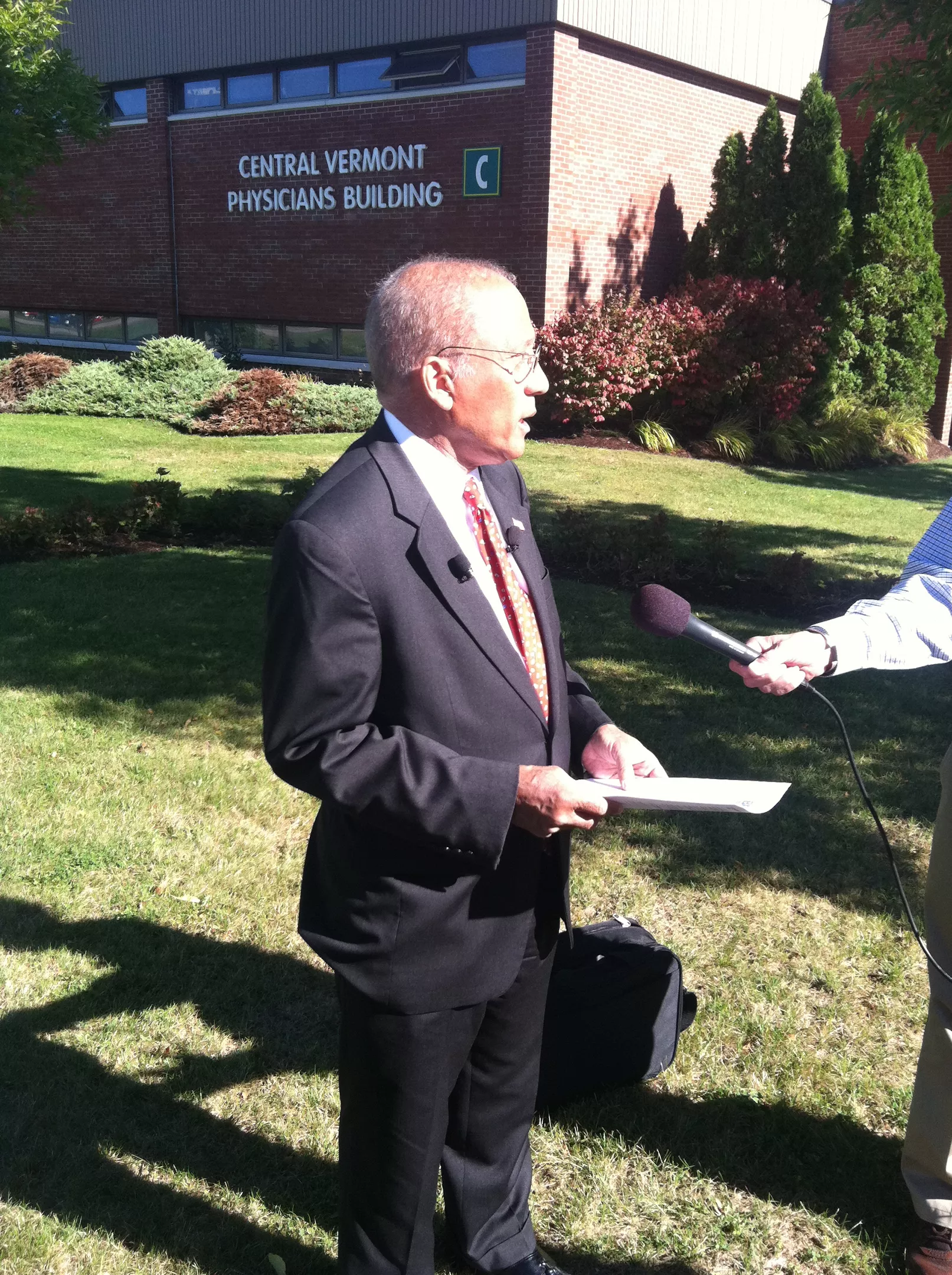
In this brave new world of post-Citizens United campaign finance regulations, that could well be the case.
During a press conference Brock called Wednesday morning in Berlin to discuss his health care proposals, reporters' questions eventually shifted from the topic at hand to Brock's impressions of Vermonters First, a new, Republican-oriented super PAC.
His answers, at first, were unsurprising: that he'd seen the group's latest commercial slamming single-payer health care reform but hadn't formed a real opinion about it; that he knows its sole donor, Lenore Broughton but not terribly well; and that he has "mixed feelings" about whether it would be helpful for such a super PAC to run ads supporting his campaign.
But then he said something quite surprising: Asked when he last spoke with Tayt Brooks, the political operative behind Vermonters First, Brock said he'd spoken with Brooks the day before. Asked what the two had talked about, Brock clammed right up.
"I won't discuss what I've discussed with him personally, but I can tell you this: It had nothing to do with what's happening with Vermonters First. That is a taboo subject with us," he said.
Pressed on whether they'd spoken about his own campaign, Brock said, "We really didn't talk about the campaign, no. We did not talk about the campaign."
He'd be wise not to. Though a series of recent U.S. Supreme Court decisions has muddied the waters of campaign finance regulations, one thing is perfectly clear: Political candidates who coordinate with so-called "independent expenditure" groups risk triggering more onerous limits on the groups' ability to raise and spend money on their behalf. That is, a super PAC like Vermonters First can take a $100,000 check and use it to cut ads supporting Brock's campaign — but if they coordinate with Brock on such expenditures, they are suddenly bound by Vermont's comparatively strict contribution and spending limits.
Wednesday, September 19, 2012
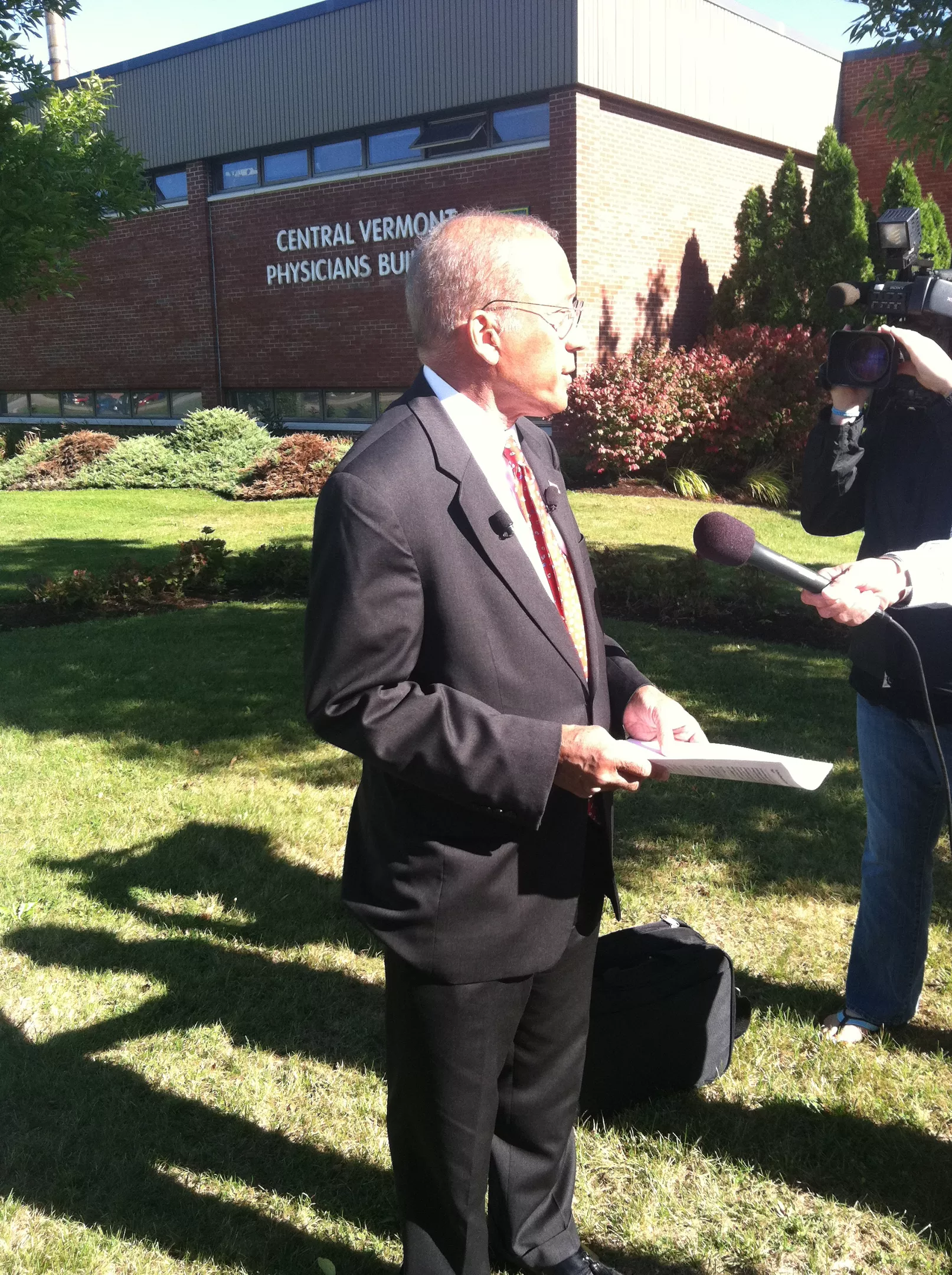
Republican gubernatorial candidate Randy Brock had dinner Tuesday night with the man behind a new, conservative super PAC, Brock disclosed Wednesday.
But Brock says he and Tayt Brooks, the treasurer and consultant for Vermonters First, did not discuss the super PAC Brooks runs or Brock's campaign, which would be illegal. While super PACs are free to raise and spend unlimited funds to support or oppose political candidates, they are barred from coordinating or sharing strategy with campaigns.
Brock disclosed the dinner to a handful of reporters following a health care press conference in Berlin (pictured), during which the topic of Brock's relationship with the super PAC and its leaders came up.
Reached by phone immediately after Brock's disclosure, Brooks at first claimed he hadn't seen the gubernatorial candidate in months.
Asked when he last saw Brock, Brooks said, "I really honestly don't know."
Asked again, he said, "I have to think about it."
Asked a third time, he said, "The last time I saw Randy Brock was probably a few months ago."
Informed of Brock's disclosure, Brooks quickly changed his story.
"I did meet with Randy last night," he said. "I happened to catch up with Randy last night."
With the 2012 campaign season in full swing, Seven Days has teamed up with VTDigger.org to create a fact-checker feature to test the "truthiness" of claims made by the candidates who want your vote this November. This week's Fact Checker was written by Paul Heintz.
CLAIM: “As city treasurer, Wilton turned Rutland’s $5 million deficit into a $3.8 million surplus.”
— Television commercial supporting Republican state treasurer candidate Wendy Wilton, paid for by the conservative super PAC Vermonters First.
FACTS: When Wilton and Rutland Mayor Christopher Louras took office in March 2007, the city was reeling from years of sloppy bookkeeping.
Due to an improper commingling of accounts, the city’s general fund had been depleted to cover deficits in its water and sewer funds. The situation grew so dire that Rutland had to borrow $5 million in 2006 to plug a hole in the general fund.
Tuesday, September 18, 2012
Updated 9/19/12
When we last checked in with former governor Howard Dean's Twitter adventures, he was rocking out to the String Cheese Incident and Jack Johnson. Last night Dean went on another tweetin' spree, this time updating the internet on the traffic situation in Connecticut. Here we go:
Stuck in bumper to bumper traffic at 111 at night on I 95 in Conn. Happens every time. Really grateful I live it Vermont.
— Howard Dean (@GovHowardDean) September 18, 2012
Assuming he meant 11:11, as the tweet was sent at 11:11 p.m. Damn those typos!
This is truly a nightmare. All construction with little apparent work being done. Now 11:30. How do the people who live here stand it?
— Howard Dean (@GovHowardDean) September 18, 2012
No work being done? What a waste of taxpayer resources!
Nearly 800 University of Vermont staff members are slated to vote today and tomorrow. At issue? Whether or not staff members should unionize.
Faculty, campus police, custodial and grounds staff at the university are all currently represented by unions, but, according to some staff members, that leaves other employees without the resources to negotiate working conditions, salaries and hours.
"When the university starts talking about budget problems and finances, they can balance the budget on the backs of the staff because we have no recourse whatsoever," says Michele Patenaude, a staff member who works in the Bailey-Howe Library and a leader of the pro-union movement.
The UVM election is being administered by the Vermont Labor Relations Board; a third of the UVM staffers eligible for the union petitioned the board for the election to take place. Voting continues tomorrow, and Patenaude says they'll know by tomorrow evening how the election shook out.
The vote considers two questions. The first asks whether eligible staffers — defined as those who qualify for overtime pay — wish to form a union. The second gives employees three choices as to which union to join: a University Staff Union affiliated with the Vermont chapter of the National Education Association (NEA); United Staff, a local and unaffiliated employee association; or neither.
Monday, September 17, 2012
It looks like Shumdog's campaign is a millionaire.
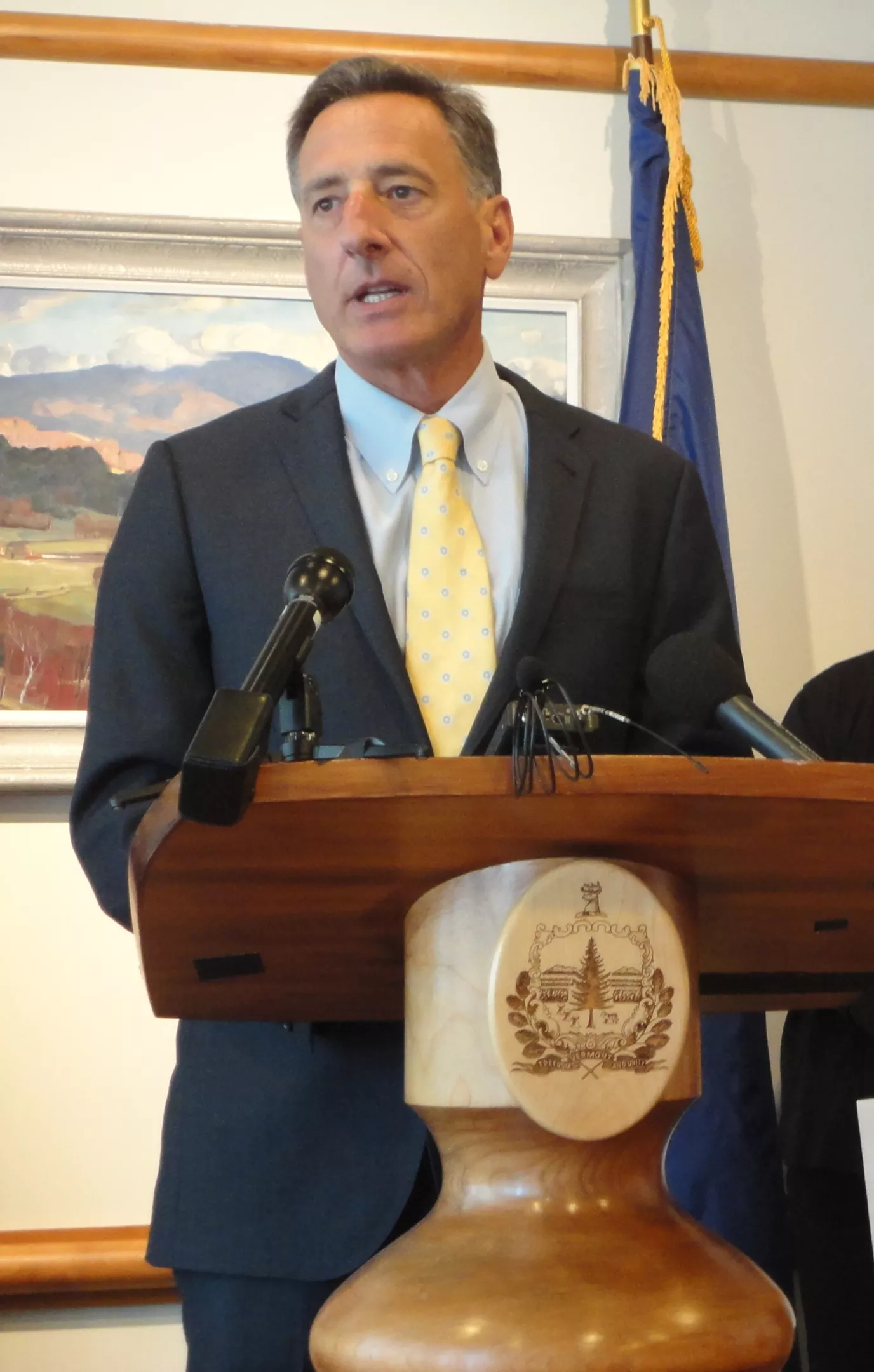
Extending his fundraising streak for yet another month, incumbent Gov. Peter Shumlin on Monday reported raising more than a million dollars total for his reelection campaign — $1,000,467.02, to be precise.
For the third month in a row, Shumlin out-raised Republican opponent Randy Brock and spent less than the Franklin County state senator. In the reporting period ending Friday, Shumlin brought in $161,000, compared with Brock's $62,000. The incumbent spent just $35,000, while his challenger spent nearly every dime he raised last month: $61,000.