

Saturday, August 16, 2014
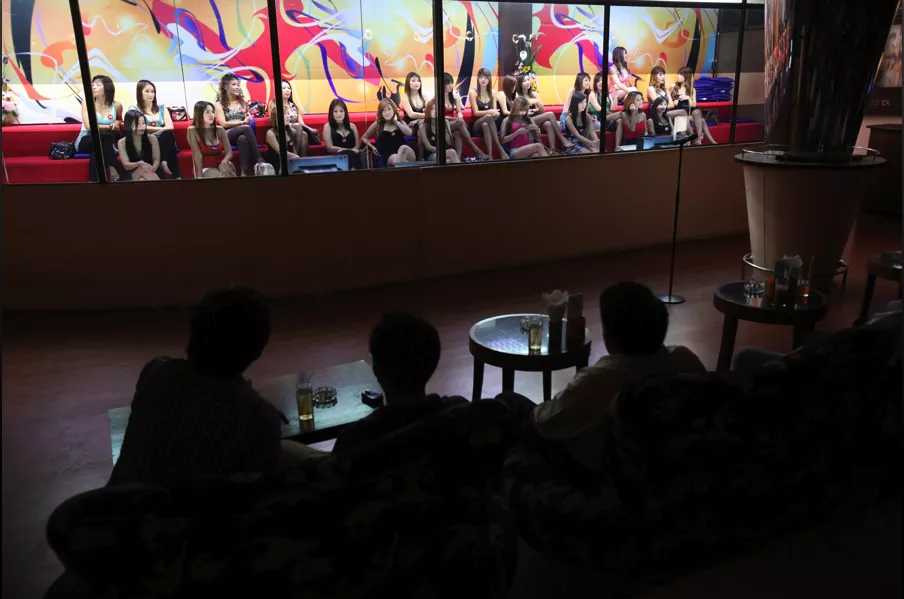
Like so many other art movements, cinéma vérité arose from changes in the tools and techniques used in the construction of art. Just as the great masterworks of Renaissance painting could not have been made until someone figured out how to suspend pigments in linseed oil, cinéma vérité could not have existed until cameras became lighter in weight.
We have World War II to thank (indirectly) for this advance: The cameras used by cinéma vérité filmmakers were descendants of those used on the battlefield. Many of these cameras sported newly developed zoom lenses, which allowed filmmakers to take images from a variety of distances without any cumbersome, time-consuming lens-swapping.
Tags: film , movie , what i'm watching , whores' glory , documentary , cinéma vérité , michael glawogger , handheld camera , Image , Web Only
Saturday, August 9, 2014
I am baffled when I hear people complain about the lack of films available on Netflix's streaming service. It's a digitized treasure trove of cinema history, people. It may be that the interface of the Netflix app — which, on the PS3 at least, is highly crappy — does not really encourage digging very deeply. But this is another matter altogether (and one that, honestly, I wish Netflix would address); Netflix's digital library is a vast and wondrous thing. All the more so because, as I understand it, the streaming rights for their films and shows are negotiated on a title-by-title basis. You can be fairly confident that much of your monthly subscription fee funds the health care plans of the company's legion of copyright attorneys.
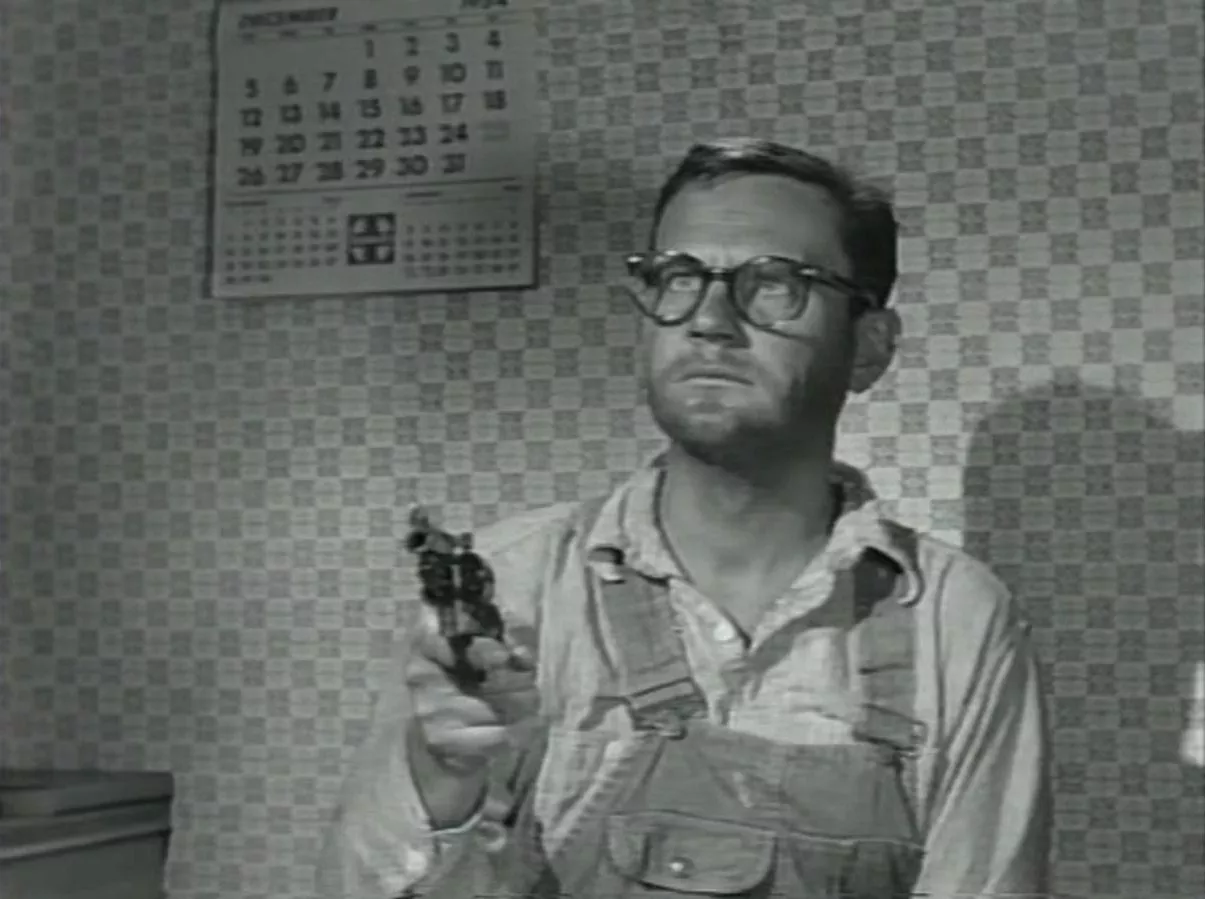
If, like me, you're fond of old, obscure Hollywood films, you could do a lot worse than trolling through Netflix's catalog. I could watch run-of-the-mill Tim Holt westerns and Virginia Mayo potboilers all day long. A few days ago, as part of my effort to clear out my overloaded queue, I finally got around to watching The Killer Is Loose, 1956 policier directed by one of the all-time greats, Budd Boetticher.
Tags: film , movies , what i'm watching , the killer is loose , budd boetticher , joseph cotten , wendell corey , staging , misdirection , Image , Web Only
Friday, August 8, 2014
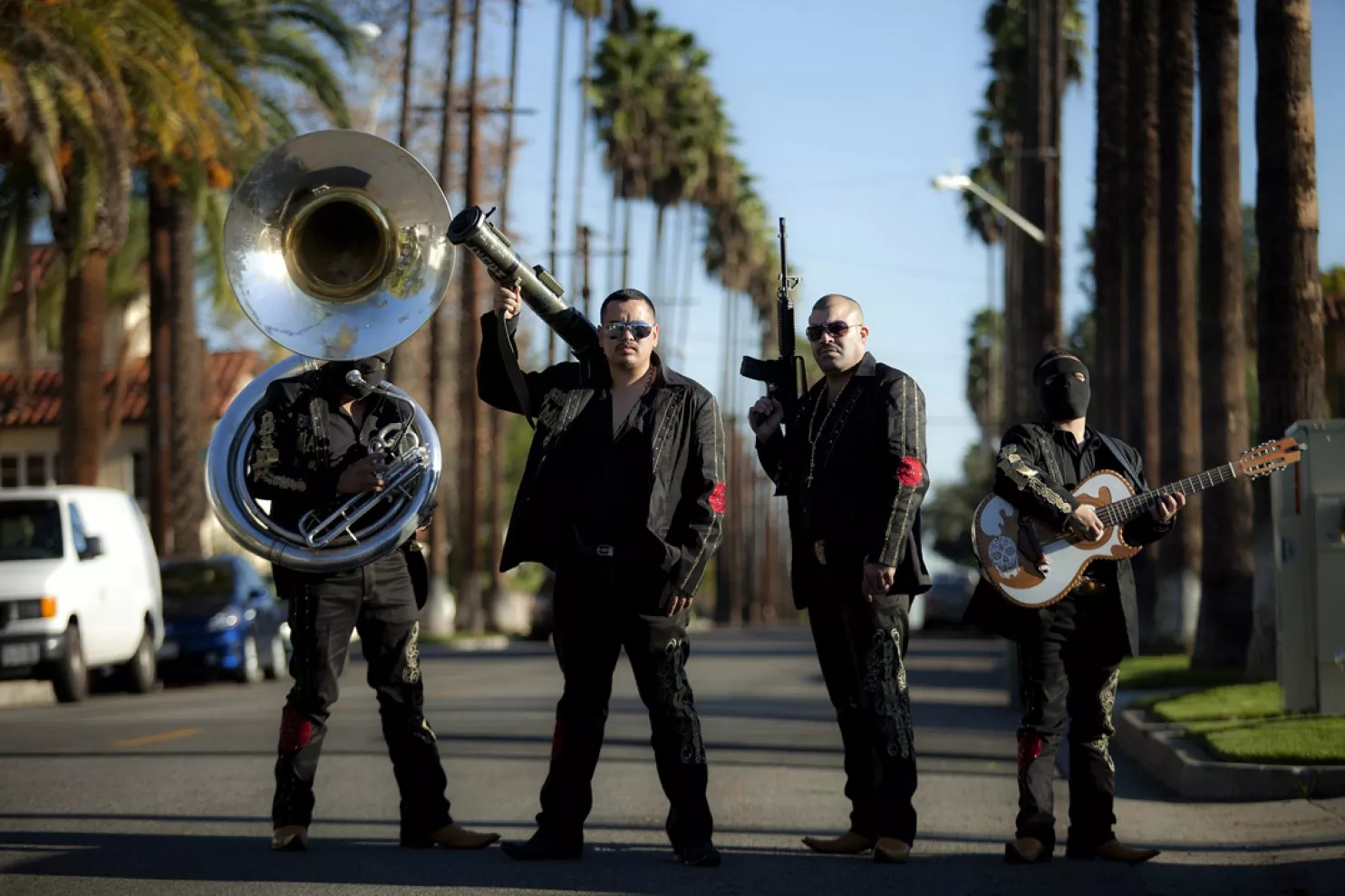
This week in movies you missed: At a time when drug wars and their casualties are making headlines, this 2013 documentary by Shaul Schwarz offers a harrowingly intimate look inside Mexico's Ciudad Juárez, the city that was, until recently, the murder capital of the world.
Since the film was shot, the inter-cartel violence may have moved elsewhere, but its causes haven't receded.
What You Missed
In 2010, photojournalist Schwarz was covering "narco culture" for a National Geographic story. One day he went straight from the site of two murders in Tijuana to a Californian club where a popular narcocorrido band was celebrating the culture of drug violence. "He was still covered in blood," writes Coburn Dukeheart in this Nat Geo story:
The bizarre collision of witnessing actual violence, paired with people celebrating killing in the music of the narcocorridos, totally jarred him. It was at that moment he decided to make the film.
Schwarz spent three years with sources in Juárez and Los Angeles, gaining their trust and getting footage with a crew of just two (himself and a soundman/interpreter).
Tags: narco cultura , shaul schwarz , Movies you missed , Image , Video , Web Only
Saturday, August 2, 2014
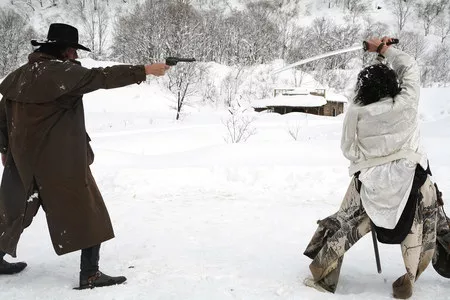
Miike is all over the map — not just in terms of quality but in his devil-may-care stylistic attitude. Dude will use any and every technique to make his films visually arresting.
Sukiyaki Western Django is an embodiment of Miike's inconsistency. It may be the one film of his that best encapsulates all that is good, bad and ugly about his style. A lurid, blood-splattered hodge-podge of a movie, Sukiyaki Western Django (hereafter SWD) is a veritable catalog of genres, emotions, narrational tones ... and everything else.
Tags: film , movie , what I'm watching , sukiyaki western django , western , takashi miike , miike , genre , yojimbo , japanese film , spaghetti western , Image , Web Only
Friday, August 1, 2014

This week in movies you missed: a movie that decisively answers the questions: Why has no one ever made a Christopher Guest-style mockumentary about aspiring novelists? With the number of self-published books mounting every year, isn't this a phenomenon ripe for satire? Aren't amateur writing groups at least as easy to mine for comedy as dog shows, folkies and community theater?
Judging by Authors Anonymous, nope.
What You Missed
An invisible documentary crew introduces us to six unpublished LA writers who meet regularly to share their work. They include:
- a breathy yoga-teacher-turned-romance-novelist (Teri Polo) who calls her Slavic-themed erotic opus Nyet Not Yet
- her hubby and bankroller (Dylan Walsh), an optometrist who likes to dictate "ideas for a screenplay/novel/character" to his digital recorder but never seems to write anything
- a crusty, flag-waving gun enthusiast (Dennis Farina) who fancies himself the next Tom Clancy but resorts to a company called U R the Publisher to put out his thriller
- a young man (Jonathan Bennett) who idolizes Charles Bukowski and constantly asks to borrow money, explaining that his working-class authenticity depends on insolvency
- a pizza-delivery-man-cum-carpet-cleaner (Chris Klein) who hopes to be the next Fitzgerald
- a Sweet Young Thing (Kaley Cuoco) who is writing a novel but doesn't appear ever to have read one
Tags: authors anonymous , ellie kanner , kaley cuoco , dylan walsh , Movies you missed , Image , Video , Web Only
Tuesday, July 29, 2014

Jesse Kreitzer's great-grandfather, Thomas Clarence Chapman (known to many as "TC"), was a coal miner in a place that's not exactly known for having much coal: Iowa. Though its land no longer yields much of the stuff, Iowa had, until the middle of the 20th century, a fairly robust coal-mining industry. That filial connection to a bygone industry was Kreitzer's inspiration for his current film project, Black Canaries, an unusual version of which will play on two Vermont screens this week.
Black Canaries is a fiction film inspired by Kreitzer's interests in his own family history and in, as he puts it, "rural storytelling." "I choose these stories because I have my own longing to reconnect," he says by phone from the Woods Hole Film Festival on Martha's Vineyard, where his 2013 short Lomax was the opening-night film. "I've been living in cities for 10 years, and have every interest in getting back to Vermont ... I have a longing to get back to nature."
Kreitzer was raised in Marlboro, and says he's been making short movies since he was in third grade. He credits both his elementary school and Brattleboro's Center for Digital Art, which he attended for two years, with inspiring him to tell stories visually. "It's rare that a high-schooler will get exposure to the works of [Russian master filmmaker Andrei] Tarkovsky, for example. There were some really advanced teachings that I was exposed to in my high-school years," he says.
Tags: film , movies , coal , coal miners , black canaries , 35mm , super 35mm , animatic , latchis , savoy , marlboro , brattleboro , montpelier , Image , Video , Web Only
Saturday, July 26, 2014
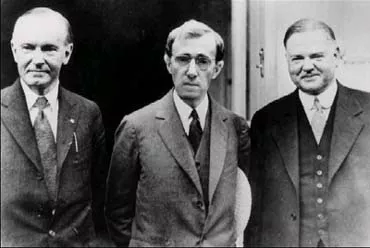
Though I grew up on Woody Allen's films, I gave up on them about 10 years ago, around the time of Match Point (2005). Though that film garnered a lot of critical praise, I found it stupefyingly dull and barely competent. Match Point apparently represented a kind of late-career renaissance for Allen, as he has used it as a generalized stylistic and narrative template for the nine films he's directed since — none of which I've cared to see.
They just don't interest me anymore, and neither did any of the eight or so Allen films that preceded Match Point. (The Curse of the Jade Scorpion was maybe the nadir.) Sometimes you just have to cut your losses. Je ne regrette rien.
I hate to be one of those guys who says of Allen, "I only really like his earlier, funny stuff" ... but that pretty well sums it up for me. His run of 1970s comedies — including What's Up, Tiger Lily?; Take the Money and Run; Bananas (which I "quoted" in my own undergraduate thesis film); Everything You Always Wanted to Know About Sex; Sleeper; the uproarious Love and Death — are still my favorites.
I also admire his 1980s and '90s "serious comedies" including Stardust Memories, Hannah and Her Sisters and, best of all, two films that are stylistically and thematically linked: Husbands and Wives and Crimes and Misdemeanors. These last two are incredibly incisive, brilliantly made films, and they rank among Allen's best.
But for me his very best film is 1983's Zelig, the mock-documentary about Leonard Zelig, a chameleon-like man who had no identity of his own. Zelig is not only incredibly funny, but a milestone in the mock-doc form. Not because it's believable enough to make viewers think it's an authentic documentary (the movie makes no attempt to hide that it's Allen himself playing Leonard Zelig in its "stock footage"), but because of its absolutely seamless integration of archival footage and newly shot film.
Tags: film , movie , what i'm watching , woody allen , men of crisis , zelig , mock documentary , PBS , youtube , Image , Video , Web Only
Friday, July 25, 2014

The new Maniac bears the distinction of having been banned in New Zealand, sort-of hobbit homeland, for its depiction of brutal killings from the killer's point of view.
What You Missed

Frank (Wood) is an Angeleno who earns his living restoring vintage mannequins. It sounds like the sort of occupation that would earn him a lot of hipster points in LA, combined with his generally emo demeanor and soulful blue eyes, but here's the thing: Frank isn't good at dating. He's better at stalking women on the street, ambushing them, murdering them, scalping them and decorating his beloved mannequins with the trophies.
The back room of his mannequin shop is a house of horrors where he sits amid his hideous creations (who appear as real women through his eyes), exhorting them not to be jealous, since he loves them all the same. Oh, and he talks to himself and his absent mommy a fair bit.
Anna (Nora Arnezeder), a young French photographer, stumbles on Frank's retro shop and thinks it's the coolest thing ever. She wants to feature his mannequins in her gallery show and make some sort of statement about objectification. Frank really likes her, but can he keep his madness at bay? I think you already know the answer.
Tags: maniac , elijah wood , franck khalfoun , Movies you missed , Image , Video , Web Only

Diversity Rocks, a multicultural youth group based in Burlington, recently picked up two awards for its video "I Am the World." The awards — a first-place prize in the "Media Outreach" category and a third-place prize for the "Audience" category — were granted on July 17 by the Maryland-based Excellence in Community Communications and Outreach (ECCO) program, a project of the federal government's Substance Abuse and Mental Health Services Administration.
The three-minute video, viewable below, features young Vermonters from a variety of racial and ethnic backgrounds celebrating the attributes that both unite and differentiate them. The video is sincere and moving; it also unexpectedly and delightfully recalls Bob Dylan's legendary proto-music video for his song "Subterranean Homesick Blues" — you know, the one where he displays all those placards to the camera.
Tags: diversity rocks , video , diversity , burlington , jeetan khadka , jean luc dushime , Image , Video , Web Only
Saturday, July 19, 2014
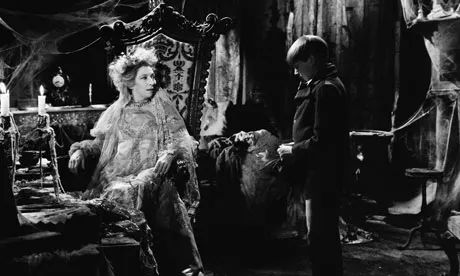
A free film series is a great thing, so I don't know why I rarely get out to the Tuesday-night showings at Burlington's Main Street Landing. Last week, though, I drove downtown to watch David Lean's 1946 version of Great Expectations, a film I'd never seen before.
(All cinephiles have the "I Ought to Have Seen This By Now" list; Great Expectations had been on mine. Though these lists needn't be sources of shame, in the age of streaming video it's harder to justify certain oversights. For instance, I've not yet seen some work by Robert Altman, one of my favorite filmmakers. What's on your "Shoulda Seen It" list?)
I recall my grad-school friend Mike once saying, after we'd watched some particularly grim drama of the "Kitchen Sink" school of filmmaking, that he was pretty well done with British films. And I knew what he meant: Many British films seem a little colorless and boring — though perhaps only to jaded American eyes.
But those descriptors don't fit Great Expectations at all. I have not read Charles Dickens' novel, so I can't assess the accuracy of the claim that Lean does the best possible job of condensing the long, complex narrative into a two-hour film. But the film's story is engaging and lively enough to keep anyone riveted.
More interesting to me is that Great Expectations is visually impressive. I don't put much stock in the Academy Awards, but it seems like this film's Oscars for art direction (black and white) and cinematography (black and white) were well deserved.
Tags: film , movies , what i'm watching , great expectations. david lean , national cinema , british cinema , continuity editing , Image , Web Only