

Saturday, September 13, 2014
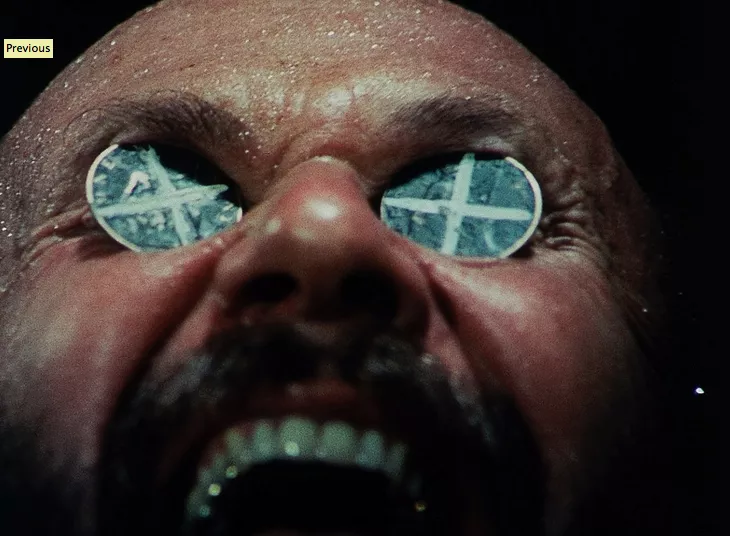
One of the most exciting cinematic rediscoveries of the last few years is now available to anyone with a Netflix streaming account, thanks to the splintered nature of modern film distribution. I'm referring to the unearthing of Ted Kotcheff's 1971 film Wake in Fright, an Australian-American coproduction that is surely among the bleakest films I've ever seen. And I've seen Salò, Grave of the Fireflies and Nil by Mouth.
The story of Wake in Fright is very simple. At the end of the school year, John Grant, a teacher at a one-room schoolhouse in the Australian outback, leaves the remote town in which he's stationed and does his best to get back to Sydney. He gets waylaid, though, in the even more remote (and fictional) town of Bundanyabba, where he soon falls into alcohol- and violence-fueled dissolution. He loses all sense of propriety, all his morals and all hope of ever getting home.
I won't reveal the ending (though it's more than 40 years old, this still somewhat obscure film has been reintroduced into circulation only within the last two years). But suffice it to say that even Grant's last-ditch attempt to escape his own personal hell is unsuccessful.
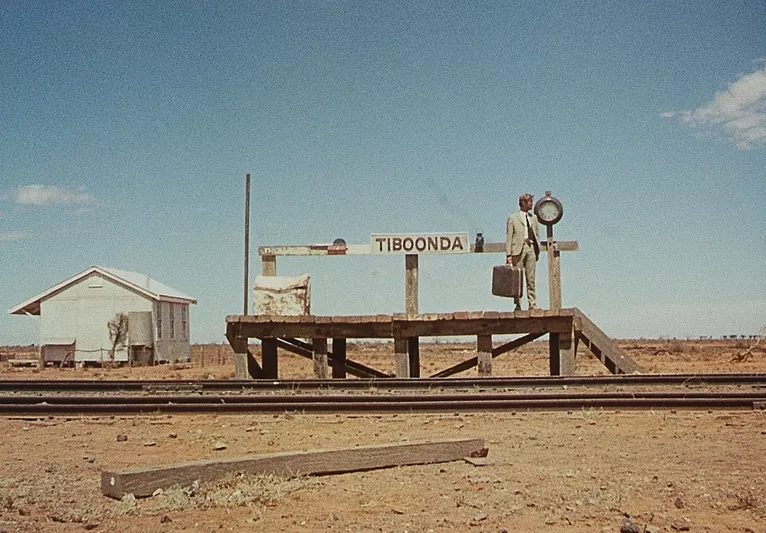
The story of Wake in Fright's rediscovery and rerelease is far more complex. Made with a small budget for United Artists, the film was released (in some locations under the title Outback) to generally favorable reviews. Even some critics prone to moralizing viewed the film positively, despite its harrowing depictions of violence and vicious alcoholism. Wake in Fright achieved little success in the U.S., UK and Australia, but it was greeted more warmly in France. It vanished quickly from most theaters.
Tags: film , movies , what i'm watching , wake in fright , australia , outback , restoration , kangaroo , alcohol , cult film , bundanyabba , ted kotcheff , netflix , Image , Video , Web Only
Friday, September 12, 2014

This week in movies you missed: Two young graffiti artists scheme to pull off the score of a lifetime: "bombing" the New York Mets' Home Run Apple at Citi Field.
Local note: The film's editor, Morgan Faust, is or was a part-time Brattleboro resident. I wrote about her own Vermont-shot film project here.
What You Missed
Sophia (Tashiana Washington) and Malcolm (Ty Hickson) work well together. She's tough and surly, he's gangly and wistful — and they're both good at lifting spray cans from stores and leaving their mark on city buildings.
Fed up with the Mets fans who keep defacing their art, the platonic pair plot the ultimate revenge: defacing the Mets Apple. Footage from a vintage cable-access show informs the viewer that this seemingly undoable stunt has been the holy grail of NYC graffiti artists for the past 20 years, putting the fictional characters in a real context.
Tags: gimme the loot , adam leon , tashiana washington , ty hickson , Movies you missed , Image , Web Only
Monday, September 8, 2014
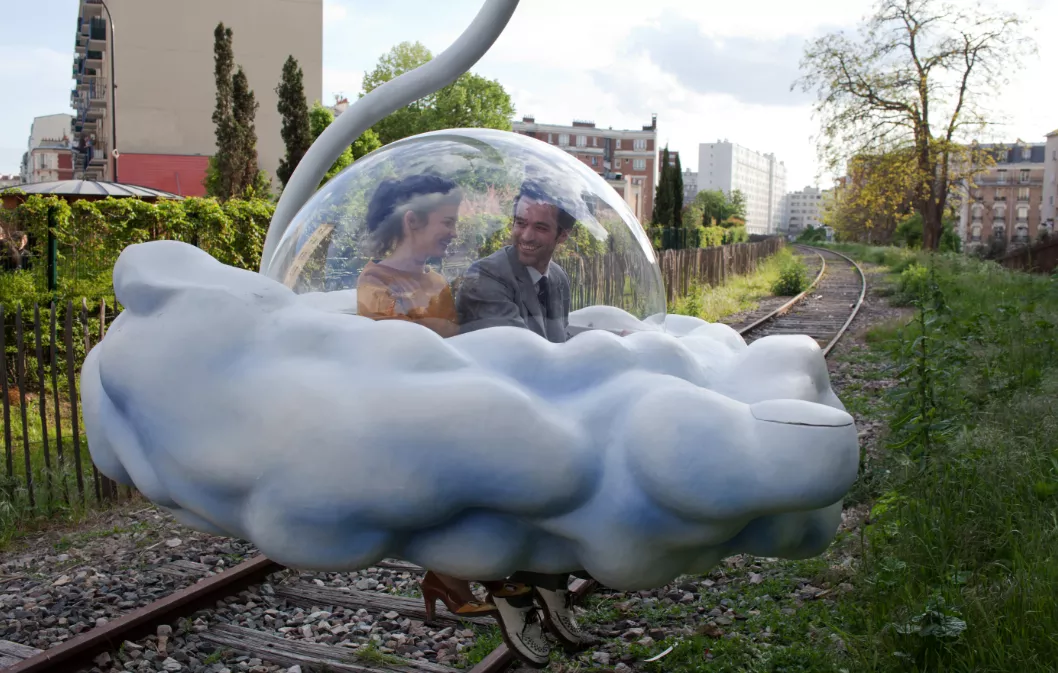
With a free program of film and live music this Thursday, Burlington City Arts reminds us that summer ain't over yet. Or should we say, l'été n'est pas encore fini?
An evening for Francophiles and art lovers of all kinds, the event in Burlington's City Hall Park features music by renowned Franco American performer Michèle Choinière, and the screening of several short films as well as acclaimed director Michel Gondry's recent feature, Mood Indigo.
Choinière, who grew up in northern Vermont, has released several albums of folk music and has been recognized as a "master artist" — she received a Governor's Heritage Award in 2007.
Tags: music , film , movies , bca , burlington city arts , michel gondry , michèle choinére , mood indigo , french , Image , Web Only
Saturday, September 6, 2014
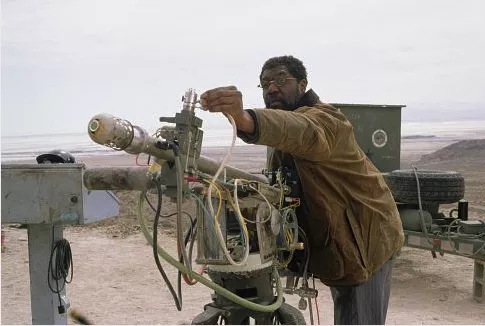
Very little about The Core is not profoundly silly. Its premise, after all, is that a proverbial ragtag crew of mismatched oddballs can "restart" the flow of the molten metal at the center of the Earth. That molten metal has stopped moving, you see, quite possibly as a result of nefarious, government-funded experiments by one of the crew, the egotistical scientist Dr. Conrad Zimsky.
Under the guidance of another crackpot scientist who just happens to have figured out how to blast through solid rock with a beam of light, government forces construct, in just a couple of months, a subway-like vehicle that can withstand the intense heat and pressure at the Earth's core. This is because the vehicle is shielded by "unobtainium," a recently synthesized material that conveniently becomes stronger as the temperature to which it is subjected climbs.
Tags: film , movie , what i'm watching , the core , science fiction , disaster , science , realism , Image , Web Only
Friday, September 5, 2014

This week in movies you missed: "That movie where a guy just talks on the phone in his car for 85 minutes."
Or: How interesting can an ultra-minimalist conceit be? Can you keep an audience absorbed in a film with one character and one set? Writer-director Steven Knight (Eastern Promises) decided to find out.
What You Missed
Somewhere in the UK, night. Ivan Locke (Tom Hardy) leaves a large industrial plant and gets in his Beemer. As he speeds toward London, he makes a series of calls: to his wife and kids, his boss, his subordinate, and a frightened woman waiting for him in a hospital at his destination.
Locke is a construction foreman, and tomorrow his company will undertake Europe's largest-ever concrete pour for a new skyscraper. He's supposed to be there to oversee the complicated process; he won't be. His boss (voice of Ben Daniels) is apoplectic, his subordinate (Andrew Scott) terrified. He's never shirked a responsibility before.
Locke's wife (Ruth Wilson) is both angry and terrified — for a different reason. His kids, who expected him to be home for the game tonight, are just confused. But Locke is dead set on making it to his destination. It's the only way he can prove to himself he is the man he's always wanted to be.
Tags: locke , tom hardy , steven knight , Movies you missed , Image , Video , Web Only
Saturday, August 30, 2014
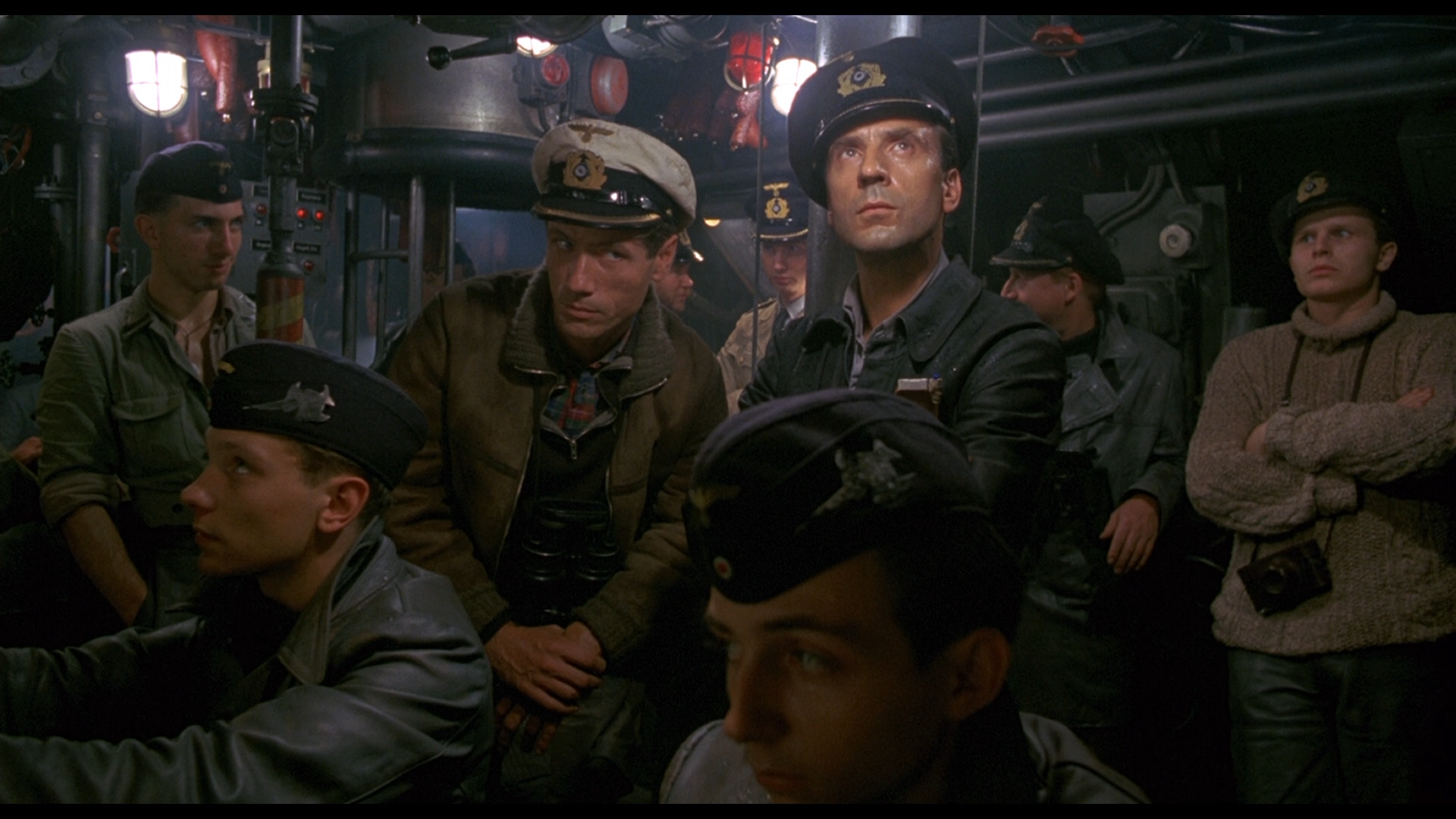
I recently rewatched another film that benefits from the same kinds of limits that Die Hard uses. Wolfgang Petersen's 1981 film Das Boot (The Boat) is set chiefly in a physical space far smaller than that of the many-storied Nakatomi Plaza: a submarine. I'm not saying anything new in remarking that the intensely claustrophobic atmosphere of this film is its most noteworthy attribute. But I was pleased at how intense the 30-year-old film remains 10 years after I saw it.
Not long ago, I happened to take a tour of a World War II-era submarine in Groton, Conn., that had been turned into a museum exhibit. After proceeding down the central hallway, I naïvely asked my stepfather, "OK, where's the door to the other hallway? I want to see the other side, too." Nope, he informed me: This was it. One underwater tube, one hallway, and unavoidable, intense claustrophobia. These are seriously confined vessels.
Tags: film , movies , what i'm watching , das boot , submarine , contrast , limitations , wolfgang petersen , die hard , nakatomi , cinematography , Image , Web Only
Friday, August 29, 2014
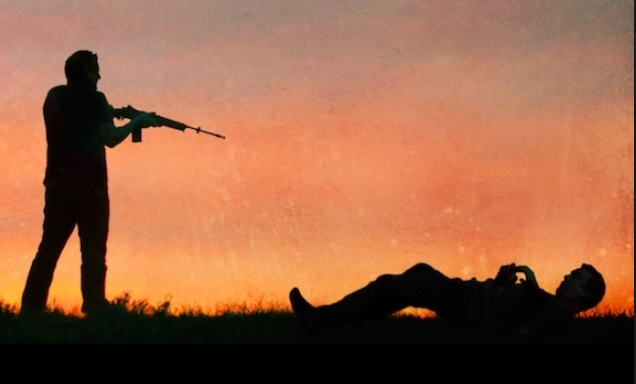
This week in movies you missed: They say revenge is a dish best served cold.
What happens when you warm up revenge in the microwave, accidentally drop it on the floor, scrape it up and serve it anyway?
Possibly something like the plot of this wonderful offbeat thriller from writer-director-DP Jeremy Saulnier, which recalls the early days of the Coen brothers.
What You Missed
Dwight (Macon Blair) lives out of his car, spending his days on the beach and his nights Dumpster diving at the fun fair.
Until a cop contacts him with news: Back home in Virginia, the man who killed Dwight's parents is about to be released from prison.
Dwight gets in his blue ruin of a Pontiac and heads home. He doesn't have a gun or money to buy one; he's not even sure how to use one. But he does have a knife. And a will to see his version of justice done.
Tags: blue ruin , jeremy saulnier , macon blair , Movies you missed , Image , Video , Web Only
Saturday, August 23, 2014
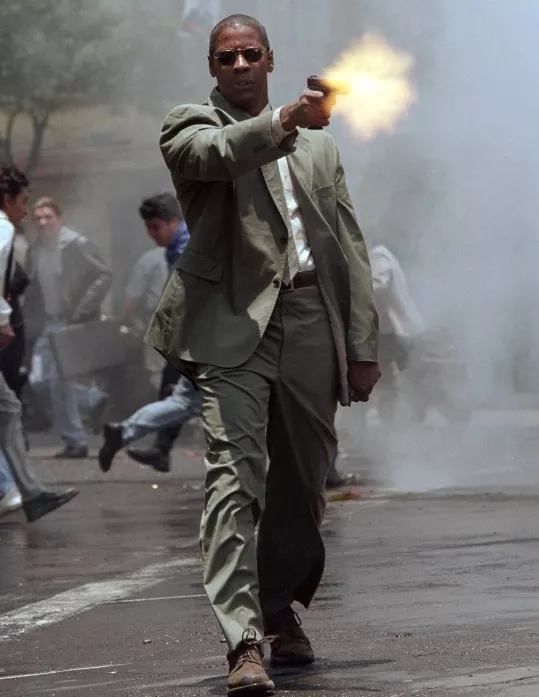
It seems to me that Tony Scott, especially in his final decade, did establish a signature style, and it's one I find appealing.
Something happened to Scott's directorial style between the late '90s and early 2000s. Though he'd been directing flashy, stylish films since the early '80s (The Hunger holds up quite nicely), his work became a little generic in the '90s. I'd never say a bad word about such films as Crimson Tide or True Romance, but I don't find them particularly distinguished, style-wise. Even less impressive are Scott's mid-'90s, run-of-the-mill thrillers such as The Fan and Enemy of the State.
Scott made six films with producer Jerry Bruckheimer: Top Gun (1986), Beverly Hills Cop II (1987), Days of Thunder (1990), Crimson Tide (1995), Enemy of the State (1998) and Déjà Vu (2006). Bruckheimer has a bad rep for privileging flash over substance, but I think his films and aesthetic are somewhat misunderstood. I don't blame him for these generally so-so films. It's just that, for whatever reason, Scott seems to have really come into his own shortly after his first five films with that influential producer.
Tags: movie , film , what I'm watching , man on fire , tony scott , visual style , visual overload , film style , denzel washington , Image , Video , Web Only
Friday, August 22, 2014

This week in movies you missed: These days it sometimes seems like every new movie release that isn't adapted from a comic book is adapted from a young adult novel. Last week it was The Giver, from Lois Lowry's classroom standard. This week it's If I Stay.
For this trend we can thank the success of Twilight, The Hunger Games and The Fault in Our Stars. But not every YA novel makes for a hit movie.
Case in point: Meg Rosoff's How I Live Now, a seeming response to 9/11 in the form of a coming-of-age story, won solid sales and prizes when it was published in 2004. Briefly released last fall, the movie version sank without a trace.
What happened?
Tags: Movies you missed , how i live now , meg rosoff , saoirse ronan , kevin macdonald , Image , Video , Web Only
Tuesday, August 19, 2014
In April of 2011, venerable independent video store Waterfront Video announced that it would close its Middlebury location. Though the locally owned shop held out longer than did most mom-and-pop video stores, the rising tide of streaming video posed too serious an economic threat. About two years later, Waterfront closed its Burlington location, as well.
When, say, an insurance company closes, it might try to recoup a little money by selling off its desk chairs, file cabinets and binder clips. But when a video store closes, its owners are faced with the issue of what to do with the stock that defined it as a business: movies.
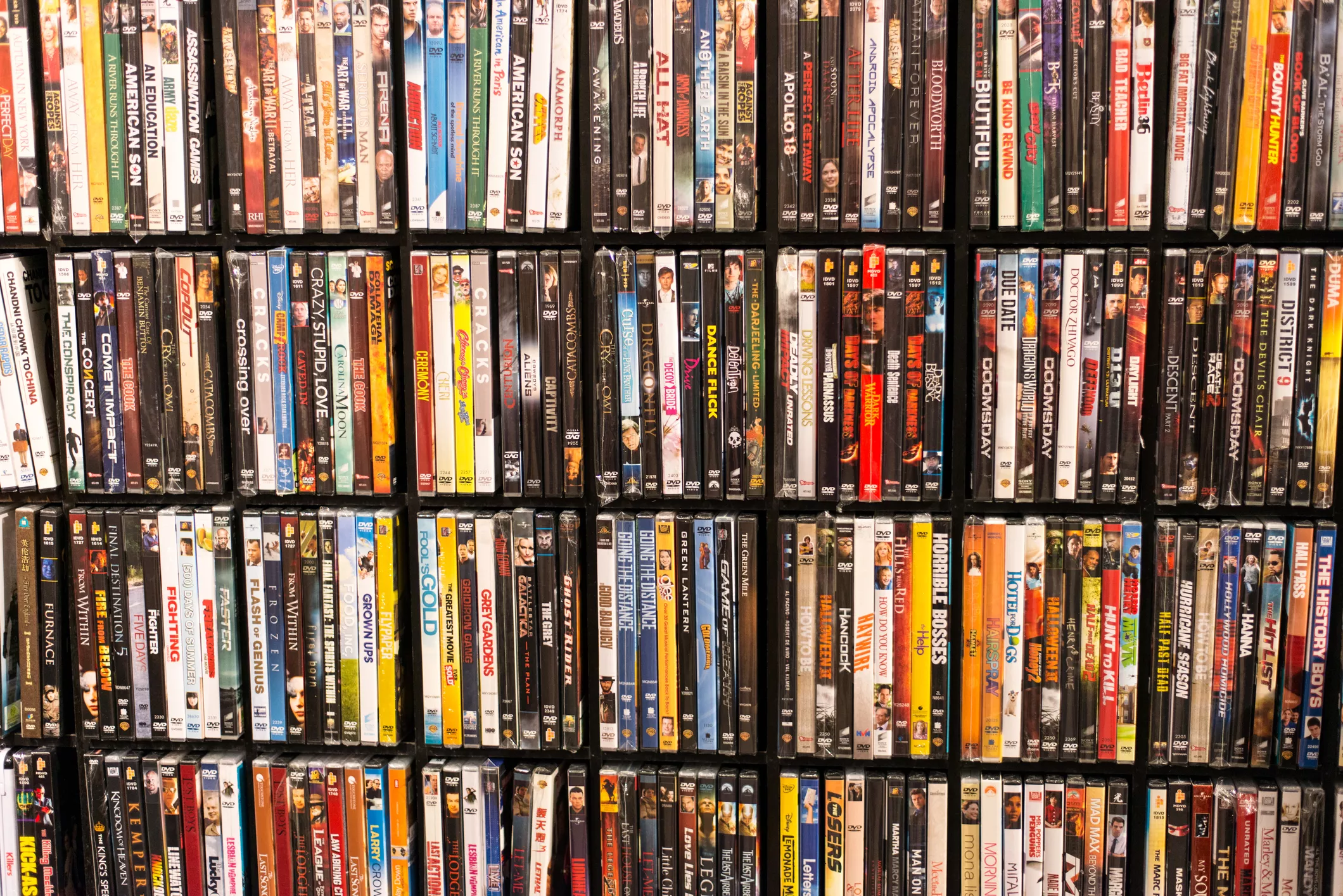
Waterfront was fortunate in that it found a buyer for its videos and DVDs. But the current owner of that collection now finds herself, in turn, stuck with 12,000 DVDs that she's been unable to unload. Which is why it is selling off, for $5 apiece, all the former Waterfront DVDs at two upcoming weekend sales.
Tags: dvds , waterfront video , HOPE center , middlebury , video , Image , Web Only