

Wednesday, February 26, 2014

Blackfish, directed by Gabriela Cowperthwaite, documents the consequences of keeping orcas (“killer whales”) in captivity at such venues as the SeaWorld theme parks. Highly controversial upon its release last year, Blackfish caused ripples in environmental and animal-rights communities.
In being denied an Oscar nomination for Best Documentary, Blackfish continues to stir up controversy — precisely the reason for its being fêted at Revolution’s event. A press release refers to the Whale Warriors being “incredulous” about the film’s exclusion from the list of nominees, and speculates that unbecoming financial transactions are part of the reason.
Why celebrate this film (and its message) in Vermont, of all places? As Kim Souza, owner of Revolution, put it in an email, “Vermont may be landlocked, but we all still need a healthy ocean.”
Revolution’s Oscar party will take place both in the store and at the Hotel Coolidge in White River Junction, beginning at 7 p.m. on Sunday, March 2.
Tags: blackfish , revolution , white river junction , oscars , whale wars , orca , orcas , Image , Video , Web Only
Tuesday, February 25, 2014
One of the most thought-provoking films I’ve seen in a while is one that I’d been meaning to get to for years: Sick: The Life and Death of Bob Flanagan, Supermasochist (1997), directed by Kirby Dick. Flanagan was an artist who surpassed all prognoses by living with cystic fibrosis until his mid-forties. His manner of dealing with the agony of this horrific disease was, as the film shows in often-uncomfortable detail, to immerse himself in pain — largely self-inflicted, but quite a lot of it at the hands of his partner, Sheree Rose, who assumed the “S” role in their S&M relationship.
It’s hard for me to imagine ways in which pain is pleasurable. For me, pain, you know, hurts, and I pretty actively dislike and avoid it. Flanagan felt differently.
Tags: sick , bob flanagan , kirby dick , what i'm watching , film , movies , documentary , cystic fibrosis , Video , Web Only
Friday, February 21, 2014
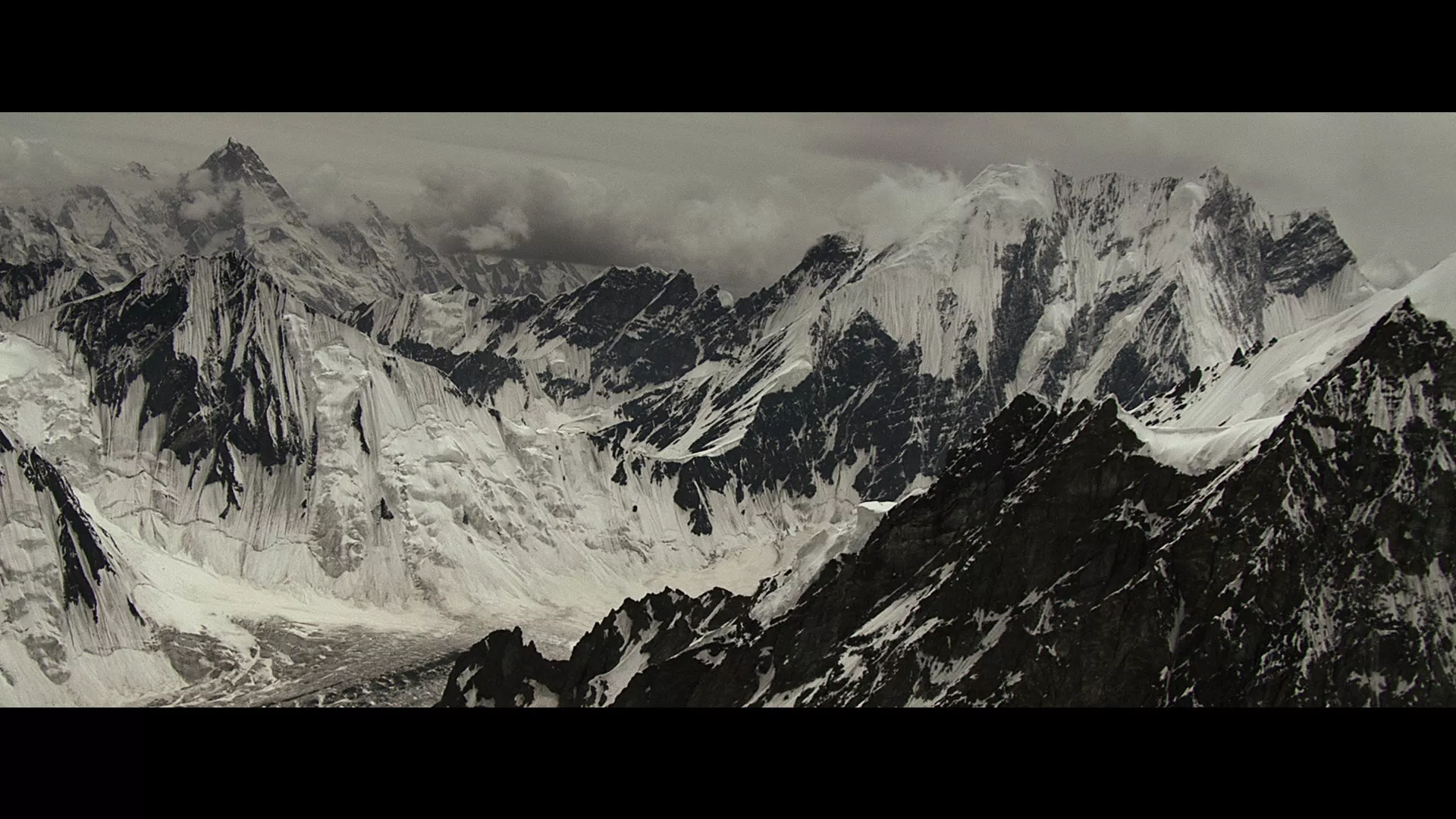
This week in movies you missed: We learn why climbing K2 is probably not a great idea.
What You Missed
In early August 2008, 11 climbers died on K2 — the world's second-highest mountain — in 48 hours. News of one of the world's worst mountaineering disasters quickly traveled around the globe, prompting a lot of tut-tutting about inexperienced climbers with "summit fever." But what really happened up there?
Director Nick Ryan interviewed the surviving climbers (those who agreed to talk) and pieced together a narrative. In this documentary, honored last year at Sundance, he tells the story through interviews, reenactments with actors and footage shot by the climbers on the mountain.
We learn that crowding was one major reason for the fatalities. Several groups had reached Camp IV simultaneously, and all hoped to summit K2 on August 1. When a Serbian climber fell to his death in the "bottleneck" — a single-file passage beneath a looming serac — progress slowed even more. Many climbers reached the summit at or after sunset, leaving them to descend in darkness.
And descending, as any aficionado of climbing tales knows, is the most dangerous part. They don't call the portion of the mountain above 7,500 meters the "death zone" for nothing. Add oxygen deficiency to a random mishap like a snapped rope, and you're in trouble.
Tags: summit , mountaineering , climbing , film , nick ryan , vermont international film festival , Movies you missed , Image , Video , Web Only

At last evening's Burlington Film Society screening of The Punk Singer at Main Street Landing, the society's organizers made an announcement that may have long-term ramifications for film culture in Burlington, and in Vermont as a whole.
Effective immediately, the BFS will operate under the aegis of the Vermont International Film Foundation (VTIFF), yet will retain a degree of independence. VTIFF is the nonprofit parent organization of the Vermont film festival that plays every autumn at various venues around Burlington.
According to a press release issued this morning, BFS will benefit in the merger from access to VTIFF's promotional skills and larger budget. VTIFF, in turn, gains connections with BFS' devoted audience members, and takes a significant step toward its professed goal of presenting films year-round.
As a sign of this new union, the BFS website can now be found nestled within that of VTIFF.
Until this point, BFS and VTIFF had shared venues (Main Street Landing), a great many cinephile audience members, and a mission to advocate for and screen films in Vermont. As of today, the two organizations are formally united in these aims.
Tags: burlington film society , vermont international film foundation , vermont international film festival , BFS , VTIFF , movies , film , Image , Web Only
Tuesday, February 18, 2014

One career ago, I was a professor of film studies. I gave that up to move to Vermont and write for Seven Days, but movies will always be my first love. In this feature, published occasionally here on Live Culture, I'll write about the films I'm currently watching, and connect them to film history and art.
I have found some unusual DVDs in random places: garage sales, thrift stores (who gives up a copy of The Way Things Go?), even at a rural Wisconsin truck stop (where, amidst the Chuck Norris DVDs on the discount rack, there nestled a highly improbable copy of A Couch in New York, one of the few quasi-mainstream films by Belgian experimentalist Chantal Akerman). I’m always delighted to find a copy of a film in a location that seems completely unrelated to it.
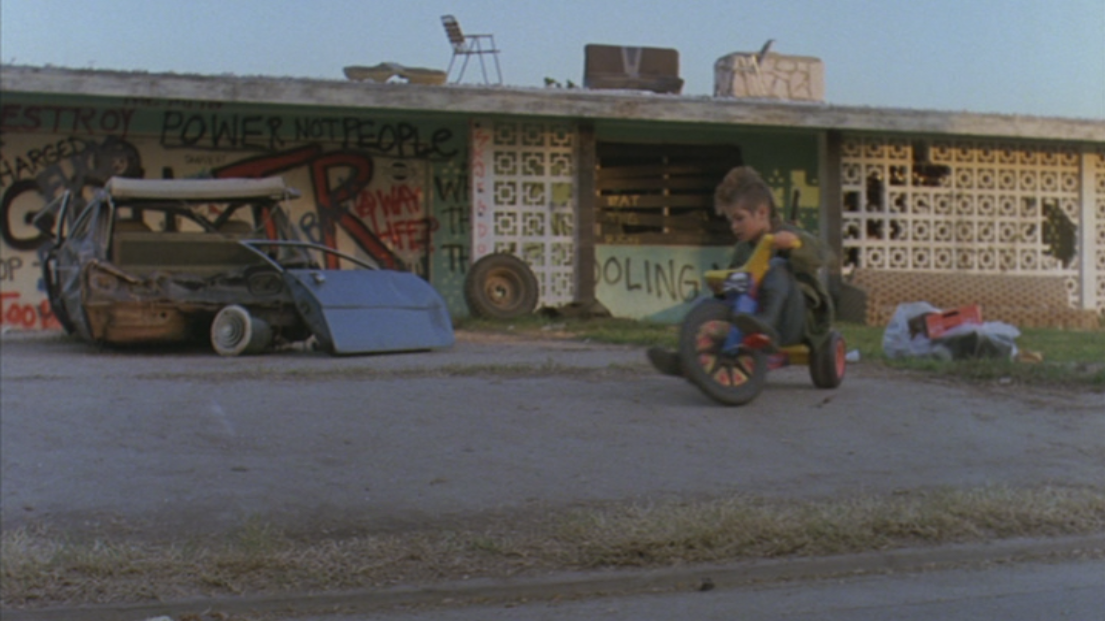
When I found a copy of Penelope Spheeris’ Suburbia at a stoop sale in Brooklyn about a year ago, I snapped it up for a buck or two. This was a less arbitrary discovery than the Akerman in the truck stop, but it wasn’t bad. It’s not like Suburbia or its director are obscure, but the film isn’t discussed much anymoree. And its story is so thoroughly steeped in early-’80s L.A. suburban subcultures that stumbling across it in an East Coast city added somewhat to the improbability of the find.
Suburbia is Spheeris’ first fiction film*; her first feature-length film is the well-regarded and revelatory 1981 documentary The Decline of Western Civilization. Both films are about disaffected punk-rock youths in and around L.A., and it seems correct to regard them as “sister” films. Spheeris was fascinated by punk rock, its fans and its culture, and clearly hadn’t gotten these subjects “out of her system” with The Decline of Western Civilization.
(Indeed, she has returned to that subject twice in her career, making The Decline of Western Civilization Part II: The Metal Years in 1988 and The Decline of Western Civilization Part III [about L.A. “gutter punks”] in 1998.) Perhaps part of Spheeris’ motivation for making Suburbia was to work through some of her “leftover” ideas about punk culture.
Tags: film , what I'm watching , movie , suburbia , penelope spheeris , punk , punk rock , cult film , richard pryor , Image , Video , Web Only
Friday, February 14, 2014

Now there's a question that never occurred to Sandra Bullock's character in Gravity while she was worrying about all that sciencey stuff.
What You Missed
"The universe, so full of wonders," rhapsodizes Jim Sturgess in voiceover as the film opens. "I could spend hours and hours looking up at the sky. So many stars, so many mysteries. And there's one very special star that makes me think of one very special person."
So, yeah. Sturgess' character, Adam, goes on to explain our premise. Two planets somehow exist so close together that you can throw a rope between them, and they have opposite gravity! Gravity that sticks to you. So everybody (and everything) from the world called Up-Top will always be drawn toward it, and same goes for the Down-Below world. If you want to visit the opposite world and walk upright, you'll have to weight yourself down with "inverse matter" from that world, but the inverse matter gets hot and burns if you hold it too long. Got that?!
Oh, and don't take a bathroom break in the other world. Trust me on this.
Tags: Movies you missed , Upside Down , Kirsten Dunst , Flop House , Image , Video , Web Only
Thursday, February 13, 2014
My friend Eric and I went to see David Lynch's Dune at a local movie theater when it first came out in 1984. It was a particularly memorable occasion for two reasons. The first is that Eric and I got into a shouting match with some annoying kids who were sitting behind us and kicking our chairs. (As I recall, we emerged victorious from that confrontation.) The other reason this particular moviegoing experience sticks in my brain is that it was the first and only time that a ticket taker handed me an actual glossary: a two-sided, one-page document to which I would need to refer in order to understand the film.
The glossary, which I wish I still had, defined key terms and concepts that the film itself did not. (I remembered just now that we live in the Internet Age; of course someone else was clever enough to keep a copy of this odd little item. Here's a site that confirms my recollection and gives some context.) Neither Eric nor I had read any of Frank Herbert's Dune novels, so the glossary was probably welcome, though I remember being puzzled by its very existence.
Universal, the studio that released Dune, was justifiably worried that moviegoers would be baffled by its obscure story and lack of explanatory detail. It's indeed hard to make sense of Dune's story — but maybe that doesn't matter so much. I know that Eric and I walked out of that theater in Mamaroneck, N.Y., far more baffled than when we entered it. But, hey, we were 11 years old.
I watched Dune again about a week ago, probably for the first time since its theatrical release. (I'd recently completed a fifth or sixth go-round with Lynch's and Mark Frost's marvelous series "Twin Peaks," and wanted to revisit some of Lynch's earlier work.) I found myself enjoying the film much more than I did 30 years ago, but not necessarily because I found it to make more sense. While printing that glossary smacks of a panicky effort by Universal to curry favor with the viewers it feared alienating, I can understand the studio's reasoning. Dune really doesn't make much sense, period.
Tags: Dune , David Lynch , What I'm Watching , film , movies , Twin Peaks , Hollywood , Web Only
Wednesday, February 12, 2014
This week in movies you missed: We reach the end of this year's Oscar-nominated documentaries. Those are The Act of Killing, The Square, Cutie and the Boxer, 20 Feet From Stardom (which doesn't qualify as an MYM) and now this documentary about covert U.S. counterterrorism efforts from director Richard Rowley and journalist Jeremy Scahill.

What You Missed
Maverick war correspondent Jeremy Scahill (of the Nation) is hanging around Kabul, getting sick of reporting on canned news from the war zone. He heads out to rural Gardez, where a family tells him a harrowing story of the "American Taliban" soldiers who raided a celebration and killed several of them, including pregnant women.
Scahill starts digging into the evidence to find out who's responsible for this mistaken attack on Afghan civilians — and for covering it up. He learns about the Joint Special Operations Command (JSOC), the elite unit that would later become famous for killing Osama bin Laden.
Scahill tries to return to his normal life in Brooklyn, but he just can't let the story go. He ends up traveling from Yemen to Somalia in search of victims of this covert U.S. counterterrorist effort, and meets with a Deep Throat-type informant who suggests that JSOC is actually creating more new terrorists than it eliminates.
All the while, our hero gets more and more scruffy and haggard, his eyes haunted by the specters of bereaved children and grieving parents. His attempts to speak truth to power net him lots of talk-show appearances, but little attention from Congress.
Tags: Movies you missed , Image , Web Only
Monday, February 3, 2014
One career ago, I was a professor of film studies. I gave that up to move to Vermont and write for Seven Days, but movies will always been my first love. In this feature, published occasionally here on Live Culture, I'll write about the films I'm currently watching, and connect them to film history and art.
When the fondly remembered cult film Heathers was released in 1988, I was only a year or two younger than its main characters, who are high school juniors and seniors. My friends and I loved it and talked about it often — especially when cable and dear old VHS gave us the chance to watch it again and again. And even though our own high school afforded us unlimited opportunities to observe the cruelty of the Popular Kids and the thoughtless acts engendered by cliquishness (the film’s chief satirical targets), I can say with certainty that, still, we didn’t fully “get” Heathers.
I watched the film a few nights ago for the first time in at least 15 years. It holds up quite well, I was happy — and somewhat surprised — to see. More on that below.More surprising was how thoroughly the movie’s little nuances had been burned into my brain. This was apparently a film that made an impression on me, as I found myself, even after that long hiatus, able to recite favorite lines of dialogue in perfect sync with the actors. The film is endlessly quotable. Phrases such as “What’s your damage?” (a now-common expression that I think was coined for the film); “I love my dead gay son”; and the too-clever-by-half “Our love is God. Let’s go get a Slushie” really do embody Heathers’ bitterly satirical tone.
The best, though, is still “Dear diary, my teen angst bullshit now has a body count,” which is duly recognized as the film’s most iconic line. Poetry, that.
The script’s cleverness, which I remembered sort of generally, is only part of the reason I was surprised that Heathers still comes off as witty and satirical, 25 years (gulp) after it was made.
Cinema is often regarded as a “director’s medium” rather than a “writer’s medium.” Scripts are of obvious importance to movies, but in both popular and critical discourse, directors are usually credited with creating a film’s look and style. And not all directors write their own films.
Heathers was written by Daniel Waters and directed by Michael Lehmann. It’s tempting to assign most or all of the pleasure we may get from the film to Waters’ acerbic wit and keen ear for genuine-yet-stylized dialogue. And it really is a clever, funny script.
To my surprise, though, I found the film quite well directed, too. The film’s visual style was more sophisticated than I remembered — probably because I didn’t pay much attention to such things when I was in high school.
One of the clearest examples is Lehmann’s use of a simple, bold primary color scheme to identify, distinguish and jokingly liken the three titular Heathers: One gets bluish-green, one gets yellow, and the one who currently sits at the tippy-top of her school’s pecking order is identified with red. Red clothing, red bedroom, even a red croquet ball. Using simple, playroom colors shows how juvenile these girls really are; and, though the colors are different, they are all similarly bold and brassy, indicating an underlying similarity or, more strongly, a mindless sameness. Which is exactly the point.
Three Heathers, three colorsIf the croquet balls are the orbs, the red hairband is the crown. As it gets passed from Heather to Heather (and ultimately to Veronica, Winona Ryder’s character), it shows us which girl is “in charge.” A simple device, and admirable for that reason. A gesture like this is so easy thing to do — and such a clean, graspable way of visually communicating narrative information — that it’s surprising so few directors do it.
To continue with the color scheme, it’s reduced to pretty much black and white in the scenes at the home of J.D. (Christian Slater) and his father. Their house is furnished with stark, colorless, modernistic furniture, which reads to us as “cold” — an apt adjective for the father-and-son relationship.
It’s tempting to align J.D. with, say, black, and his father with white, though that would be too simple. Heathers is much more ironic in tone than that. (We’re cued to the irony right from the start, when an idyllic scene of three charming young ladies — the Heathers — playing croquet is undermined when the girls willfully stomp over the flowers neatly arranged in the garden.)
Though J.D. and his dad plainly can’t stand one another, the film also makes a point of likening them strongly to each other. It accomplishes this at the level of dialogue and performance, having the son deliver “paternal” clichés in an ironic voice, and the father speak as if he were a teenager. An example: J.D. says, sarcastically, as his father enters the house, “Why, son, I didn’t hear you come in.” A few lines later, his father responds in kind with, “Gosh, Pop, I almost forgot to introduce my girlfriend.”
Veronica reacts to this dialogue with revulsion, highlighting its creepiness. And it is creepy: We feel just as uncomfortable as she does. It’s also a smart and simple way to establish the frosty relationship — as well as the essential similarity — between the two.
All of which is simply to say that Heathers’ ironic tone extends beyond its script to the visual realm, in which the black-and-white scheme of this unhappy home also confirms these characters’ status as the outsiders they are. They do not belong in this town, a fact that the story’s ending confirms. In fact, Veronica, when she hears this unpleasant dialog, is granted her first clue that this J.D. character, whose cheeky misanthropy was at first so appealing, is actually more dangerous than are the Heathers.
The Dumptruck DoughnutThe visual pleasures of Heathers are a major reason the film plays so well for me now. And many of the film's elements that had lodged in my brain were, in fact, visual, not just lines of dialog. The lovely overhead shot of Heather No. 1 crashing through her glass coffee table; the Wham!-esque “Big Fun” T-shirts; the cow-tipping scene; and, most iconically for me, the moment when Martha “Dumptruck,” in her little motorized scooter, does a loop around Veronica at the far end of a high school hallway.
Seeing all these images again reminded me what an impression they made on me in high school, even if I didn’t realize it at the time. And I don't think Heathers ever received proper credit for its visual creativity.
Friday, January 31, 2014
This week in movies you missed: We continue with the current Oscar nominees for Best Documentary. When I'm done viewing them, I'll predict the winner.
But I can already award the Most Memorable Title award to Cutie and the Boxer, Zachary Heinzerling's study of the 40-year marriage of two artists. (Trailer is here.)
What You Missed
Eighty-year-old Ushio Shinohara and his wife, Noriko, live in a sprawling living/studio space in Brooklyn. He has been creating ferocious neo-Dadaist art — including canvases that he attacks with paint-covered boxing gloves, hence the nickname — since his angry-young-man days in Japan. She draws wry cartoons about their turbulent relationship and grumbles about being in his shadow.
Together, they worry about making the rent. For all Ushio's '60s celebrity — the Guggenheim is considering acquiring one of his boxing paintings — money is tight.
Tags: Movies you missed , Web Only