

Saturday, June 14, 2014
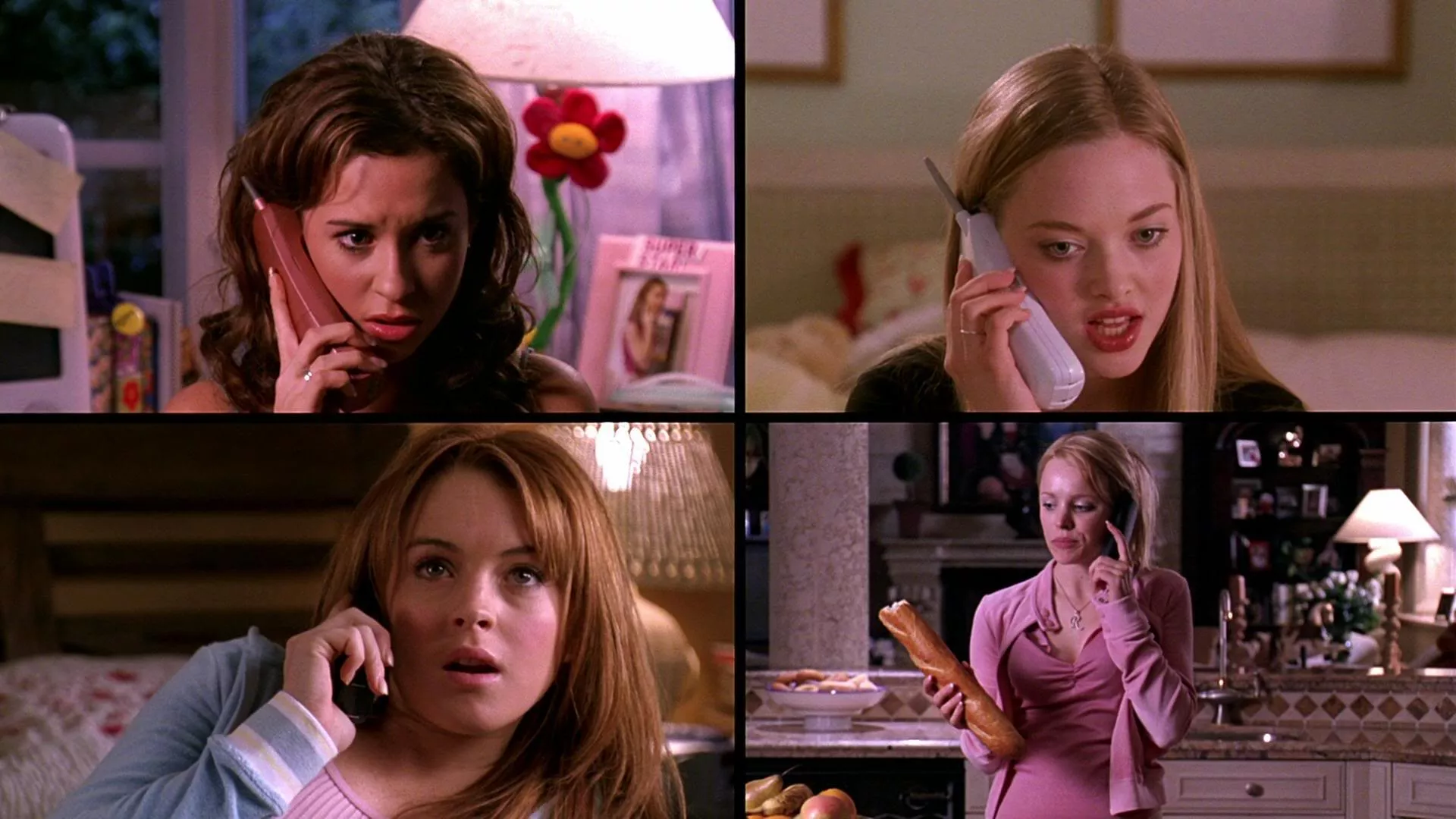
Recently, I unwittingly observed a cinematic milestone by unintentionally watching Mean Girls on the occasion of its 10th anniversary. It was the first time I’d seen it since visiting, expressly for that purpose, a theater in Madison, Wisc., in 2004. I am pretty fond of this film, but nevertheless will try to make it a point not to watch it again until 2024, by which time I’ll surely be able to download it directly to my neural cortex.
Not long after I watched Mean Girls, I watched a short, thought-provoking video online about the state of visual sophistication of current film comedy. That video, created by a fellow named Tony Zhou, falls somewhere between scholarly and fanboyish, and I found it pretty astute. It’s worth your seven minutes.
Edgar Wright - How to Do Visual Comedy from Tony Zhou on Vimeo.
Zhou has a few central points. The first is that mainstream comedy is visually noncreative — an argument that is, regrettably, borne out by far too many films. The 2014 film Neighbors, which I saw a few days ago, is a perfect example. It might have a (precious) few funny scenes, but none of its scenes evince any sort of visual creativity. It’s mostly just medium shots of people talking. Not much to look at.(Back when I taught public speaking — don’t ask; it was horrible — I used to instruct my students to anticipate listeners’ objections to their arguments. It was one of the few useful tidbits from that stupid class. Anyway, I’m going to do that right now: Those of you who have seen Neighbors will surely recall a series of quick flashbacks, one that takes place in the 1960s, one in the 1970s and one in the 1980s. And, while it’s true that these temporally discontinuous scenes each have visual styles that are superficially different from that of the main body of the film, they are each so mired in tired visual clichés as to be equally tedious. The ’70s scene is processed to look like “scratchy film,” and the people in it wear Björn Borg headbands; the ’80s scene looks like it was shot on decaying videotape, and uses an “8-bit”-style font. Let’s just say that hack director Nicholas Stoller is not the most original thinker. So, again: even the visually “different” parts are hackneyed.)
Tags: film , movies , what i'm watching , mean girls , comedy , visual style , lindsay lohan , edgar wright , neighbors , Image , Video , Web Only
Saturday, June 7, 2014

In last week’s “What I’m Watching,” I made an offhand remark about Henry Fonda, whom I’d just watched in Fritz Lang’s great film You Only Live Once, being “in the running for greatest screen actor ever.” I stand by that assessment and would like to expand on it.
It’s not like I’m going out on a limb here in suggesting that Fonda was one of the greatest of all film actors: His talent and intensity are well known and are amply evident in most of the man’s performances. Fonda is one of those actors whose presence in a film justifies viewing it. (My catalog of such actors is fairly small but also includes Lily Tomlin, John Goodman [greatest living actor?], Henry Gibson and Antonio Fargas, among others.)
I did a bit of research on Fonda in grad school, mostly about how his performance style developed and was refined by a handful of directors (such as John Ford and Sergio Leone). It’s difficult to pick out the single best of Fonda’s performances, though some argue for his turn as Frank in Leone’s great masterpiece Once Upon a Time in the West.
Tags: what i'm watching , film , movie , henry fonda , my darling clementine , western , acting , Image , Web Only
Friday, June 6, 2014

This week in movies you missed: This time, for a change, I’m previewing a movie you don’t have to miss. Hank and Asha will play this Friday, June 6, through Thursday, June 12, at Catamount Arts in St. Johnsbury — a great resource for art-house fare up north. More info here.
Full disclosure: I heard about Hank and Asha from my coworker, staff writer Ethan de Seife, who knows the filmmakers. If you look closely, you’ll see him in a restaurant scene!
What You Missed
Asha (Mahira Kakkar) is an Indian studying film in Prague. When she sees a documentary by New York director Hank (Andrew Pastides) at a festival, she has questions — but he doesn’t show up for the Q&A, so Asha sends him a video letter. He responds in kind, and we watch their relationship evolve as they continue to correspond in this format over several months.
The two young artists open up about their work (he’s a PA for a reality show), their families and past relationships, their hopes for the future. When Asha says she longs to see Paris, Hank sends her a ticket — to meet him there. That’s when things get less light-hearted, because Asha hasn’t told him everything about herself.
Tags: hank and asha , james e. duff , mahira kakkar , andrew pastides , Movies you missed , Image , Web Only
Saturday, May 31, 2014
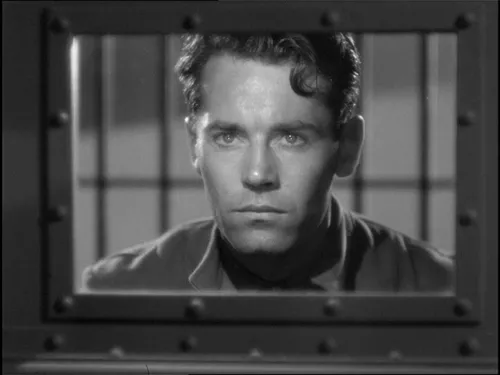
Though its title suggests otherwise, Fritz Lang’s 1937 film You Only Live Once is immortal. Not just the immortality achieved by immeasurably great works of art — a descriptor that suits You Only Live Once — but immortal in the true sense of the word.
Motion pictures, even the old ones, lead pretty interesting lives these days. When this film was made nearly 80 years ago, its studio, United Artists, never envisioned turning a profit on You Only Live Once for any longer than it remained in theaters — perhaps several months. (There was no such thing in the 1930s as a nationwide, “blanket” release, such as the kind unfurled last weekend with the latest X-Men film. Films by the major studios would play for some weeks, maybe months if very successful, in major urban theaters. In subsequent months, they'd make their ways to theaters in smaller cities, suburbs and, lastly, rural areas, by which time the 35mm prints were often pretty beat up.)
Though it was fairly common practice for studios to re-release a profitable film one, two, five or 10 years after its initial release, most works of cinema in those pre-television days effectively expired after their initial theatrical runs. If you missed it when it was in your town, too bad for you.
After their initial wave of “oh-my-God-they’re-going-to-steal-all-our-business” panic, in the early 1950s, most studios realized that their own film vaults represented goldmines in licensing fees. TV stations were hungry for what we now call “content,” and the film studios had tons and tons of it in their archives. This was a golden opportunity for them to profit afresh from it. Stations and studios both won, as did the viewing public, who received more opportunities to see some great films from decades past.
Tags: film , movie , you only live once , fritz lang , henry fonda , netflix , film noir , kinescope , dvd , Image , Web Only
Friday, May 30, 2014

This week in movies you missed: Last December, Uganda’s parliament passed an act that makes “aggravated homosexuality” punishable with life imprisonment. Since then, according to a group called Sexual Minorities Uganda, violence against the gay community has increased tenfold. In April, the Ugandan government raided an AIDS treatment program on the grounds that its real mission was “training youth in homosexuality.”
Being gay has never been easy in Uganda, but where did the recent groundswell of fear and hatred come from? This 2013 documentary from Roger Ross Williams argues that it started with American evangelicals who view this predominantly Christian African nation as the perfect place to put their fundamentalist beliefs in practice.
What You Missed
In Missouri, at the HQ of a Pentecostal mission called the International House of Prayer (yes, IHOP), a group of fresh-faced young people prepare for their upcoming trip to Uganda. They talk about helping orphans and preaching a gospel of love.
Meanwhile, in Uganda, the streets are dotted with signs exhorting citizens to “Stay a Virgin” and pray away the gay. Native missionaries stop cars and hand out leaflets. A popular, well-funded minister preaches against homosexuality, and a member of parliament proposes a law that would make it punishable by death. A tabloid ironically called Rolling Stone prints photos of known or suspected gay people under the words “Hang Them.”
Tags: god loves uganda , call me kuchu , david kato , roger ross williams , Movies you missed , Image , Video , Web Only
Saturday, May 24, 2014
Having grown up in the 1980s, I’ve been watching music videos for pretty much as long as I’ve been watching TV. I even remember when MTV’s programming consisted mainly of a series of what were effectively three- and four-minute avant-garde films. Indeed, many of the first wave of MTV videos (a term I used to distinguish them from their precursors, such as “Soundies”; the music video itself was emphatically NOT invented by MTV) were directed by filmmakers with serious avant-garde cred: No less an artist than Bruce Conner, for instance, directed the terrific video for DEVO’s “Mongoloid.”
Take a look at the terrific mini-documentary, below, on the subject of Conner's creation of that video. The video for that song (which is included in its entirety at the end of the YouTube clip) most assuredly laid the groundwork for "Cirrus," the video that is the subject of this essay.
Part of what was cool about the early days of MTV is that the videos embraced past, present and future all at once.
Tags: what i'm watching , film , movie , video , music video , cirrus , bonobo , cyriak harris , avant garde , devo , rick prelinger , internet archive , Video , Web Only
Friday, May 23, 2014

This week in movies you missed: Call this the Summer of Cheaper Blockbuster Substitutes. Last week I watched Monsters, the cheaper version of Godzilla. This week I check out the under-$10-million version of Gravity. Is a bigger budget always better?
What You Missed
In the near future, a private company sends a spacecraft with six astronauts to Jupiter's moon Europa, which may hide a life-supporting ocean beneath its coating of ice. (This could actually happen, with NASA in charge.)
Six months along on their lonely voyage, the astronauts lose their communication line with Earth. When they try to repair it, disaster ensues. As a result, humanity has been in the dark about the Europa mission's outcome — until now, we're told.
The found-footage film poses as a documentary exposé, presenting footage from the ship (and outside the ship, and the crew's helmets) along with talking-head commentary from the scientists who designed the mission, played by Embeth Davidtz, Isiah Whitlock Jr. and, bizarrely, comedian Dan Fogler. We know early on that one crew member has been killed — but not how, or what happened next, or whether anyone survived.
Tags: Movies you missed , europa report , sebastian cordero , gravity , prometheus , Image , Web Only
Saturday, May 17, 2014
For my 18th birthday, my uncle, to whom I owe much of my love for movies, gave me Danny Peary’s classic 1981 book Cult Movies: The Classics, the Sleepers, the Weird, and the Wonderful. In that book (the first in a series of three), the author writes short essays on 100 films that had, according to him, earned a place in the cult canon.
The book became a bible of sorts for me, an introduction to all kinds of movies that would become important to me: The Girl Can’t Help It; Aguirre, the Wrath of God; I Walked With a Zombie; Shock Corridor; The Tall T; The Warriors; Two-Lane Blacktop and many others. Though the cult canon has changed a lot since 1981, and though Peary has a distinct preference for postwar American films, the book was still a great primer on the many ways in which films could be odd.
So of course I sought out Cult Movies 2. As I had in its predecessor’s table of contents, I put a little black dot next to the title of each film after I’d seen it. Both books are pretty heavily dotted now. It was always a great thrill to be able to mark off another of Peary’s selected films.
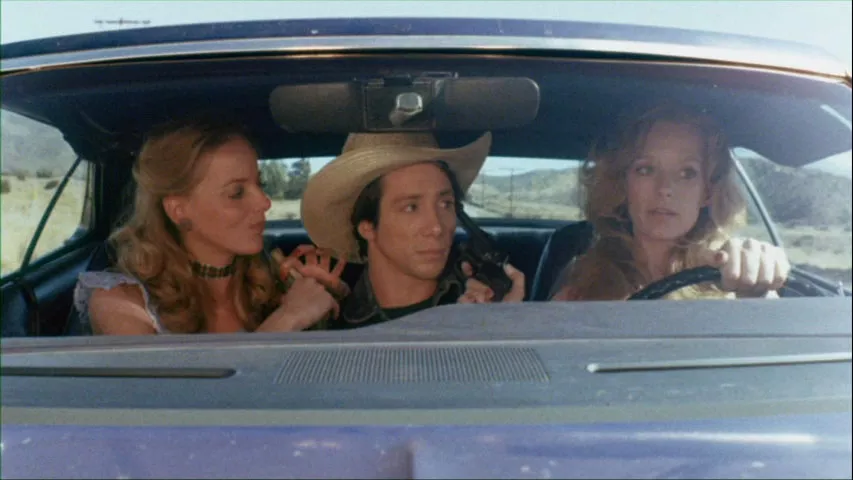
I remember marking off, for example, the 1976 film The Great Texas Dynamite Chase at some point in high school, when cable television was still pretty weird. I was introduced to the film by "Joe Bob Briggs’ Drive-In Theater," the Movie Channel show that he hosted for years and that was responsible for a great deal of my cinematic education. (Joe Bob remains one of my film heroes and is a major reason why I dedicated my academic studies to film.) I’m sure that the film played at 2 a.m. on some weekday. I was usually pretty groggy for my first-period classes.
Tags: movies , film , the great texas dynamite chase , roger corman , exploitation films , new world pictures , claudia jennings , jocelyn jones , Image , Video , Web Only
Friday, May 16, 2014

This week in movies you missed: This weekend brings us Warner Bros.' new $160 million version of Godzilla, directed by Gareth Edwards. Who's Gareth Edwards, you may be wondering, and what makes him big enough to snag the job of rebooting the big guy?
Answer: He made a movie called Monsters (2010) for reportedly less than $500,000, with a crew of seven and special effects he created with off-the-shelf software in his bedroom.
What You Missed
In 2011, NASA discovered evidence of nearby extraterrestrial life and sent out a probe. On the way back to Earth, the craft crashed in northern Mexico. Result: Six years later, part of the country is occupied by giant, glowy flying squids. (That's what they look like, anyway.)
Andrew Kaulder (Scoot McNairy) is a photojournalist who haunts the edges of Mexico's quarantined Infected Zone, looking for photo ops of children killed by alien attacks. Samantha Wynden (Whitney Able), his boss' daughter, has been injured while vacationing in Mexico, so Andrew is enlisted (with threats of imminent job loss) to bring her safely home.
This involves traveling to the very verge of the Infected Zone, where a mishap deprives the pair of their passports. Their only way home is through the quarantined area and over the massive wall that the U.S. has built to keep flying squids from infringing on its territory. (Are you catching the political implications yet?)
Why You Missed It
Monsters reached 25 U.S. theaters. It's now on DVD, Blu-ray, Netflix Instant and Amazon Prime.
Tags: monsters , godzilla , gareth edwards , scoot mcnairy , Movies you missed , Image , Web Only
Saturday, May 10, 2014
But I didn’t have mixed feelings about Deceptive Practice, the documentary that I selected on the basis of its poster-image of the face of Ricky Jay. I regard Ricky Jay as a national treasure, a man deserving of every honor this culture can pile upon him. And while I already had piecemeal knowledge of his background, I was happy to learn more. To me, Jay is one of the most fascinating men alive.
As a bonus, the film, whose full title is Deceptive Practice: The Mysteries and Mentors of Ricky Jay, was thoughtful, visually appealing and playful. In a number of ways, it is similar to The Kid Stays in the Picture, the documentary about film producer Robert Evans, a film I admire very much.
Tags: what i'm watching , ricky jay , deceptive practice , documentary , magic , robert evans , Web Only