

Thursday, January 15, 2015
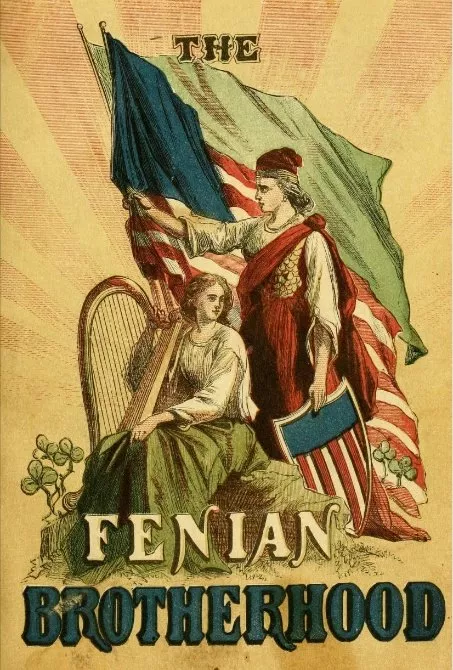
For one, that's what it was called when it was the site of the cooper shop of John Lonergan. Lonergan, who would become a captain of the 13th Vermont Infantry in the Civil War, used his business as the headquarters for the Vermont chapter of the Fenian Brotherhood, a militia dedicated to the cause of Irish independence.
The second reason for the "Skinner's Alley" moniker is that it seems to have been named for the Dublin alley that was the site of that city's skinning and tanning trades.
For McKone, a historian who sits on the board of the Burlington Irish Heritage Festival, all roads — literal and figurative — lead back to Ireland. Which is why he's chosen Rí Rá, the Irish pub on Church Street that faces "Skinner's Alley," as the site of the inaugural meeting of the local chapter of the Fenian Historical Society. It'll take place in the pub's back-room "library" on Sunday, January 18, and is open to anyone with an interest in Irish and Irish American history. Irish heritage is not required.
The Fenian (pronounced FEE-nee-an) Brotherhood was originally founded in Ireland itself, where it was promptly outlawed; in Vermont and other states, the militant organization was widespread. Its current incarnation aims not to free Ireland from the yoke of British rule but to commemorate the history of Irish nationalism.
Tags: history , ireland , fenian historical society , fenian brotherhood , irish , skinner's alley , dublin , rí rá , Image , Web Only
Friday, October 10, 2014
Authors Rose Mitchell and Andrew Janes are map archivists at the National Archives in London, a fact that accounts for the book's overall Anglocentric focus. And while it does contain many a map of Britain and her former colonies, this handsome, profusely illustrated volume also offers such fascinating features as a map of 19th-century Edo (now Tokyo), a map of the Allied forces' invasion of Normandy and, from 1836, the first-known pen-and-ink map by an Aboriginal Australian.
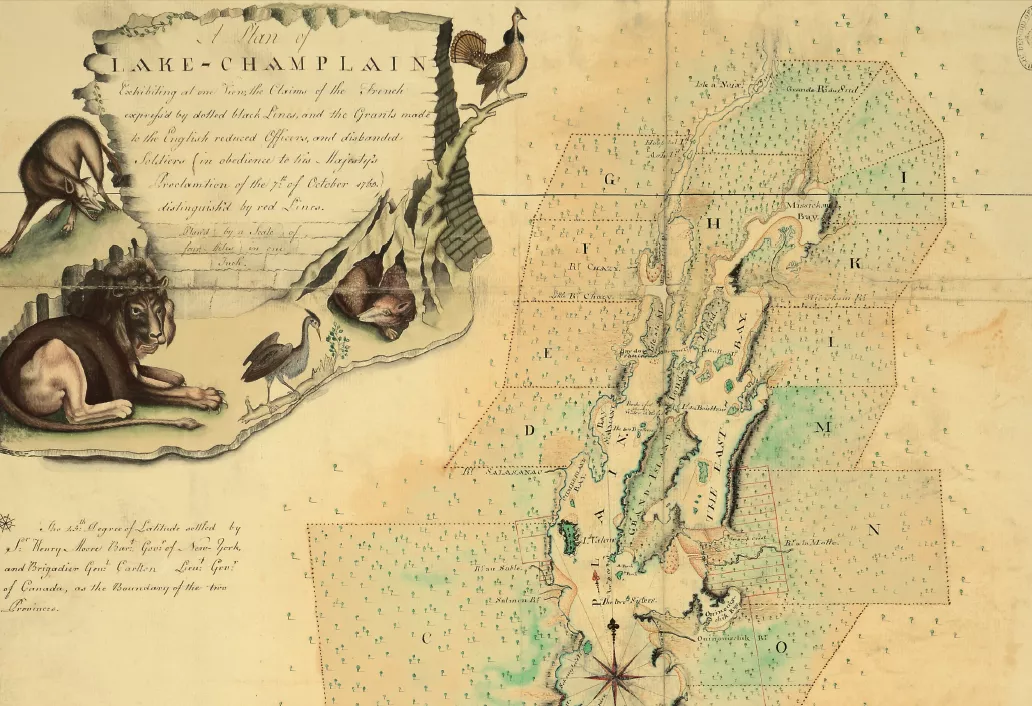
One chapter, "New Worlds: Exploration and the Colonies," showcases maps that testify to the massive wingspan of the British Empire. Amongst the maps of Gambian slave forts and the Indian subcontinent is a 1767 map of French and British claims to the forested parcels of land that surrounded Lake Champlain. Created by Yorkshireman Simon Metcalfe, the surveyor general of New York province, the map shows how the two countries' claims conflicted.
Even more interesting is the watchful lion that joins a wolf, a crane and a turkey in the cartouche in the map's upper left corner. Cool your jets, Catamount Truthers: Just as in the present day, no lions romped through the Champlain Valley in the mid-18th century. Rather, as the authors write, the mapmaker included this fearsome beast in order to "convey ... to those in London both the inherent possibilities and the dangers present in the colonies."
Fanciful details such as that incongruous lion are exactly what make this and the other maps in the book so fascinating. The maps' very inaccuracies speak most eloquently to their origins and attest to their historical significance.
Tags: maps , lake champlain , national archives , history , cartography , beer , Image , Web Only
Wednesday, September 24, 2014

What's mime got to do with being Jewish? Nothing, particularly. Except that legendary mime artist Marceau (1923-2007), a longtime mentor and friend to Mermin, was active in the French Resistance during World War II, helping to save Jewish children. For that, he was rightly respected as a humanitarian, as well as an unparalleled performance artist.
After growing up in Connecticut with two sisters and a brother, Mermin headed to Europe to study with circuses in England, Sweden and Denmark. In addition to training with mime masters Marceau and Etienne Decroux, he earned a degree in drama and literature from Lake Forest College, near Chicago, Ill. Mermin says he had been coming to Vermont since the early ’70s, and moved here around 1980. In 1987, he founded Circus Smirkus. One of the highlights of his career, Mermin says, is when Marceau came to Vermont to perform a benefit for, and actually talk out loud to, the Circus Smirkus crowd.
Seven Days chatted with Mermin by phone in advance of his presentation — and silent demo — this Sunday.
Tags: rob mermin , mime , marcel marceau , etienne decroux , circus , circus smirkus , silence , Image , Web Only
Friday, September 19, 2014

This week Shelburne Craft School director Sage Tucker-Ketcham announced that some pastels, which had been sitting in a closet for years, were found to have once belonged to renowned American impressionist painter Mary Cassatt — and that the box of artist crayons have been acquired by the National Gallery of Art in Washington, D.C.
How did this happen? A couple of years ago, SCS volunteer and teacher Barbara Nedde noticed in a book on Cassatt that she had given, in 1920, a box of pastels to then-10-year-old Electra Webb Bostwick, the daughter of Cassatt's good friend Electra Havemeyer Webb. (An exhibit this summer at the Shelburne Museum illustrated how that friendship led to the Webbs' acquaintance with and collection of European impressionist painters including Monet and Degas.) And the family's support of the arts extended not only to the museum but to the craft school, as well.
Tags: mary cassatt , shelburne craft school , shelburne museum , electra havemeyer webb , national gallery of art , Degas , pastels , Image , Web Only
Thursday, September 18, 2014
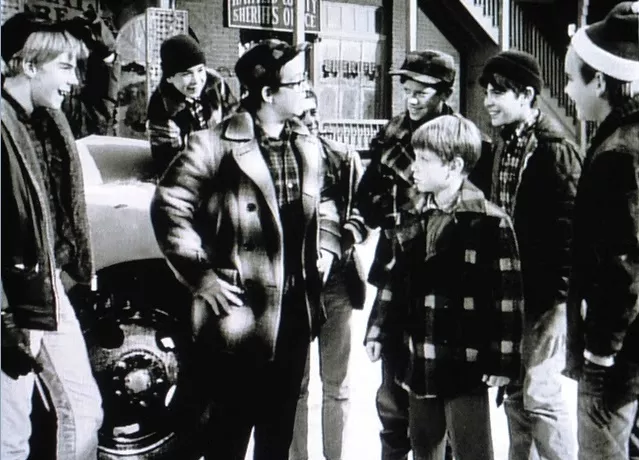
Hatfield Corners exists only in "Return From Outer Space," a first-season episode of the classic mid-1960s TV show "Lost in Space." In it, Will Robinson discovers an alien device that somehow beams him back to his home planet, and the earthly spot where he lands just happens to be a fictional Vermont town. And, wouldn't you know it, the locals don't believe young Will's story that he's been alienistically transported there from somewhere beyond Alpha Centauri. Poor Will Robinson. Always in danger.
Attendees of the Vermont Historical Society's Annual Meeting and Fall Conference are encouraged to watch "Return From Outer Space" (it's streaming on Hulu), the better to appreciate public programs coordinator Amanda Gustin's talk, "Vermont vs. Hollywood: The Green Mountain State on Film." The talk will also feature other film and television clips that depict fictional versions of Vermont.
Tags: lost in space , vermont historical society , TV , montpelier , annual meeting , jill mudgett , amanda gustin , Image , Web Only
Tuesday, July 29, 2014

Jesse Kreitzer's great-grandfather, Thomas Clarence Chapman (known to many as "TC"), was a coal miner in a place that's not exactly known for having much coal: Iowa. Though its land no longer yields much of the stuff, Iowa had, until the middle of the 20th century, a fairly robust coal-mining industry. That filial connection to a bygone industry was Kreitzer's inspiration for his current film project, Black Canaries, an unusual version of which will play on two Vermont screens this week.
Black Canaries is a fiction film inspired by Kreitzer's interests in his own family history and in, as he puts it, "rural storytelling." "I choose these stories because I have my own longing to reconnect," he says by phone from the Woods Hole Film Festival on Martha's Vineyard, where his 2013 short Lomax was the opening-night film. "I've been living in cities for 10 years, and have every interest in getting back to Vermont ... I have a longing to get back to nature."
Kreitzer was raised in Marlboro, and says he's been making short movies since he was in third grade. He credits both his elementary school and Brattleboro's Center for Digital Art, which he attended for two years, with inspiring him to tell stories visually. "It's rare that a high-schooler will get exposure to the works of [Russian master filmmaker Andrei] Tarkovsky, for example. There were some really advanced teachings that I was exposed to in my high-school years," he says.
Tags: film , movies , coal , coal miners , black canaries , 35mm , super 35mm , animatic , latchis , savoy , marlboro , brattleboro , montpelier , Image , Video , Web Only
Sunday, July 20, 2014
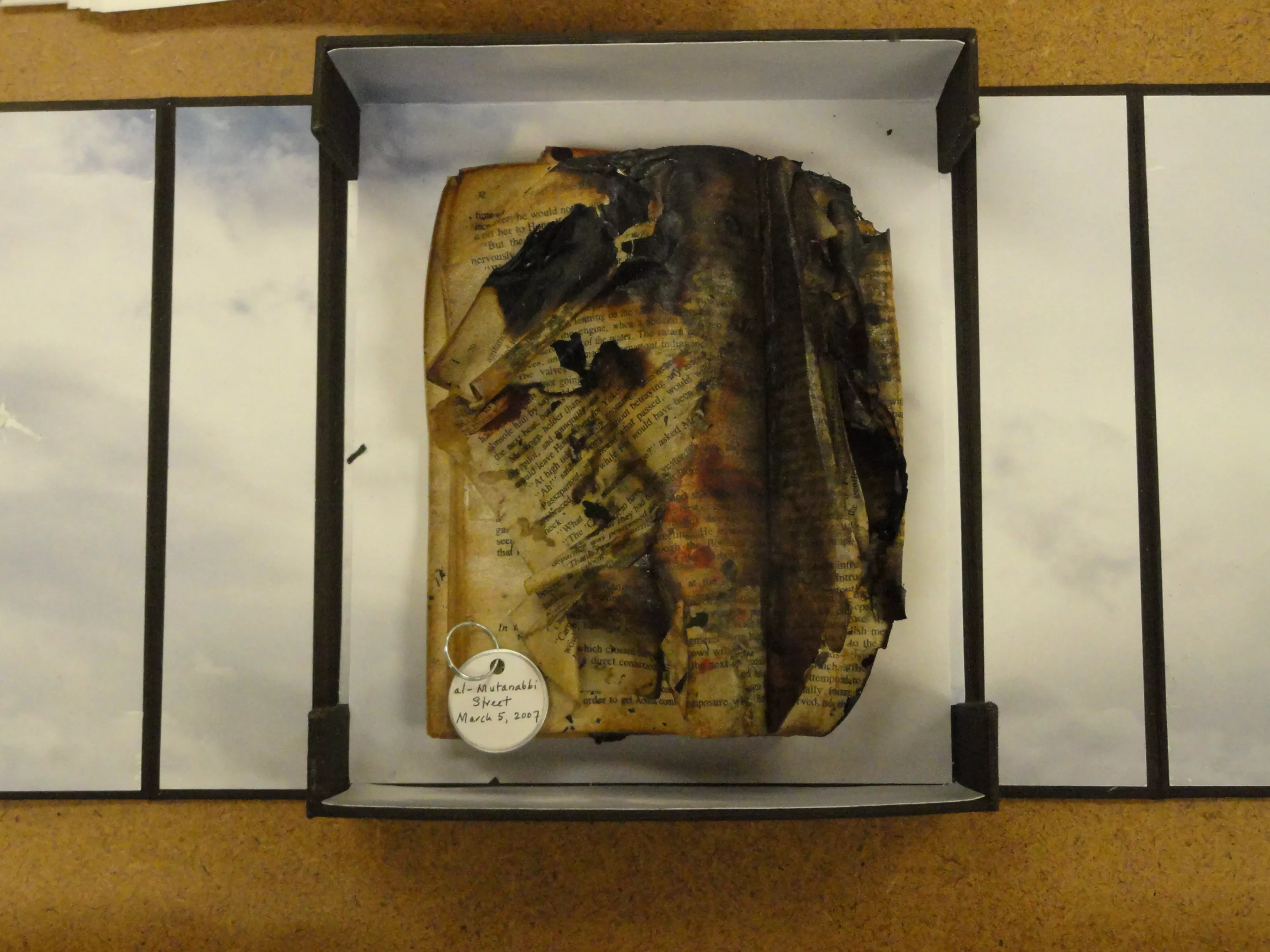
Almost 1,100 years after the birth of the poet for whom it is named, Baghdad's historic Al Mutanabbi Street was reduced to rubble by a car bomb that killed more than 30 people. Other casualties of that 2007 bombing included several businesses and their wares, a loss that surely would have immensely grieved the poet, whose full name is Abu at-Tayyib Ahmad ibn al-Husayn al-Mutanabbi al-Kindi.
For centuries, Al Mutanabbi Street has been the center of Baghdad's intellectual community, renowned for its many bookshops, itinerant book vendors and convivial cafés and tea shops. The car bombing seven years ago not only claimed lives but shredded the very stuff that made Baghdad one of the world's most cosmopolitan cultural capitals.
Starting on July 22, Plainfield's Goddard College will host a traveling art exhibit that uses books and printmaking to commemorate the loss of one of the world's great literary communities. The exhibit, "Al Mutanabbi Street Starts Here," has been traveling the world since 2012, and will remain at Goddard's Eliot D. Pratt Library Art Gallery until October 10. Its creator, San Francisco poet and bookseller Beau Beausoleil [PDF link], will discuss his work at an opening-night event.
Tags: books , printmaking , goddard , goddard college , al mutanabbi street , baghdad , Image , Web Only
Wednesday, June 11, 2014
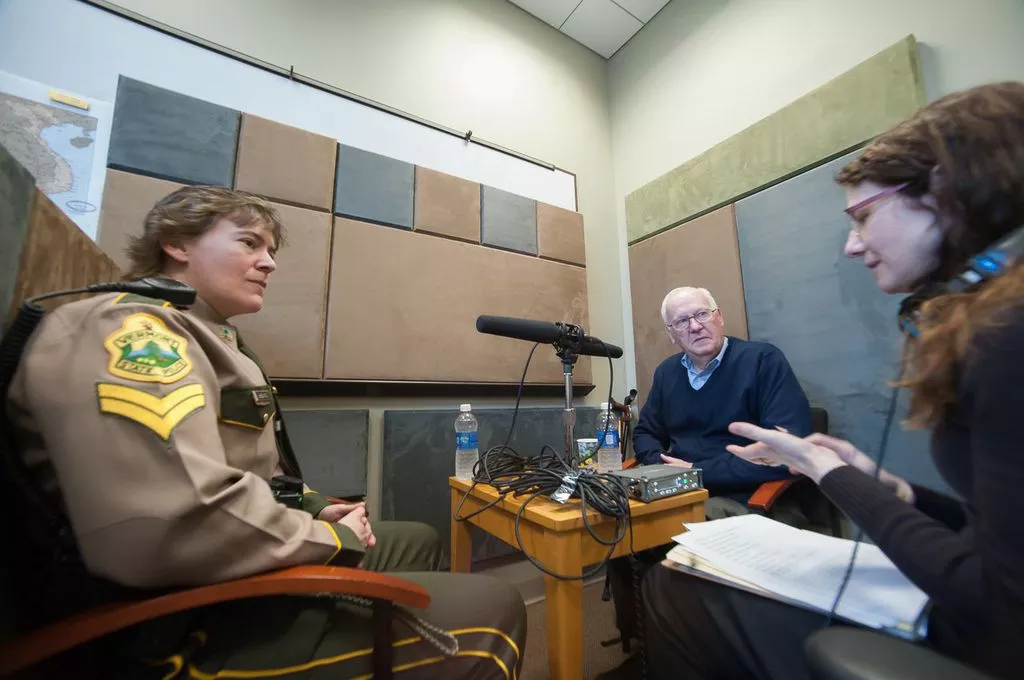
The history of Norwich University, the country’s oldest private military college, goes back to 1819. In those 195 years, thousands of cadets, instructors and employees have passed through the school’s Northfield campus, each of whom surely has stories to tell about his or her time there.
Over the past year, the school has, using grant money from the Chicago-based Tawani Foundation, found a way to record, archive and share those stories, which, together, constitute a de facto history of Norwich University. The Norwich Voices Oral History Project commenced in June of last year; now, the college is actively seeking participants for the second year of the three-year program.
Anyone who has a story relating to Norwich University — current and former students and teachers, past and present employees, residents of Northfield — is invited to contribute to the project, which has a goal of recording, transcribing, cataloguing, indexing and archiving 30 stories per year.
To be interviewed for the project, potential subjects must first be nominated (either by themselves or someone else); nominees are then vetted by the project’s organizers. Those who are selected will be interviewed for up to one hour, and the finished stories — in audio, digital and printed form — will be made available to researchers.
Tags: norwich , norwich university , college , oral history , Image , Web Only
Thursday, June 5, 2014
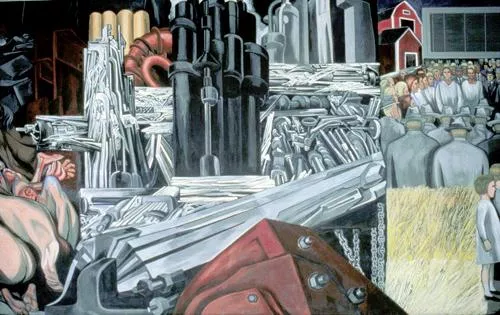
José Clemente Orozco may have wondered who besides Dartmouth College students would come to see his astonishing mural in the school's library. But the Mexican artist, a contemporary of Diego Rivera, certainly couldn't have conceived that anybody, anywhere in the world, would someday be able to do so on a magical thing called the internet — and without leaving home.
Yes, Orozco is online. Dartmouth's Hood Museum of Art as created an interactive website for the National Landmark mural, titled "The Epic of American Civilization," which was commissioned by the college and painted on the walls of the Baker-Berry Library between 1932 and 1934. The fresco is considered one of the finest mural paintings in the U.S. Some of its 24 scenes — which cover 3,200 square feet — are not for the faint of heart. The history of the Americas, from the Aztecs to the rise of modern, capitalistic civilization, is often brutal, particularly in the eyes of an artist devoted to the causes of peasants and workers.
Anyone from scholars of Mexican art to the greenest student just discovering the work can now access not only the mural itself but more than 200 preparatory drawings and photographs. The site permits a 360-degree scan of the Orozco Room at the viewer's own pace.
If you've been meaning to go and see the mural in person, by all means do. But meantime, you can get a preview by clicking here.
Tags: orozco , mural , dartmouth college , hood museum , Image , Web Only
Saturday, May 24, 2014
Having grown up in the 1980s, I’ve been watching music videos for pretty much as long as I’ve been watching TV. I even remember when MTV’s programming consisted mainly of a series of what were effectively three- and four-minute avant-garde films. Indeed, many of the first wave of MTV videos (a term I used to distinguish them from their precursors, such as “Soundies”; the music video itself was emphatically NOT invented by MTV) were directed by filmmakers with serious avant-garde cred: No less an artist than Bruce Conner, for instance, directed the terrific video for DEVO’s “Mongoloid.”
Take a look at the terrific mini-documentary, below, on the subject of Conner's creation of that video. The video for that song (which is included in its entirety at the end of the YouTube clip) most assuredly laid the groundwork for "Cirrus," the video that is the subject of this essay.
Part of what was cool about the early days of MTV is that the videos embraced past, present and future all at once.
Tags: what i'm watching , film , movie , video , music video , cirrus , bonobo , cyriak harris , avant garde , devo , rick prelinger , internet archive , Video , Web Only