

Thursday, December 4, 2014

What happened next is a tragicomedy of errors that Bell details in a recent online piece for Vanity Fair. When he arrives at the bodega, Bell, like Brown a 6'4" black male, goes through a checklist that is likely standard operating procedure for many BBMs — per Bell's VF piece, that's short for Big Black Male. First, he drops the hood on his sweatshirt to appear less suspicious or threatening. He keeps his hands out of his pockets while he browses, only touching items he's certain he'll buy and keeping his palms visible, just like his mother taught him. When he's ready to check out he slowly, "gingerly" as he writes, places his items on the counter. Just as carefully, he reaches for his money. Then something goes wrong.
The elaborate parade of thoughts that marches through Bell's head at that moment — a series of imagined events that culminates with Bell being gunned down, ice cream sandwich in hand, by police — is absurd. So much so that it would almost be funny, except for the fact that the scenario that plays out in his mind contains elements of the shooting deaths of not only Brown, but several other BBMs recently. Though he's one of the country's bright, up-and-coming comedic stars, Bell's story is no joke. And it highlights the unique day-to-day reality of being a large black man in America in a way few of us who aren't large black men likely ever think about.
Bell is hailed as among the sharpest young sociopolitical comedians working today. He's perhaps best known as the host of the critically acclaimed but sadly short-lived late night FX talk show, "Totally Biased with W. Kamau Bell." But it's his standup act that has really set him apart. To wit, the New York Times called him "the most promising new talent in political comedy in many years."
On Thursday, December 4, Bell will bring his latest show, "The Oh Everything! Tour" to Club Metronome in Burlington. In advance of that performance Seven Days recently caught up with Bell by phone.
———-
SEVEN DAYS: The ACLU named you an Ambassador of Racial Justice. That's quite a grand title. What does it mean, exactly?
W. KAMAU BELL: You know, I'm still figuring it out. I'm just worried about messing it up. I think when you take a comedian and give them respectability, sometime comedians don't know how to handle when they're meant to be respectable — but we're not talking about Bill Cosby.
SD: Yeesh …
WKB: My thing is that I just keep doing what I do and if I do the wrong thing they'll take it away from me. They have a bunch of different ambassadors. Harry Belafonte is one them, and all Harry Belafonte has to do is continue to be Harry Belafonte. So I have to get better, faster, stronger.
SD: I imagined you swooping in wearing a mask and cape wherever racial injustice rears its ugly head.
WKB: Nope. I do it from onstage. I just wish it came with a badge so I could be walking down the street and randomly break up racism.
SD: I really appreciated what you wrote for Vanity Fair after the Darren Wilson grand jury verdict. Being a five-foot-eight white guy, it made me think about some things I probably don't think about as often as I should.
WKB: The thing that I'm trying to put out to the world is that we can argue all day long — and we are arguing all day long — about whether you think that was justified. I certainly don't think the killing of Michael Brown was justified. However, you can't, or at least shouldn't argue how people feel. You can't tell me I shouldn't feel this way or that there's not a reason to feel this way. And since that piece came out, a lot of BBMs — "Big Black Males," as I put in the piece — have come out saying, "Yeah, exactly."
I think we're finally coming to a place, for the most part, in places where adult discussions are happening, that women walk around in the world a lot of times feeling like they have to protect themselves from being a victim. And I feel like this is the flip-side of that. We haven't really talked about that. There is fear of black people of any size. But for black people over six feet tall who have some size and girth to them, as I do — I've got some dad weight on me — there's a way that I have to walk through the world, too, to try and limit the possibility that something bad will happen, even if I'm just going out for ice cream.
I sort of wrote that for the Vanity Fair audience. I don't need to tell black people that story. If that piece was in Essence magazine they'd be like, "Yes. I know." It was for people that that idea had never even crossed their mind before. And there are million different versions of that story. But this one literally happened the night of the grand jury decision. I was up and anxious and it was 12:30 and I needed to take a walk and that all happened. So the lingering feeling from that story I felt was inarguable. And if you do argue it, which many people have, then you … are … a … dick.
Tags: W. Kamau Bell , Ferguson , Michael Brown , Vermont Comedy Club , Vanity Fair , Image , Video , Web Only
Monday, September 15, 2014

Call it mercenary, if you like, that all of the Beatles' albums have recently been reissued — again — on the 50th anniversary of the band's first incursion into America. Some of us have purchased them several times over, perhaps even taking note of the improvements in sound quality. But, as many fans seem to agree, when the music on those albums is arguably still the best pop music ever recorded, it's a worthwhile investment.
The Beatles were more than a band, of course. They were an international phenomenon, and they left behind a remarkable legacy in other media, as well as music. Of their four fiction films, none is better than their debut, A Hard Day's Night, which has also been extensively restored for its 50th anniversary.
The new 4K digital restoration will play for one night only in Burlington, on Thursday, September 18, at the Main Street Landing Film House, presented by the Burlington Film Society and the Vermont International Film Foundation.
Tags: film , movie , beatles , a hard day's night , the beatles , main street landing , vtiff , burlington film society , restoration , 4k , music , pop music , Image , Video , Web Only
Saturday, July 26, 2014
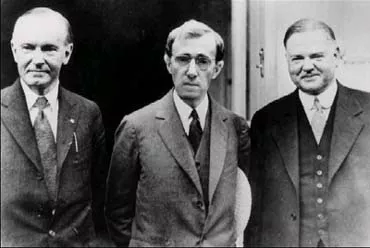
Though I grew up on Woody Allen's films, I gave up on them about 10 years ago, around the time of Match Point (2005). Though that film garnered a lot of critical praise, I found it stupefyingly dull and barely competent. Match Point apparently represented a kind of late-career renaissance for Allen, as he has used it as a generalized stylistic and narrative template for the nine films he's directed since — none of which I've cared to see.
They just don't interest me anymore, and neither did any of the eight or so Allen films that preceded Match Point. (The Curse of the Jade Scorpion was maybe the nadir.) Sometimes you just have to cut your losses. Je ne regrette rien.
I hate to be one of those guys who says of Allen, "I only really like his earlier, funny stuff" ... but that pretty well sums it up for me. His run of 1970s comedies — including What's Up, Tiger Lily?; Take the Money and Run; Bananas (which I "quoted" in my own undergraduate thesis film); Everything You Always Wanted to Know About Sex; Sleeper; the uproarious Love and Death — are still my favorites.
I also admire his 1980s and '90s "serious comedies" including Stardust Memories, Hannah and Her Sisters and, best of all, two films that are stylistically and thematically linked: Husbands and Wives and Crimes and Misdemeanors. These last two are incredibly incisive, brilliantly made films, and they rank among Allen's best.
But for me his very best film is 1983's Zelig, the mock-documentary about Leonard Zelig, a chameleon-like man who had no identity of his own. Zelig is not only incredibly funny, but a milestone in the mock-doc form. Not because it's believable enough to make viewers think it's an authentic documentary (the movie makes no attempt to hide that it's Allen himself playing Leonard Zelig in its "stock footage"), but because of its absolutely seamless integration of archival footage and newly shot film.
Tags: film , movie , what i'm watching , woody allen , men of crisis , zelig , mock documentary , PBS , youtube , Image , Video , Web Only
Saturday, July 5, 2014

A confession: The title of this column has, in recent weeks, not always been accurate. Though I've genuinely been writing about the movies that I've been watching, I've been spending more time watching "Community" than anything else. I'm pretty convinced, having now seen its whole run, that this is one of the greatest shows ever broadcast on network television.
I didn't watch the fifth and most recent season as it aired. Instead, my wife, Laura, and I watched it online, finishing it up just a few nights ago. In an odd coincidence, we learned, just hours after we watched the final episode, of the show's semi-unexpected, online-only renewal.
Tags: tv , television , what i'm watching , community , netflix , yahoo , internet , comedy , sitcom , Image , Web Only
Thursday, April 24, 2014
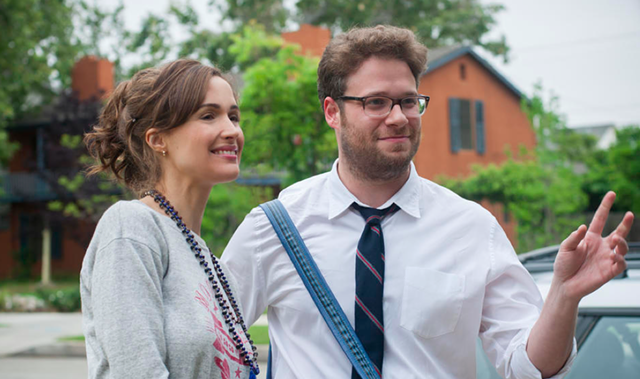
UPDATE 4/25: Owing to concerns about security at Rogen's appearance, we have removed any mention of its scheduled venue from this post. Please be aware that the screening is not open to the public, and its venue may change without notice.
In his new movie Neighbors, Canadian comedian Seth Rogen plays a nice family man who experiences hell on earth after he moves in next door to a rowdy college fraternity. In real life, Rogen's relationship with a certain University of Vermont fraternity is a lot more cordial. So cordial, in fact, that he and his wife, actress Lauren Miller, will come to an undisclosed Burlington-area theater on Thursday, May 1, to host a special, private screening of Neighbors for the men of Pi Kappa Alpha.
How'd that happen? Well, Rogen and Miller are outspoken advocates of Alzheimer's research — Miller's mother was diagnosed with the disease at age 55 — and started the organization Hilarity for Charity to get Generation Y behind the cause. Part of that is a collegiate contest called HFC U, in which more than 270 campus organizations around the country vied to raise the most funds for the Alzheimer's Association.
The winner? UVM's Pi Kappa Alpha, with more than $27,000 raised. (HFC U collectively raised nearly $130,000 for Alzheimer's research, according to an HFC press release.) Their prize is the special screening on Thursday, with Rogen and Miller in attendance for a Q&A.
Here are a WPTZ report and a Vermont Cynic article with details on the frat's fundraising effort.
So if you happen to see Seth Rogen around town next Thursday, just act normal. Maybe you could ask him if he's a freak or a geek, or how he feels about Vermont's maple penis. Meanwhile, check out this video of the funnyman testifying before Congress about the need for Alzheimer's research — a cause he's pretty damn serious about.
Tags: Alzheimer's , Neighbors , Pi Kappa Alpha , Seth Rogen , university of vermont , Image , Web Only
Thursday, March 13, 2014
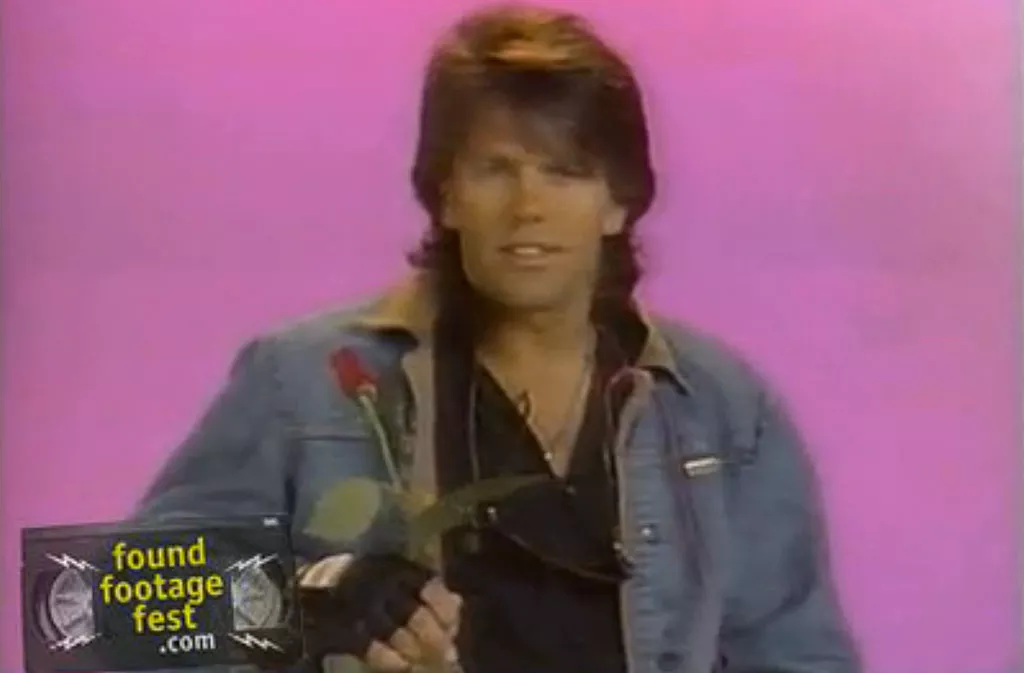
Now in its tenth year, the Found Footage Film Festival is more than just an annual showcase of the oddest oddities of America’s VHS heritage. It’s also a kind of educational program. In this year’s show, which comes to Higher Ground in South Burlington on Sunday, March 23, viewers will learn, among other valuable life skills, How to Have Cybersex on the Internet.
A video with exactly that curiously redundant title, produced by a Minneapolis video house in 1997, is one of the highlights of this year’s fest, says co-host and co-curator Nick Prueher. Prueher and his fellow host/curator Joe Pickett, both 38, travel the country every year, scouring thrift store and garage sales for videotaped ephemera that would otherwise never see the light of day. How to Have Cybersex on the Internet, Prueher says, has a unique appeal. “It’s too sexy to be informational, but not sexy enough to be titillated by,” he says. “Why does it even exist? What are we watching here?”
The traveling show presents a combination of screenings of unintentionally hilarious videos, a recounting of the stories behind them and a number of comedy bits inspired by them. Prueher and Pickett both have serious comedy chops: They’ve written, respectively, for “The Late Show with David Letterman” and The Onion, among other outlets.
Prueher, speaking by phone from New York City, sounds both proud and surprised by the fact that his and Pickett’s festival of strange videos has become a central part of the “found materials” movement that has also manifested itself in such venues as Found magazine and innumerable craft projects on Pinterest and Instructables. “We grew up in small towns and had to make our own fun, so you look at the stuff around you and make something of that,” he says. “We spent a lot of time in thrift stores in Wisconsin.”
)
Though the festival has now grown into an international phenomenon — the two curators recently completed a tour of Europe in which they both presented and collected obscure videos — Prueher, for one, finds that many of the videos they show embody a uniquely American quality. “One thing we found about a lot of the footage that we’re drawn to,” he says, “is that people had a lot of ambition, even if their talent was questionable. That’s one of our exports, and it’s true about us as a people.”
When the pickings are irresistible, the festival does occasionally curate DVDs: Prueher mentions a DVD they found in Memphis called Sing Like the King, an instructional video for Elvis impersonators. But it’s VHS, for all its analog-era imperfections, that holds the real allure for these curators. “VHS is the bastard stepchild,” Prueher says. “It’s an ugly, clunky format, but that doesn’t make the footage any less worth hanging onto.”
Though they’ve sometimes proven to have a shelf life longer than originally predicted, VHS tapes do decay, a fact that lends a sense of urgency to the Found Footage Film Festival’s mission. As well, Prueher notes, he and Pickett were startled to learn recently that many thrift stores no longer even accept the tapes as donations, since they simply don’t sell. That’s one of the reasons anyone attending the festival is encouraged to bring their own video oddities as submissions for future screenings.
Though they’ve long made their own comedic videos (which often carefully recreate the no-budget aesthetic of many of their found treasures), the festival curators recently released a video of a different kind. Bored over a long holiday in their native Wisconsin, they dreamed up a way to game local morning shows: Prueher would masquerade as a chef who specialized in turning leftovers into creative new meals.
As the author of the nonexistent book Making a Winner of Last Night’s Dinner, Prueher appeared on numerous talk shows, earnestly instructing viewers on how to make such horrific concoctions as mashed-potato-and-corn ice cream cones and blended ham shakes. Even when he straight-facedly namechecked the late shock-punk rock star GG Allin as his culinary inspiration, no one caught on to the stunt. “Nobody questioned it at all,” Prueher says. “Bless their hearts, they just kind of plowed forward. I’m surprised at how much we were able to get away with.” See for yourselves below:
Even as the compilation video of these stunts (which quickly went viral) represents a different kind of comedy than the found films themselves, the humor it embodies “has always been a part of the show,” Prueher says. “We know what the recipe is for weird, awkward footage; we know all the elements of the uncomfortable. We used some of that knowledge for this material.”
Reiterating that anyone who creates anything draws inspiration from whatever surrounds them, Prueher says that, for him and for Pickett, it’s the seemingly endless supply of oddball videos “that brings us so much joy."
The Found Footage Film Festival, Sunday, March 23, 8 p.m., Higher Ground, South Burlington. $12. highergroundmusic.com / foundfootagefest.com
Tags: found footage film festival , film , movies , found , prank , Image , Video , Web Only
Tuesday, March 11, 2014

In the past few years Vermont has seen Parenting 101: The Musical ("for anyone who's ever been a parent or had a parent') and Menopause: The Musical ("the hilarious celebration of women and The Change"). Last week, we heard from the Barre Opera House that a touring production of Assisted Living: The Musical this way cometh. Yes, really. Think an eccentric cast of coots at the Pelican Roost. Then, of course, there's Urinetown: The Musical (starting this week at UVM).
And speaking of coming, today the Flynn Center for the Performing Arts in Burlington exclaimed the triumphant return of 50 Shades! The Musical ("a sexy, hysterical musical romp").
Which of course got us peeps here at Seven Days thinking about our own wacky, LOL romps. Only we don't have time to write musicals, so we just took a few minutes on a busy production day to spew a bunch of titles and tag lines. Naturally, we just have to share. Be warned, though, that some of the following are un-PC and likely to offend ... someone.
Here's a sampling:
Drug Addiction: The Musical — “Shot up with trippy near-death experiences! It’ll leave you wanting more!”
Viagra Monologues: The Musical — "The Centrum Silver set comes clean about getting up — or not!"
Hip and Hipster: The Musical — "An unemployed twentysomething rocker moves in with his elderly dad, who's fallen and can't get up. Or get down!"
Potty Training The Musical — "Pooh-pooh-pee-do!"
Driver's Ed: The Musical - "White-knuckle excitement set to your favorite road tunes!"
Heady Topper: The Musical — "Tickets on sale at select locations nobody will tell you about"
Vermont Health Connect: the Musical — "Spend two hours at the edge of your seat, only to be disconnected"
Monday, February 3, 2014
One career ago, I was a professor of film studies. I gave that up to move to Vermont and write for Seven Days, but movies will always been my first love. In this feature, published occasionally here on Live Culture, I'll write about the films I'm currently watching, and connect them to film history and art.
When the fondly remembered cult film Heathers was released in 1988, I was only a year or two younger than its main characters, who are high school juniors and seniors. My friends and I loved it and talked about it often — especially when cable and dear old VHS gave us the chance to watch it again and again. And even though our own high school afforded us unlimited opportunities to observe the cruelty of the Popular Kids and the thoughtless acts engendered by cliquishness (the film’s chief satirical targets), I can say with certainty that, still, we didn’t fully “get” Heathers.
I watched the film a few nights ago for the first time in at least 15 years. It holds up quite well, I was happy — and somewhat surprised — to see. More on that below.More surprising was how thoroughly the movie’s little nuances had been burned into my brain. This was apparently a film that made an impression on me, as I found myself, even after that long hiatus, able to recite favorite lines of dialogue in perfect sync with the actors. The film is endlessly quotable. Phrases such as “What’s your damage?” (a now-common expression that I think was coined for the film); “I love my dead gay son”; and the too-clever-by-half “Our love is God. Let’s go get a Slushie” really do embody Heathers’ bitterly satirical tone.
The best, though, is still “Dear diary, my teen angst bullshit now has a body count,” which is duly recognized as the film’s most iconic line. Poetry, that.
The script’s cleverness, which I remembered sort of generally, is only part of the reason I was surprised that Heathers still comes off as witty and satirical, 25 years (gulp) after it was made.
Cinema is often regarded as a “director’s medium” rather than a “writer’s medium.” Scripts are of obvious importance to movies, but in both popular and critical discourse, directors are usually credited with creating a film’s look and style. And not all directors write their own films.
Heathers was written by Daniel Waters and directed by Michael Lehmann. It’s tempting to assign most or all of the pleasure we may get from the film to Waters’ acerbic wit and keen ear for genuine-yet-stylized dialogue. And it really is a clever, funny script.
To my surprise, though, I found the film quite well directed, too. The film’s visual style was more sophisticated than I remembered — probably because I didn’t pay much attention to such things when I was in high school.
One of the clearest examples is Lehmann’s use of a simple, bold primary color scheme to identify, distinguish and jokingly liken the three titular Heathers: One gets bluish-green, one gets yellow, and the one who currently sits at the tippy-top of her school’s pecking order is identified with red. Red clothing, red bedroom, even a red croquet ball. Using simple, playroom colors shows how juvenile these girls really are; and, though the colors are different, they are all similarly bold and brassy, indicating an underlying similarity or, more strongly, a mindless sameness. Which is exactly the point.
Three Heathers, three colorsIf the croquet balls are the orbs, the red hairband is the crown. As it gets passed from Heather to Heather (and ultimately to Veronica, Winona Ryder’s character), it shows us which girl is “in charge.” A simple device, and admirable for that reason. A gesture like this is so easy thing to do — and such a clean, graspable way of visually communicating narrative information — that it’s surprising so few directors do it.
To continue with the color scheme, it’s reduced to pretty much black and white in the scenes at the home of J.D. (Christian Slater) and his father. Their house is furnished with stark, colorless, modernistic furniture, which reads to us as “cold” — an apt adjective for the father-and-son relationship.
It’s tempting to align J.D. with, say, black, and his father with white, though that would be too simple. Heathers is much more ironic in tone than that. (We’re cued to the irony right from the start, when an idyllic scene of three charming young ladies — the Heathers — playing croquet is undermined when the girls willfully stomp over the flowers neatly arranged in the garden.)
Though J.D. and his dad plainly can’t stand one another, the film also makes a point of likening them strongly to each other. It accomplishes this at the level of dialogue and performance, having the son deliver “paternal” clichés in an ironic voice, and the father speak as if he were a teenager. An example: J.D. says, sarcastically, as his father enters the house, “Why, son, I didn’t hear you come in.” A few lines later, his father responds in kind with, “Gosh, Pop, I almost forgot to introduce my girlfriend.”
Veronica reacts to this dialogue with revulsion, highlighting its creepiness. And it is creepy: We feel just as uncomfortable as she does. It’s also a smart and simple way to establish the frosty relationship — as well as the essential similarity — between the two.
All of which is simply to say that Heathers’ ironic tone extends beyond its script to the visual realm, in which the black-and-white scheme of this unhappy home also confirms these characters’ status as the outsiders they are. They do not belong in this town, a fact that the story’s ending confirms. In fact, Veronica, when she hears this unpleasant dialog, is granted her first clue that this J.D. character, whose cheeky misanthropy was at first so appealing, is actually more dangerous than are the Heathers.
The Dumptruck DoughnutThe visual pleasures of Heathers are a major reason the film plays so well for me now. And many of the film's elements that had lodged in my brain were, in fact, visual, not just lines of dialog. The lovely overhead shot of Heather No. 1 crashing through her glass coffee table; the Wham!-esque “Big Fun” T-shirts; the cow-tipping scene; and, most iconically for me, the moment when Martha “Dumptruck,” in her little motorized scooter, does a loop around Veronica at the far end of a high school hallway.
Seeing all these images again reminded me what an impression they made on me in high school, even if I didn’t realize it at the time. And I don't think Heathers ever received proper credit for its visual creativity.
Thursday, January 23, 2014
For as long as there have been songs, there have been songs about women. Next to God, the fairer sex has probably inspired more music than any other subject — maybe even more since the dawn of pop music.
But for all the songs about California girls, northern California girls, girls from the North Country, barroom girls, my girl, girls who just wanna have fun and honky-tonk women, precious few tunes have been penned specifically about our personal favorite kind of ladies: Vermont women.
Local songwriter Josh Schlossberg, who performs under the pseudonym Dark Green Folk, has attempted to rectify that egregious oversight with a new song called simply "Vermont Woman." DGF tends toward humorous tunes, and his latest is no exception, as he touches on just about every Vermont-y cliché there is, affectionately painting a portrait of a crass, crafty and crunchy Green Mountain woman who might seem familiar to anyone who's lived in Vermont for a while. (In fact, I think I may have dated her.)
Here's Schlossberg performing the song recently at Radio Bean, with full lyrics after the jump.
Wednesday, December 18, 2013
Here's something to help you shake off the shivers. Green Mountain Cabaret is performing tonight at Montpelier's Lost Nation Theater in a one-night-only, 21+ burlesque show. And if you don't feel like shaking — or shimmying — Alexa Luthor and Her Sugar Shakers will do it for you. And then some.
Formerly living in Chicago, Luthor returned to her native Vermont a couple years back and brought professional burlesque along with her, not to mention her husband, MC Leif Peepers. Since then, she's trained other dancers in the North Country, some of whom will be entertaining central Vermont hippies, er, Montpelierites tonight — Trixie Hawke Siouxsie Chrisse, Aeshna Mairead, Swizzle Schtick and Merrique Hysteric.
And if any readers are expecting, I strongly suggest you consider one of these names for your impending child.
LNT actually said in a press release that Green Mountain Cabaret is "Ass-tronomically talented," so what more do you need to know? Except that tickets are $15 and the show starts at 8 p.m. tonight and you can only go if you are 21 or older.
Photo by Matthew Thorsen accompanied a story about Luthor in February, which you can read here.