

Sunday, July 12, 2020
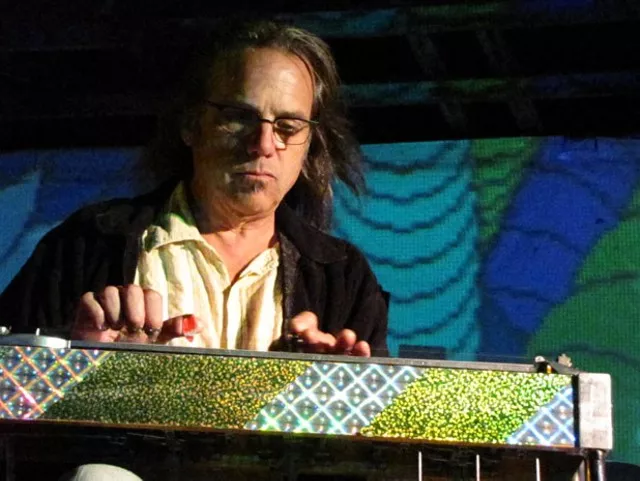
She announced Stone's death today in a post on his personal Facebook page:
Tags: Gordon Stone , Pappy Biondo , Jennifer Harwood , Web Only , Image
Thursday, July 9, 2020
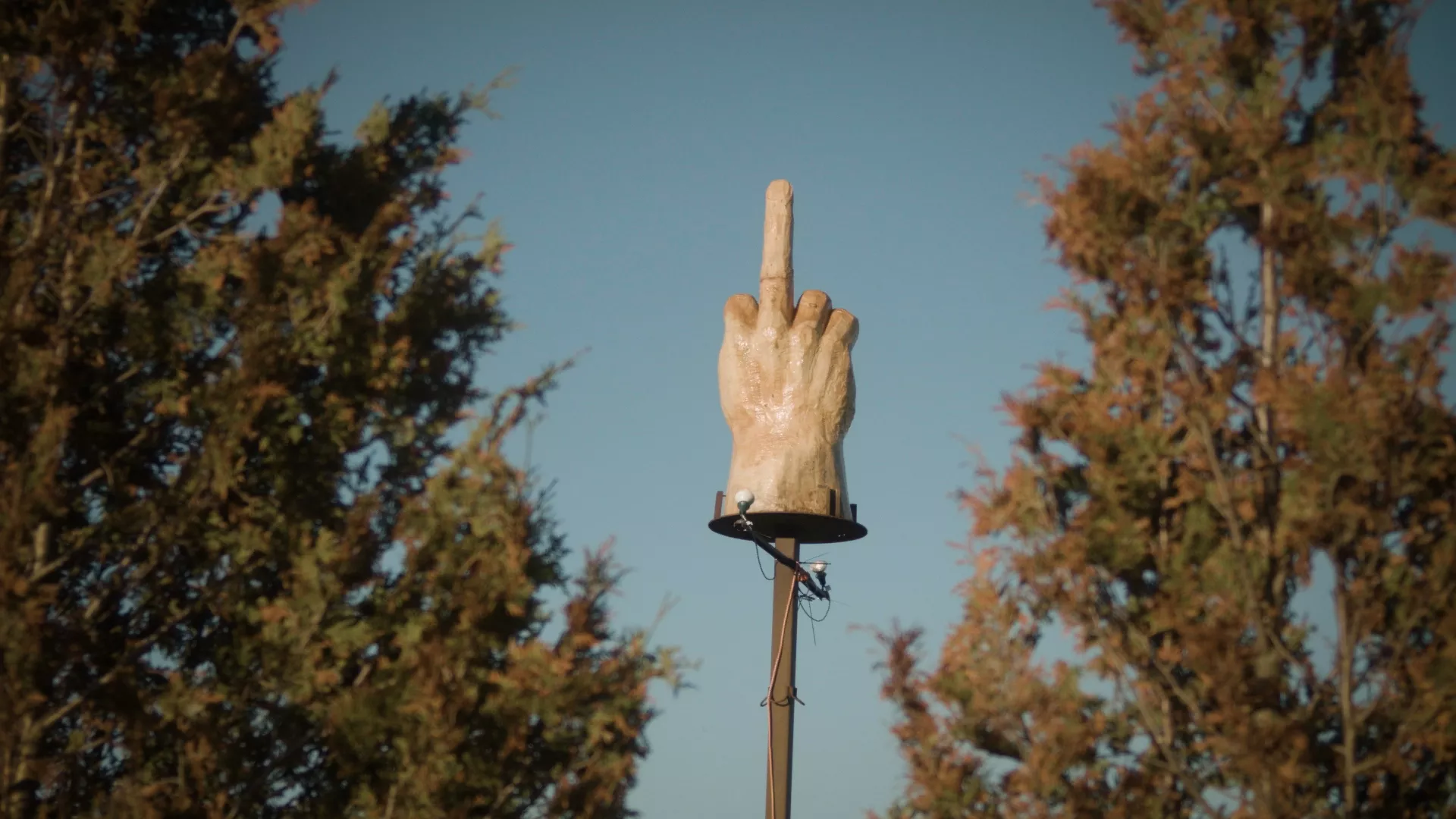
Westford resident Ted Pelkey spent 11 years and more than $75,000 in legal fees fighting the Westford Development Review Board after it denied him a permit to build an 8,000-square-foot commercial garage. Stymied in his legal fight, Pelkey decided to air his extreme displeasure in a creative, if vulgar, manner. His $4,000 chainsaw-carved “fuck you!” to town officials soon went viral, attracting national media coverage, from CNN to the Boston Globe. The sculpture attracted so much attention that musician Robert Richie, aka Kid Rock, commissioned Pelkey's chainsaw artist, Charlie O'Brien, of Waterbury Center, to make one for him, too.
Now, Wilmington, Vt., filmmaker Garret Harkawik has weighed in on the conflict with his aptly titled short film: A Very Large Gesture. While some people might wonder whether there’s anything left to say about Pelkey’s colossal bird flip, Harkawik’s nearly 15-minute documentary touches on the intriguing backstory to Pelkey’s 15 minutes of fame.
Tuesday, July 7, 2020
Applications opened Monday on the ACCD website for all the agency’s Economic Recovery Grants. Arts and culture nonprofits are eligible for up to $50,000 in funding. The arts council will partner with ACCD to review the applications.
“It’s an incredible boost for the nonprofit cultural sector,” said Karen Mittelman, executive director of the arts council. “It’s important as a recognition of the economic stress our sector is experiencing … And we also know it will not be enough. That’s true across the board [in every sector].”
Tags: arts , culture , coronavirus , Vermont Arts Council , Vermont Humanities , Vermont Legislature , grants , Web Only , Image

The film:
The Vast of Night (2019)
Where to see it:
Amazon Prime Video
The deal:
No need to adjust your television. If your HD picture is suddenly fuzzy black-and-white, that’s because it’s the 1950s and you’re watching “Paradox Theater,” an anthology of tales of the unexplained. This week: What caused the bizarre noise that rippled over the airwaves in the town of Cayuga, N.M., one dark night while everyone was in the high school gym cheering on the basketball team?
Well, almost everyone. That doesn’t include our main characters: Everett (Jake Horowitz), a hot-shot young radio DJ; and Fay (Sierra McCormick), a 16-year-old bobby-soxer/science enthusiast who works at the telephone switchboard. The story opens with Fay showing Everett her new prized possession: a portable cassette tape recorder.
Tags: The Vast of Night , The Twilight Zone , Twin Peaks , The Magnus Archives , Jake Horowitz , Sierra McCormick , Web Only , Image
Saturday, July 4, 2020
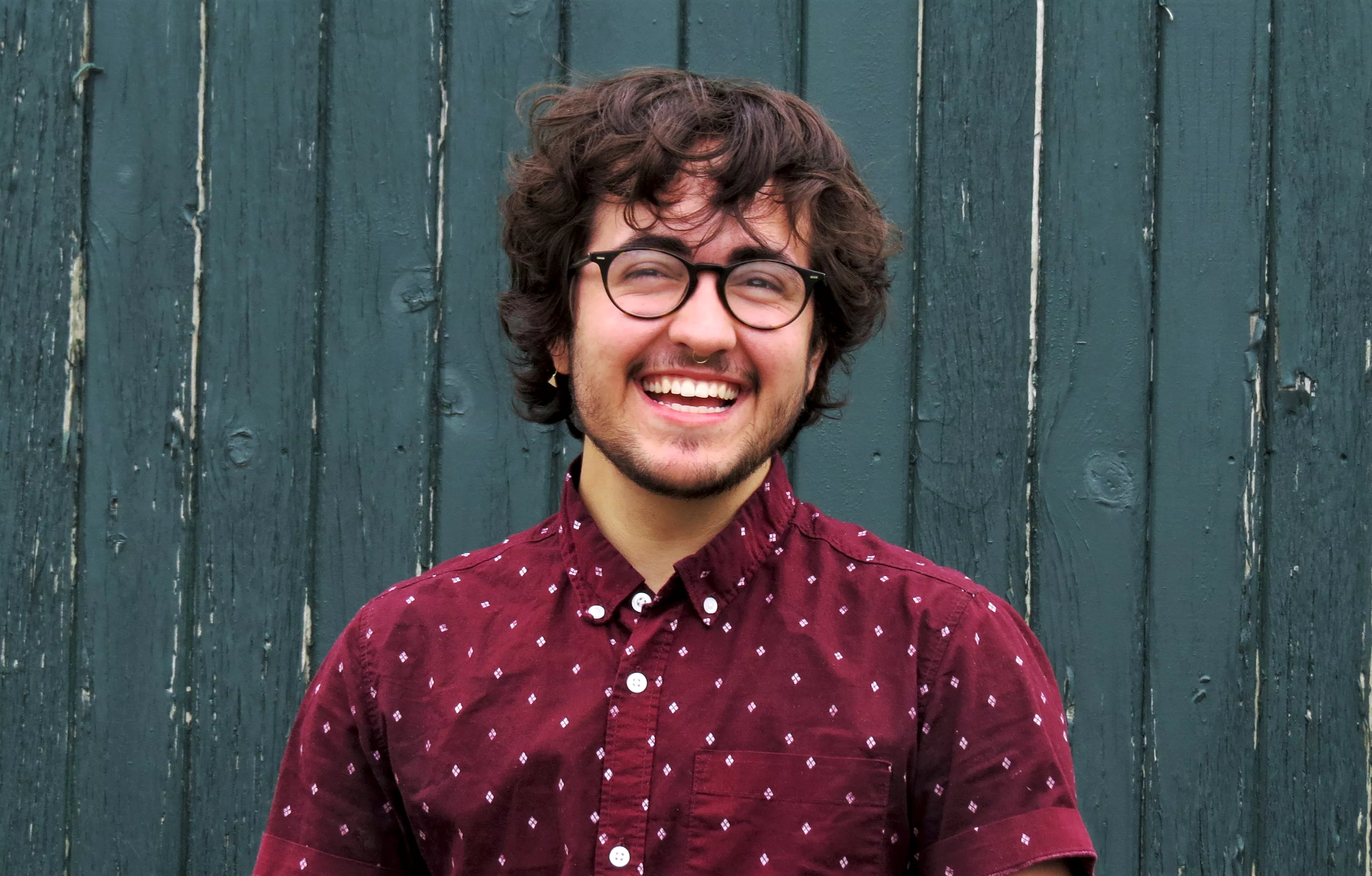
On a Monday night in early June, Alex Escaja was waiting his turn to speak in support of defunding the police during a Burlington City Council Zoom meeting when he got an email from GLAAD, a national organization that advocates for LGBTQ equality through the media. He had been selected as one of GLAAD’s “20 Under 20 Rising Stars,” a cohort that included gun control activist Emma Gonzalez and TLC reality show protagonist and trans spokesperson Jazz Jennings.
Seeing his name among so many queer youth icons was overwhelming: “I looked up to many of those people, so it was pretty disorienting and also incredibly exciting,” he said.
Escaja grew up in a trilingual household in South Burlington. He speaks Spanish with his mother, Tina Escaja, an artist and feminist scholar who teaches Spanish and directs the Gender, Sexuality and Women's Studies program at the University of Vermont; his father, scientist and entrepreneur Uwe Heiss, communicates with him in German. (When the whole family is together, said Escaja, Spanish prevails.)
At 20, Escaja already has an impressive résumé as an activist and filmmaker. From his first major accolade — at age 11, he won third place in NASA's Optimus Prime Spinoff Film Contest — to his leadership roles in Outright Vermont and LGBTQ student groups at UVM, Escaja has been finding ways to merge his artistic talents with his passion for advocacy.
Seven Days spoke with Escaja about how he got his start in filmmaking, queer representation in the media, and what Pride should look like in 2020.
SEVEN DAYS: I feel like everyone is sick of this question, but here goes: How has your quarantine experience been?
ALEX ESCAJA: It was pretty tough at the beginning. I was part of a study-abroad program in New York City — “abroad” being the city — in January, through the University of Vermont. I had an internship that was wonderful, and then, two months in, the pandemic hit. So I was stuck in the city and quarantined alone in a dorm room for about two months. Mentally, that was not very comfortable, and the city was kind of a scary place to be. It’s definitely a relief to be back in Vermont and to be close to nature and family and friends.
SD: Yikes. That sounds rough. How has the pandemic affected your plans?
AE: My original plan was to stay in the city over the summer, after my program ended. I was considering transferring schools — I’d been accepted into the NYU Tisch program for cinematic arts and I was really excited about that. But the pandemic certainly changed the course of things. NYU was going to be online, which I didn't find worth it, and going into film means, you know, working on films with other people. We obviously can’t do that, which kind of defeated the purpose. So I decided to come back to Vermont and stay at UVM, and I’m on the path to graduate a year early, in May 2021.
SD: How did you find your way into filmmaking?
AE: I went to Frederick H. Tuttle Middle School and they had a broadcasting club where students got to produce a news segment. That introduced me to the resources to start making media. Then, when I was 14, I watched a film that inspired me to become a filmmaker, called My Prairie Home, which really changed the way I perceived myself and influenced my process of self-discovery. I have a passion for advocacy and a love of the technicalities of filmmaking, and combining the two brings me joy. That’s what I want to dedicate my life to; watching that movie solidified that.
SD: What’s My Prairie Home about?
AE: It’s a low-budget, independent Canadian film about a nonbinary artist, Rae Spoon. I watched it on a plane, and it was the first time I ever saw a genderqueer experience on screen that was authentic and beautiful. I actually watched it twice on that flight, and I walked off the plane transformed.
SD: That feels very symbolic — you’re on a plane, the most liminal of spaces, and you see this movie, and then you disembark a different version of yourself.
AE: That’s very true. It didn’t give me all the answers; I didn’t walk off the plane knowing who I was, exactly, and in a lot of ways I’m still discovering myself. But at that age, I was starting to question my gender and my sexuality, and the film gave evidence that it was possible for me to live in a space that was different from what was assigned to me. And what was really powerful for me is that the film is about an artist who’s happy. They’re just a normal human being, with normal human experiences, and that felt radical for me.
SD: Totally. In so many movies about queer and nonbinary people, the focal point is their struggle to accept themselves or to gain the acceptance of others, to come into their personhood, in a sense. It’s rare to see those characters have conflicts that aren’t somehow connected to their sexuality or gender identity.
AE: There’s a lack of complexity in representations of queer people. I haven’t really seen a film, besides My Prairie Home, that depicts nonbinary experience in the same way. The representation of LGBTQ-plus people is often for audiences who aren’t LGBTQ. So the stories are distorted — if there’s a queer person onscreen, they’re often caricatures, or they exist to advance the plot of straight or cisgender characters.
Recently, there have been more sympathetic coming-out films, but, again, the focus is usually on the drama of coming out, and how that person is affecting the straight or cisgendered people around them: Their families are tortured, or they’re bullied and they have to overcome it. And while that is a realistic experience, it de-complexifies a person; it paints this picture of being queer as very difficult and painful.
SD: Looking Back at Me, your 2017 documentary, is about an 18-year-old nonbinary Vermonter, Sade. There’s a joyful, youthful exuberance to it, and you can sense this deep comfort and trust between the two of you, even though the viewer only sees Sade on screen. How did you two end up making that film?
AE: Sade and I both went to South Burlington High School, and I really wanted to make a film that talked about queer and nonbinary experience in a way that was educational for a wider audience and relatable for people who are actually queer and nonbinary. Sade had a YouTube channel, so I knew they were comfortable speaking to the public about queerness. So I reached out to them, and we got coffee, and immediately we became very good friends.
The film felt like a collaboration in a lot of ways. We were both young and figuring ourselves out — I, in particular, was figuring myself out — and I looked up to Sade.
I really appreciate my younger self for making that film. I was 17 years old, and I feel like part of the reason that film feels special to me is that you can tell that a 17- year-old is behind the camera and talking about their own community. That really makes a difference in filmmaking — if an outsider comes in, the gaze of the camera feels different, kind of voyeuristic.
It’s so important for people to tell their own stories. We need to have more LGBTQ people behind the screen, creating the stories and producing the films. That applies to any other marginalized group — the stories will be more powerful and, in many ways, they’ll inherently be better, because people will be talking about the real thing, their real experiences.
SD: Did you have queer role models growing up?
AE: I’m really grateful for Outright Vermont, which serves LGBTQ youth ages 22 and under. I attribute a lot of the self-confidence I’ve developed over the years to them. I have a very supportive and loving family, too, but in terms of finding community and representation, Outright is run by queer-identified individuals. They were the first queer adults I’d ever met in my life, and they taught me that it’s possible to have a thriving, happy future as a queer person. If it hadn’t been for that experience, I don’t think I would have been able to go back into the greater world with the same amount of security and comfort.
SD: Over the past few years, Pride has become an increasingly mainstream cultural event, and that acceptance is so good on so many levels. But there’s also been a lot of whitewashing of LGBTQ history, and among the many refrains of protestors in the past few weeks is “Black Trans Lives Matter.” It was a black trans woman, Marsha P. Johnson, who started the protests that grew into the LGBTQ movement. From your perspective, what would an authentic Pride “celebration” look like?
AE: Pride originated as a riot, led by black transgender women and people of color. It’s really amazing that we’ve reached a point where we can celebrate openly, but there’s also something that feels wrong about that — because in a lot of ways, we haven’t achieved liberation.
Racism and xenophobia are prevalent within the LGBTQ community, and if you observe a lot of Pride celebrations in large cities, it’s often the cisgender white gay men who are doing most of the celebrating. I think it’s great that we’re revisiting the roots and starting to critique some of the issues in our community. We need to focus on how we can be anti-racist in the LGBTQ community. I don’t feel like we can celebrate, in the way that we have been, until we’ve secured liberation for everyone.
Tags: LGBTQ , nonbinary , genderqueer , Alex Escaja , GLAAD , Outright Vermont , filmmaking , Web Only , Image
Friday, July 3, 2020
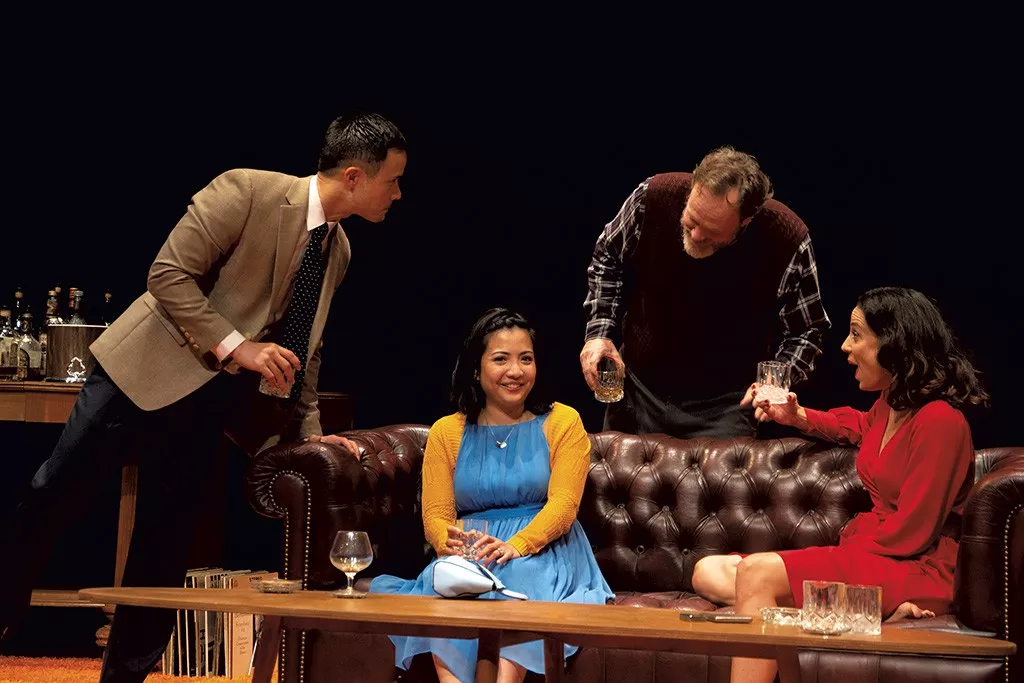
The NEA awarded $50,000 grants to Kingdom County Productions, Dorset Theatre Festival, the Vermont Folklife Center, the Community Engagement Lab, the Yellow Barn and the Weston Playhouse Theatre.
The NEH awarded $133,512 to the Vermont Historical Society, $69,263 to the University of Vermont, $29,362 to the Henry Sheldon Museum of Vermont History, $53,036 to the Lake Champlain Maritime Museum and an additional $97,017 to the Folklife Center.
Tags: coronavirus , Vermont Arts Council , arts and culture , theater , performing arts , NEA , NEH , Vermont Humanities , Weston Playhouse , Web Only , Image
Thursday, July 2, 2020

“At the heart of the matter, it’s a public health consideration,” said the Flynn’s interim executive director Charles Smith. “The complications are just too great.”
State guidelines for Vermont schools are explicit: “No outside visitors and volunteers except for employees or contracted service providers for the purpose of special education or required support services, as authorized by the school or district.”
Tags: the Flynn , Charles Smith , teaching artists , Lois Trombley , dance , theater , performing arts , Web Only , Image