

Friday, October 17, 2014
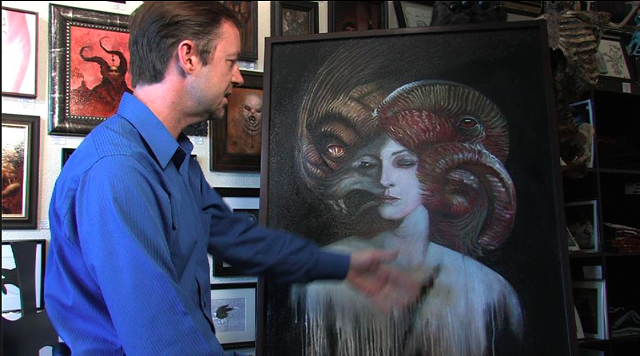
This week in movies you missed: Why do people spend months turning their homes into Halloween scare houses? Why do they flock to tours of Jeffrey Dahmer's Milwaukee haunts? Why do they collect the autographs and artwork of serial killers?
Two recent Halloween-y documentaries, The American Scream and Serial Killer Culture, explore these questions about the fascination of fear.
What You Missed
In the small town of Fairhaven, Mass., trick-or-treaters can visit three elaborate houses of horrors created by passionate amateurs. Directed by Michael Stephenson (Best Worst Movie), The American Scream profiles them, with a special emphasis on family man Victor Bariteau.
An IT guy by day, Bariteau grew up in a religious home where Halloween wasn't observed. Determined to make up for lost time, he bought his home largely for its perfect trick-or-treating neighborhood. Now he painstakingly crafts gruesome models and animatronics to scare his neighbors, while his wife, two daughters and pet ferrets help out, with various degrees of enthusiasm.
Tags: serial killer culture , american scream , john borowski , michael stephenson , Movies you missed , Image , Video , Web Only
Sunday, October 12, 2014
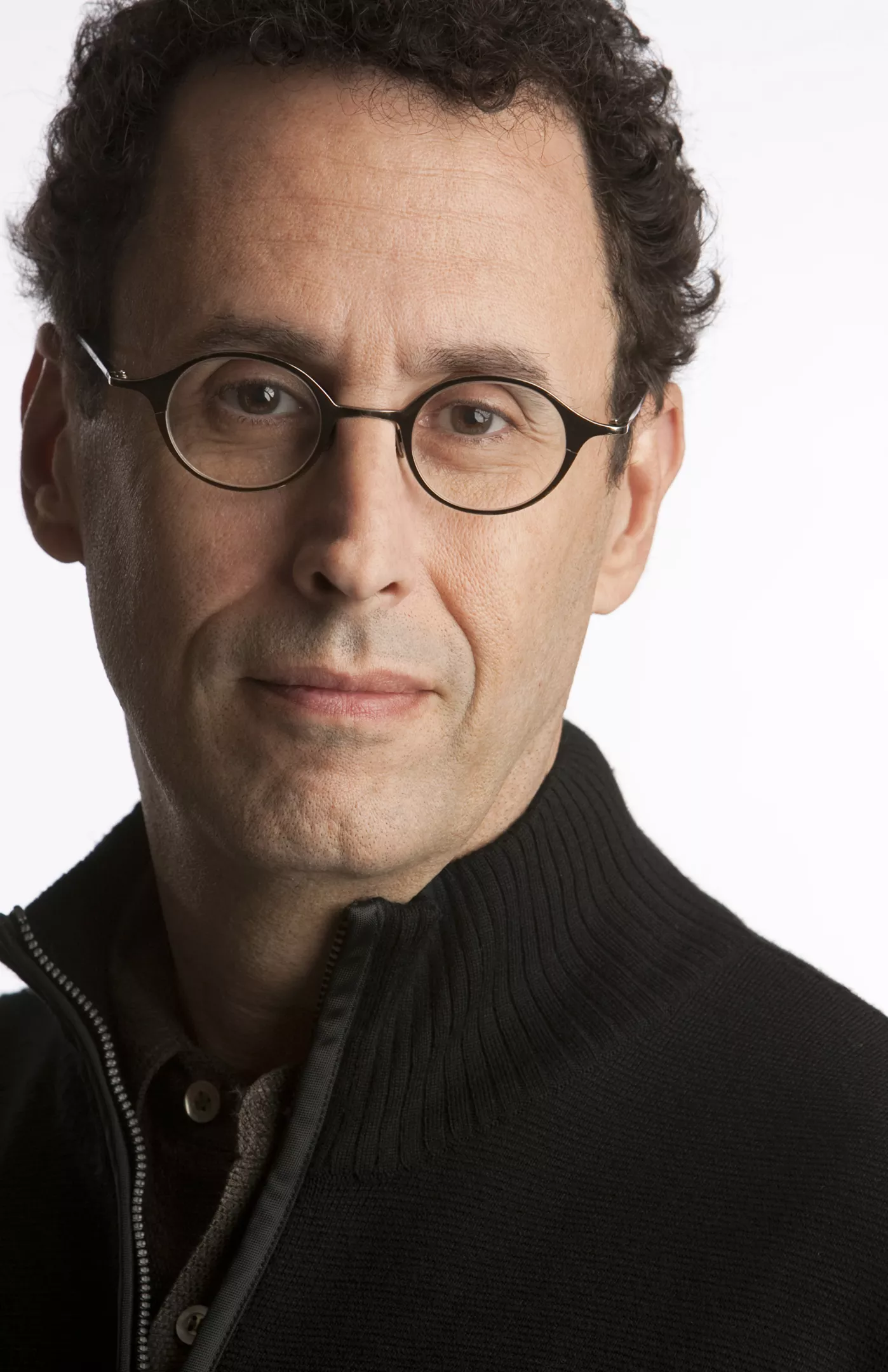
The capstone event? A dialogue with Pulitzer Prize-winning playwright Tony Kushner, who waxed poetic on the "vital" role of theater to an appreciative crowd of UVM students, alumni and faculty, as well as local fans and theater enthusiasts.
Kushner is best known for his seven-hour, two-part epic Angels in America: A Gay Fantasia on National Themes, which won the 1993 Pulitzer for drama and was adapted into an Emmy-winning HBO miniseries. His lengthy list of accolades includes two Tony awards, three Obie awards, a PEN/Laura Pels International Foundation for Theater Award and the 2012 National Medal of Arts. He also cowrote the screenplays for Steven Spielberg's Lincoln (2012) and Munich (2005).
During a loosely structured, hourlong Q&A moderated by UVM acting professor Kathleen Gough, Kushner spoke off the cuff about topics ranging from climate change to the current state of LGBTQ rights to the value of a liberal arts education.
The stage, Kushner told his captive audience, is "a tool to look at the mysteries of things" — and the primary goal of the playwright, he clarified later in the discussion, "is to get at a truth, and not a single truth, but a dialectical, spinning truth."
Tags: performing arts , royall tyler theatre , theater , tony kushner , university of vermont , Image , Web Only
Saturday, October 11, 2014
My disdain for 3-D isn't particularly novel: It's gimmicky, it gives me a headache, the glasses dim the image and are uncomfortable. And I'm certainly unwilling to pay extra for this "feature" — given the choice of a film in 3-D or "flat," I'll always choose the latter.
One of my main arguments against 3-D is this: "Do you remember the film in 3-D?" The answer is always no, for the simple reason that our brains don't work that way. Our visual memories unfold in two dimensions, almost as if they were — yup — unfolding on a movie screen.
I'll admit that the question might be unfair, since our memories of the films we see are highly intangible and fluid. And it's likely that our memories of a film are less important to us than are the two hours we spend watching it. Usually, the pleasure we derive from a film is experiential — we enjoy the act of watching, and enjoy experiencing the film as it unfolds in real time.
Tags: film , movie , what i'm watching , dial m for murder , 3-D , 3d , alfred hitchcock , andre de toth , the stranger wore a gun , Image , Video , Web Only
Friday, October 10, 2014
Authors Rose Mitchell and Andrew Janes are map archivists at the National Archives in London, a fact that accounts for the book's overall Anglocentric focus. And while it does contain many a map of Britain and her former colonies, this handsome, profusely illustrated volume also offers such fascinating features as a map of 19th-century Edo (now Tokyo), a map of the Allied forces' invasion of Normandy and, from 1836, the first-known pen-and-ink map by an Aboriginal Australian.
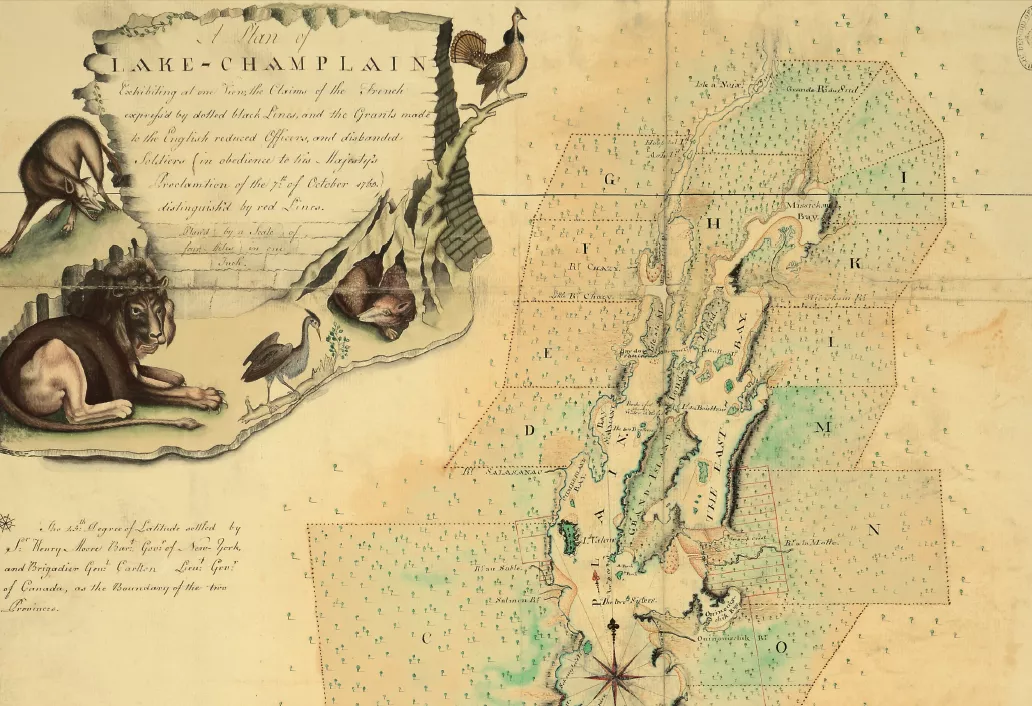
One chapter, "New Worlds: Exploration and the Colonies," showcases maps that testify to the massive wingspan of the British Empire. Amongst the maps of Gambian slave forts and the Indian subcontinent is a 1767 map of French and British claims to the forested parcels of land that surrounded Lake Champlain. Created by Yorkshireman Simon Metcalfe, the surveyor general of New York province, the map shows how the two countries' claims conflicted.
Even more interesting is the watchful lion that joins a wolf, a crane and a turkey in the cartouche in the map's upper left corner. Cool your jets, Catamount Truthers: Just as in the present day, no lions romped through the Champlain Valley in the mid-18th century. Rather, as the authors write, the mapmaker included this fearsome beast in order to "convey ... to those in London both the inherent possibilities and the dangers present in the colonies."
Fanciful details such as that incongruous lion are exactly what make this and the other maps in the book so fascinating. The maps' very inaccuracies speak most eloquently to their origins and attest to their historical significance.
Tags: maps , lake champlain , national archives , history , cartography , beer , Image , Web Only
This week in movies you missed: It's October again, season of crappy horror releases, so I'm on the hunt for a scare flick that will actually scare me. Where better to look than among movies I missed?
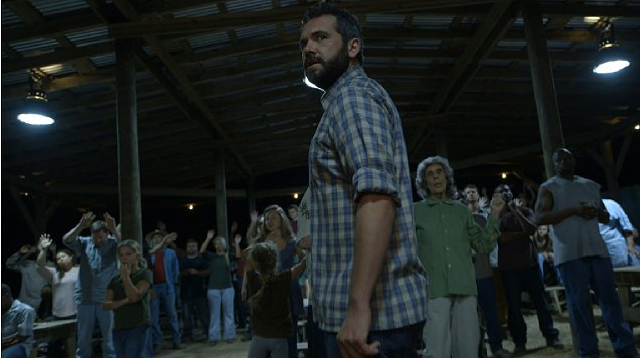
Let's start with The Sacrament, the latest from director Ti West (The House of the Devil, The Innkeepers). This found-footage film has a simple premise: What if Jonestown had happened last year, and Vice Media was there to film it?
What You Missed
Vice reporter Sam (A.J. Bowen) explains self-importantly to the camera that he practices a new form of gonzo journalism called "immersionism." Next up: He'll immerse himself in a utopian community that could well be a cult.
Sam's photographer friend Patrick (Kentucker Audley) has arranged to visit his ex-addict sister at Eden Parish, an overseas colony built by a religious community with a charismatic leader called "Father." Patrick, Sam and Vice photographer Jake (prolific indie director Joe Swanberg) take a helicopter into the jungle, where they're met by guards with machine guns.
Tags: the sacrament , ti west , jonestown , movies you missed , Image , Video , Web Only
Tuesday, October 7, 2014

Tod Gunter is the first to admit that his giclée prints — though they feature exceptionally detailed, aesthetically pleasing and difficult-to-execute drawings — only appeal to certain crowds.
The Stowe artist, aviation enthusiast and industrial designer makes technical illustrations of airplanes. Each takes him three to four months to create. Gunter researches extensively, then draws in "every last rivet" in Adobe Illustrator and Photoshop, eschewing 3-D rendering programs. "It's all done by eye," Gunter says. "It's the same as if I were painting on a canvas, except my canvas is digital."
But, he adds, it's not the kind of thing that most gallerygoers or curators find appealing. "It's highly specific art," Gunter notes. "There is an audience for it, but getting out in front of people is always a challenge."
Fortunately, the right audience will soon be exposed to Gunter's work — namely, the millions of visitors who pass through the Smithsonian National Air & Space Museum in Washington, D.C. Gunter learned earlier this week that an open-edition series of his prints would be offered in the museum's two gift stores, which are located at the Washington Dulles International Airport and the National Air and Space Museum on the Washington Mall.
Tags: art , smithsonian art and space museum , tod gunter , plane profiles , Image , Web Only
Saturday, October 4, 2014
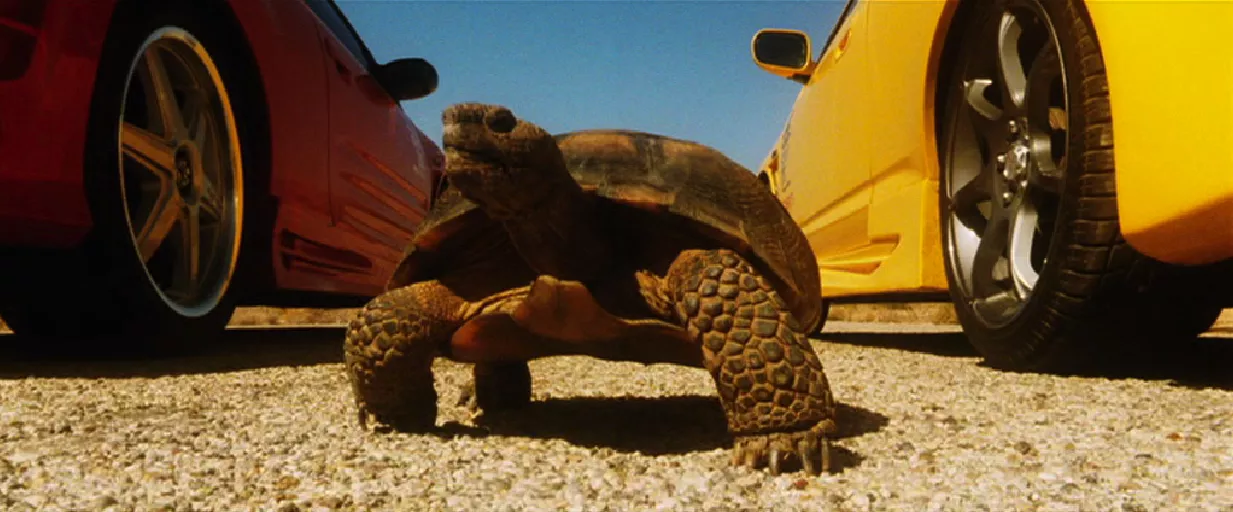
Joseph Kahn is one of the many filmmakers who moved into feature filmmaking after cutting their teeth on music videos. It used to be a bit of a punchline to say something like "Looks like this guy should have stuck to making music videos," but I don't think that really applies anymore. Big, Important Directors like David Fincher, Spike Jonze and Michel Gondry started in music videos, as did less beloved but still talented directors like Michael Bay, Gore Verbinksi, Antoine Fuqua, Dominic Sena, F. Gary Gray and Alex Proyas (all of whom, in my opinion, have made some excellent films).
Maybe it's still commonplace to mock music videos for being "all style, no substance," but I don't subscribe to such a notion. The more stylishly you can do anything cinematic, the better, I believe. And it's no surprise that so many music-video directors have found success in making big-budget genre films in Hollywood. By definition, genre filmmaking traffics in narratives that are, in at least a general way, predictable; they thereby provide directors with narrative frameworks that viewers understand "already." In other words, genre films are perfect vehicles for stylistic experimentation, since their general narrative familiarity won't be compromised by experiments with film form. Indeed, in many cases (I would argue), genre films are importantly enhanced when they're directed with stylistic flair.
Tags: film , movie , what i'm watching , torque , joseph kahn , action film , motorcycle , britney spears , toxic , music video , mtv , Image , Video , Web Only
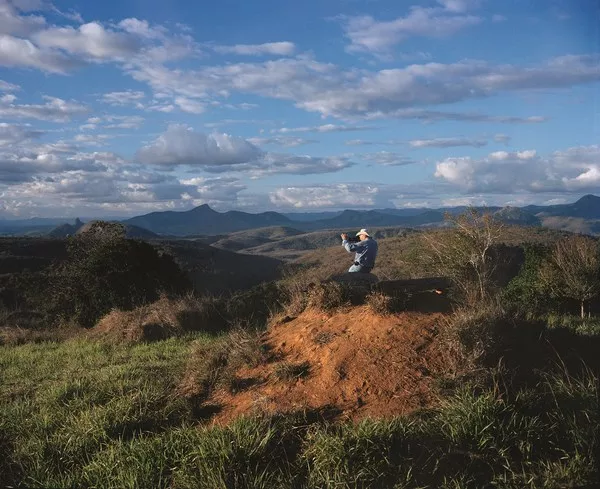
Dedicated to the newest of the new in film, the 11-day FNC includes films, videos and interactive digital works from all over the world. All types of moving-image artworks — nearly 400 of them — make up the program: animated and live-action; fiction, documentary and avant-garde; funny, serious, confusing and everything in between.
Cinephiles who wish to see the latest by master filmmakers can feast on new works by Jean-Luc Godard (Adieu au langage), Bruno Dumont (P'tit Quinquin) and David Cronenberg (Maps to the Stars), among others. The festival is also particularly rich in new independent films, such as the Kazakh film The Owners and the Lebanese film Scheherazade's Diary.
Tags: film , movie , film festival , festival du nouveau cinema , montreal , Image , Video , Web Only
Friday, October 3, 2014
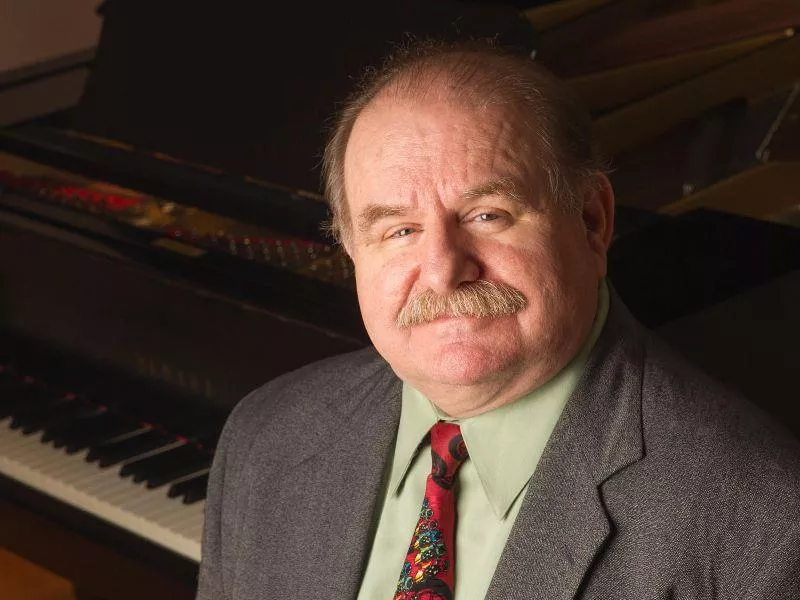
More than 100 people turned out to hear Parker’s free tribute concert at Elley-Long Center in Colchester on Wednesday. Hosted by its lead organizer and Parker’s newest colleague, morning classical host Kari Anderson, the “variety show,” as she called it, was also broadcast live. And tuning in, no doubt, were many of VPR Classical’s 42,100 weekly listeners (the Nielsen Audio numbers for fall 2013).
Parker is now the wise old owl in Vermont’s classical-music forest, the one who, as he recalled during the concert, brought the “barely teenaged” violinist Soovin Kim and a young boy who played piano, Ignat Solzhenitsyn, to perform live in the VPR studio long before anyone knew their names. Parker has interviewed and hosted performances by pretty much every musician and ensemble in the state since he began doing so at VPR’s original headquarters in Windsor. Not surprisingly, he had a hand in choosing who performed in his concert.
Tags: walter parker , vermont public radio , classical music , Image , Web Only
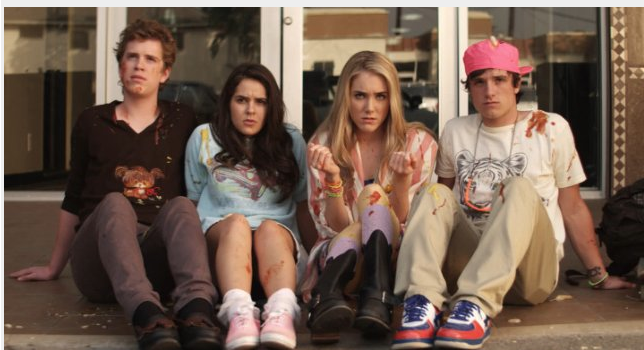
Director Joseph Kahn's little-seen 2011 horror comedy is the film Easy A should have been. Namely, a self-referential high school flick that takes the genre to the limit and drops it off a cliff, then stands and watches gleefully as it explodes into candy-colored smithereens.
What You Missed
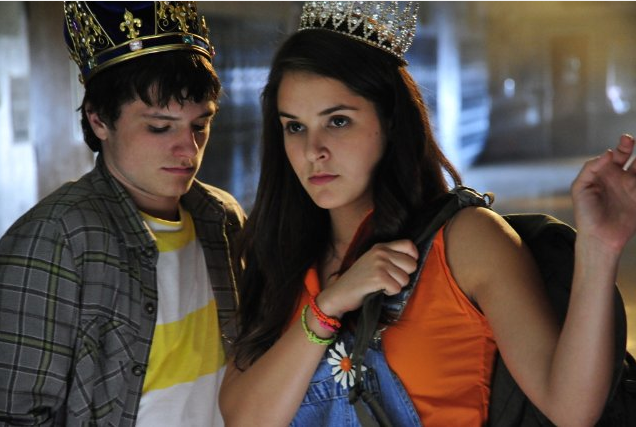
The resident queen bee of Grizzly Lake High (Alison Woods) rises from her bed and lectures the camera on the art of being popular, Ferris Bueller-style. No sooner has she explained the day's fashion statement ("The '90s are the new '80s") than a knife-wielding maniac dressed like the villain of the Cinderhella film series appears and puts a merciful (for us) end to her existence.
Meanwhile, in another bedroom, misfit Riley Jones (Shanley Caswell) is considering suicide. Her former BFF (Spencer Locke) has morphed into an evil cheerleader and stolen her secret crush (Josh Hutcherson, who got a huge career boost from The Hunger Games shortly after this was released). The school's resident geek (Aaron David Johnson) won't stop propositioning Riley; and the only person less cool than she is is the girl who committed an unspeakable act on the school's resident stuffed grizzly bear in 1992.
I've just described the film's first 10 minutes, tops. The plot spins out of control as we meet more dramatis personae: the vengeful nerd principal (Dane Cook); the pissed-off quarterback (Parker Bagley), who hides a dark secret; a goth girl; a geek named Toshiba; Ione's cougar mom; the guy (Walter Perez) who's been in detention for literally decades; and, of course, the killer hiding behind Cinderhella's bloody prom dress.
Tags: Movies you missed , joseph kahn , detention , josh hutcherson , Image , Web Only